Collagen-Rich Foods: 10 Best Options To Boost Skin & Joints
Discover the top foods rich in collagen and nutrients that boost its production for healthier skin, joints, and hair.
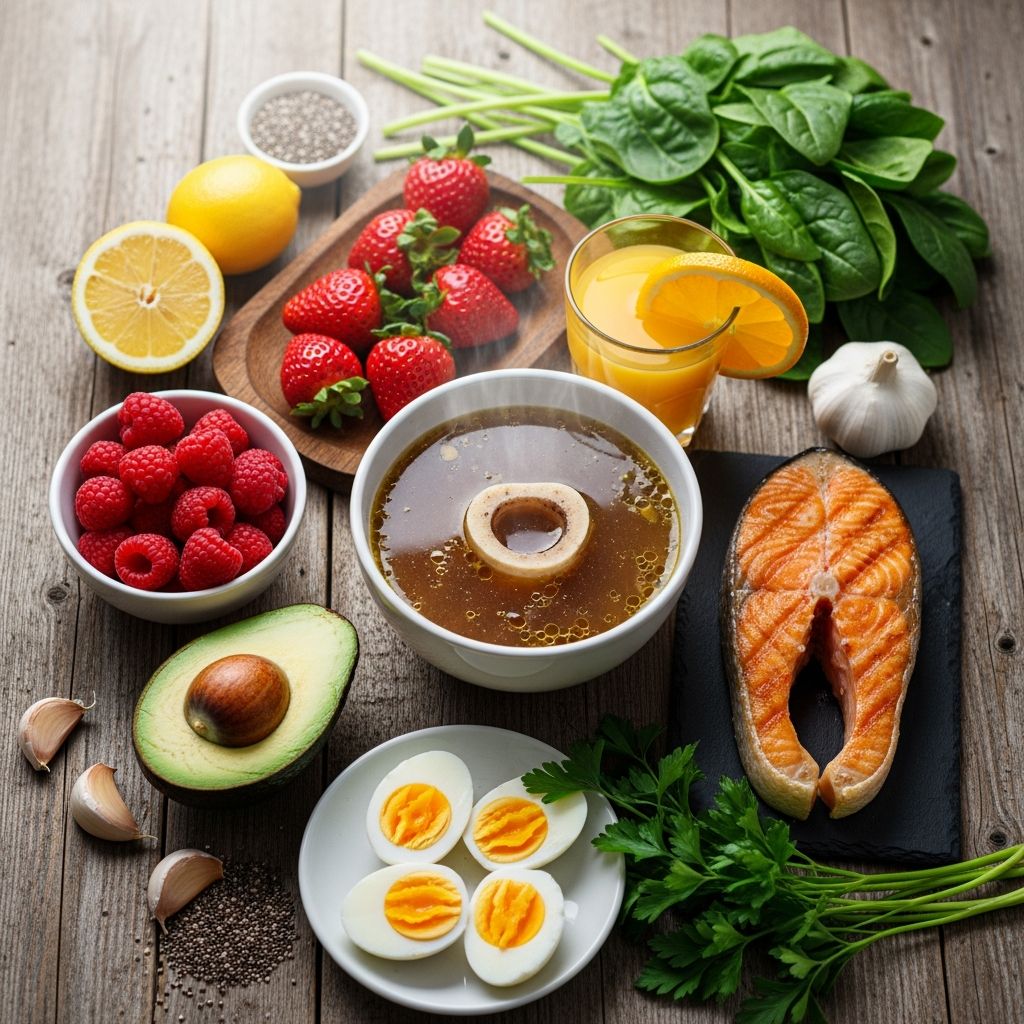
Collagen is the most abundant protein in the body, providing structure to skin, bones, tendons, ligaments, and cartilage. As we age, natural collagen production declines, leading to wrinkles, joint pain, and weaker hair and nails. While supplements are popular, incorporating
collagen-rich foods
and collagen-boosting nutrients into your diet offers a natural, nutrient-dense approach. This guide covers the best foods to eat for a collagen boost, drawing from credible health sources.What Is Collagen and Why Do You Need It?
Collagen makes up about 30% of the body’s total protein, acting as the scaffolding for skin elasticity, joint cushioning, and strong connective tissues. Type I collagen dominates in skin, hair, nails, and bones, while Type II supports cartilage and gut health. Factors like aging, UV exposure, smoking, and poor diet accelerate collagen breakdown. Eating collagen directly from foods or supporting production with key amino acids (glycine, proline, hydroxyproline), vitamin C, zinc, and copper can help maintain levels.
A balanced diet with protein-rich foods, fruits, vegetables, and whole grains nurtures collagen synthesis. High-collagen foods are primarily animal-based, found in connective tissues, skin, bones, and cartilage, but plant foods aid production.
Top 10 Collagen-Rich Foods
Focus on these foods to directly increase collagen intake. Animal sources provide pre-formed collagen, while others supply building blocks.
- Bone Broth: Simmered from beef, chicken, or fish bones, bone broth extracts collagen, gelatin, and minerals. It’s versatile for soups, stews, or sipping. Opt for organic to avoid contaminants. A cup provides amino acids for skin and gut health.
- Chicken Skin and Cartilage: Rich in Type II collagen, chicken wings or drumsticks with skin and cartilage offer joint support. Studies show it reduces osteoarthritis pain. Grill or roast skin-on for maximum benefit, but moderate due to saturated fat.
- Beef (Tough Cuts): Brisket, chuck, or pot roast contain collagen in tendons and cartilage. Slow-cooking breaks it down into gelatin. Limit red meat for heart health.
- Pork Skin: Used in rinds, jokbal, or pickled feet, pork skin is collagen-packed. Supplements from pig skin improve knee osteoarthritis.
- Salmon Skin and Scales: Marine collagen absorbs efficiently. Eat skin-on grilled salmon or use in broth. Paired with vitamin C, it aids wound healing.
- Sardines: Canned whole sardines include edible bones and scales loaded with Type I collagen. Add to salads or toast for omega-3s and collagen.
- Jellyfish: Up to 75% protein as collagen, low-fat, and nutrient-dense. Common in Asian salads; supports wound healing.
- Egg Whites: Provide proline and glycine, key for collagen synthesis. Versatile in meals.
- Gelatin: Derived from collagen, use in desserts or homemade gummies for easy intake.
- Fish (General): Skin, scales, and bones from any fish boost intake. Marine collagen is highly bioavailable.
Plant-Based Foods That Boost Collagen Production
Vegetarians and vegans can’t get collagen directly from plants, but foods rich in amino acids, vitamin C, zinc, and copper stimulate production.
- Legumes and Beans: Lentils, chickpeas, edamame supply amino acids like proline.
- Whole Grains: Barley, wheat, amaranth offer glycine and zinc.
- Fermented Soy: Tempeh and miso provide amino acids and probiotics for gut health, indirectly supporting collagen.
- Seaweed: Rich in amino acids and minerals for marine-like collagen support.
- Dairy: Yogurt or milk for protein and amino acids (lacto-vegetarian option).
Key Nutrients for Collagen Synthesis
Collagen production requires specific cofactors. Here’s a breakdown:
| Nutrient | Role | Food Sources |
|---|---|---|
| Vitamin C | Essential for collagen cross-linking; deficiency causes scurvy. | Citrus, strawberries, bell peppers, kiwis, broccoli. |
| Zinc | Supports collagen synthesis enzymes. | Shellfish, nuts, seeds, legumes, meats. |
| Copper | Aids cross-linking for stability. | Shellfish, nuts, seeds, dark chocolate. |
| Protein/Amino Acids | Building blocks: glycine, proline. | Meat, fish, eggs, dairy, legumes. |
Pair collagen foods with vitamin C-rich ones, like salmon with citrus salsa, for optimal absorption.
How to Incorporate Collagen-Boosting Foods Into Your Diet
Practical tips for daily intake:
- Start your day with bone broth in smoothies or as soup base.
- Snack on sardines or pork rinds.
- Cook tough meats slowly in stews.
- Eat skin-on chicken or fish twice weekly.
- Add vitamin C sides: strawberry salad with chicken, bell peppers in stir-fries.
- Try recipes like Asian jellyfish salad or Korean jokbal for variety.
Aim for 10-20g protein per meal, including collagen sources. Hydrate well, as collagen thrives in moist tissues.
Collagen Supplements vs. Food: What’s Better?
Related Stories



Foods provide collagen plus co-nutrients, potentially outperforming isolates, but research is mixed. Supplements from chicken cartilage or salmon aid joints and skin, yet whole foods like bone broth offer broader benefits with less processing. Consult a doctor for supplements, especially if vegetarian.
Potential Benefits of Boosting Collagen Through Diet
- Skin Health: Improved elasticity, reduced wrinkles.
- Joint Health: Less pain, better mobility.
- Hair and Nails: Stronger growth.
- Gut and Immune Support: Type II collagen aids lining.
- Wound Healing: Faster recovery.
Frequently Asked Questions (FAQs)
Do fruits contain collagen?
No, fruits lack collagen but are high in vitamin C, which boosts production. Opt for oranges, strawberries, kiwis, and papayas.
Are collagen supplements better than foods?
Scientists are unsure; more research needed. Foods may provide synergistic nutrients.
Can vegetarians boost collagen?
Yes, via amino acid-rich plants like legumes, grains, and vitamin C foods.
How much collagen do I need daily?
No RDA, but 10-20g from food/supplements shows benefits in studies.
Does cooking destroy collagen?
No, slow cooking converts it to bioavailable gelatin.
References
- 7 Foods High in Collagen — GoodRx. 2023-10-15. https://www.goodrx.com/well-being/diet-nutrition/collagen-rich-foods
- What is the benefit of collagen in your diet? — Gundersen Health System. 2024-05-20. https://www.gundersenhealth.org/health-wellness/eat-move/what-is-the-benefit-of-collagen-in-your-diet
- 18 Foods With Collagen Boosting Benefits — Cleveland Clinic. 2023-11-08. https://health.clevelandclinic.org/the-best-way-you-can-get-more-collagen
- Collagen — Harvard T.H. Chan School of Public Health. 2024-02-14. https://nutritionsource.hsph.harvard.edu/collagen/
- Collagen benefits: Should I take a supplement? — MD Anderson Cancer Center. 2023-01-10. https://www.mdanderson.org/cancerwise/should-i-take-a-collagen-supplement.h00-159462423.html
Similar Articles








Read full bio of medha deb