Best Healthy Dinner Foods: 12 Nutrient-Dense Picks
Discover the top nutrient-packed foods for healthy dinners that support weight management, heart health, and overall wellness.
Creating satisfying dinners that nourish your body doesn’t have to be complicated. The
best healthy dinner foods
focus on nutrient density, offering high levels of vitamins, minerals, fiber, and healthy fats while keeping calories in check. These foods support weight management, improve heart health, stabilize blood sugar, and boost overall vitality. Drawing from established nutritional guidelines, this guide covers top categories like proteins, vegetables, grains, and more, with practical tips for incorporating them into your meals.What Makes a Dinner Food ‘Healthy’?
Healthy dinner foods are those that deliver substantial nutritional value per calorie. They are rich in
fiber
,protein
,healthy fats
, andmicronutrients
while being low in added sugars, sodium, and refined carbs. According to USDA guidelines, aim for half your plate to be vegetables and fruits, a quarter protein, and a quarter whole grains for balanced meals. These choices help with satiety, reducing overeating, and align with diets like Mediterranean or DASH for long-term health benefits.Key criteria include:
- Nutrient density: High vitamins (A, C, K), minerals (potassium, magnesium), and antioxidants.
- Fiber content: Promotes digestion and fullness.
- Low glycemic index: Prevents blood sugar spikes.
- Anti-inflammatory properties: Supports heart and immune health.
1. Fatty Fish Like Salmon
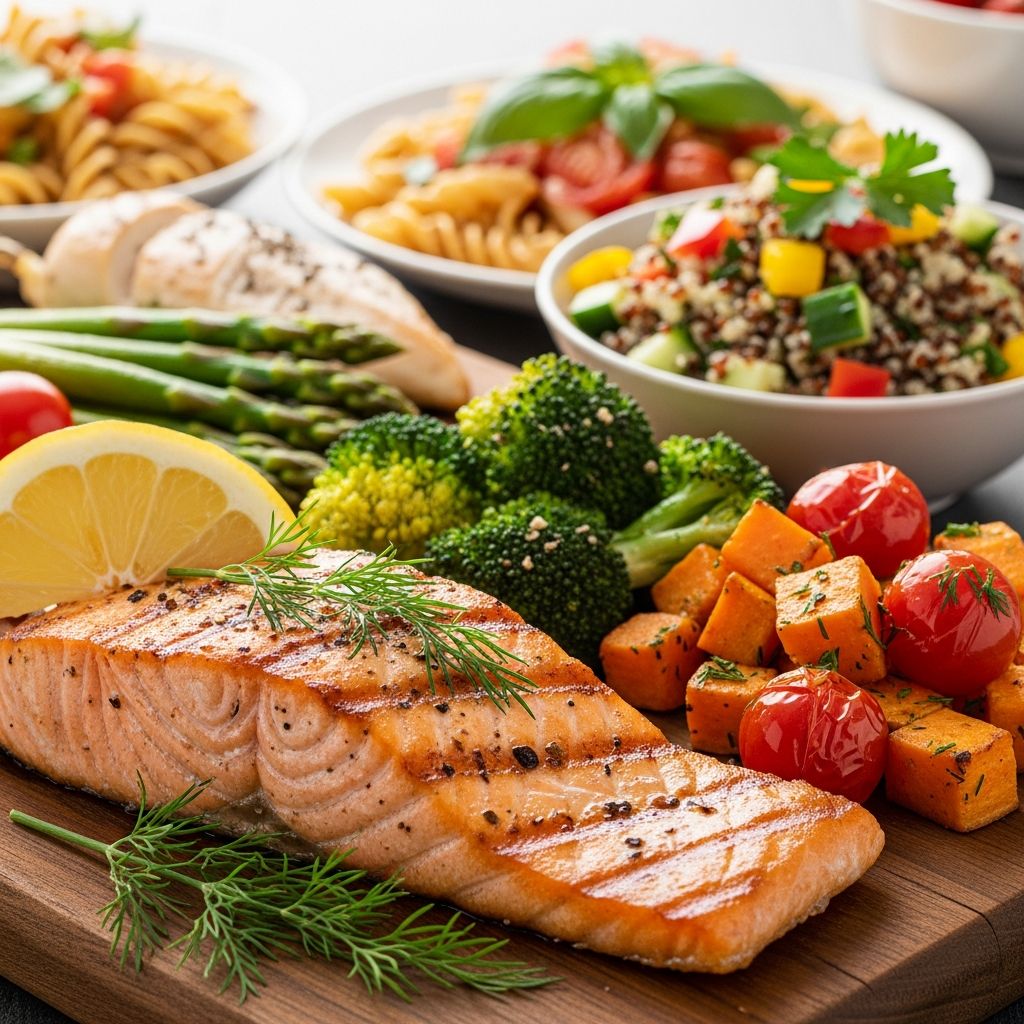
**Salmon** tops the list for healthy dinners due to its exceptional omega-3 fatty acids, high-quality protein, and vitamin D content. A 3-ounce serving provides about 22 grams of protein and 1,800 mg of omega-3s, which reduce inflammation and support cardiovascular health. Grilled salmon with vegetables, as featured in low-calorie recipes, keeps dinners under 500 calories while delivering heart-protective benefits. The American Heart Association recommends eating fatty fish twice weekly to lower triglycerides and blood pressure.
Benefits include:
- Improved brain function from DHA/EPA.
- Weight loss support via increased satiety.
- Rich in selenium and B vitamins for energy metabolism.
Try baking salmon with lemon and herbs for a simple, flavorful meal.
2. Leafy Greens (Spinach, Kale, Swiss Chard)
Leafy greens are powerhouse vegetables low in calories but packed with
vitamins A, C, K
, folate, and magnesium. One cup of cooked spinach offers over 100% of daily vitamin K needs, essential for blood clotting and bone health. These greens add volume to dinners without extra calories, making them ideal for salads, stir-fries, or sides. Studies from the NIH show regular intake links to lower risks of type 2 diabetes and heart disease due to their nitrate content, which improves blood flow.Incorporate them by sautéing with garlic or blending into smoothies if raw texture is an issue. A serving has just 40 calories but 5 grams of fiber for digestive health.
3. Cruciferous Vegetables (Broccoli, Brussels Sprouts, Cauliflower)
**Cruciferous veggies** like broccoli are loaded with
glucosinolates
, compounds that detoxify and have cancer-fighting potential. Broccoli provides sulforaphane, an antioxidant that supports liver function and reduces inflammation. A cup of steamed broccoli delivers 135% of vitamin C daily value and 10% of fiber, aiding weight control. Roast Brussels sprouts with olive oil for caramelized flavor in under 500-calorie dinners.- High in vitamin K for bone density.
- Potassium helps regulate blood pressure.
- Low-carb alternative to grains.
Related Stories



4. Berries (Blueberries, Strawberries, Raspberries)
Though often breakfast fare,
berries
shine in dinners as low-sugar desserts or salad toppers. Blueberries are antioxidant powerhouses with anthocyanins that protect cells and improve insulin sensitivity. A half-cup serving has 4 grams of fiber and only 40 calories. Pair with grilled chicken for a sweet-savory dish that satisfies without spiking blood sugar.Harvard research links berry consumption to slower cognitive decline and better heart health.
5. Nuts and Seeds (Almonds, Chia Seeds, Walnuts)
A handful of
nuts and seeds
adds crunch and healthy fats to dinners. Walnuts provide ALA omega-3s, while chia seeds offer plant-based omega-3s and 11 grams of fiber per ounce. They promote fullness; studies show almond eaters have better weight control. Sprinkle on yogurt parfaits or salads, keeping portions to 1 ounce (160 calories).6. Whole Grains (Quinoa, Brown Rice, Oats)
**Quinoa** is a complete protein grain with all nine essential amino acids, plus magnesium and iron. One cup cooked has 8 grams of protein and 5 grams of fiber, stabilizing blood sugar better than white rice. Use in stuffed peppers or as a pilaf base for hearty, 500-calorie meals.
- Brown rice offers manganese for metabolism.
- Oats’ beta-glucan lowers cholesterol.
7. Legumes (Lentils, Chickpeas, Black Beans)
**Legumes** are budget-friendly protein sources with soluble fiber that lowers cholesterol. Lentils cook quickly, providing 18 grams of protein per cup and folate for heart health. Add to soups or tacos; CDC data shows they reduce diabetes risk by improving glycemic control.
8. Avocados
**Avocados** deliver monounsaturated fats that enhance nutrient absorption from veggies. Half an avocado has 10 grams of fiber and potassium surpassing bananas. Use in salads or as a creamy sauce base for healthy dinners.
9. Sweet Potatoes
**Sweet potatoes** are beta-carotene rich, supporting eye health and immunity. A medium one has 4 grams of fiber and vitamin A at 400% DV. Bake or mash as a side.
10. Eggs
**Eggs** offer 6 grams of protein and choline for brain health. Poached or boiled, they’re versatile and filling.
11. Greek Yogurt
Plain
Greek yogurt
is probiotic-rich with 20 grams of protein per cup, ideal for sauces or marinades.12. Olive Oil
**Extra-virgin olive oil** provides anti-inflammatory polyphenols. Use 1-2 tablespoons for cooking.
Sample Healthy Dinner Meal Plans
| Meal | Calories | Key Foods |
|---|---|---|
| Grilled Salmon & Quinoa Bowl | 450 | Salmon, quinoa, broccoli, avocado |
| Lentil Soup with Kale Salad | 400 | Lentils, kale, chickpeas, olive oil |
| Stuffed Peppers with Brown Rice | 480 | Peppers, brown rice, black beans, spinach |
Frequently Asked Questions (FAQs)
What are the healthiest foods for dinner?
The healthiest dinner foods include fatty fish like salmon, leafy greens, cruciferous veggies, whole grains, and legumes for their nutrient density and satiety.
Can healthy dinners be under 500 calories?
Yes, recipes like grilled salmon with summer squash or ginger-chicken stew with brown rice keep dinners around 500 calories while being nutritious and satisfying.
How do I make healthy dinners quickly?
Opt for one-pan meals with pre-chopped veggies, quick-cooking grains like quinoa, and proteins like eggs or canned beans.
Are nuts good for weight loss dinners?
Yes, in moderation; their healthy fats and fiber promote fullness without excess calories.
Building Balanced Plates
Follow the plate method: 50% veggies, 25% protein, 25% grains. Season with herbs to avoid sodium. These foods align with evidence-based diets for sustainable health.
References
- Dietary Guidelines for Americans, 2020-2025 — U.S. Department of Agriculture (USDA). 2020-12-01. https://www.dietaryguidelines.gov/sites/default/files/2020-12/Dietary_Guidelines_for_Americans_2020-2025.pdf
- Fish and Omega-3 Fatty Acids — American Heart Association. 2023-05-15. https://www.heart.org/en/healthy-living/healthy-eating/eat-smart/fats/fish-and-omega-3-fatty-acids
- Cruciferous Vegetables and Cancer Prevention — National Cancer Institute (NCI), NIH. 2022-11-10. https://www.cancer.gov/about-cancer/causes-prevention/risk/diet/cruciferous-vegetables-fact-sheet
- Legumes and Chronic Disease Risk — Centers for Disease Control and Prevention (CDC). 2024-03-20. https://www.cdc.gov/nutrition/healthy-eating/legumes.html
- Berries and Health Outcomes — Harvard T.H. Chan School of Public Health. 2023-08-05. https://www.hsph.harvard.edu/nutritionsource/food-features/berries/
Similar Articles








Read full bio of Sneha Tete