Best Inversion Tables: 5 Top Picks For Spinal Decompression
Discover top-rated inversion tables for back pain relief, spinal decompression, and improved posture with expert-tested reviews.
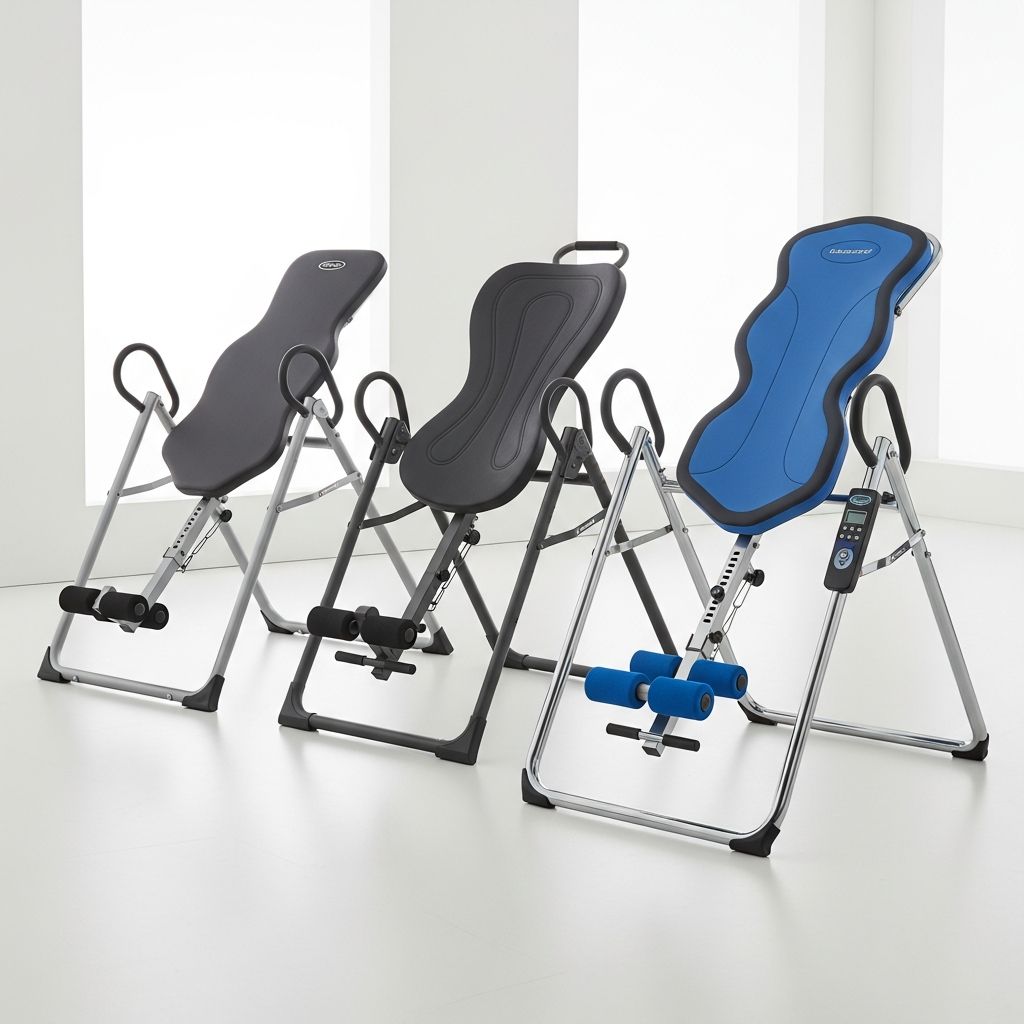
Inversion tables provide noninvasive spinal traction by positioning the body upside down or at an angle, decompressing joints and relieving pressure from gravity to potentially ease back pain and improve spinal health.
What Actually Is an Inversion Table?
An
inversion table
is a therapeutic device resembling a padded board hinged on a fulcrum, allowing users to secure their ankles and tilt to inverted positions. This setup reverses gravity’s pull, elongating the spine, stretching muscles, and reducing disc compression from daily activities like sitting or standing.Originating in the 1970s, modern tables feature improved safety locks, adjustable angles, and ergonomic padding. Users lie back, strap feet into ankle supports, and use handles or body shifts to invert gradually—typically from 30° to full 90° upside down.
Do Inversion Tables Work?
Evidence supports inversion tables for short-term relief in conditions like low back pain, herniated discs, sciatica, and spinal stenosis. A 2021 study showed inversion reduced surgery needs in herniated disc patients (21% vs. 39% in controls). Another 2020 study confirmed intermittent traction eases chronic low back pain.
Research indicates benefits at 60° angles over 8 weeks, improving pain, lumbar flexibility, and trunk strength. A 2012 review in the Journal of Chiropractic Medicine affirmed efficacy for low back pain via inverted spinal traction. However, no studies prove permanent cures; benefits are adjunctive to exercise and therapy.
Benefits of Inversion Tables
- Spinal Decompression: Reverses gravitational compression, widening disc spaces and reducing nerve pressure.
- Back and Neck Pain Relief: Effective for degenerative disc disease, pinched nerves, and sciatica by unloading vertebrae.
- Improved Posture and Flexibility: Stretches tight muscles, enhances circulation, and promotes spinal alignment.
- Stress Reduction: Boosts endorphins and brain blood flow for relaxation.
- Joint Health: Decompresses hips, knees, and shoulders alongside the spine.
Risks and Who Should Avoid Inversion Tables
Inversion elevates blood pressure and intraocular pressure, posing risks. Avoid if you have hypertension, glaucoma, heart disease, osteoporosis, recent fractures, pregnancy, or eye/ankle issues.
Case reports highlight rare spinal injuries from falls or dislocations even with correct use, especially in overweight individuals (BMI >25). Start at shallow angles; consult a doctor first.
How We Selected the Best Inversion Tables
Selections prioritize safety certifications (e.g., UL-listed), weight capacity (250–300 lbs), adjustability (height 4’10″–6’6″), padded comfort, ease of inversion, and user reviews. We favored models with progressive angle control and sturdy ankle systems, drawing from physiotherapy guidelines and studies.
The Best Inversion Tables
| Model | Weight Capacity | Angle Range | Key Features | Best For |
|---|---|---|---|---|
| Teeter FitSpine X3 | 300 lbs | 0–90° | UL-tested, acupressure nodes, lumbar bridge | Advanced users |
| Innova ITX9600 | 300 lbs | 0–90° | Foldable, memory foam backrest | Beginners/Budget |
| Exerpeutic Stretch 300 | 300 lbs | 0–86° | Heavy-duty steel, ergonomic ankle system | Daily use |
| Skybike Inversion Table | 325 lbs | 0–90° | Motorized adjustment, heat therapy | Tech-savvy |
| Ironman Gravity 4000 | 350 lbs | 0–90° | Extra padding, high capacity | Larger frames |
1. Teeter FitSpine X3 — Best Overall
The Teeter FitSpine X3 excels with FDA-registered Class 1 status, seamless 20-position ankle closure, and FlexTech bed flexing 42% for natural stretch. Users report lasting back relief after weeks.
2. Innova ITX9600 — Best Budget
Related Stories



Affordable yet robust, this foldable table offers six angles, foam handles, and a quick-lock ankle system. Ideal for home storage and entry-level decompression.
3. Exerpeutic Stretch 300 — Best Value
With a powder-coated steel frame and double-pin hinges, it supports extended sessions safely. Padded table and U-bar prevent slippage.
4. Skybike — Best Motorized
Electric controls eliminate manual tilting; includes lumbar pillow and heat. Smooth for those with mobility limits.
5. Ironman Gravity 4000 — Best for Heavy Users
High weight limit, foam backrest, and adjustable headrest ensure stability. Proven for chronic pain management.
How to Use an Inversion Table
- Consult a physician, especially with pre-existing conditions.
- Adjust height and secure ankles firmly; use padded supports.
- Start at 30–45° for 1–2 minutes, 2–3 sets daily.
- Progress to 60° and 5 minutes max per set; total 10–20 minutes.
- Breathe steadily; use arms for control. Return upright slowly.
- Use 1–3 times daily for pain, once for maintenance.
Combine with core exercises for best results; discontinue if dizzy.
Inversion Table FAQs
How long should you use an inversion table?
Begin with 1–2 minutes per inversion, building to 5 minutes max per set over sessions. Total daily time: 10–20 minutes.
Are inversion tables safe?
Generally yes for healthy adults, but contraindicated for hypertension, glaucoma, obesity, or recent injuries. Doctor approval essential.
Can inversion tables fix herniated discs?
They relieve symptoms and may delay surgery, per 2021 research, but don’t ‘fix’—pair with PT.
How often to use an inversion table?
Once daily for wellness; up to 3x for acute pain. Rest days prevent dependency.
Do inversion tables increase blood pressure?
Possibly temporarily; studies mixed. Avoid if hypertensive.
References
- Inversion Tables: A Gimmick or a Helpful Health Tool? — Corydon Physiotherapy. Accessed 2026. https://corydonphysiotherapy.com/inversion-tables-a-gimmick-or-a-helpful-health-tool/
- What are inversion tables? Reviews, benefits, and how to use — Medical News Today. 2023-10-12. https://www.medicalnewstoday.com/articles/inversion-table
- Inversion Tables for Back Pain: How Effective Are They Really? — Dorsal Health. Accessed 2026. https://www.dorsalhealth.com/blog/inversion-table-for-pain-benefits-risks
- Inversion Table Fall Injury, the Phantom Menace: Three Case Reports — PMC (NIH). 2021-05-17. https://pmc.ncbi.nlm.nih.gov/articles/PMC8143462/
- The Benefits of Using an Inversion Table for Spinal Health — Posture Perfect Wellness Center. Accessed 2026. https://www.postureperfectwellnesscenter.com/blog/inversion-therapy-the-benefits-of-using-an-inversion-table-for-spinal-health
- Do Those Inversion Tables Work? A Physical Therapist’s Perspective — Activcore. Accessed 2026. https://www.activcore.com/blog/do-those-inversion-tables-work
Similar Articles








Read full bio of medha deb