Best Sleep Position to Ease COVID-19 Symptoms
Discover science-backed sleep positions that may help improve breathing and reduce COVID-19 symptoms at home or in hospital.
Best Sleep Position to Help Ease COVID-19 Symptoms, According to Science
COVID-19 often causes respiratory distress, making breathing difficult due to lung inflammation and fluid buildup. Research indicates that
prone positioning
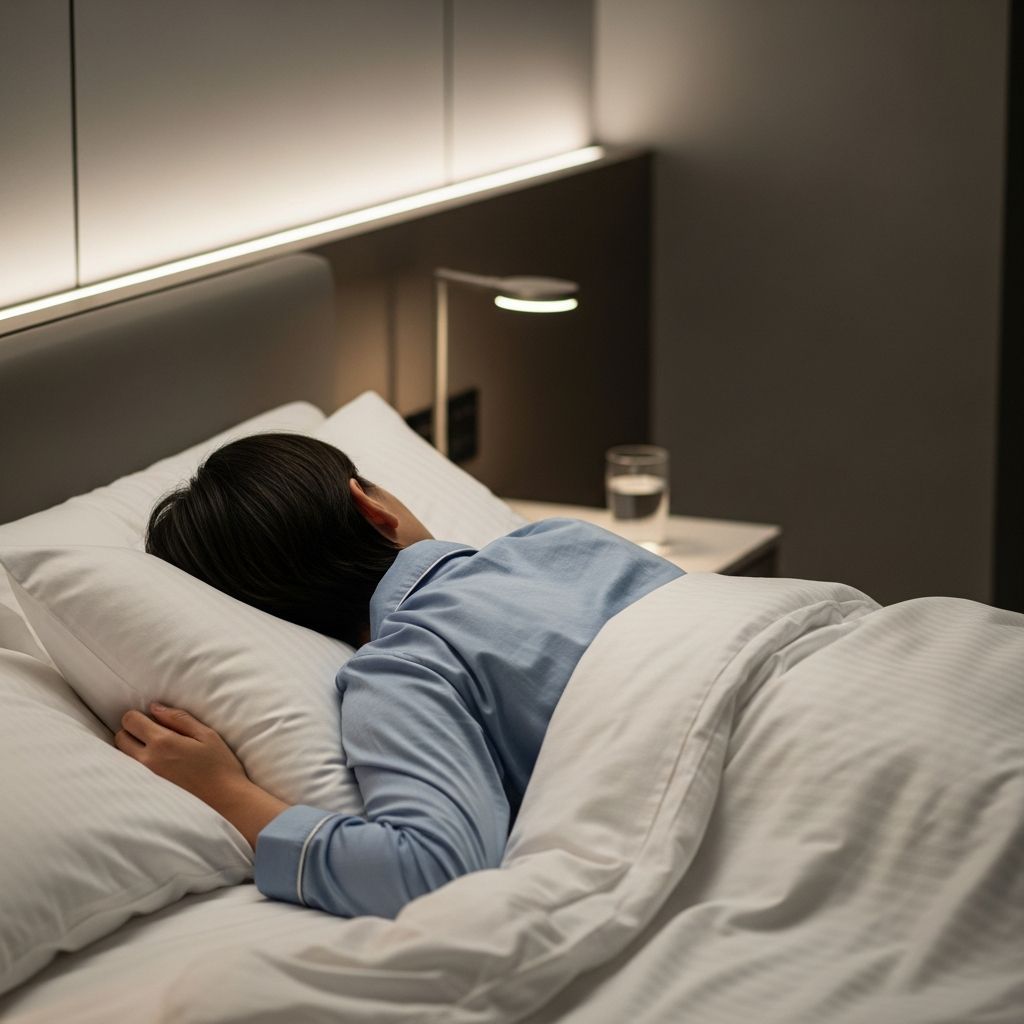
—lying on the stomach—can improve oxygenation by redistributing lung pressures and enhancing ventilation in affected areas. This simple adjustment, effective for both hospitalized and home-managed patients, leverages gravity to optimize lung function without invasive interventions.What Is Prone Positioning and Why Does It Help with COVID-19?
Prone positioning involves lying face-down on the stomach, a technique long used for acute respiratory distress syndrome (ARDS), which frequently complicates severe COVID-19 cases. The posterior (back) regions of the lungs, crucial for oxygen exchange, receive better blood flow and air distribution in this position. When supine (on the back), these areas compress under the heart’s weight, worsening ventilation-perfusion mismatch—a key issue in COVID-19 pneumonia.
Studies explain that proning opens dorsal lung units, recruiting collapsed alveoli and reducing overdistension in ventral areas. For awake patients, this non-pharmacological method boosts oxygen saturation (SpO2) levels, potentially delaying the need for mechanical ventilation. Boston University research highlights how early proning in COVID-19 patients mimics gravity-assisted lung recruitment seen in pre-COVID ARDS trials, where mortality dropped significantly.
The Science Behind Prone Positioning for COVID-19 Patients
Decades of evidence support proning for ARDS, with COVID-19 trials extending these findings. A randomized controlled trial at Boston Medical Center tested prone positioning shortly after admission, showing improved oxygenation ratios due to better posterior lung perfusion. CNN reported in 2020 that U.S. doctors adopted this for the sickest ventilated patients, aligning with gravity’s role in lung mechanics.
However, results vary by severity. A PMC meta-analysis of awake prone positioning in hypoxemic COVID-19 patients found no significant mortality reduction but noted decreased intubation needs in some meta-trials. Another North American randomized trial across 15 hospitals (248 patients) assigned awake subjects to 8+ hours daily proning versus usual care; no differences emerged in death rates, ventilation needs, or respiratory failure, with poor tolerance cited as a barrier. Conversely, Cleveland Clinic affirms proning elevates oxygen levels by relieving frontal lung compression.
| Study Type | Key Finding | Patient Group | Source |
|---|---|---|---|
| Randomized Trial (BMC) | Improved oxygenation via gravity | Hospitalized COVID-19 | |
| Meta-Analysis | Reduced intubation, no mortality benefit | Awake hypoxemic | |
| Randomized Trial (15 hospitals) | No clinical differences; low tolerance | Awake mild-moderate | |
| Clinical Guidance | Better lung expansion, prevents collapse | General COVID-19 |
These insights reveal proning’s context-specific efficacy: most beneficial for moderate-to-severe cases with ventilation issues, less so for mild awake patients.
Best Sleep Positions for COVID-19 Symptom Relief
- Prone (Stomach-Sleeping): Primary recommendation. Enhances dorsal lung aeration, ideal for 16+ hours daily in capable patients.
- Lateral (Side-Sleeping): Effective alternative; right or left side relieves back pressure, suitable if proning is uncomfortable.
- Semi-Fowler’s (Elevated Upper Body): 30-45 degree head elevation reduces reflux and fluid pooling, combining with proning for hybrid relief.
- Avoid Supine (Back-Sleeping): Compresses posterior lungs, exacerbating hypoxia and fluid retention.
For home recovery, cycle positions: prone during day sessions (2-4 hours, 4x daily), side at night. Mayo Clinic discussions emphasize stomach or side sleeping to prevent lung ‘smashing’.
How to Prone Position Safely at Home
Start with short sessions, building tolerance. Use pillows under chest/pelvis to ease pressure; keep head turned for airway patency. Monitor SpO2 if possible—aim for >92%. Contraindications include facial trauma, spinal instability, or pregnancy (beyond 20 weeks).
- Clear a flat surface (bed/floor) with pillows.
- Lie face-down, arms extended or folded under head.
- Breathe deeply; shift every 30-60 minutes.
- Combine with deep breathing exercises for amplified effect.
Norton Healthcare stresses mobility alongside proning—walk and stretch to prevent deconditioning.
Benefits and Limitations of Prone Positioning
Benefits:
- Increased SpO2 by 5-10% in responsive patients.
- Delays intubation, shortens hospital stays.
- Low-cost, non-invasive.
Limitations:
- Poor tolerance in awake patients (median 138 min/day).
- No mortality benefit in mild cases or meta-analyses.
- Potential NIV risk in lower BMI patients.
A French randomized trial (268 patients) confirmed no reduction in NIV/intubation/death risks, though secondary oxygenation improvements occurred. Future research may refine protocols for adherence.
Frequently Asked Questions (FAQs)
Is prone positioning safe for all COVID-19 patients?
Generally yes for awake adults, but consult a doctor for comorbidities like obesity, pregnancy, or facial issues. It’s contraindicated in unstable spines or recent abdominal surgery.
How long should I stay in the prone position?
Aim for 16 hours/day in hospital settings; at home, 2-4 hour sessions multiple times daily, or overnight if comfortable.
Does proning work for mild COVID-19 symptoms?
Evidence is mixed; it may aid oxygenation but shows no clear reduction in progression for mild cases per randomized trials.
Can I prone position while sleeping?
Yes, if it’s your natural position. Side-sleeping is a good alternative to avoid back-lying.
What if proning is uncomfortable?
Try modified proning (elevated head) or side positions. Improve tolerance with pillows and gradual exposure.
Additional Tips for Managing COVID-19 Respiratory Symptoms
Beyond positioning, deep breathing, incentive spirometry, and hydration support recovery. Avoid prolonged bed rest—gentle movement prevents clots and maintains lung capacity. Stay vaccinated and monitor symptoms; seek care if SpO2 drops below 92% or breathing worsens.
For long COVID, persistent prone benefits may apply, though data is emerging. Always integrate with medical advice.
References
- For COVID-19 Patients, Could Breathing Easier Be as Simple as Lying Prone? — Boston University. 2020. https://www.bu.edu/articles/2020/covid-19-bu-sph-lying-prone/
- Awake prone positioning in COVID-19 patients: is there any benefit? — PMC (NCBI). 2024. https://pmc.ncbi.nlm.nih.gov/articles/PMC10894415/
- Prone position might not work for awake COVID-19 patients — CIDRAP, University of Minnesota. 2022. https://www.cidrap.umn.edu/prone-position-might-not-work-awake-covid-19-patients
- COVID-19: Lying in a Prone Position (Proning) — University of Maryland Medical System. 2023. https://www.ummhealth.org/health-library/covid-19-lying-in-a-prone-position-proning
- Sleeping positions with COVID-19 or Bronchiectasis — Mayo Clinic Connect. 2022. https://connect.mayoclinic.org/discussion/sleeping-positions/
- In bed with COVID? You need to get up — Norton Healthcare. 2022. https://nortonhealthcare.com/news/sick-in-bed-with-covid-19-heres-why-you-need-to-get-up/
- Proning: Position, Purpose, Benefits & Side Effects — Cleveland Clinic. 2024. https://my.clevelandclinic.org/health/treatments/25026-proning
Similar Articles






Read full bio of Sneha Tete