Best Source of Vitamins: Your Plate, Not Your Medicine Cabinet
Discover why whole foods are superior to supplements for meeting your vitamin and mineral needs.
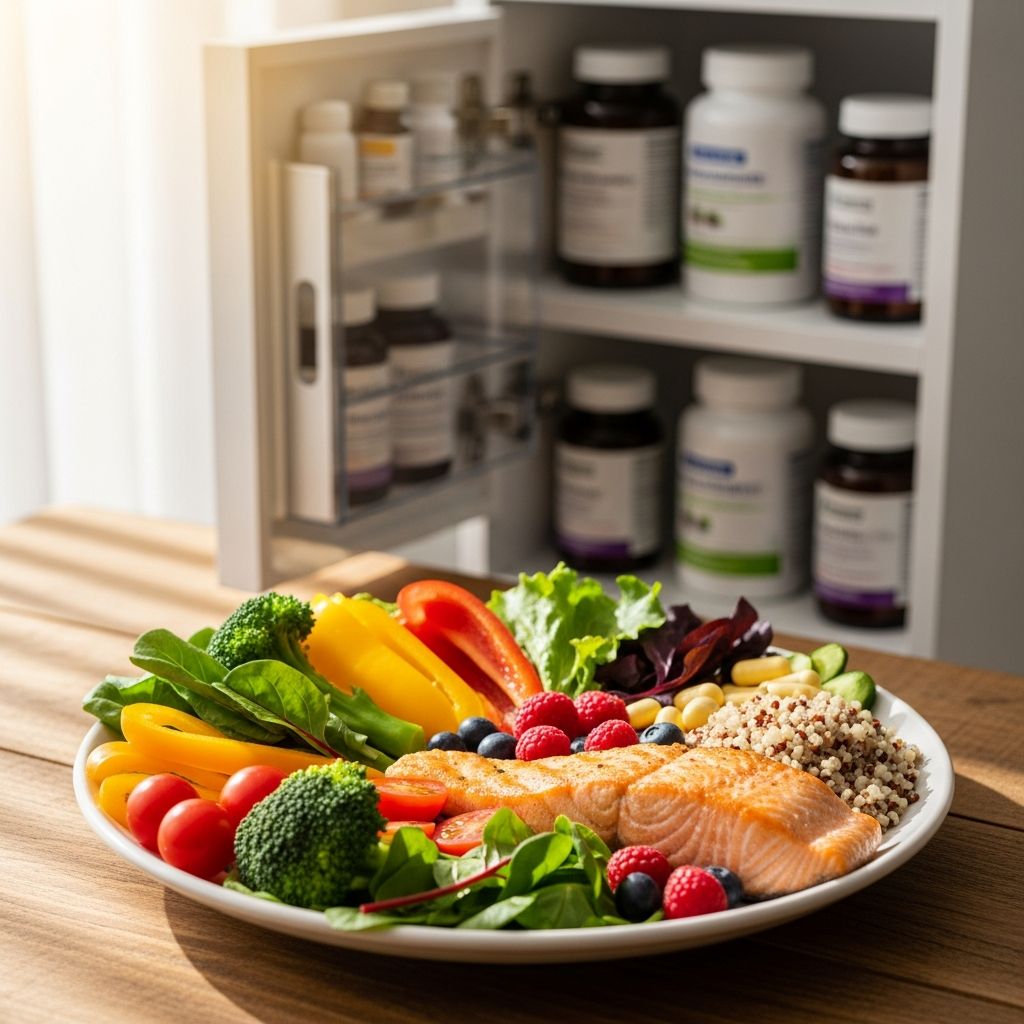
The supplement industry is worth billions of dollars, with millions of people spending considerable money on vitamins and minerals in pill form each year. However, scientific evidence increasingly suggests that the best source of vitamins and minerals for your body is not found in your medicine cabinet—it’s on your plate. Whole foods contain not just isolated vitamins but also fiber, phytonutrients, and other beneficial compounds that work together to support your health in ways that supplements simply cannot replicate.
Why Food-Based Vitamins Are Superior
When you consume vitamins and minerals from whole foods, you’re not just getting single nutrients in isolation. Instead, you’re receiving a complex matrix of compounds that have evolved together over millions of years to work synergistically within your body. Eating plenty of fruits, vegetables, wholegrains and cereals, lean meats and reduced fat dairy products will give your body the vitamins and minerals it needs, at the right level and in the right balance.
This balanced approach is crucial because vitamins and minerals don’t work in isolation. They interact with each other, with fiber, and with thousands of other plant compounds to support various bodily functions. No single food source contains all the vitamins, and importantly, inadequate or suboptimal consumption of vitamins result in deficiencies. This implies that different foods are needed to meet the vitamin requirement of the human body.
The bioavailability of vitamins from food sources is typically higher than from supplements. This means your body can more easily absorb and utilize the nutrients when they come from whole foods. Additionally, food-based nutrients are often accompanied by cofactors that enhance their absorption and utilization.
The Risks of Over-Supplementation
One of the significant advantages of obtaining vitamins from food is that it’s virtually impossible to consume toxic levels of vitamins through eating whole foods alone. Some vitamins and minerals can cause toxicity if consumed in large amounts. This risk exists primarily with supplements, where concentrated doses can exceed safe upper limits.
Fat-soluble vitamins like A, D, E, and K can accumulate in body tissues, potentially reaching harmful levels when consumed in supplement form. Water-soluble vitamins, while generally considered safer due to excretion through urine, can still cause problems at extremely high doses. Food naturally regulates intake—you’re unlikely to eat excessive amounts of any single nutrient source.
Essential Vitamins and Their Food Sources
Vitamin A
Vitamin A is essential for vision, immune function, and skin health. There are different compounds with vitamin A activity in animal and plant foods. Plant foods can be easy to spot as they tend to have orange/yellow pigment known as beta-carotene.
Plant sources of Vitamin A include:
– Orange and yellow fruit and vegetables – such as carrots, red capsicum, mangoes, sweet potatoes, apricots, pumpkin and cantaloupe- Leafy green vegetables – such as spinach, peas and broccoli
Animal sources of Vitamin A include:
– Liver- Eggs- Some fortified milk and milk products
Vitamin C
Related Stories



Dietary intake of vitamin C (from food and drinks) is essential, because the human body cannot make this vitamin from other compounds. We also need to have vitamin C as a regular part of our diet because the body cannot store vitamin C for very long. Vitamin C supports immune function, collagen production, and acts as a powerful antioxidant.
Adults need about 45mg of vitamin C per day and any excess amount (above 200mg) is excreted. Vitamin C is sensitive to heat, so some of its nutritional benefits can be lost during cooking. Raw foods are more beneficial as dietary sources of vitamin C.
Excellent food sources of Vitamin C include:
– Fruit – oranges, lemons, limes, grapefruits, blackcurrants, mangoes, kiwifruits, rock melon, tomatoes and strawberries- Vegetables – particularly green vegetables (such as cabbage, capsicum, spinach, Brussels sprouts, lettuce and broccoli), cauliflower and potatoes
Vitamin D
Only a small amount (around 5-10%) of Vitamin D is sourced from our diet. Most vitamin D is produced by your skin when exposed to sunlight. However, dietary sources are important, particularly during winter months or for those with limited sun exposure.
Dietary sources of Vitamin D include:
– Fatty fish (such as salmon)- Eggs- Margarine and some milks with added vitamin D
Vitamin E
Vitamin E is a powerful antioxidant that protects cells from damage. Vitamin E is best obtained from a healthy diet that contains plenty of fresh minimally processed foods. Vitamin E is also vulnerable to heat (especially cooking methods such as deep frying).
Dietary sources include:
– Meats (e.g. liver)- Egg yolks- Leafy green vegetables – spinach, broccoli- Nuts and seeds – such as almonds, sunflower seeds, peanuts and hazelnuts- Healthy oils – such as extra virgin, sunflower, soybean- Unprocessed cereals and wholegrains – such as wheat germ
Vitamin K
We get vitamin K from food and the bacteria in our gastrointestinal tract. Vitamin K is essential for blood clotting and bone metabolism.
Food sources include:
– Leafy green vegetables – spinach and kale- Fruits – such as avocado and kiwi fruit- Some variable oils – such as soybean oil
Essential Minerals and Their Food Sources
Calcium
At different life stages, our calcium needs vary. It is better to get calcium from foods than from calcium supplements. Calcium from food is often better absorbed and comes packaged with other nutrients that support bone health.
Good sources of calcium include:
– Dairy foods like milk, yoghurt and cheese- Some plant-based foods with added calcium (for example, soymilk, tofu and breakfast cereals)- Almonds, bok choy, kale, parsley, broccoli and watercress
Zinc
Dietary sources include:
– Red meat- Shellfish- Poultry- Milk and cheese- Whole grains- Cereals with added zinc
Potassium
Foods high in potassium include:
– Bananas and apricots- Mushrooms and spinach- Nuts and seeds
Understanding Micronutrient Absorption
The absorption of vitamins and minerals from food is a complex process that involves multiple factors. Notably, the occurrence of micronutrient (vitamin) malnutrition in an individual, could be an indication of vitamin deficiency, attributable not only to poor consumption of vitamin-rich diets but also due to factors influencing vitamin absorption.
Your digestive health, age, medications, and even the preparation method of food can affect how well you absorb nutrients. Whole foods contain the optimal ratios of nutrients that naturally enhance each other’s absorption. For instance, vitamin C enhances iron absorption, while fat helps absorb fat-soluble vitamins. These synergistic relationships are difficult to replicate in supplement form.
Antioxidants and Phytonutrients in Whole Foods
One of the major advantages of food-based nutrition is access to thousands of plant compounds that aren’t available in supplement form. These phytonutrients work alongside vitamins and minerals to reduce inflammation, fight oxidative stress, and support various aspects of health. A diet rich in colorful fruits and vegetables provides a spectrum of these compounds that supplements simply cannot offer.
Building a Vitamin-Rich Diet
Rather than spending money on supplements, invest in a varied diet that includes:
– Multiple servings of colorful vegetables daily- Fresh fruits as snacks and desserts- Whole grains instead of refined grains- Lean proteins from various sources- Healthy fats from nuts, seeds, and oils- Low-fat or fat-free dairy products
This approach naturally ensures you consume a broad spectrum of vitamins and minerals in balanced proportions. The fiber from whole foods also supports digestive health, which improves nutrient absorption overall.
When Supplements Might Be Appropriate
While food should be your primary source of vitamins and minerals, there are certain situations where supplements may be beneficial. These include specific deficiency states diagnosed by a healthcare provider, certain life stages (such as pregnancy), or medical conditions that impair nutrient absorption. However, supplements should complement, not replace, a healthy diet.
Vitamin B12 and Plant-Based Diets
In dietary terms vitamin B12 is not derived from plant-based foods; therefore, humans and animals that consume strictly vegetarian diets are very likely to have the suboptimal intake of vitamin B12 except where the plant-based foods have been fortified or enriched. Vegans and strict vegetarians may need to seek B12 from fortified foods or supplements, as this nutrient is naturally found primarily in animal products.
The Bottom Line
Your plate is truly your best medicine cabinet. Whole foods provide vitamins and minerals in their most bioavailable forms, accompanied by fiber, antioxidants, and phytonutrients that work synergistically to support your health. While the supplement industry continues to market isolated nutrients as solutions, the scientific evidence consistently points to food-based nutrition as the superior approach for meeting your body’s micronutrient needs. By focusing on eating a varied diet rich in whole foods, you’ll provide your body with the complete nutritional support it needs to thrive.
Frequently Asked Questions (FAQs)
Q: Is it possible to get all the vitamins I need from food alone?
A: Yes, for most people, a balanced diet containing a variety of whole foods can provide all essential vitamins and minerals. However, certain situations (pregnancy, specific medical conditions, dietary restrictions) may require supplementation—consult your healthcare provider to determine your individual needs.
Q: Why do supplements sometimes feel like they give me more energy?
A: This could be a placebo effect or due to correcting a deficiency. If you’re not eating well, supplementing might temporarily improve energy. However, addressing the underlying diet is more sustainable and beneficial for long-term health.
Q: Are organic foods significantly more nutritious than conventional foods?
A: Research shows minimal nutritional differences between organic and conventional produce. The most important factor is eating plenty of vegetables and fruits, regardless of growing method. Choose based on your budget and preferences.
Q: How can I ensure I’m getting enough vitamin D without supplements?
A: Aim for 10-30 minutes of midday sun exposure several times per week, eat fatty fish regularly, and consume fortified dairy products. Those in northern climates or with limited sun access may need supplementation during winter months.
Q: Can I overdose on vitamins from food?
A: It’s extremely unlikely to reach toxic levels from food alone. Your body naturally regulates intake, and excess water-soluble vitamins are excreted. This is one major advantage of food-based nutrition over supplements.
References
- Vitamins and minerals — Better Health Channel, State Government of Victoria, Australia. 2024. https://www.betterhealth.vic.gov.au/health/healthyliving/Vitamins-and-minerals
- Revisiting food-sourced vitamins for consumer diet and health needs — National Center for Biotechnology Information, National Library of Medicine. 2021. https://pmc.ncbi.nlm.nih.gov/articles/PMC8418216/
- Vitamins and Minerals — HelpGuide, adapted from Harvard Health Publishing. https://www.helpguide.org/wellness/nutrition/vitamins-and-minerals
Similar Articles








Read full bio of Sneha Tete