Best Time To Take Iron Supplement: 5 Tips For Maximum Absorption
Discover the optimal timing, foods to pair or avoid, and expert tips for maximizing iron supplement absorption and effectiveness.
Iron supplements are essential for addressing iron deficiency, but their effectiveness hinges on
timing
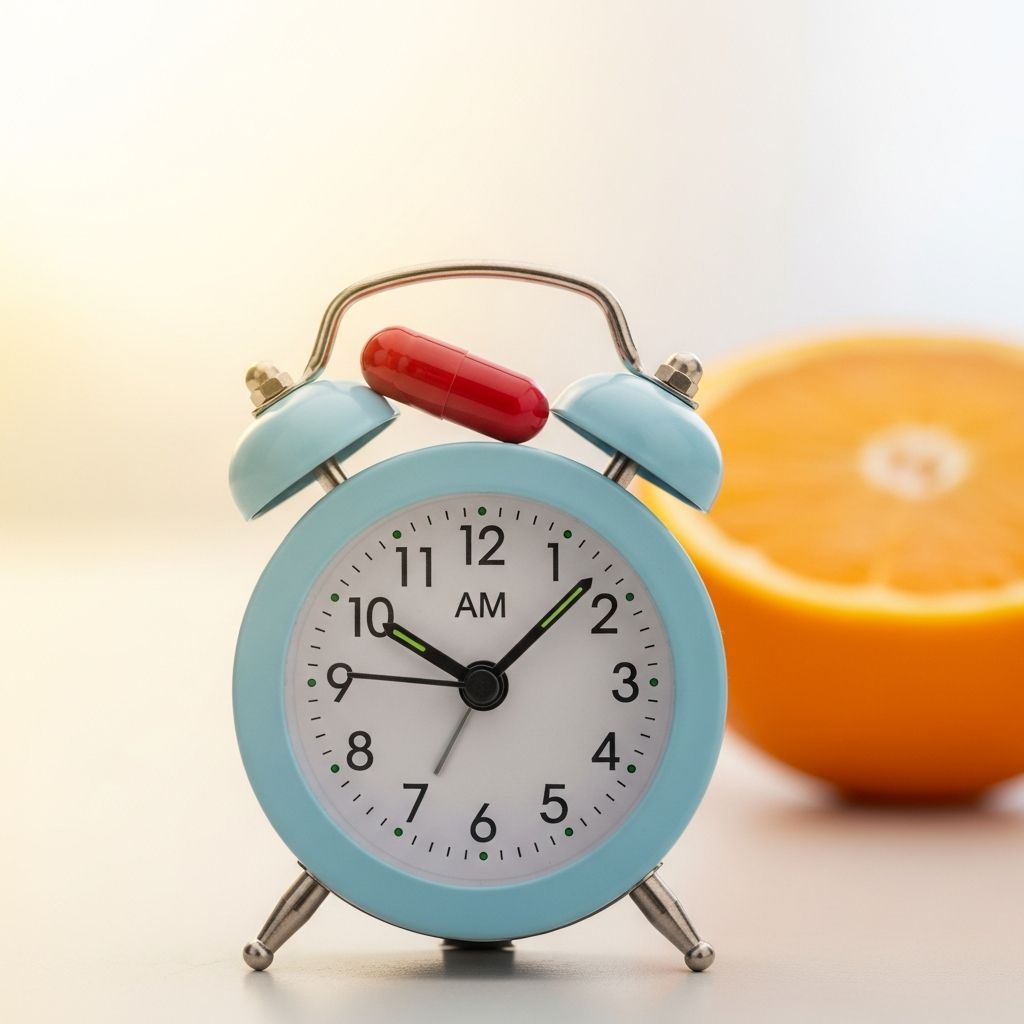
and dietary pairings. Taking them on an empty stomach in the morning maximizes absorption, as hepcidin levels—the body’s iron regulator—are lowest then, while avoiding inhibitors like calcium, coffee, and phytates boosts uptake significantly.Why Timing Matters for Iron Absorption
Iron absorption from supplements varies throughout the day due to
hepcidin
, a hormone that controls iron uptake in the intestines. Hepcidin levels are lowest in the morning, allowing better absorption from a supplement dose, and rise diurnally, peaking in the afternoon. Studies using iron stable isotopes show median absorption of 20.5% from morning doses versus 12.9% in the afternoon, with hepcidin over twofold higher later in the day.A morning iron dose also accentuates the diurnal hepcidin increase, reducing absorption from subsequent doses. For once-daily supplementation,
morning on an empty stomach
is optimal. Guidelines often recommend this, but direct evidence confirms it outperforms afternoon intake.Factors That Enhance Iron Absorption
Certain nutrients significantly improve
nonheme iron
uptake from supplements, which constitutes most supplemental iron (ferrous or ferric forms).- Vitamin C (Ascorbic Acid): The primary enhancer. Even 80 mg increases absorption by 30%, forming soluble chelates that keep iron bioavailable in the alkaline duodenum. Higher doses (500 mg) offer no extra benefit at typical supplement iron levels (e.g., 60 mg). Pair with orange juice or vitamin C-rich foods.
- Animal Proteins: Heme iron and certain proteins (e.g., from meat) promote nonheme iron uptake via the ‘meat factor.’
- Low Molecular Mass Peptides: Emerging research shows peptide-iron complexes boost bioavailability up to 70% over ferrous sulfate in cell models.
Nonheme iron absorption is 10-18% from typical diets, higher in deficiency states due to upregulated transporters.
Factors That Inhibit Iron Absorption
Dietary inhibitors can slash absorption by 50-80% if consumed simultaneously.
- Polyphenols: In tea, coffee, wine, and plant foods; potent even at low ratios to iron. Coffee reduced absorption by ~50% in studies.
- Phytates (Phytic Acid): In grains, legumes, nuts; 2 mg inhibits 18%, 250 mg up to 82%. Soaking reduces phytates.
- Calcium: Dairy, supplements; 100-200 mg cuts absorption 18-27%, additive with other inhibitors.
- Dietary Fiber and Soy Proteins: Moderate inhibitors; fiber effects debated.
- Meals: Breakfast meals drop absorption 67%, overriding vitamin C benefits in supplement contexts.
| Inhibitor | Source Examples | Absorption Impact |
|---|---|---|
| Polyphenols | Tea, coffee, wine | ~50% reduction |
| Phytates | Grains, legumes | 18-82% reduction |
| Calcium | Dairy, supplements | 18-27% reduction |
| Full Meals | Any mixed meal | 67% reduction |
Best Practices for Taking Iron Supplements
To optimize absorption:
- Take
60-100 mg elemental iron
(ferrous sulfate common) once daily in themorning
, at least 1 hour before or 2 hours after food. - With
8 oz water or orange juice
(vitamin C source); avoid milk, tea, coffee, or calcium for 2 hours. - Separate from antacids, calcium supplements by 2-4 hours.
- For vegetarians: Pair with vitamin C-rich foods; monitor deficiency risk (10% absorption vs. 18% in omnivores).
- Divide doses if >100 mg/day, but morning primary dose.
Side effects like constipation minimized with stool softeners or alternate forms (e.g., ferrous gluconate).
Who Needs Iron Supplements?
Iron deficiency affects billions; supplements for:
- Pregnant/lactating women, menstruating individuals.
- Vegetarians/vegans (lower heme intake).
- Athletes, those with malabsorption (e.g., celiac).
Related Stories



Absorption higher in deficiency due to low hepcidin and upregulated transporters.
Common Myths About Iron Supplements
- Myth: Afternoon is fine. Fact: Lower absorption due to hepcidin.
- Myth: Meals don’t matter for supplements. Fact: 67% drop with food.
- Myth: More vitamin C always better. Fact: 80 mg sufficient; excess unnecessary.
Frequently Asked Questions (FAQs)
What’s the best time of day to take iron supplements?
Morning on an empty stomach, when hepcidin is low, yields highest absorption (20.5% median).
Should I take iron with food?
No—meals reduce absorption by 67%; take fasting with water or vitamin C drink.
Does coffee or tea affect iron supplements?
Yes, polyphenols inhibit strongly; avoid for 1-2 hours before/after.
Can vitamin C really boost iron absorption?
Yes, 80 mg increases by 30%; orange juice ideal.
How much iron do I need daily?
8-18 mg for adults; supplements 60 mg elemental for deficiency.
Is ferrous sulfate the best form?
Common and effective; peptides or heme forms emerging for better uptake.
Recent Research on Iron Bioavailability
2022 reviews highlight innovative enhancers like rice-tetrapeptide hydrolysates (4.7x bioavailability) and peptide-FeCl2 complexes (70% boost). Diurnal studies (2024) confirm time-of-day effects on supplements, urging morning dosing.
Iron status, genetics, and gut health also influence transporters like DMT1. For IDA patients, absorption 20% higher than replete individuals.
References
- Iron Absorption: Factors, Limitations, and Improvement Methods — Akramienė et al., Nutrients (PMC). 2022-06-29. https://pmc.ncbi.nlm.nih.gov/articles/PMC9219084/
- Effect of dietary factors and time of day on iron absorption from oral iron supplements — Moretti et al., American Journal of Hematology. 2024. https://onlinelibrary.wiley.com/doi/full/10.1002/ajh.26987
- Understanding Iron Absorption — Feosol (official). Accessed 2026. https://feosol.com/blogs/iron-info/understanding-iron-absorption
- How to Increase the Absorption of Iron from Foods — Healthline (review). 2021. https://www.healthline.com/nutrition/increase-iron-absorption
- Iron and iron deficiency — Better Health Channel (VIC Gov). Accessed 2026. https://www.betterhealth.vic.gov.au/health/conditionsandtreatments/iron
- Iron supplements – patient information — University Hospital Southampton NHS. 2019. https://www.uhs.nhs.uk/Media/UHS-website-2019/Patientinformation/Blooddisorders/Iron-supplements-1533-PIL.pdf
Similar Articles








Read full bio of Sneha Tete