Beta Thalassemia: Types, Symptoms, and Treatment
Understanding beta thalassemia: genetic blood disorder affecting hemoglobin production and management options.
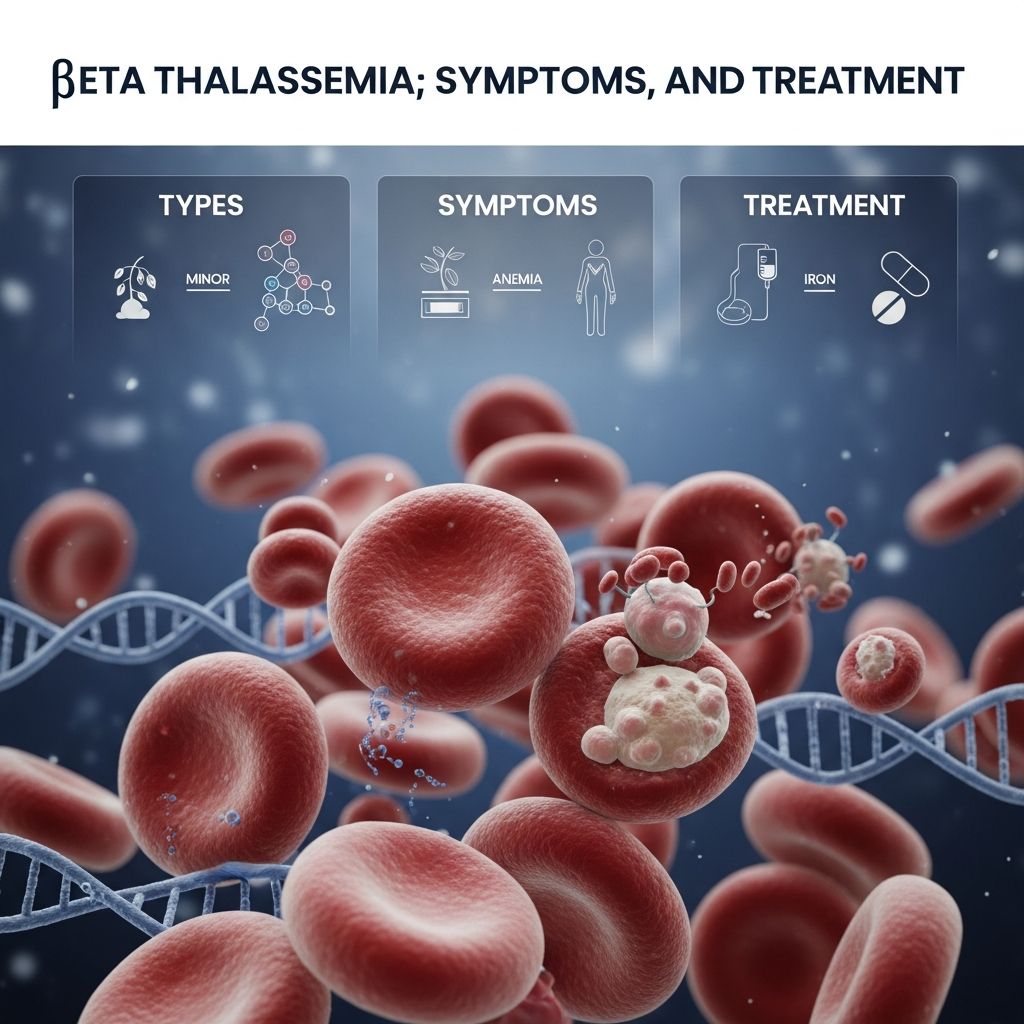
Understanding Beta Thalassemia
Beta thalassemia is an inherited blood disorder caused by damaged or missing genes that prevent the body from producing adequate hemoglobin, a vital protein in red blood cells essential for carrying oxygen throughout the body. This genetic condition results in varying degrees of anemia depending on the severity of the genetic defect. Unlike many acute medical conditions, beta thalassemia is a lifelong genetic disorder that requires ongoing management and specialized medical care.
The condition falls into the category of hemoglobinopathies, which are disorders affecting the structure or production of hemoglobin. Beta thalassemia specifically affects the beta-globin genes responsible for producing the beta chains of hemoglobin molecules. When these genes are damaged or entirely missing, the body cannot maintain normal hemoglobin levels, leading to various health complications ranging from mild to life-threatening.
Types of Beta Thalassemia
Beta thalassemia exists in three primary forms, each characterized by the number of affected genes and the severity of symptoms experienced:
Beta Thalassemia Major (Cooley’s Anemia)
Beta thalassemia major represents the most severe form of this disorder, occurring when both beta-globin genes are damaged or missing. Individuals with this condition produce minimal to no functional hemoglobin and experience severe anemia from early childhood. Symptoms typically appear within the first year of life, including pale skin, persistent fussiness, slowed growth, and poor feeding responses. Without prompt medical intervention, infants may fail to thrive and develop serious complications.
Children with beta thalassemia major require frequent blood transfusions to survive, often beginning in infancy and continuing throughout their lives. The regular transfusions necessary for survival paradoxically create another serious problem: iron accumulation in vital organs including the heart, liver, and pancreas. This iron overload, known as hemochromatosis, can cause life-threatening complications such as heart failure, which may develop as early as the teenage years or early twenties. Without appropriate iron chelation therapy, organ damage becomes irreversible and can result in premature mortality.
Additional complications in untreated beta thalassemia major include bone disease leading to fractures and deformities, enlargement of the spleen and liver, kidney dysfunction, diabetes, thyroid problems, and delayed sexual maturation. The facial bone changes resulting from extramedullary hematopoiesis create distinctive facial features, sometimes referred to as “chipmunk facies.”
Beta Thalassemia Intermedia
Beta thalassemia intermedia represents a moderate form of the disorder, falling between the mild and severe presentations. Individuals with this type typically have one gene that produces some hemoglobin and another that produces little or none. The clinical course is highly variable, with some patients requiring occasional blood transfusions during periods of illness or infection, while others may need more frequent transfusions.
Symptoms associated with beta thalassemia intermedia include moderate to severe anemia, pale skin, growth delays, weak bones predisposed to fractures, and spleen enlargement. Many patients with this form can maintain adequate hemoglobin levels without transfusions during stable periods, though transfusion needs may increase during physiologic stress. The variable nature of this form necessitates individualized treatment planning and regular monitoring by hematology specialists.
Related Stories



Beta Thalassemia Minor (Thalassemia Trait)
Beta thalassemia minor, also called thalassemia trait, represents the mildest form of this disorder, occurring when only one beta-globin gene is damaged. Many individuals with this type experience no symptoms whatsoever and may live their entire lives unaware of carrying the genetic mutation. Others may experience mild anemia with minimal impact on daily functioning.
Individuals with beta thalassemia minor are carriers of the condition and face a significant consideration for family planning: they have a 50% chance of passing the gene to each of their children. If the other parent is unaffected, children will also inherit the carrier trait. If both parents carry the gene, the risk of having a child with beta thalassemia major or intermedia increases substantially, making genetic counseling an important consideration before having children.
Thalassemia Minima
Thalassemia minima represents an extremely mild form that typically causes no health problems, though affected individuals remain carriers of the disorder and can potentially pass it to offspring.
Inheritance Pattern and Genetic Basis
Beta thalassemia is an autosomal recessive genetic disorder, meaning an individual must inherit two mutated copies of the beta-globin gene—one from each parent—to develop the condition. Parents who each carry one mutated gene have a 25% chance with each pregnancy of having a child with beta thalassemia major, a 50% chance of having a carrier child, and a 25% chance of having an unaffected child.
The genetic mutations causing beta thalassemia most commonly involve point mutations or deletions in the beta-globin gene located on chromosome 11. These mutations result in either partial loss of beta-globin function or complete absence of functional beta-globin production. The specific mutation inherited influences the severity of the condition and treatment requirements.
Symptoms and Clinical Manifestations
The presentation of beta thalassemia varies considerably depending on the type and severity of the genetic defect. Symptoms may range from absent in mild forms to severe and life-threatening in major forms.
Symptoms of Beta Thalassemia Major
Infants with beta thalassemia major typically develop symptoms early in life, often within the first year:
– Pale or yellowish skin- Persistent fussiness and irritability- Poor feeding and weak appetite- Slowed or delayed growth and development- Frequent infections- Swelling in the abdomen from enlarged spleen or liver- Dark-colored urine- Jaundice (yellowing of skin and eyes)
As children mature, additional symptoms emerge including facial bone deformities, leg cramps, weakness, extreme fatigue, shortness of breath, rapid heartbeat, and trouble concentrating. Without treatment, organs enlarge significantly and bones become thin, brittle, and prone to fractures and deformities.
Symptoms of Beta Thalassemia Intermedia
Individuals with beta thalassemia intermedia experience symptoms related to moderate or severe anemia, including pale skin, slow or delayed growth, weak and brittle bones, enlarged spleen, fatigue, weakness, and occasional jaundice.
Symptoms of Beta Thalassemia Minor
Many people with beta thalassemia minor experience no symptoms and may go their entire lives without realizing they carry the genetic mutation. Others may develop mild anemia with minimal clinical consequences.
Diagnosis and Testing
Many individuals receive a beta thalassemia diagnosis between ages six and twelve, though diagnosis can occur earlier in severe cases or later in mild forms. Early recognition is crucial for preventing serious complications and implementing appropriate management strategies.
Diagnostic Tests
Several laboratory tests can identify beta thalassemia and determine its severity:
Complete Blood Count (CBC): This fundamental test examines the size, number, and maturity of different blood cell types within a specific volume of blood. Individuals with beta thalassemia typically show microcytic anemia (small red blood cells) with reduced hemoglobin concentrations.
Hemoglobin Electrophoresis: This specialized test separates different types of hemoglobin and quantifies each type. Results reveal abnormal hemoglobin patterns characteristic of beta thalassemia and help determine the specific genetic form.
Genetic Testing: DNA testing can identify specific mutations in the beta-globin gene, confirming the diagnosis and helping predict disease severity.
Carrier Testing: These tests determine if individuals carry one copy of the mutated gene, which is particularly important for family planning and genetic counseling.
Diagnostic Considerations
Misdiagnosis represents a common problem in beta thalassemia care. Physicians may incorrectly attribute anemia to iron deficiency and prescribe iron supplementation, which can be harmful in thalassemia patients who typically develop iron overload rather than deficiency. Obtaining an accurate diagnosis from a hematologist—a blood disorder specialist—is essential to avoid inappropriate and potentially damaging treatments.
Treatment Options
Beta thalassemia is treatable, though management strategies vary significantly based on disease severity. Treatment aims to maintain adequate hemoglobin levels, prevent organ damage, manage complications, and optimize quality of life.
Mild Beta Thalassemia Minor
Many individuals with mild beta thalassemia minor require no specific treatment beyond regular monitoring and genetic counseling regarding reproductive considerations.
Beta Thalassemia Intermedia
Treatment for beta thalassemia intermedia is individualized based on hemoglobin levels and symptoms. Some patients require occasional blood transfusions during illness or infection, while others need more regular transfusions. Iron chelation therapy may be necessary if iron accumulation occurs.
Beta Thalassemia Major
Patients with beta thalassemia major require comprehensive management including:
Blood Transfusions: Regular blood transfusions represent a cornerstone of treatment for beta thalassemia major, delivering healthy red blood cells with adequate hemoglobin to maintain oxygen-carrying capacity and prevent organ damage from severe anemia.
Iron Chelation Therapy: This medication treatment removes excess iron from the body before it damages vital organs. Iron chelation therapy is essential for patients receiving regular transfusions and significantly improves outcomes and life expectancy.
Erythroid Maturation Agents: Medications such as luspatercept increase hemoglobin levels and reduce the number of transfusions required by stimulating red blood cell development in the bone marrow.
Surgical Interventions: Surgical removal of the spleen may be necessary if it becomes severely enlarged or causes complications. Gallbladder removal may also be required, as gallstones frequently develop in thalassemia patients due to increased bilirubin from red blood cell breakdown.
Bone Marrow Transplantation: Bone marrow or hematopoietic stem cell transplantation offers potential cure in carefully selected patients, particularly children with matched sibling donors. Success depends on factors including age, donor matching, and pre-transplant organ function.
Gene Therapy: Emerging gene therapy approaches show promising results, offering potential long-term solutions by correcting the underlying genetic defect in blood-forming cells.
Complications and Long-Term Outlook
Without appropriate treatment, beta thalassemia major causes serious complications affecting multiple organ systems including delayed growth, bone problems causing facial changes, liver and gallbladder disease, enlarged spleen and kidneys, diabetes, thyroid dysfunction, and cardiac problems. The life expectancy for untreated or inadequately treated beta thalassemia major remains significantly reduced compared to the general population.
However, modern comprehensive management has dramatically improved outcomes. Patients receiving appropriate transfusion therapy, iron chelation, and monitoring can now achieve near-normal or substantially extended life expectancies. Many patients with proper care can work, attend school, form relationships, and live fulfilling lives despite their chronic condition.
Frequently Asked Questions
Q: What causes beta thalassemia?
A: Beta thalassemia results from mutations or deletions in the beta-globin genes inherited from both parents. These genetic defects prevent adequate hemoglobin production, leading to anemia.
Q: Can beta thalassemia be cured?
A: While not yet curable in the traditional sense, bone marrow transplantation and emerging gene therapy approaches show promise for potential cure in selected patients. Current management focuses on effective treatment and complication prevention rather than cure.
Q: Is beta thalassemia inherited?
A: Yes, beta thalassemia is an autosomal recessive inherited condition requiring two mutated genes, one from each parent, to develop the severe form.
Q: How often do patients with beta thalassemia major need blood transfusions?
A: Transfusion frequency varies but typically ranges from every two to four weeks for patients with beta thalassemia major, adjusted based on hemoglobin levels and individual needs.
Q: What is the life expectancy for someone with beta thalassemia major?
A: With modern comprehensive treatment including regular transfusions and iron chelation therapy, many patients with beta thalassemia major can expect normal or near-normal life expectancies, though outcomes vary individually.
References
- Beta Thalassemia Overview — Johns Hopkins Medicine. Retrieved from educational materials on blood disorders. https://www.hopkinsmedicine.org/health/conditions-and-diseases/beta-thalassemia
- Beta Thalassemia: What You Should Know — WebMD. 2024. https://www.webmd.com/a-to-z-guides/beta-thalassemia-overview
- Thalassemias — Merck Manuals Professional Edition. Updated 2024. https://www.merckmanuals.com/professional/hematology-and-oncology
- Overview of β-Thalassemia — Maria Domenica Cappellini, MD. Johns Hopkins Medicine educational presentation. https://www.youtube.com/watch?v=1xHrRuyRyMI
Similar Articles








Read full bio of Sneha Tete