Betaxolol eye drops for glaucoma (Betoptic)
Comprehensive guide to Betaxolol eye drops (Betoptic) for managing glaucoma and ocular hypertension effectively.
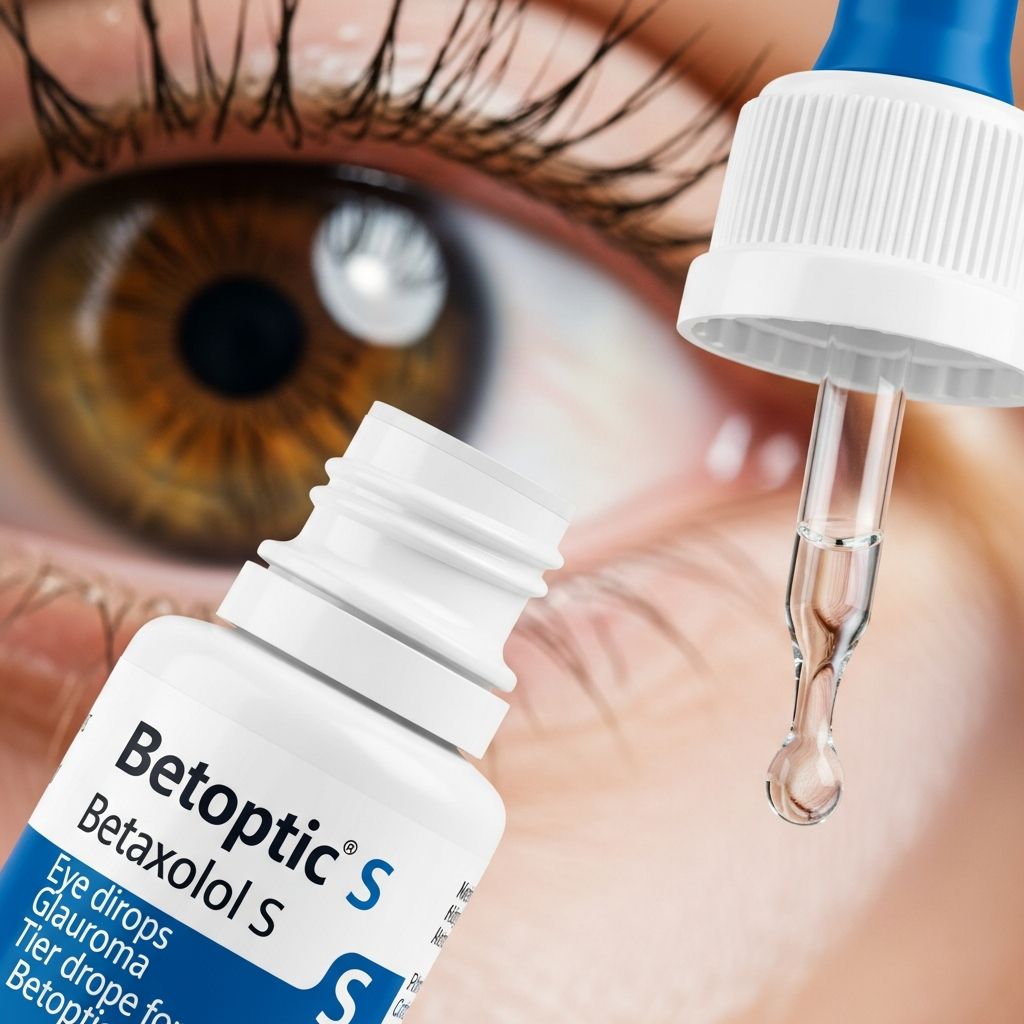
Betaxolol eye drops, commonly known by the brand name Betoptic, are a prescription medication specifically designed to manage glaucoma and ocular hypertension. These drops belong to the class of beta-blocker eye drops, which work by decreasing the production of fluid (aqueous humor) in the eye, thereby lowering intraocular pressure (IOP). Elevated IOP is a primary risk factor for glaucoma, a condition that can lead to irreversible vision loss if untreated. Betaxolol is particularly valued for its cardioselective properties, meaning it primarily affects beta-1 receptors in the heart with less impact on beta-2 receptors in the lungs, making it safer for patients with mild respiratory issues compared to non-selective beta-blockers like timolol.
About betaxolol eye drops
Betaxolol hydrochloride ophthalmic solution, available as a 0.5% solution or 0.25% suspension (Betoptic-S), is indicated for the treatment of elevated intraocular pressure in patients with chronic open-angle glaucoma or ocular hypertension. Unlike miotic agents that constrict the pupil, betaxolol has minimal effect on pupil size, avoiding visual impairment in patients with central lenticular opacities. Clinical studies demonstrate that it reduces mean IOP by approximately 25% from baseline, with effects lasting up to 12 hours after a single dose, supporting twice-daily administration.
The medication is well-tolerated in various patient groups, including those wearing hard or soft contact lenses and aphakic patients (those without the lens). Long-term use, up to three years, maintains its IOP-lowering efficacy without significant tachyphylaxis (loss of response over time). In comparative trials, betaxolol’s hypotensive effect is clinically equivalent to timolol, but with a potentially better safety profile in patients with respiratory conditions.
Key facts about betaxolol eye drops
- Betaxolol is a cardioselective beta-blocker eye drop used mainly for glaucoma.
- The usual dose is 1 drop in each affected eye twice a day.
- Effects on eye pressure typically stabilize within a few weeks of consistent use.
- Common brand: Betoptic or Betoptic-S (suspension form).
- Suitable for contact lens wearers; wait 15 minutes after instillation before reinserting lenses.
- Does not cure glaucoma but controls IOP to prevent vision loss.
How does betaxolol work for glaucoma?
Glaucoma, particularly open-angle glaucoma, develops when the eye’s drainage system fails to adequately remove aqueous humor, leading to increased IOP that damages the optic nerve. Betaxolol acts as a beta-adrenergic receptor antagonist, specifically blocking beta-1 receptors in the ciliary body of the eye. This reduces the rate of aqueous humor production without significantly affecting outflow.
Unlike systemic beta-blockers, topical betaxolol has minimal systemic absorption effects on pulmonary and cardiovascular parameters in most patients. A single drop provides up to 12 hours of IOP reduction, and in clinical trials, it controlled IOP below 22 mmHg in over 94% of patients, with 73% managed on monotherapy. It is also effective post-laser trabeculoplasty as adjunctive therapy.
Common questions about betaxolol eye drops
How long does it take to work?
Betaxolol begins lowering IOP within 30 minutes to 2 hours after instillation, peaking at around 2 hours. Full stabilization may take a few weeks. Continue use even if you feel well, as glaucoma is often asymptomatic until advanced.
Do the drops have preservatives?
Betoptic-S suspension contains benzalkonium chloride (BAK) as a preservative, which may cause ocular surface issues with long-term use. The solution form also has preservatives; preservative-free options are unavailable for betaxolol.
Are they safe for contact lens users?
Yes, betaxolol is safe for hard and soft contact lens wearers. Remove lenses before applying drops and wait at least 15 minutes before reinserting to avoid absorption of preservatives.
Related Stories



Dosage for betaxolol eye drops
The recommended dosage is 1-2 drops in each affected eye twice daily (approximately 12 hours apart). Shake the suspension well before use. Do not exceed the prescribed dose, as it will not enhance efficacy but may increase side effects.
| Patient Group | Dosage | Frequency |
|---|---|---|
| Adults with open-angle glaucoma or ocular hypertension | 1 drop per eye | Twice daily |
| Combination therapy | 1-2 drops per eye | Twice daily, as directed |
| Contact lens wearers | 1 drop per eye | Twice daily (remove lenses first) |
Monitor IOP regularly, especially initially. If response is inadequate after 4 weeks, your doctor may adjust or add other agents. In angle-closure glaucoma, use only with a miotic agent to reopen the angle.
How to use betaxolol eye drops
- Wash hands thoroughly with soap and water.
- Shake the bottle (for suspension).
- Tilt head back, pull down lower eyelid to form a pouch.
- Hold dropper above eye, squeeze 1 drop into pouch without touching the eye or eyelids.
- Close eye for 1-2 minutes; apply gentle pressure to inner corner to minimize drainage.
- Wipe excess with tissue. Repeat for other eye if needed.
- Replace cap tightly; do not touch tip.
If using multiple eye drops, wait 5-10 minutes between products. Use within 4 weeks of opening. Store at room temperature, away from light.
Who can and cannot use betaxolol eye drops
Can use: Most adults with open-angle glaucoma or ocular hypertension, including contact lens wearers and those with mild asthma (due to cardioselectivity).
Cannot use:
- People with severe bradycardia, second- or third-degree AV block, cardiogenic shock, overt cardiac failure, or sinus node dysfunction.
- Those with hypersensitivity to betaxolol or beta-blockers.
- Avoid in angle-closure glaucoma without concomitant miotic therapy.
Pregnancy and breastfeeding with betaxolol eye drops
Safety in pregnancy is not fully established; use only if benefits outweigh risks (Category C). Systemic absorption is low, but monitor fetus for bradycardia or hypoglycemia. During breastfeeding, caution is advised as it may pass into milk; consult a doctor.
Side effects of betaxolol eye drops
Most side effects are mild and ocular. Systemic effects are rare due to low absorption but mimic oral beta-blockers.
Common side effects
- Temporary eye discomfort, burning, or stinging (most common).
- Watery eyes, itching, redness.
- Blurred vision, photophobia.
Serious side effects (seek immediate help)
- Shortness of breath, wheezing (especially in asthmatics).
- Slow heartbeat, dizziness, fatigue.
- Severe eye pain, vision changes.
In studies, betaxolol was safe in glaucoma patients with reactive airway disease, reducing IOP by 18% without pulmonary worsening.
How to cope with side effects of betaxolol eye drops
- Eye discomfort: Apply warm compress; effects often lessen over time.
- Watery eyes: Use artificial tears 15 minutes after betaxolol.
- Light sensitivity: Wear dark glasses outdoors.
- Monitor systemic symptoms; discontinue and contact doctor if severe.
Cautions of betaxolol eye drops
Systemic absorption can cause cardiac or pulmonary effects. Use caution in:
- Patients with heart conditions, diabetes (masks hypoglycemia), hyperthyroidism, or myasthenia gravis.
- Those on oral beta-blockers or psychotropics; additive effects possible.
Discontinue before surgery; restart post-recovery. Overdose: Flush with warm water; treat symptomatically.
Interactions with other medicines
- Other beta-blockers or antihypertensives: Enhanced hypotension/bradycardia.
- Epinephrine: Initial hypertensive response.
- Calcium channel blockers, digoxin: Increased AV conduction effects.
- Insulin: Masks tachycardia.
Other medicines for glaucoma
| Class | Examples | Mechanism |
|---|---|---|
| Prostaglandin analogs | Latanoprost | Increase outflow |
| Rho kinase inhibitors | Netarsudil | Improve trabecular meshwork |
| Carbonic anhydrase inhibitors | Dorzolamide | Reduce fluid production |
| Alpha agonists | Brimonidine | Reduce production, increase outflow |
| Non-selective beta-blockers | Timolol | Reduce fluid production |
Betaxolol may be combined with these for better control.
Frequently asked questions (FAQs)
Can I drive after using betaxolol eye drops?
Temporary blurred vision may occur; avoid driving until vision clears.
Is betaxolol safe for long-term use?
Yes, studies show sustained efficacy up to 3 years with good tolerance.
What if I miss a dose?
Apply as soon as remembered; skip if near next dose. Do not double up.
Does betaxolol affect blood pressure?
Minimal systemic effects, but monitor if you have hypertension.
Can children use betaxolol?
Not approved for pediatric use; consult specialist.
References
- Betaxolol Hydrochloride Ophthalmic Solution, 0.5% as base — FDA. 2006-08-01. https://www.accessdata.fda.gov/drugsatfda_docs/label/2006/19270s031lbl.pdf
- Betaxolol (Betoptic-S): Side Effects, Dosage, Uses & More — GoodRx. 2025. https://www.goodrx.com/betaxolol/what-is
- Betaxolol Ophthalmic: MedlinePlus Drug Information — MedlinePlus (NIH). 2024-05-15. https://medlineplus.gov/druginfo/meds/a686004.html
- Betaxolol in patients with glaucoma and asthma — PubMed (JAMA). 1986-05-01. https://pubmed.ncbi.nlm.nih.gov/3706457/
- Betaxolol eye solution or suspension — Cleveland Clinic. 2024. https://my.clevelandclinic.org/health/drugs/18707-betaxolol-eye-solution-or-suspension
- Betaxolol – StatPearls — NCBI Bookshelf. 2023-07-17. https://www.ncbi.nlm.nih.gov/books/NBK557870/
Similar Articles








Read full bio of medha deb