Biliary Atresia: Causes, Symptoms, Diagnosis & Treatment
Understanding biliary atresia: A rare liver condition affecting infants requiring early surgical intervention.
Understanding Biliary Atresia
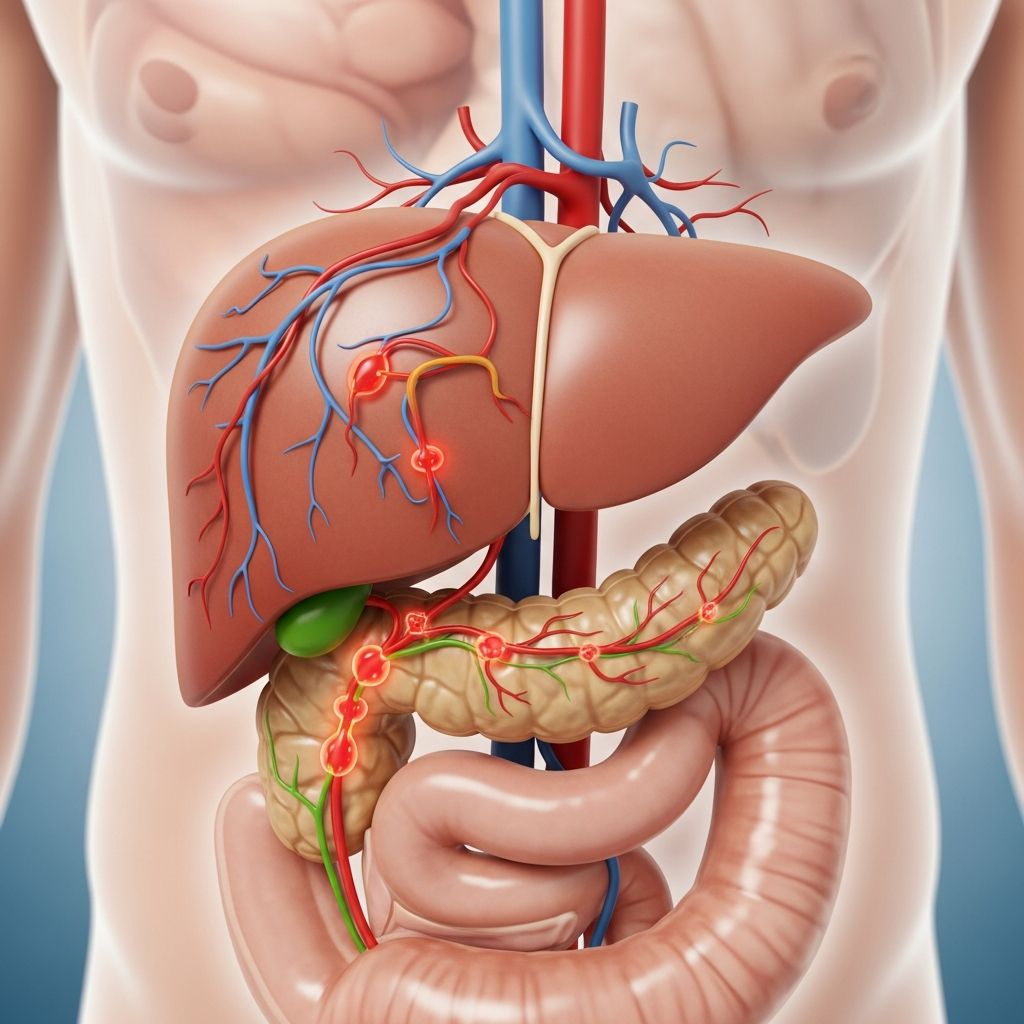
Biliary atresia is a rare but serious liver condition that affects newborns and young infants. In this condition, the bile ducts—tubes that normally carry bile from the liver to the gallbladder and small intestine—become blocked, inflamed, or are absent from birth. This blockage prevents bile from flowing properly, causing it to accumulate in the liver where it causes progressive damage. The condition typically appears within the first few weeks of life and requires prompt medical attention to prevent irreversible liver damage and cirrhosis.
Bile is a digestive fluid produced by the liver that plays a crucial role in fat digestion and waste elimination from the body. When bile ducts are blocked, the normal flow of bile is interrupted, leading to a buildup of bile in liver tissue. This accumulation triggers inflammation and scarring, which can rapidly progress to cirrhosis if left untreated. Biliary atresia is one of the most common reasons infants require liver transplantation in the United States.
What Causes Biliary Atresia?
Despite extensive research, the exact cause of biliary atresia remains unclear. However, medical professionals have identified several factors that may contribute to its development. These potential causes include viral infections occurring after birth, exposure to toxic substances, multiple genetic factors, perinatal injuries, and certain medications such as carbamazepine.
The condition appears to be multifactorial, meaning it likely results from a combination of genetic predisposition and environmental triggers rather than a single cause. Interestingly, biliary atresia shows variation in prevalence among different populations, occurring more commonly in individuals of East Asian and African-American descent. Additionally, the condition appears more frequently in girls than in boys, though the biological reason for this gender difference is not fully understood.
Two distinct forms of biliary atresia are recognized in clinical practice. The perinatal form is the most common, accounting for 65-90 percent of all cases, where infants typically appear healthy at birth and develop symptoms within the first few weeks of life. The fetal form is less common and develops while the baby is still in the womb, though symptoms may not become apparent until after birth.
Disease Progression and Pathophysiology
Understanding how biliary atresia develops and progresses is essential for appreciating why early intervention is so critical. The disease process involves the extrahepatic bile ducts—those located outside the liver—which become abnormal and are damaged by a progressive inflammatory process. Over time, this inflammation leads to the formation of strictures, which are abnormal narrowings of the bile ducts that further restrict bile flow.
As bile accumulates in the liver, it damages the intrahepatic bile ducts—those within the liver tissue itself—leading to progressive liver damage. This cascade of events results in the hallmark complications of the disease: jaundice, cirrhosis (scarring of liver tissue), and hepatomegaly (enlargement of the liver). The inflammatory process is relentless, and without intervention, it inevitably leads to complete liver failure.
In cases where cirrhosis develops, children may experience portal hypertension, which is abnormally high blood pressure in the portal vein—the vessel that carries blood from the intestines to the liver. This complication can lead to severe consequences, including ascites (fluid accumulation in the abdomen) and varices (enlarged blood vessels in the esophagus or stomach) that can rupture and cause life-threatening internal bleeding.
Related Stories



Recognizing Symptoms of Biliary Atresia
Parents and caregivers should be alert to early signs of biliary atresia, which typically appear between two and eight weeks after birth. The first and most noticeable symptom is jaundice, which causes yellowing of the skin and the whites of the eyes. This jaundice occurs because the liver cannot remove bilirubin—a yellowish pigment—from the blood. Normally, the liver absorbs bilirubin and releases it into bile, but when bile ducts are blocked, bilirubin and bile accumulate in the bloodstream, causing the characteristic yellowing.
Additional symptoms that may accompany jaundice include:
- Pale gray or clay-colored stools
- Dark urine that appears tea-colored or cola-colored
- Swelling of the abdomen
- Hardening of the liver (hepatomegaly)
- Intense itching in some infants
- Poor weight gain or failure to thrive
It is important to note that while newborns commonly experience mild jaundice in the first few days of life due to normal physiological processes, jaundice persisting beyond two weeks warrants immediate medical evaluation. Any infant presenting with persistent jaundice combined with pale stools should be evaluated by a healthcare provider promptly, as early diagnosis significantly improves outcomes.
Diagnosis of Biliary Atresia
Diagnosing biliary atresia involves a combination of clinical evaluation and diagnostic testing. Healthcare providers begin with a thorough physical examination and medical history, paying particular attention to the timing and persistence of jaundice and changes in stool color. If biliary atresia is suspected, several diagnostic tests may be performed to confirm the diagnosis and assess the degree of liver damage.
Common diagnostic procedures include blood tests to measure bilirubin levels, liver function tests to assess hepatic function, and imaging studies such as ultrasound or hepatobiliary scintigraphy (a special imaging technique using radioactive dye to track bile flow). In many cases, exploratory surgery may be necessary to directly visualize the bile ducts and confirm the diagnosis of biliary atresia. During this surgical exploration, the surgeon can determine the extent of bile duct damage and whether reconstruction is feasible.
Treatment Options for Biliary Atresia
The Kasai Procedure
When biliary atresia is confirmed, surgical intervention is required. The primary surgical treatment is the Kasai procedure, also known as hepato-portoenterostomy. This procedure aims to restore bile flow from the liver to the intestine by reconstructing the damaged bile duct system. During the Kasai procedure, the surgeon removes the blocked extrahepatic bile ducts and gallbladder, then connects a segment of the child’s own intestine directly to the liver where the bile ducts were previously located.
This surgical reconstruction creates a new pathway for bile to flow from the liver into the intestine, bypassing the damaged ducts entirely. The success of the Kasai procedure depends on several factors, including the child’s age at surgery, the extent of fibrosis present, and post-operative care. Studies have shown that when performed early—ideally before twelve weeks of age—the Kasai procedure has the best chance of success in establishing bile flow and delaying or preventing the need for liver transplantation.
Following the Kasai procedure, children require lifelong monitoring and management, including regular follow-up appointments, blood tests to assess liver function, and nutritional support. Some children may require additional medications to help prevent infection of the new bile duct system and to support liver function. Even with a successful Kasai procedure, many children eventually require liver transplantation as liver function gradually declines over time.
Liver Transplantation
Despite successful initial surgery, most children with biliary atresia ultimately require liver transplantation. Transplantation becomes necessary when the liver fails or cirrhosis progresses to the point where the liver can no longer perform essential functions. Biliary atresia is, in fact, the most common indication for liver transplantation in children in the United States.
Liver transplantation offers the only definitive cure for biliary atresia and can dramatically improve quality of life and long-term survival. Modern transplantation techniques and immunosuppressive medications have significantly improved outcomes, with excellent survival rates in the pediatric population. However, transplantation involves lifelong immunosuppression to prevent organ rejection and carries its own set of risks and challenges that require careful medical management.
Complications of Biliary Atresia
Without appropriate treatment, biliary atresia can lead to severe and potentially fatal complications. Progressive liver damage leads to cirrhosis, which impairs the liver’s ability to synthesize proteins, regulate blood clotting, filter toxins, and perform numerous other critical functions. As noted earlier, cirrhosis can cause portal hypertension and its associated complications of ascites and varices.
Even after successful surgical treatment, children with biliary atresia remain at risk for cholangitis, an infection of the bile ducts that can rapidly spread to involve the liver. Cholangitis presents as fever and requires prompt treatment with intravenous antibiotics to prevent sepsis and further liver damage. Additionally, malnutrition and failure to thrive are common complications in children with biliary atresia, requiring careful nutritional management and supplementation with fat-soluble vitamins and specialized formulas.
Long-Term Outlook and Management
The prognosis for children with biliary atresia has improved substantially over recent decades due to advances in surgical techniques, immunosuppressive therapy, and comprehensive multidisciplinary care. Children who undergo the Kasai procedure in early infancy and receive appropriate ongoing medical management have the best opportunity for good long-term outcomes. However, the progressive nature of the disease means that most children will eventually require liver transplantation.
Long-term management of biliary atresia requires coordination among pediatric hepatologists, surgeons, nutritionists, and other specialists. Regular monitoring of liver function, assessment of growth and development, and management of nutritional status are essential components of care. Families should be educated about signs of complications such as fever (suggesting cholangitis), increased abdominal swelling (suggesting ascites), or vomiting of blood (suggesting variceal bleeding), as prompt recognition and treatment of these complications can be life-saving.
Frequently Asked Questions
Q: At what age is biliary atresia typically diagnosed?
A: Biliary atresia is usually diagnosed between two and eight weeks after birth, when parents notice persistent jaundice or pale-colored stools. Early diagnosis and treatment are crucial for the best outcomes.
Q: Is biliary atresia preventable?
A: No, biliary atresia cannot be prevented as its exact cause remains unknown. However, prompt diagnosis and early surgical intervention can prevent irreversible liver damage.
Q: What is the difference between the Kasai procedure and liver transplantation?
A: The Kasai procedure is reconstructive surgery performed early in infancy to restore bile flow and delay liver failure. Liver transplantation replaces the diseased liver with a healthy donor organ and is often required after the Kasai procedure fails or when liver failure develops.
Q: How long do children survive after the Kasai procedure?
A: Children who undergo a successful Kasai procedure may maintain reasonable liver function for several years. However, most eventually require transplantation as liver function gradually declines. With modern care, many children now live into adulthood.
Q: What is cholangitis and why is it dangerous?
A: Cholangitis is a bacterial infection of the bile ducts that can occur after the Kasai procedure. It is dangerous because the infection can rapidly spread to the liver and bloodstream, causing sepsis. It requires immediate treatment with antibiotics.
Q: Are there any dietary restrictions for children with biliary atresia?
A: Children with biliary atresia often require special nutritional support, including fat-soluble vitamin supplementation and possibly specialized formulas. Your medical team will provide specific dietary recommendations based on your child’s individual needs.
References
- Biliary Atresia — MakerLab, University of California San Francisco. Accessed December 2025. https://makerlab.ucsf.edu/condition/biliary-atresia
- Definition & Facts of Biliary Atresia — National Institute of Diabetes and Digestive and Kidney Diseases (NIDDK), National Institutes of Health. Accessed December 2025. https://www.niddk.nih.gov/health-information/liver-disease/biliary-atresia/definition-facts
- Biliary Atresia — Medical Encyclopedia, MedlinePlus, National Library of Medicine. Accessed December 2025. https://medlineplus.gov/ency/article/001145.htm
- Biliary Atresia: Causes, Symptoms, Diagnosis & Treatment — Cincinnati Children’s Hospital Medical Center. Accessed December 2025. https://www.cincinnatichildrens.org/health/b/biliary-atresia
- Biliary Atresia: Facts & Symptoms — American Liver Foundation. Accessed December 2025. https://liverfoundation.org/liver-diseases/pediatric-liver-information-center/pediatric-liver-disease/biliary-atresia/
- Biliary Atresia — Children’s Hospital of Philadelphia. Accessed December 2025. https://www.chop.edu/conditions-diseases/biliary-atresia
- Biliary Atresia Symptoms & Causes — Cleveland Clinic. Accessed December 2025. https://my.clevelandclinic.org/health/diseases/21076-biliary-atresia
- Biliary Atresia in Children — UMass Memorial Health. Accessed December 2025. https://www.ummhealth.org/health-library/biliary-atresia-in-children
Similar Articles








Read full bio of Sneha Tete