Bilirubin Test: Understanding Blood Levels
Complete guide to bilirubin testing, normal ranges, and what your results mean.
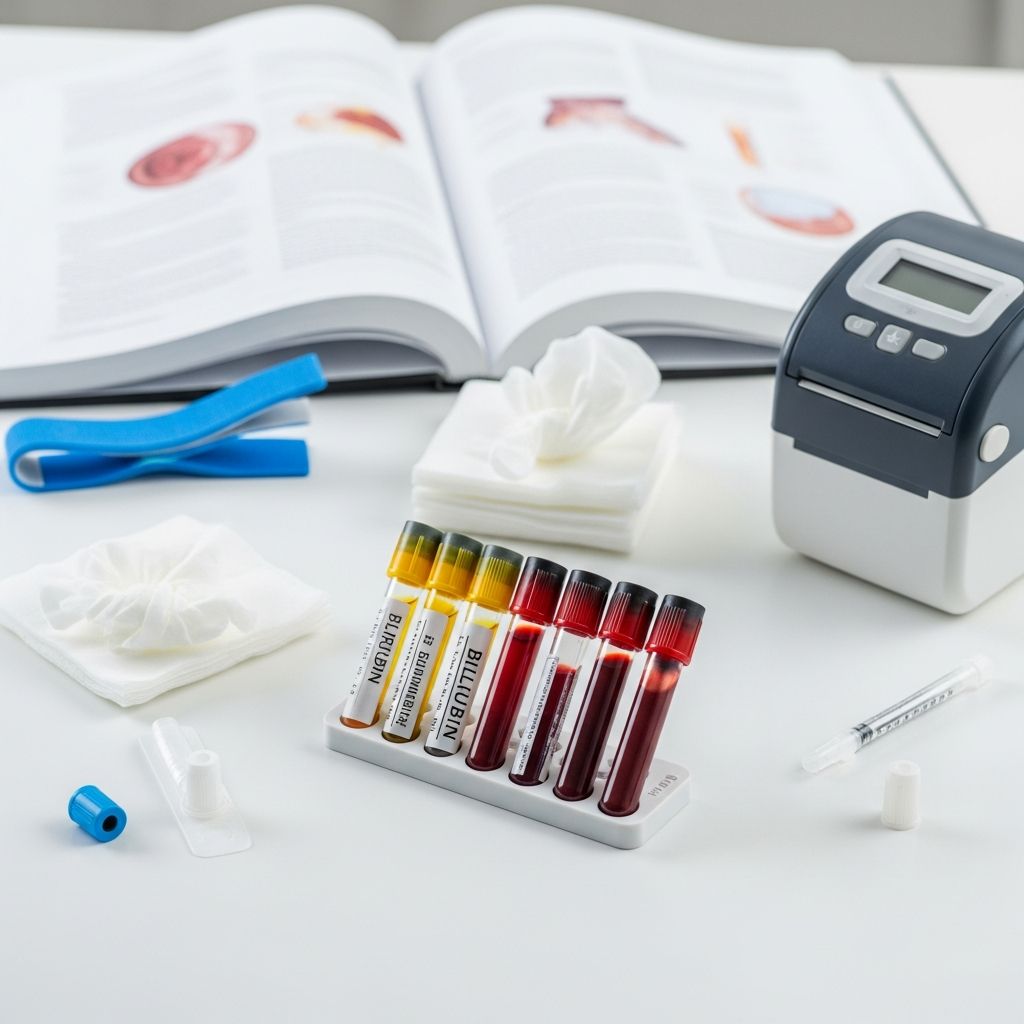
What Is a Bilirubin Test?
A bilirubin test is a blood test that measures the amount of bilirubin in your bloodstream. Bilirubin is a yellow-colored compound that forms when your body breaks down hemoglobin from red blood cells. This pigment is normally processed by your liver and excreted through bile into your digestive system. However, if your liver is damaged or your bile ducts are blocked, bilirubin can accumulate in your blood, potentially causing jaundice—a condition characterized by yellowing of the skin and eyes.
The bilirubin test is one of the most important diagnostic tools for evaluating liver function and identifying various health conditions. It measures both total bilirubin and the two main forms: unconjugated (indirect) bilirubin and conjugated (direct) bilirubin. Understanding your bilirubin levels can help your healthcare provider diagnose liver disease, hemolytic anemia, bile duct obstruction, and other serious health conditions.
Understanding Bilirubin Metabolism
Bilirubin production and metabolism involve several steps in your body. When red blood cells reach the end of their lifespan (approximately 120 days), your spleen breaks them down, releasing hemoglobin. This hemoglobin is further broken down into heme and globin, with heme eventually converted into unconjugated bilirubin. This form of bilirubin travels through your bloodstream to your liver, where it undergoes conjugation—a process that makes it water-soluble.
Once conjugated in the liver, bilirubin becomes conjugated (direct) bilirubin and is secreted into bile. Bile flows through the bile ducts into your gallbladder and small intestine, where bilirubin helps break down fats and is eventually eliminated through stool. In the intestines, bacteria convert some bilirubin into urobilinogen, which is partially reabsorbed and recycled back to the liver. This delicate balance ensures proper bilirubin metabolism and maintains normal blood levels.
When Is a Bilirubin Test Ordered?
Your healthcare provider may order a bilirubin test in several clinical situations:
Suspected Liver Disease: If you have symptoms such as jaundice, dark urine, clay-colored stools, or persistent abdominal pain, your provider may suspect hepatitis, cirrhosis, or other liver conditions and will order this test to confirm.
Bile Duct Obstruction: If imaging suggests potential blockage in your bile ducts, a bilirubin test helps determine if bile flow is impaired and bilirubin is backing up into your bloodstream.
Hemolytic Anemia Evaluation: High bilirubin levels in the context of low hemoglobin may indicate hemolytic anemia, a condition where your body destroys red blood cells faster than it produces them.
Monitoring Existing Liver Disease: If you have a known liver condition, periodic bilirubin testing helps track disease progression and treatment effectiveness.
Newborn Screening: Many healthy newborns develop jaundice due to immature liver function. Screening for elevated bilirubin is crucial because severe hyperbilirubinemia can cause bilirubin encephalopathy, a serious form of brain damage.
How the Bilirubin Test Is Performed
The bilirubin test is straightforward and minimally invasive. A healthcare professional will clean a small area of your arm, usually the inner elbow where veins are easily accessible. They insert a needle into the vein and collect a small sample of blood into a tube. The sample is then sent to a laboratory for analysis using specialized equipment.
Related Stories



In newborns, testing may be performed differently. Many hospitals use a transcutaneous bilirubinometer—a small probe placed on the baby’s skin, typically on the forehead or chest—to estimate bilirubin levels without drawing blood. If this screening test indicates elevated levels, a blood sample obtained by heel prick confirms the results with a serum bilirubin measurement.
Various analytical methods measure bilirubin in laboratory settings. The diazo transfer reaction, specifically the Jendrassik-Grof method, remains the gold standard for serum bilirubin measurement. High-performance liquid chromatography (HPLC) offers excellent accuracy by measuring individual bilirubin fractions. Enzymatic oxidation methods and direct spectrophotometry provide alternative measurement approaches suitable for different laboratory settings.
Normal Bilirubin Levels
Understanding normal bilirubin ranges is essential for interpreting test results. Normal values vary slightly between laboratories depending on their testing methods and equipment calibration.
Adults
Direct (Conjugated) Bilirubin: Normal values typically range from 0 to 0.3 milligrams per deciliter (mg/dL), with some laboratories considering values up to 0.4 mg/dL as normal.
Total Bilirubin: Normal total bilirubin levels in adults generally range from 0.1 to 1.2 mg/dL. Some laboratories may extend the upper limit to 1.9 mg/dL. It’s important to check your specific laboratory’s reference range, as variations exist.
Indirect (Unconjugated) Bilirubin: This is calculated by subtracting direct bilirubin from total bilirubin. Normal indirect bilirubin is typically less than 1.0 mg/dL.
Newborns
Newborn bilirubin levels are interpreted differently than adults because their livers are still developing. Normal ranges depend on the infant’s age in hours and whether they are at low, medium, or high risk for severe hyperbilirubinemia. Healthcare providers use specific nomograms (standardized charts) to determine whether a newborn’s bilirubin level is concerning. Generally, levels exceeding age-specific thresholds warrant treatment to prevent complications.
What Abnormal Results Mean
Elevated Bilirubin Levels (Hyperbilirubinemia)
High Direct (Conjugated) Bilirubin: Elevated conjugated bilirubin suggests your liver can conjugate bilirubin but cannot properly excrete it into bile. This pattern typically indicates cholestasis (bile flow obstruction), which may result from bile duct stones, tumors, pancreatitis, primary biliary cirrhosis, or primary sclerosing cholangitis.
High Indirect (Unconjugated) Bilirubin: Elevated unconjugated bilirubin indicates either increased bilirubin production or impaired hepatic uptake and conjugation. Causes include hemolytic anemia (excessive red blood cell destruction), Gilbert’s syndrome (benign genetic condition affecting bilirubin conjugation), Crigler-Najjar syndrome, or newborn jaundice.
High Total Bilirubin with Mixed Pattern: When both direct and indirect bilirubin are elevated, this suggests hepatocellular injury affecting both the conjugation and excretion of bilirubin. Common causes include viral hepatitis, alcoholic liver disease, drug-induced liver injury, cirrhosis, and autoimmune hepatitis.
Low Bilirubin Levels
Low bilirubin levels are uncommon but may occur with certain medications such as theophylline, phenobarbital, and high-dose vitamin C supplements. Significantly low levels are rarely clinically significant and typically don’t require treatment.
Bilirubin in Urine and Other Specimens
While serum bilirubin is the standard test, bilirubin can also be detected in urine and amniotic fluid. Only conjugated bilirubin, being water-soluble, is normally filtered by the kidneys and appears in urine. The presence of bilirubin in urine indicates conjugated hyperbilirubinemia and suggests either hepatocellular disease or cholestasis. Urine bilirubin is typically measured using reactive dipstick strips containing diazo reagents.
Concurrent measurement of urobilinogen with bilirubin provides valuable diagnostic information. Elevated urobilinogen with normal or increased bilirubin suggests hemolysis or liver disease with preserved enterohepatic circulation. In contrast, elevated bilirubin with normal urobilinogen indicates impaired bile flow into the intestines, as seen in complete bile duct obstruction.
Treatment for Elevated Bilirubin
Management of elevated bilirubin depends on identifying and treating the underlying cause. After thorough evaluation, your healthcare provider will determine whether the elevation results from hemolysis, liver disease, or bile duct obstruction.
Liver Disease Management: If your elevated bilirubin reflects liver damage, treatment focuses on the specific cause. Viral hepatitis may require antiviral medications, while alcoholic liver disease necessitates alcohol cessation. Autoimmune hepatitis typically responds to immunosuppressive therapy.
Hemolytic Anemia Treatment: If hemolytic anemia causes your elevated bilirubin, addressing the underlying cause—whether autoimmune, hereditary, or drug-induced—is essential.
Bile Duct Obstruction: Obstruction from gallstones may require surgical removal of stones. Tumors may need surgical resection or other interventions. Cholangitis (infection in blocked bile ducts) requires antibiotics and urgent drainage procedures.
Lifestyle Modifications: Regardless of the specific cause, avoiding alcohol consumption is crucial to prevent further liver damage. This recommendation applies to all patients with elevated bilirubin from any hepatic cause.
Newborn Jaundice Treatment: In newborns, phototherapy (exposure to special blue-spectrum light) converts bilirubin into a water-soluble form that can be excreted without liver processing. Severe cases may require exchange transfusion. Most newborn jaundice resolves within one to two weeks with appropriate management.
Additional Testing Considerations
A single bilirubin measurement provides limited information. Your healthcare provider typically interprets bilirubin results alongside other liver function tests, including alkaline phosphatase, aspartate aminotransferase (AST), alanine aminotransferase (ALT), and albumin levels. This comprehensive assessment helps determine the type and severity of liver dysfunction.
The pattern of results—elevated bilirubin with normal or mildly elevated enzymes, for example—can suggest specific conditions. Importantly, prothrombin time (PT) or international normalized ratio (INR) is a more sensitive and specific marker of liver synthetic dysfunction than bilirubin alone, particularly in acute liver failure.
Quality Standards for Bilirubin Testing
Bilirubin testing is subject to rigorous quality standards. According to Clinical Laboratory Improvement Amendments (CLIA) guidelines, total error in bilirubin measurement must not exceed 20%. International standards established by expert panels require a minimum variability of 24% for serum bilirubin testing. These standards ensure accuracy and reliability of results across different laboratories and testing platforms.
Frequently Asked Questions
Q: What causes elevated bilirubin?
A: Elevated bilirubin can result from three main mechanisms: increased bilirubin production (hemolysis), impaired hepatic conjugation or uptake (liver disease), or obstruction of bile flow (cholestasis). The pattern of direct versus indirect bilirubin elevation helps identify which mechanism is responsible.
Q: Is jaundice always a sign of liver disease?
A: No. While jaundice indicates hyperbilirubinemia, it can result from hemolytic anemia, bile duct obstruction, or inherited disorders like Gilbert’s syndrome, not exclusively from liver disease. Your healthcare provider must evaluate other clinical findings and test results to determine the cause.
Q: Should I be concerned about newborn jaundice?
A: Mild to moderate newborn jaundice is common and usually benign, resolving within a few weeks as the baby’s liver matures. However, severe hyperbilirubinemia can cause brain damage, so screening and appropriate treatment are important preventive measures.
Q: Can medications affect bilirubin levels?
A: Yes. Certain medications like phenobarbital, theophylline, and high-dose vitamin C may affect bilirubin levels. Additionally, drugs that cause liver injury can elevate bilirubin. Always inform your healthcare provider about all medications and supplements you take.
Q: How often should bilirubin be tested if I have liver disease?
A: Testing frequency depends on your specific condition and treatment. Acute liver disease may require frequent monitoring, while chronic conditions might be tested annually or less frequently. Your healthcare provider will determine the appropriate schedule based on your individual situation.
Q: What is Gilbert’s syndrome?
A: Gilbert’s syndrome is a benign inherited condition affecting the enzyme that conjugates bilirubin, resulting in mildly elevated unconjugated bilirubin levels. It typically causes no symptoms but may result in mild jaundice during illness or stress. It requires no treatment and has no long-term health consequences.
References
- Bilirubin Blood Test: MedlinePlus Medical Test — National Library of Medicine (NLM). 2024. https://medlineplus.gov/lab-tests/bilirubin-blood-test/
- Measurement and clinical usefulness of bilirubin in liver disease — National Center for Biotechnology Information (NCBI). 2023. https://pmc.ncbi.nlm.nih.gov/articles/PMC10197288/
- Bilirubin Test: Normal, Low & High Levels in Adults & Newborns — MedicineNet. 2024. https://www.medicinenet.com/bilirubin_and_bilirubin_blood_test/article.htm
- Jaundice in Newborns: Symptoms, Causes & Treatment — Cleveland Clinic. 2024. https://my.clevelandclinic.org/health/diseases/22263-jaundice-in-newborns
- Liver Tests: What Do They Say About Your Health? — Cleveland Clinic. 2024. https://health.clevelandclinic.org/liver-tests-what-do-they-say-about-your-health/
- Gilbert’s Syndrome: Symptoms, Causes, Tests & Treatment — Cleveland Clinic. 2024. https://my.clevelandclinic.org/health/diseases/17661-gilberts-syndrome
Similar Articles








Read full bio of Sneha Tete