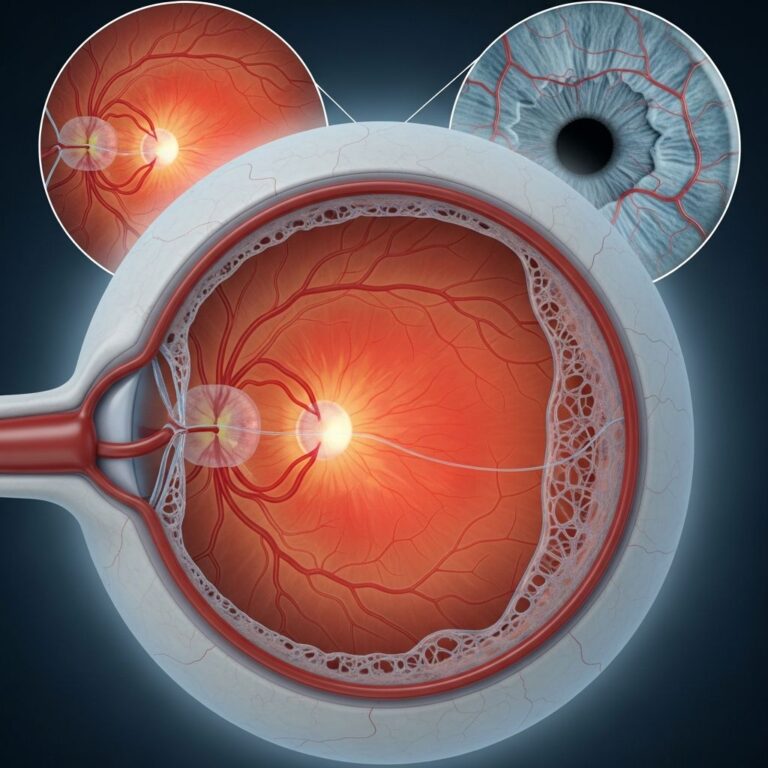
Billable Eye Emergencies: Key Visits Explained
Discover which urgent eye conditions qualify for emergency billing and how to recognize true ophthalmic crises from routine issues.

Ophthalmic emergencies represent a critical subset of medical visits where timely intervention can prevent irreversible vision loss. Understanding which conditions qualify as billable emergencies helps clinicians prioritize care, optimize triage, and ensure proper reimbursement. This guide delves into prevalent scenarios encountered in emergency departments, drawing from clinical patterns and triage data to clarify what demands immediate attention versus routine follow-up.
Defining Urgency in Ophthalmic Care
In eye care, emergencies are categorized by their potential to cause permanent damage if not addressed promptly. True emergencies, such as open globe injuries or central retinal artery occlusion, require intervention within hours to salvage vision. Semi-emergencies, like corneal abrasions or retinal detachments, need same-day treatment to avoid complications, while non-emergencies—such as conjunctivitis or minor subconjunctival hemorrhages—can be managed outpatient.
Studies show that about 30% of eye-related ED visits are non-urgent, often involving redness or mild pain that mimics serious issues. This overuse strains resources, highlighting the need for better public education on symptoms warranting true urgency.
Prevalent Complaints Driving Emergency Visits
The most frequent reasons patients seek ophthalmic emergency care include redness, pain, trauma, tearing, and vision changes, accounting for over 90% of cases. Men and unilateral symptoms correlate strongly with high-priority triage, as do complaints like photophobia or visual field defects.
- Red eye: Often non-billable if isolated, but escalates with pain or vision loss.
- Eye pain: Billable when severe and linked to glaucoma or infection.
- Ocular trauma: Frequently billable, especially open injuries.
- Tearing or blurred vision: Urgent if sudden onset suggests retinal issues.
Trauma: A Leading Billable Emergency
Ocular trauma constitutes a significant portion of billable visits, particularly in industrial or agricultural settings where risks are high. Closed traumas like blunt injuries may be semi-urgent, but open globe ruptures demand immediate surgical evaluation to prevent infection or prolapse.
Key indicators for billing Level 4-5 E/M codes include penetration, deformity, or associated vision loss. Triage nurses often prioritize eyelid or conjunctival traumas higher than corneal ones, though physicians emphasize vitreoretinal risks.
| Symptom | Billable Level | Typical Management |
|---|---|---|
| Blunt force | Level 3-4 | Imaging, observation |
| Open globe | Level 5 | Surgery, shield protection |
| Chemical burn | Level 4-5 | Irrigation, pH check |
For chemical exposures, immediate flushing is crucial, followed by coding for foreign body removal if debris persists.
Acute Angle-Closure Glaucoma: Painful Vision Threat
Severe eye pain with nausea, halos around lights, and cloudy cornea signals acute glaucoma, a billable emergency due to rapid pressure spikes damaging the optic nerve. This condition justifies high-level billing when intraocular pressure exceeds 30 mmHg and vision is impaired.
Patients often present unilaterally with mid-dilated pupils. Treatment involves laser iridotomy post-medication, with documentation of tonometry and gonioscopy supporting reimbursement.
Related Stories



Retinal Emergencies: Silent Vision Stealers
Sudden painless vision loss from central retinal artery occlusion (CRAO) or detachment is highly billable, as delays beyond 90-240 minutes for CRAO limit recovery. Symptoms like a ‘curtain’ effect or floaters/shadows trigger urgent fundus exam and possible thrombolysis referral.
Flashes and new floaters suggest retinal tears, billable under urgent retina consults. Visual field testing confirms defects, essential for coding specificity.
Triage Disparities and Billing Optimization
Nurses tend to over-prioritize superficial issues like conjunctivitis (74% of non-emergencies), while underestimating corneal or uveitic threats compared to doctors. Accurate documentation bridges this gap, ensuring billable status via detailed history, exam, and MDM complexity.
For reimbursement, use ICD-10 codes like H40.20 for glaucoma or S05.00 for globe injuries, paired with CPT 99284-99285 for high-acuity visits.
Non-Billable Mimics to Divert
Not all red or painful eyes merit ED billing. Conjunctivitis, styes, and subconjunctival bleeds (common in 4 million U.S. visits) are routine, reducible via education. Distinguish by absence of vision change or severe pain.
- Allergic conjunctivitis: Itching, bilateral.
- Subconjunctival hemorrhage: Painless red patch.
- Minor foreign body: Self-resolves post-irrigation.
When Neurological Signs Demand Action
Double vision, unequal pupils, or vision loss with weakness signals stroke or aneurysm, billable as multisystem emergencies requiring ER coordination. Call 911 for these life-threatening overlaps.
Practical Steps for Clinicians
Streamline billing by:
- Document chief complaint precisely.
- Perform targeted exams (e.g., slit-lamp for trauma).
- Assess acuity via Snellen and confrontation fields.
- Code based on time, risk, and data reviewed.
In specialized centers, experienced triage cuts non-urgent load, improving billable efficiency.
Patient Education for Better Outcomes
Empower patients to self-triage: Seek immediate care for sudden vision loss, trauma, or severe pain; use drops for mild irritation. This reduces inappropriate visits by 30-44%.
FAQs on Billable Eye Emergencies
What makes an eye visit billable as an emergency?
High complexity involving vision-threatening risks, documented via detailed E/M criteria like Level 4-5.
Is red eye always urgent?
No, isolated redness is often non-billable; pair with pain or vision loss for urgency.
How to handle after-hours trauma?
Stabilize with shield, irrigate chemicals, and refer to on-call ophthalmology.
Can floaters be billable?Sudden showers with curtains yes, indicating detachment; isolated ones no.
What’s the top trauma billing code?S05 series for penetrating injuries, with 99285 for critical care.
Emerging Trends in Eye ED Utilization
With rising industrial activity, trauma visits surge, necessitating robust protocols. AI triage tools may soon refine nurse-physician alignment, enhancing billable accuracy.
References
- Characteristics of eye-related emergency visits and triage … – PMC — PMC. 2023. https://pmc.ncbi.nlm.nih.gov/articles/PMC10061012/
- When to Seek Emergency Eye Care: A Complete Guide — ReFocus Eye Health. 2023. https://hatboro.refocuseyedoctors.com/article/when-to-seek-emergency-eye-care-a-complete-guide/
- What Qualifies as an Eye Emergency? Examples and When to Seek … — Local Eyes Optometry. 2023. https://www.localeyesoptometry.com/blog/what-qualifies-as-an-eye-emergency-examples-and-when-to-seek-immediate-care.html
- Ocular Emergencies — American Academy of Family Physicians (AAFP). 2007-09-15. https://www.aafp.org/pubs/afp/issues/2007/0915/p829.html
- Stamford Eye Exam & Eye Emergencies — Greenwich Ophthalmology. 2023. https://www.greenwicheye.com/conditions/eye-emergencies/
Similar Articles








Read full bio of Sneha Tete