Billing Botox Waste Across Multiple Patients
Master the art of recovering costs from Botox wastage when treating several patients from one vial for optimal practice revenue.
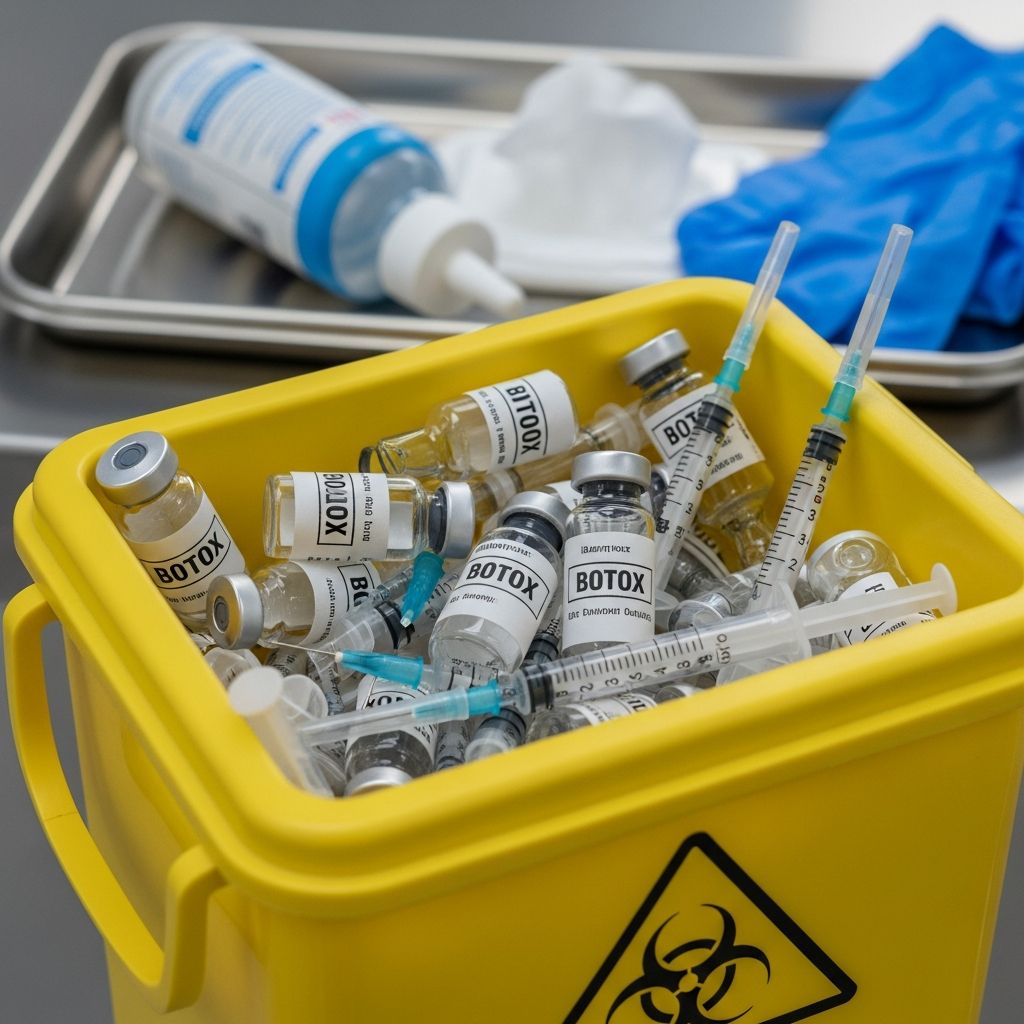
Healthcare providers administering Botox injections often face the challenge of managing drug wastage, particularly when treating multiple patients from a single vial. Proper billing practices allow practices to recoup costs for unused portions, ensuring financial sustainability while complying with payer guidelines. This article explores effective strategies for billing Botox waste, focusing on scenarios involving shared vials.
Understanding Botox Vial Usage and Wastage Basics
Botox, or onabotulinumtoxinA, comes in single-use vials typically containing 100 units. Once reconstituted, it must be used within a strict four-hour window to maintain efficacy and safety. This time constraint frequently results in wastage if the entire vial cannot be administered.
When scheduling multiple patients, providers can optimize vial usage by aligning appointments within the same session. For instance, a 100-unit vial might treat two or three patients, with any remainder discarded. Failing to bill for this discarded amount leads to revenue loss, as Botox is a high-cost medication.
- Vial sizes: Commonly 50, 100, or 200 units, billed per unit via HCPCS code J0585.
- Reconstitution rule: Must be discarded after four hours post-mixing.
- Economic impact: Unused units represent direct financial loss without proper billing.
Medicare Guidelines for Reporting Drug Waste
Medicare permits reimbursement for discarded drugs from single-use vials through specific billing protocols. Providers must document both administered and wasted amounts precisely in the patient’s record.
The key mechanism is the JW modifier, appended to a separate claim line for the discarded units. This tracks waste transparently without inflating the administered dose.
| Scenario | Administered Units | Wasted Units | Billing Line 1 | Billing Line 2 |
|---|---|---|---|---|
| Single Patient, 100-unit vial | 80 | 20 | J0585 x 80 | J0585-JW x 20 |
| Two Patients, 100-unit vial | 40 + 50 | 10 | Patient 1: J0585 x 40 Patient 2: J0585 x 50 + 10 waste | N/A (waste on last patient) |
For multi-patient scenarios, waste is typically assigned to the final patient’s claim. This approach aligns with Centers for Medicare & Medicaid Services (CMS) instructions, ensuring the total units match the vial contents.
Documentation Requirements for Compliance
Thorough documentation is non-negotiable for successful reimbursement. Each patient’s record must note the total vial units prepared, units injected, time of reconstitution, and discard details including reason and timestamp.
Providers should record:
- Drug name, lot number, and expiration.
- Exact units drawn and administered per site.
- Remaining units and discard time.
- Clinical justification for dosage.
Inadequate records lead to denials. For example, if a procedure halts midway due to patient intolerance, document the prepped amount per protocol but bill only verifiable waste.
Payer Variations in Waste Billing Policies
While Medicare standardizes JW usage, commercial payers differ. Some require including waste in the total units without a separate line, others mirror Medicare.
UnitedHealthcare, for instance, allows waste on the last patient’s claim when sharing vials among same-day patients. Always verify policies pre-treatment to avoid adjustments.
Related Stories



- Medicare: Separate JW line mandatory.
- Some commercial: Total units including waste on one line.
- Best practice: Contact payer for Botox-specific instructions.
Strategic Scheduling to Minimize Waste
Efficient scheduling reduces waste frequency. Cluster Botox procedures within one to four hours, matching cumulative doses to vial sizes.
Example: Schedule three patients needing 30 units each. Use one 100-unit vial, bill 30 units per first two claims, and 30 administered + 10 waste on the third with JW.
This not only cuts costs but demonstrates medical necessity through planned efficiency.
Common Billing Errors and Prevention
Avoid pitfalls like omitting the JW modifier or failing to round units correctly. J0585 bills per unit, so precision matters.
- No waste documentation: Leads to zero reimbursement for discards.
- Incorrect modifier placement: Use JW only on waste line.
- Overbilling prepped amounts: Bill actual vial contents, not speculative prep.
- Ignoring time limits: Discard post-four hours invalidates claims.
Implement checklists: Verify eligibility, obtain prior auth, confirm coding, and audit charts pre-submission.
Medical Necessity and Prior Authorization
Botox requires proven necessity, especially for non-cosmetic uses like migraines or spasticity. Support with history, failed alternatives, and ICD-10 codes.
Prior authorization streamlines approvals. Submit vial size, dosage rationale, and expected waste if applicable.
Case Studies: Real-World Applications
Scenario 1: Ophthalmology Practice
An eye clinic treats two patients for blepharospasm using a 100-unit vial: 45 units first patient, 45 second, 10 wasted. Bill first: J0585 x45; second: J0585 x45 + J0585-JW x10. Full recovery.
Scenario 2: Migraine Protocol Interrupt
Patient scheduled for 155 units (two 100-unit vials). Only 50 administered due to intolerance. Bill 50 used + 150 waste with JW, documented per protocol.
Advanced Tips for Revenue Optimization
Leverage eligibility verification tools like Availity. Outsource coding for complex cases. Track denial trends to refine processes.
Stay updated via CMS articles, as policies evolve (e.g., JW mandate since 2017).
Frequently Asked Questions (FAQs)
What is the JW modifier used for?
The JW modifier indicates discarded drug amounts from single-use vials on Medicare claims.
Can waste be billed if no other patients share the vial?
Yes, document and bill with JW on the patient’s claim.
How to handle payer denials for waste?
Appeal with full documentation showing vial size, usage, and discard reason.
Is Botox waste billable for cosmetic procedures?
Typically no, as most payers cover only medical necessity.
What if waste exceeds 10% of vial?
Still billable if documented; efficiency is encouraged but not required.
Mastering Botox waste billing enhances practice profitability. Implement these protocols to ensure compliance and full reimbursements.
References
- Stop Drug Waste From Shrinking Your Bottom Line — AAPC. 2023-05-15. https://www.aapc.com/codes/coding-newsletters/my-general-surgery-coding-alert/stop-drug-waste-from-shrinking-your-bottom-line-article
- 5 Tips for Accurate Botox Medical Billing — PracticeForces. 2024-02-10. https://practiceforces.com/blog/5-tips-for-accurate-botox-medical-billing/
- Billing for Botox waste when patient requested procedure to be stopped — AAPC Discuss. 2022-11-03. https://www.aapc.com/discuss/threads/billing-for-botox-waste-when-patient-requested-procedure-to-be-stopped.146461/
- Practice Management: Botulinum Toxin Billing & Coding Update — Practical Neurology. 2023-08-20. https://practicalneurology.com/diseases-diagnoses/headache-pain/practice-management-botulinum-toxin-billing-coding-update/31904/
- Coding — Ophthalmic Professional. 2021-05-01. https://www.ophthalmicprofessional.com/issues/2021/mayjune/coding/
- Drug Waste A Big Money Issue & How Providers Can Recoup The Cost — Florida Healthcare Law Firm. 2023-11-12. https://floridahealthcarelawfirm.com/drug-waste-a-big-money-issue-how-providers-can-recoup-the-cost-of-unused-drugs-on-medicare-part-b-claims/
- Discarded Drugs and Biologicals Policy, Professional — UnitedHealthcare. 2024-01-15. https://www.uhcprovider.com/content/dam/provider/docs/public/policies/medadv-reimbursement/MEDADV-Discarded-Drugs-and-Biologicals-Policy.pdf
- Billing and Coding: Botulinum Toxin Injections (A57185) — CMS. 2025-06-01. https://www.cms.gov/medicare-coverage-database/view/article.aspx?articleId=57185
- Billing and Coding: Botulinum Toxins (A57715) — CMS. 2025-03-20. https://www.cms.gov/medicare-coverage-database/view/article.aspx?articleId=57715
Similar Articles








Read full bio of Sneha Tete