Bindii Dermatitis: Causes, Symptoms, and Prevention
Understanding bindii dermatitis: A seasonal skin condition affecting active children and prevention strategies.
What is Bindii Dermatitis?
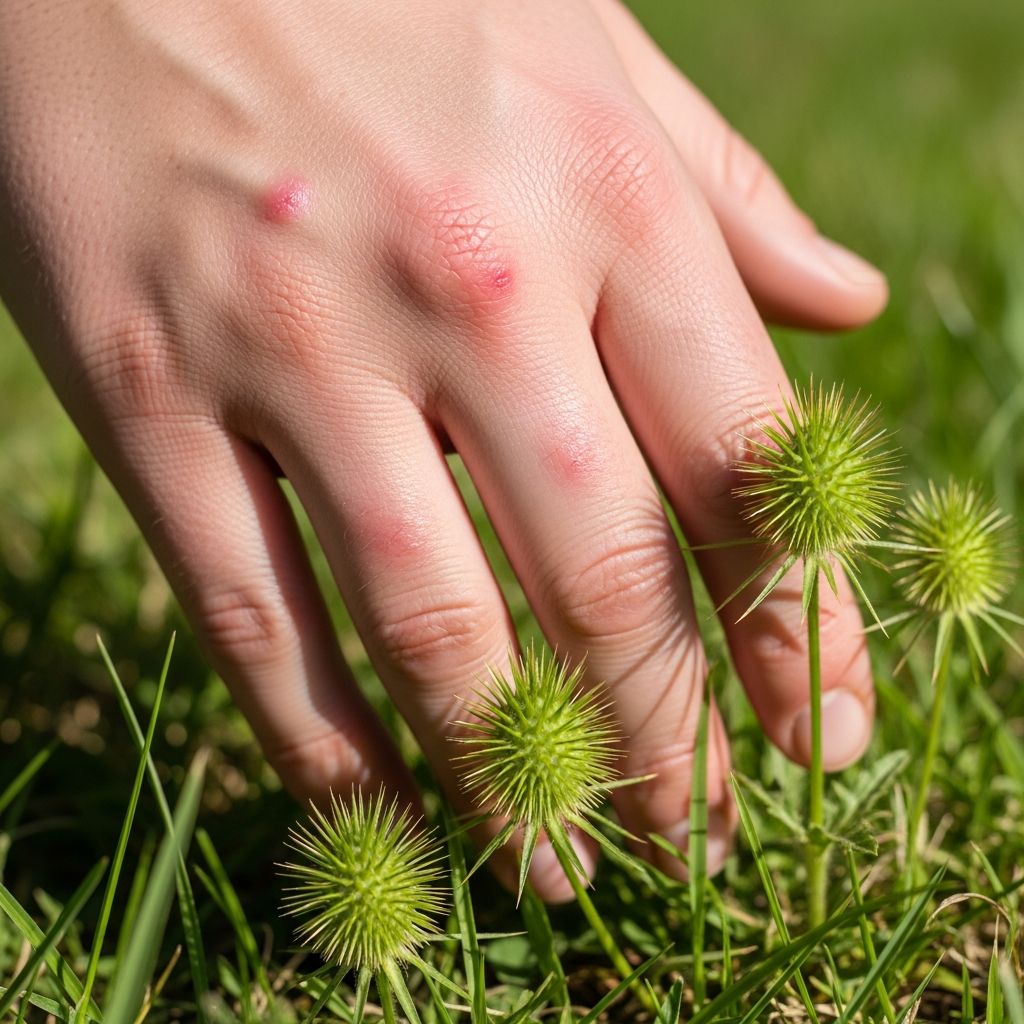
Bindii dermatitis is a form of irritant contact dermatitis resulting from injury by the seed of the bindii weed. This distinctive skin condition occurs when the sharp spine of the bindii seed penetrates the skin, causing inflammation and the development of characteristic red papules. The condition is particularly common in Australia and has become increasingly recognized in other regions where bindii weeds have established themselves.
Bindii is the Australian name for a prickly annual weed that grows low to the ground and is widely established in lawns and flower beds. The weed is known by several alternative names, including bindi, bindyi, Jo-Jo, and bindi-eye. In New Zealand, it is referred to as Onehunga weed, prickle weed, or burrweed. The bindii weed originated in South America and has since spread to Australia, New Zealand, Portugal, Spain, and the southern United States.
The scientific names for bindii include Soliva pterosperma and Soliva sessilis, with these species being particularly common. Unlike many other plant-related dermatitis conditions, bindii dermatitis involves mechanical injury rather than purely allergic reactions, though immunological components have been identified in the condition’s pathogenesis.
Who is Affected by Bindii Dermatitis?
Bindii dermatitis can affect anyone who comes into contact with the bindii weed. However, the condition shows a distinct demographic pattern of occurrence. It most often affects boys aged 5–18 years, possibly because of their active lifestyles involving outdoor sports and recreational activities. This demographic predominance suggests that exposure risk is directly related to increased outdoor activity and skin contact with contaminated surfaces.
The risk of developing bindii dermatitis may be increased if there is a family history of the condition. This suggests possible genetic or familial factors that may influence susceptibility to the inflammatory response triggered by bindii seed penetration. Environmental and behavioral factors, such as barefoot outdoor play and participation in sports on grass surfaces, also contribute significantly to the likelihood of exposure.
Seasonal Pattern and Epidemiology
Bindii dermatitis exhibits a marked seasonal pattern of occurrence. The condition most often occurs in late spring and early summer and is less frequent during winter when the bindii weed becomes dormant. This seasonal distribution reflects the growth cycle of the bindii plant, which is an annual weed that thrives during warmer months.
The peak incidence during late spring and early summer coincides with increased outdoor activities among children and higher exposure to contaminated lawns and garden areas. During winter months, when the weed dies back, new cases become less common, though existing lesions may still be resolving. Understanding this seasonal pattern helps clinicians maintain appropriate clinical suspicion during the risk season and helps patients and families implement preventive measures at the appropriate times of year.
Clinical Features and Presentation
The clinical presentation of bindii dermatitis is distinctive and relatively characteristic, making it recognizable to experienced clinicians. Understanding the typical progression and appearance of lesions is important for accurate diagnosis.
Related Stories



Mechanism of Injury
The spine of the bindii seed penetrates the skin causing a sharp prick. This mechanical injury is the initiating event in the development of the condition. Over the next few days following the initial injury, the skin around the spine becomes inflamed, forming discrete red papules with a central puncture site. Some patients may develop an immediate weal reaction (raised bump) when pricked by the bindii weed; this can resolve without progressing to dermatitis.
Characteristics of Lesions
The papules that develop have several characteristic features:
- Papules occur most frequently on the hands, feet, elbows, and knees; they are rare elsewhere on the body.
- Lesions are characterized as discrete erythematous (red) papules with central puncta (puncture marks).
- Papules can develop scaly surfaces or occasionally become pustular in appearance.
- They can cause itching, tenderness, or stinging sensations.
- Individual lesions can persist for several months.
- Bindii dermatitis may recur; tolerance does not seem to develop with repeated exposure.
Severity Factors
The severity of the dermatitis depends on multiple factors:
- The number and species of bindii seeds that penetrated the skin
- The thickness of the injured skin at the site of contact
- Whether the affected skin is already damaged (for example, by atopic eczema)
- High or low ambient temperature
- High or low humidity levels
These factors explain why clinical presentations can vary significantly between individuals and even between different episodes in the same individual.
Diagnosis of Bindii Dermatitis
Bindii dermatitis is a clinical diagnosis made through taking a thorough medical history and examination of the patient. There are no specific laboratory tests required for diagnosis. The key to accurate diagnosis lies in recognizing the characteristic clinical presentation in combination with a history of exposure to bindii weeds.
When evaluating a patient suspected of having bindii dermatitis, clinicians should:
- Obtain a detailed history of outdoor activities and geographic location
- Ask specifically about walking barefoot on grass or engaging in outdoor sports
- Examine the distribution of lesions, noting the characteristic involvement of palms, soles, knees, and elbows
- Look for visible bindii seeds or ‘prickles’ embedded in the skin
- Assess the temporal relationship between exposure and symptom onset
Histological Findings
When skin biopsies are performed, the histology of bindii dermatitis shows characteristic features. The microscopic examination reveals spongiosis (intercellular edema in the epidermis), mixed dermal infiltrate (inflammatory cell infiltration in the dermis), and foreign-body giant cells. There may be marked edema of the papillary dermis and draining sinuses. Evidence of plant material may also be present, further confirming the diagnosis.
Differential Diagnosis
Bindii dermatitis can easily be misdiagnosed by dermatologists unfamiliar with the condition. The differential diagnosis should include other forms of contact dermatitis, folliculitis, insect bite reactions, and other plant-related dermatitis conditions. The distinctive distribution pattern and the presence of visible puncture marks help differentiate bindii dermatitis from these other conditions.
Treatment Options
Visible bindii seeds or ‘prickles’ should be manually removed. This is the primary intervention and should be performed as soon as the condition is recognized. Using sterile instruments or needles, healthcare providers can carefully extract embedded seeds to prevent ongoing irritation and potential infection.
Bindii dermatitis does not always respond to topical or systemic corticosteroids. However, corticosteroids may provide symptomatic relief in some cases and can be considered as part of the treatment approach. Luckily, the condition is self-limited, meaning it will eventually resolve on its own without specific treatment beyond supportive care.
Additional supportive measures that may help manage symptoms include:
- Topical anti-inflammatory agents or emollients to soothe irritated skin
- Antihistamines if pruritus (itching) is significant
- Keeping the affected areas clean and protected from further irritation
- Avoiding scratching or manipulation of the lesions
- Appropriate wound care if the lesions become secondarily infected
Since the condition is self-limiting, treatment is largely supportive and focused on managing symptoms and preventing complications rather than achieving rapid resolution.
Prevention Strategies
Bindii dermatitis can be prevented by avoiding contact with bindii weed. Understanding and implementing effective prevention strategies is particularly important for families with children at high risk of exposure.
Personal Protection Measures
- Cover your skin during outdoor activities, particularly your hands, feet, elbows, and knees.
- Wear appropriate footwear when outdoors on grass or in areas where bindii may be present
- Use protective clothing such as long pants and closed-toe shoes during late spring and early summer when bindii is most prevalent
- Encourage children to avoid walking barefoot in unfamiliar outdoor areas
Environmental Control
- Remove bindii patches from grassy areas, either manually or by applying a suitable herbicide in the spring.
- Discourage reappearance of weeds by aerating the soil (making small holes in the grass surface to allow air, water, and nutrients to penetrate the grass roots).
- Regular lawn maintenance to reduce bindii establishment in residential areas
- Community awareness programs in endemic areas to educate about the presence of bindii in local environments
Behavioral Prevention
- Avoid playing barefoot on grass during peak season months
- Inspect outdoor recreation areas for the presence of bindii before activities
- Educate children about the risks and encourage appropriate footwear
- Plan outdoor activities in areas that have been cleared of bindii weeds
Prognosis and Long-Term Outcomes
The prognosis for bindii dermatitis is generally favorable. As noted, the condition is self-limiting and will eventually resolve without specific treatment. However, individual lesions can persist for several months, and patients should be counseled about the expected duration of symptoms.
One important consideration is that bindii dermatitis may recur with repeated exposure to the weed. Tolerance does not seem to develop with repeated exposures, meaning that individuals who have had the condition once may experience it again if they are re-exposed to bindii seeds. This emphasizes the ongoing importance of prevention strategies.
Geographic Considerations
While bindii dermatitis is most common and well-documented in Australia, the geographic range of the condition has expanded significantly. The weed’s presence in New Zealand, Portugal, Spain, and the southern United States means that bindii dermatitis can occur in these regions as well. Healthcare providers in these areas should maintain clinical awareness of the condition, particularly during the appropriate seasonal risk periods.
In areas where bindii is not yet established, quarantine measures and weed management programs may help prevent the introduction and spread of this problematic plant species.
Frequently Asked Questions
Q: Can adults get bindii dermatitis?
A: Yes, bindii dermatitis can affect anyone who comes into contact with bindii weed. However, it most commonly affects children aged 5–18 years, likely due to their more active outdoor lifestyles and greater likelihood of barefoot exposure to grass and contaminated areas.
Q: Is bindii dermatitis contagious?
A: No, bindii dermatitis is not contagious. It is a mechanical injury reaction to contact with bindii seeds and cannot be spread from person to person through skin contact or other means.
Q: How long does bindii dermatitis last?
A: Individual lesions can persist for several months. However, the condition is self-limiting, meaning it will eventually resolve on its own. The timeline varies depending on factors such as the severity of initial injury and individual healing rates.
Q: Will antibiotics help treat bindii dermatitis?
A: Antibiotics are not typically indicated for uncomplicated bindii dermatitis unless secondary bacterial infection develops. The condition is a mechanical injury-related inflammation rather than a bacterial infection. If pustules develop or signs of infection appear, antibiotics may be considered.
Q: Can I prevent bindii dermatitis by using insect repellent?
A: Insect repellents are not effective for preventing bindii dermatitis because the condition is caused by mechanical injury from weed seeds, not insect bites. Physical barriers such as closed-toe shoes and protective clothing are more effective prevention strategies.
Q: Is bindii dermatitis worse in certain weather conditions?
A: The severity of bindii dermatitis can be influenced by both high and low ambient temperatures as well as humidity levels. However, the condition is most common during late spring and early summer when the bindii plant is actively growing and producing seeds.
References
- Bindii (Jo Jo) dermatitis (Soliva pterosperma [Compositae]) — Commens C, McGeogh A, Bartlett B, Kossard S. Journal of the American Academy of Dermatology. 1984-05. https://pubmed.ncbi.nlm.nih.gov/6373854/
- Bindii dermatitis — DermNet New Zealand. 2024. https://dermnetnz.org/topics/bindii-dermatitis
- Dermatitis Bindii — Doctor Hoogstra Medical Centers. 2024. https://doctorhoogstra.com/en/wiki/dermatitis-bindii/
- Bindii dermatitis — PubMed. 1999-07. https://pubmed.ncbi.nlm.nih.gov/9431724/
Similar Articles








Read full bio of Sneha Tete