Biological Agents For Psoriasis: 11 Key Biologics & Safety
Advanced targeted therapies revolutionizing treatment for moderate to severe psoriasis patients worldwide.
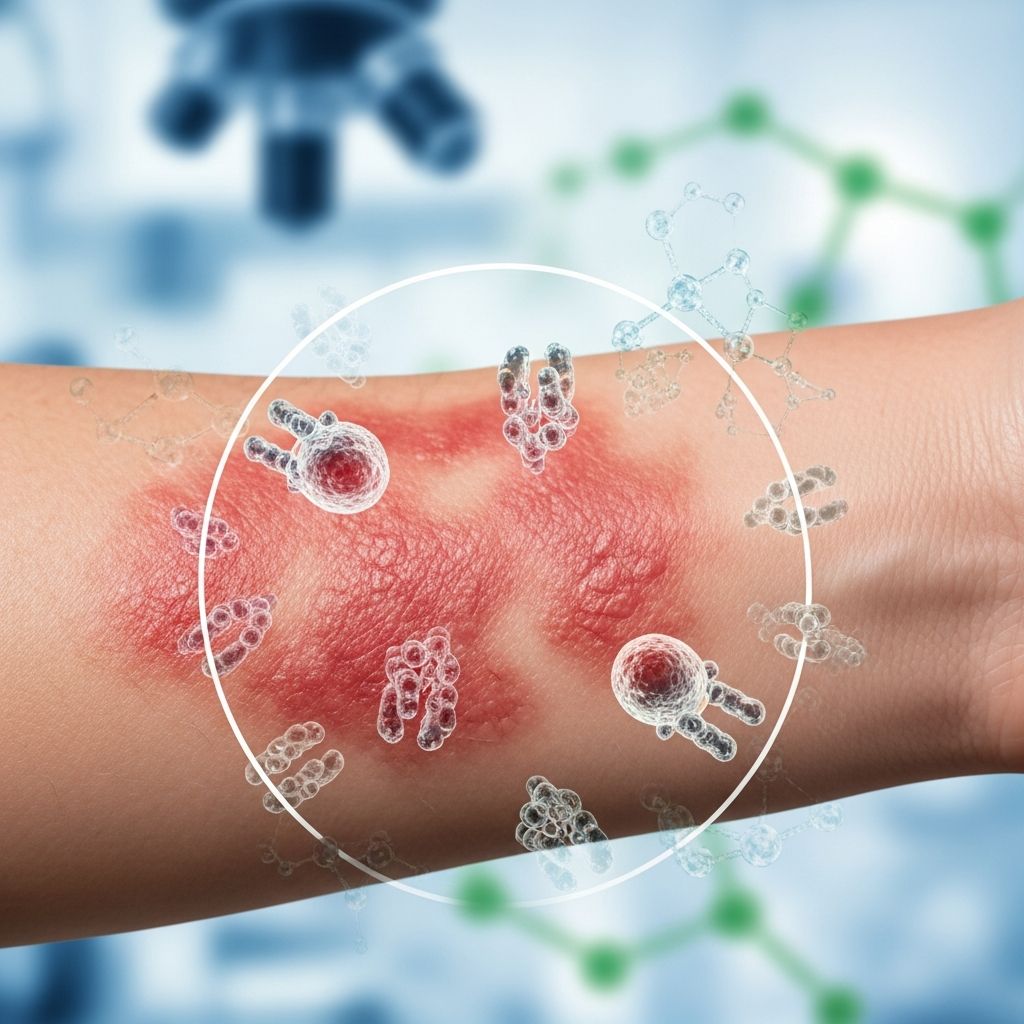
Psoriasis is a chronic autoimmune skin disorder affecting millions worldwide, characterized by inflamed, scaly plaques due to overactive T-cells and cytokine release. Biological agents, or biologics, represent a major advancement in treatment, selectively targeting specific immune pathways responsible for psoriasis pathogenesis rather than broadly suppressing the immune system.
What are biological agents?
Biological agents are laboratory-produced proteins derived from living organisms, including monoclonal antibodies and fusion proteins. Unlike traditional systemic immunosuppressants like methotrexate or ciclosporin, biologics precisely block key cytokines such as TNF-α, IL-17, IL-23, or their receptors involved in psoriatic inflammation. This targeted approach yields rapid skin clearance, often achieving PASI 90 (90% improvement in Psoriasis Area and Severity Index) within weeks, while minimizing systemic side effects.
Approved for moderate-to-severe plaque psoriasis unresponsive to conventional therapies, biologics are administered via subcutaneous injection (most) or intravenous infusion. They have transformed patient outcomes, with many achieving clear or almost clear skin and improved quality of life.
Who is biological therapy used for?
Biologics are indicated for adults and children (depending on the agent) with moderate-to-severe chronic plaque psoriasis, psoriatic arthritis, or other severe forms (e.g., erythrodermic, pustular) failing topical therapies, phototherapy, or non-biologic systemic agents. Patient selection considers disease severity (PASI >10 or BSA >10%), quality-of-life impact (DLQI >10), comorbidities, and infection risk. They are not first-line for mild disease.
- Candidates: Rapidly progressive disease, high symptom burden, joint involvement.
- Contraindications: Active infections, untreated TB, live vaccines, severe heart failure (for TNF inhibitors).
How do biological agents work?
Psoriasis arises from dysregulated immune responses where T-helper cells (Th1/Th17) release pro-inflammatory cytokines, accelerating keratinocyte proliferation and angiogenesis. Biologics interrupt this cascade at specific points:
- TNF-α inhibitors: Block TNF-α, a master cytokine driving inflammation (e.g., infliximab, adalimumab, etanercept).
- IL-12/23 inhibitors: Target the p40 subunit shared by IL-12 and IL-23 (e.g., ustekinumab).
- IL-23 inhibitors: Selectively bind IL-23 p19 subunit (e.g., guselkumab, risankizumab).
- IL-17 inhibitors: Neutralize IL-17A (secukinumab, ixekizumab) or dual IL-17A/F (bimekizumab).
- IL-17 receptor inhibitors: Block IL-17 receptor (brodalumab).
This precision reduces plaque formation, itching, and scaling effectively.
What biological agents are used for psoriasis?
Several biologics are FDA- and EMA-approved for psoriasis. Below is a comprehensive table of key agents, mechanisms, dosing, and approvals:
| Agent (Brand) | Class/Target | Administration | Approval Notes |
|---|---|---|---|
| Infliximab (Remicade®) | TNF-α inhibitor | IV infusion (induction then maintenance) | First TNF biologic; rapid action but infusion reactions possible. |
| Etanercept (Enbrel®) | TNF-α inhibitor | SC weekly | Fusion protein; self-injectable. |
| Adalimumab (Humira®) + biosimilars (Amgevita®, etc.) | TNF-α inhibitor | SC every 2 weeks | Biosimilars reduce costs; effective for skin/joints. |
| Ustekinumab (Stelara®) | IL-12/23 p40 inhibitor | SC (weight-based induction, then q12w) | Broad efficacy; also for Crohn’s. |
| Guselkumab (Tremfya®) | IL-23 p19 inhibitor | SC q8w | High PASI responses; long-term data strong. |
| Tildrakizumab (Ilumya®) | IL-23 p19 inhibitor | SC q12w | Convenient dosing. |
| Risankizumab (Skyrizi®) | IL-23 p19 inhibitor | SC q12w | Superior long-term clearance. |
| Secukinumab (Cosentyx®) | IL-17A inhibitor | SC monthly after loading | Fast onset; effective for scalp/entheses. |
| Ixekizumab (Taltz®) | IL-17A inhibitor | SC q4w after loading | Excellent for genitals/scalp. |
| Brodalumab (Siliq®) | IL-17RA inhibitor | SC weekly then q2w | High efficacy; boxed warning for suicidality. |
| Bimekizumab (Bimzelx®) | IL-17A/F inhibitor | SC q8w after loading | Dual inhibition; newest option. |
Related Stories



Combination with topicals (e.g., corticosteroids, vitamin D analogs) or methotrexate enhances efficacy and prevents secondary failure.
What is the evidence for biological agents?
Phase III trials demonstrate biologics achieve PASI 75 in 70-90% of patients by week 12, superior to non-biologics. IL-17/IL-23 inhibitors often hit PASI 90/100 faster. Long-term extensions show sustained responses up to 5 years with low discontinuation. Real-world data confirm effectiveness, though 20-30% experience secondary failure, responsive to switching classes.
Are biological agents safe?
Biologics have favorable safety profiles due to specificity, but risks include:
- Infections: Upper respiratory (common); screen for TB/hepatitis.
- Injection-site reactions: Mild, transient.
- IBD risk: Paradoxical flares with IL-17 inhibitors (monitor).
- Candida: Higher with IL-17 inhibitors.
- Malignancy: No increased risk in trials; monitor.
Older patients and comorbidities elevate risks. No live vaccines during therapy.
What monitoring is required?
Pre-treatment: TB test (Quantiferon/chest X-ray), hep B/C, HIV, vaccines. Ongoing: CBC, LFTs q3-6 months; infection vigilance.
Secondary failure
Loss of response (10-30%) due to anti-drug antibodies. Switch to different class (e.g., TNF to IL-17) restores efficacy in 60-80%.
Guidelines for biologic use
International guidelines (AAD, EADV) recommend biologics post-conventional failure. First-line for severe disease.
Frequently Asked Questions
Who cannot use biologics?
Patients with active infections, untreated TB, NYHA III/IV heart failure (TNFs), or pregnancy (category B/C).
Do biologics cure psoriasis?
No, they control symptoms; relapse occurs upon discontinuation.
Are biosimilars as good?
Yes, equivalent efficacy/safety to originators like Humira biosimilars.
Can biologics treat psoriatic arthritis?
Most (e.g., secukinumab, ixekizumab, TNFs) are dual-approved.
How to choose a biologic?
Based on comorbidities (avoid IL-17 in IBD), preference (dosing), cost/insurance.
References
- Biological Agents for Psoriasis – Dr. Breslavets | CMSD — Centre for Medical and Surgical Dermatology. 2023. https://cmsderm.ca/biological-agents-for-psoriasis/
- Guidelines for the management of psoriasis – DermNet — DermNet NZ. 2024-01-15. https://dermnetnz.org/topics/guidelines-for-the-treatment-of-psoriasis
- Biologic Treatments of Psoriasis: An Update for the Clinician – PMC — National Library of Medicine. 2021-02-18. https://pmc.ncbi.nlm.nih.gov/articles/PMC7896737/
- Psoriasis treatment – DermNet — DermNet NZ. 2024. https://dermnetnz.org/topics/treatment-of-psoriasis
- Biological agents for psoriasis – DermNet — DermNet NZ. 2024. https://dermnetnz.org/topics/biological-agents-for-psoriasis
- Clinical Characteristics Associated With Response to Biologics in Psoriasis — JAMA Dermatology. 2024. https://jamanetwork.com/journals/jamadermatology/fullarticle/2819898
- Comparative effectiveness of combined biologic agents versus standard therapy — Frontiers in Medicine. 2024-09-10. https://www.frontiersin.org/journals/medicine/articles/10.3389/fmed.2024.1451069/full
Similar Articles








Read full bio of medha deb