Biological Medicines for Rheumatoid Arthritis
Advanced treatments targeting rheumatoid arthritis inflammation to ease symptoms and protect joints effectively.
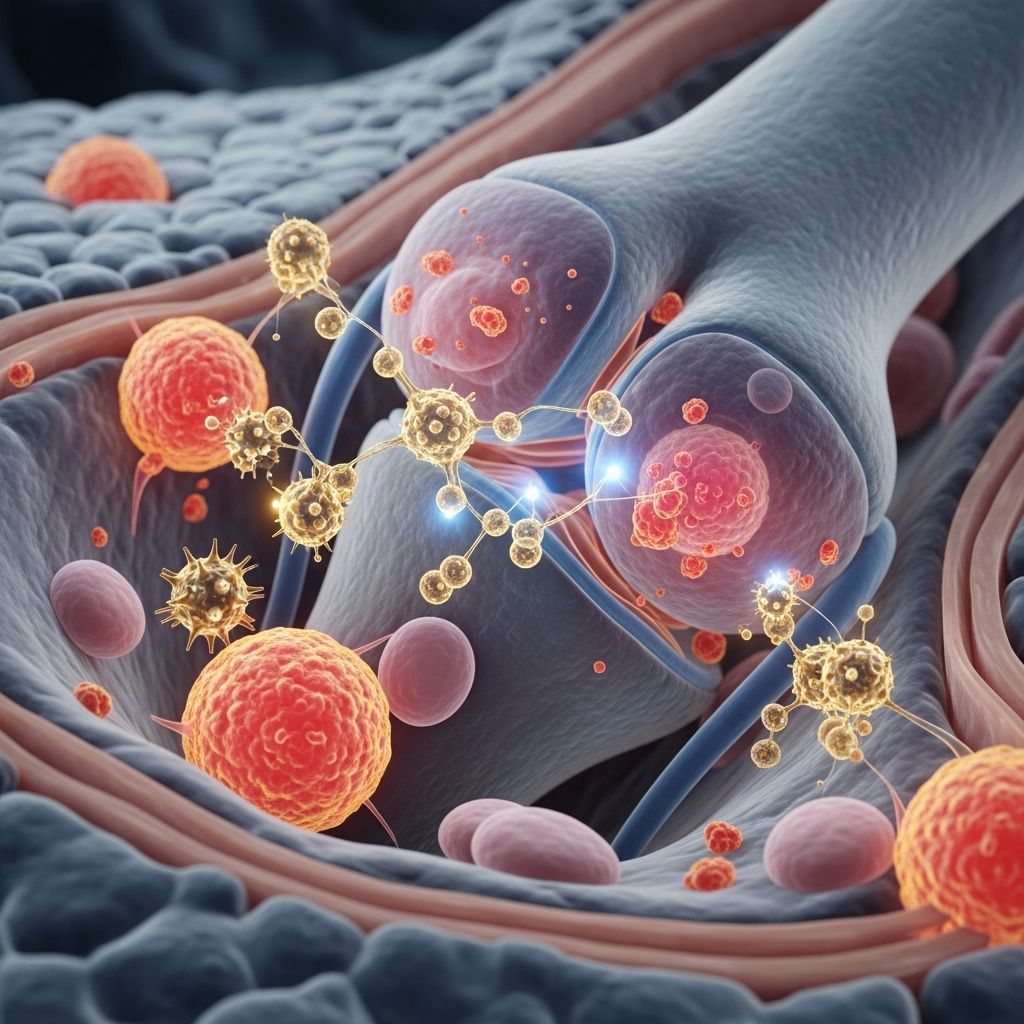
Biological medicines represent a significant advancement in treating rheumatoid arthritis (RA), offering targeted relief from symptoms and slowing joint damage when conventional treatments fall short.
What are biological medicines?
Biological medicines are innovative therapies derived from living organisms, such as cloned human white blood cells, unlike traditional drugs produced through chemical synthesis. They mimic natural body substances like antibodies to combat RA’s autoimmune effects. These agents specifically target malfunctioning immune components driving chronic inflammation in RA, providing a more precise approach than broad-spectrum immunosuppressants.
In RA, the immune system erroneously attacks joint linings, causing pain, swelling, and erosion. Biologics interrupt this process at key points, reducing inflammation and preventing long-term disability.[10]
Types of biological medicines
Several biological medicines are approved for RA, categorized by their molecular targets. Common types include:
- TNF inhibitors: Adalimumab, certolizumab pegol, etanercept, golimumab, infliximab – block tumour necrosis factor alpha (TNF-alpha), a primary inflammation trigger.
- IL-6 inhibitors: Tocilizumab, sarilumab – target interleukin-6, another key inflammatory cytokine.
- T-cell modulators: Abatacept – inhibits T-cell activation.
- B-cell inhibitors: Rituximab – depletes B-cells producing harmful antibodies.
- IL-1 inhibitors: Anakinra – blocks interleukin-1.
- IL-17 inhibitors: Secukinumab – for specific RA cases.
These are marketed under various brand names and administered via injection or infusion. Newer options and biosimilars – highly similar versions of originators post-patent expiry – expand access while maintaining efficacy and safety profiles.
How do biological medicines help rheumatoid arthritis?
Biologics act as targeted therapies, precisely blocking inflammatory pathways without broadly suppressing immunity like steroids or conventional DMARDs. TNF inhibitors neutralize TNF-alpha, curbing joint inflammation and damage. Others disrupt unique steps: abatacept prevents T-cell co-stimulation, rituximab eliminates B-cells, and tocilizumab intercepts IL-6 signaling.
This specificity yields faster symptom relief, reduced disease progression, and improved quality of life. Studies show up to 75% of patients exhibit no progression after one year on biologics. Unlike non-targeted drugs, biologics spare protective immune functions, minimizing certain risks.
When are biological medicines usually prescribed for rheumatoid arthritis?
Biologics are reserved for moderate-to-severe RA unresponsive to at least two conventional DMARDs (e.g., methotrexate) after 6 months. Prescribed solely by hospital rheumatologists, they often combine with methotrexate or another DMARD for synergy, unless contraindicated. NICE guidelines endorse this sequence: DMARDs first, biologics if failure occurs.
Which biological medicines are usually prescribed?
Choice depends on prior treatments, patient factors, and guidelines. Commonly prescribed:
| Medicine | Target/Mechanism | Administration |
|---|---|---|
| Adalimumab | TNF inhibitor | Subcutaneous injection |
| Certolizumab pegol | TNF inhibitor | Subcutaneous injection |
| Etanercept | TNF inhibitor | Subcutaneous injection |
| Golimumab | TNF inhibitor | Subcutaneous or IV |
| Infliximab | TNF inhibitor | IV infusion |
| Abatacept | T-cell modulator | IV or subcutaneous |
| Sarilumab | IL-6 inhibitor | Subcutaneous injection |
| Secukinumab | IL-17 inhibitor | Subcutaneous injection |
| Tocilizumab | IL-6 inhibitor | IV or subcutaneous |
| Rituximab | B-cell inhibitor | IV infusion |
Post-TNF failure, alternatives like IL-6 inhibitors or rituximab follow. Biosimilars (e.g., for adalimumab) offer cost-effective options with equivalent outcomes.
How well or quickly do biological medicines work?
Many patients notice improvements within 2-4 weeks, with peak effects by 3-6 months. Response rates: 60-70% achieve significant symptom reduction (e.g., 50% improvement in ACR criteria). Non-responders switch biologics. Long-term use halts radiographic progression in responders.
Related Stories



How long are biological medicines prescribed for?
Initial trial: 6 months; discontinue if no improvement. Sustained responders continue indefinitely, with periodic dose tapering or holidays if remission achieved. Decisions balance symptom control, side effects, and specialist assessment. NICE supports ongoing use for moderate RA post-DMARD failure.
Can biological medicines cause side effects?
Yes, though often mild. Common: injection-site reactions, infections (upper respiratory), nausea, headaches, fever. Serious risks: opportunistic infections (e.g., TB reactivation), rare malignancies, autoimmune reactions. TNF inhibitors elevate infection risk; monitor closely. Pre-treatment screening mitigates dangers.
- Injection-site issues: Redness, itching (20-30%).
- Infections: Increased susceptibility.
- Other: Fatigue, elevated liver enzymes.
Do I need any tests before starting a biological medicine?
Mandatory screening: Blood tests (liver/kidney function, blood count), TB test (Quantiferon or chest X-ray), hepatitis B/C serology, varicella status. Ongoing monitoring: infections, bloodwork every 3-6 months.
Can I buy biological medicines?
No, biologics are prescription-only, specialist-initiated, not over-the-counter or private-purchase without NHS/hospital oversight in the UK.
Who cannot take biological medicines?
Contraindicated in:
- Active/severe infections (e.g., TB, sepsis).
- Severe heart failure (NYHA III/IV).
- Demyelinating disorders (e.g., MS).
- Pregnancy/breastfeeding (risk-benefit assessment).
- Severe allergies to components.
Use caution in malignancy history, immunosuppression.
Frequently Asked Questions (FAQs)
What if one biologic fails?
Switch to another class (e.g., TNF to IL-6 inhibitor); many respond to second-line.
Are biologics safe long-term?
Generally yes for responders; vigilant monitoring essential.
Can I get vaccinated on biologics?
Yes, but live vaccines avoided; consult specialist.
Do biosimilars work as well?
Yes, equivalent efficacy/safety per regulators.
How are biologics given at home?
Self-injectable forms (e.g., etanercept pen) trained by nurses.
References
- Biological medicines for rheumatoid arthritis — Patient.info. 2023. https://patient.info/bones-joints-muscles/rheumatoid-arthritis-leaflet/biological-medicines-for-rheumatoid-arthritis
- Rheumatoid arthritis – Treatment — NHS.uk. 2023-12-19. https://www.nhs.uk/conditions/rheumatoid-arthritis/treatment/
- Biologic Drugs for Arthritis — Arthritis Foundation. 2024. https://www.arthritis.org/drug-guide/biologics/biologics
- Adalimumab, etanercept, infliximab and abatacept for treating rheumatoid arthritis — NICE. 2021-07. https://www.nice.org.uk/guidance/ta375
- Sarilumab for rheumatoid arthritis — NICE. 2017-11. https://www.nice.org.uk/guidance/ta485
- Management of rheumatoid arthritis — Patient.info (Doctor). 2023. https://patient.info/doctor/rheumatology/management-of-rheumatoid-arthritis
Similar Articles








Read full bio of medha deb