Biologics For Eczema: 4 FDA-Approved Options And How They Work
Discover how advanced biologic therapies are transforming management of moderate to severe eczema with targeted immune modulation.
Biologic therapies represent a major advancement in treating moderate to severe eczema, also known as atopic dermatitis. These injectable medications precisely target overactive immune responses, offering relief where traditional topicals and oral drugs fall short.
Understanding Eczema and the Need for Targeted Therapies
Eczema affects millions worldwide, causing intense itching, inflamed skin, and disrupted sleep. Conventional treatments like moisturizers, corticosteroid creams, and immunosuppressants provide temporary relief but often fail in persistent cases, leading to side effects such as skin thinning or increased infection risk.
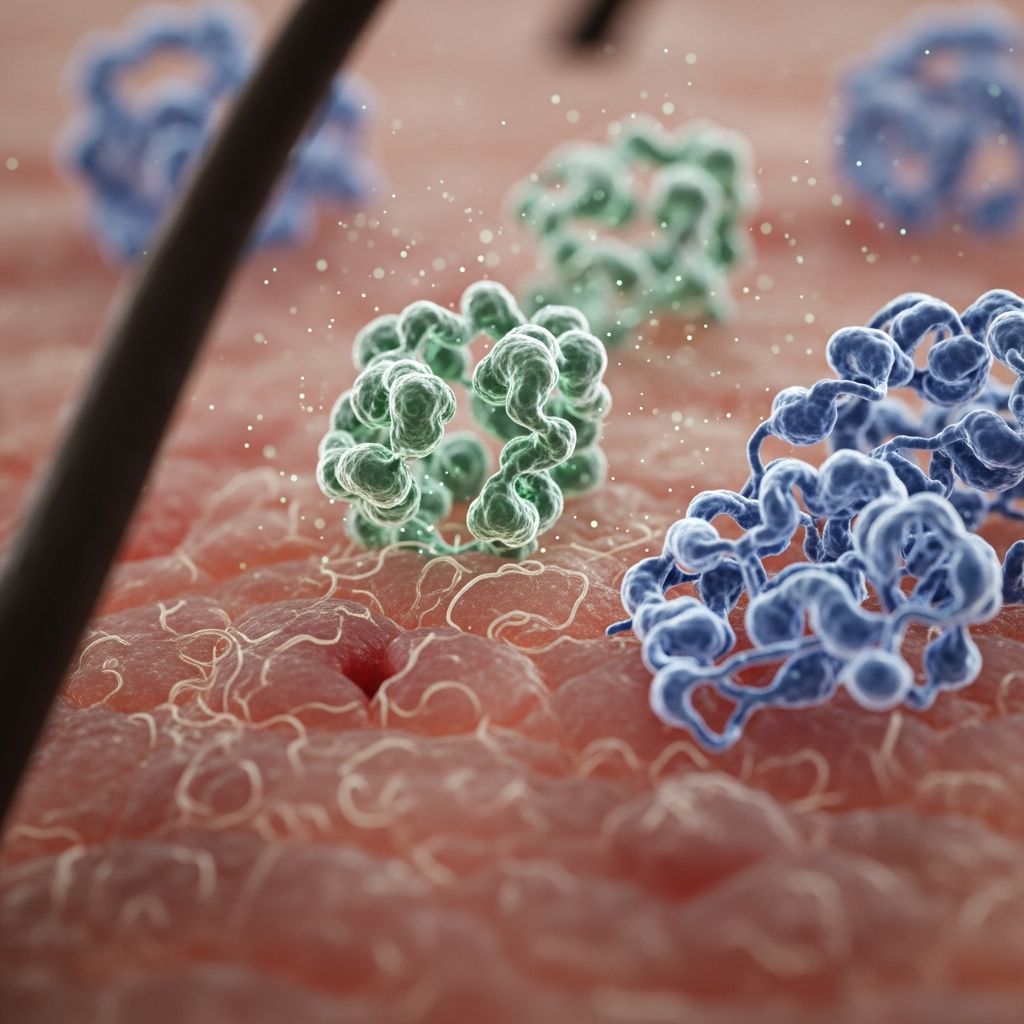
Biologics address this by focusing on specific proteins driving inflammation. Derived from living cells, they block interleukins—immune signaling molecules like IL-4, IL-13, and IL-31—that fuel eczema flares. This precision reduces symptoms without broadly suppressing immunity.
Key FDA-Approved Biologics for Eczema
Four biologics have gained FDA approval for eczema, each targeting distinct pathways. Here’s an overview:
- Dupixent (dupilumab): First approved in 2017, it inhibits IL-4 and IL-13. Suitable for ages 6 months and up, administered every two to four weeks.
- Adbry (tralokinumab): Targets IL-13 specifically, for patients 12+. Dosing starts biweekly, potentially extending to monthly.
- Ebglyss (lebrikizumab): Another IL-13 blocker, approved for ages 12+, with similar flexible dosing after initial loading.
- Nemluvio (nemolizumab): Uniquely targets IL-31, key for itch, for those 12+ with moderate-to-severe disease.
| Biologic | Target | Age Group | Dosing Frequency |
|---|---|---|---|
| Dupixent | IL-4 & IL-13 | 6 months+ | Every 2-4 weeks |
| Adbry | IL-13 | 12+ | Every 2-4 weeks |
| Ebglyss | IL-13 | 12+ | Every 2-4 weeks (then 4) |
| Nemluvio | IL-31 | 12+ | Every 4 weeks |
This table highlights differences in mechanisms and administration, aiding personalized selection.
Mechanisms of Action: Precision at the Cellular Level
Interleukins orchestrate immune overreactions in eczema. IL-4 and IL-13 promote skin barrier dysfunction and inflammation, while IL-31 drives pruritus (itch).
Dupixent binds receptors for both IL-4 and IL-13, halting their signals. IL-13 specialists like Adbry and Ebglyss prevent this cytokine from activating immune cells, reducing Th2 inflammation—a hallmark of atopic dermatitis. Nemluvio disrupts IL-31 binding to sensory nerves, directly alleviating itch.
Clinical trials demonstrate these biologics clear skin lesions, cut itch by over 50%, and enhance sleep in 60-75% of users within 16 weeks.
Who Benefits Most from Biologic Treatments?
Biologics suit those with moderate-to-severe eczema unresponsive to topicals, phototherapy, or systemic immunosuppressants. Ideal candidates report daily itch impacting work, school, or relationships.
- Failed multiple topical regimens (e.g., corticosteroids, calcineurin inhibitors).
- Intolerance to oral therapies like cyclosporine due to side effects.
- Extensive body involvement or facial/hand eczema resistant to standard care.
Pediatric approval expands access, with Dupixent showing safety in infants.
Administration and Practical Considerations
Delivered via subcutaneous injection using prefilled syringes or pens, most start with loading doses followed by maintenance every two weeks. Patients or caregivers train for home use after demonstration.
Related Stories



Storage requires refrigeration; travel kits ensure portability. Insurance often covers after proving prior treatment failures, though copays vary.
Effectiveness and Real-World Outcomes
Trials like LIBERTY AD show Dupixent achieves 75% EASI score improvement (Eczema Area and Severity Index) versus 25% placebo. Adbry and Ebglyss yield similar skin clearance; Nemluvio excels in itch reduction.
Long-term data indicate sustained benefits up to four years, with many reducing topicals. Quality-of-life metrics improve markedly, per patient-reported outcomes.
Safety Profile and Common Side Effects
Unlike broad immunosuppressants, biologics spare overall immunity, lowering infection risks. Common issues include injection-site reactions (redness, swelling in 10-20%), conjunctivitis (especially Dupixent, 10-20%), and mild upper respiratory infections.
Rare serious events like hypersensitivity occur in <1%. Eye symptoms often resolve with drops; monitoring is key. No increased malignancy risk noted.
- Conjunctivitis: Monitor eyes; treat as needed.
- Injections: Rotate sites (abdomen, thigh).
- Infections: Report fever or worsening skin.
Biologics Versus Traditional Eczema Therapies
Topicals offer localized relief but falter in severe disease. Oral steroids risk rebound flares; immunosuppressants like methotrexate carry organ toxicity.
JAK inhibitors (e.g., abrocitinib) block broader pathways orally but heighten herpes zoster risk. Biologics provide superior targeting, steroid-free control.
| Treatment Type | Mechanism | Pros | Cons |
|---|---|---|---|
| Topicals | Surface anti-inflammatory | Easy apply, first-line | Limited for severe cases |
| Immunosuppressants | Broad immune suppression | Oral convenience | Side effects, monitoring |
| Biologics | Targeted cytokine block | High efficacy, safe long-term | Injections, cost |
| JAK Inhibitors | Enzyme inhibition | Oral, rapid action | Infection risks |
Accessing Biologics: Steps to Get Started
Consult a dermatologist or allergist experienced in eczema. Document prior treatments. Prior authorization may require photos or scores.
Support programs from manufacturers assist uninsured patients. Track response at 16 weeks; switch if suboptimal.
Future Directions in Biologic Therapies
Ongoing trials explore IL-22, TSLP blockers, and combinations. Pediatric expansions and biosimilars promise affordability. Personalized medicine via biomarkers may optimize choices.
Frequently Asked Questions (FAQs)
Are biologics a cure for eczema?
No, they manage symptoms effectively long-term but don’t cure. Most maintain control with continued use.
How soon do biologics work for itch?
Noticeable relief in 2-4 weeks; peak at 12-16 weeks.
Can I combine biologics with other treatments?
Yes, topicals enhance results; avoid unapproved systemics.
Do biologics weaken immunity?
Minimally; targeted action preserves defenses.
What’s the cost of eczema biologics?
Varies; $3,000-$5,000/month pre-insurance, often covered.
References
- A Guide to Biologic Treatments for Eczema (Atopic Dermatitis) — Healthline. 2023. https://www.healthline.com/health/eczema/biologics-for-eczema
- An expert explains switching to biologics for eczema — Medical News Today. 2024. https://www.medicalnewstoday.com/articles/switching-to-biologics-for-eczema
- Biologics | Injectables for Eczema — National Eczema Association. 2024. https://nationaleczema.org/treatments/injectables/
- Biologics for Eczema: A Comparison of Dupixent, Adbry — GoodRx. 2024. https://www.goodrx.com/conditions/eczema/biologics-for-eczema
- Dupilumab — National Eczema Society. 2023. https://eczema.org/information-and-advice/treatments-for-eczema/dupilumab/
- Biologics for Atopic Dermatitis — WebMD. 2024. https://www.webmd.com/skin-problems-and-treatments/eczema/biologics-atopic-dermatitis
- Biologics for Treatment of Atopic Dermatitis: Current Status — PMC (PubMed Central). 2021-02-26. https://pmc.ncbi.nlm.nih.gov/articles/PMC7951162/
Similar Articles








Read full bio of medha deb