BiPAP Machine: 5 Benefits, Risks, And Setup Guide
Discover how BiPAP machines assist breathing for COPD, sleep apnea, and more—benefits, uses, and expert insights.
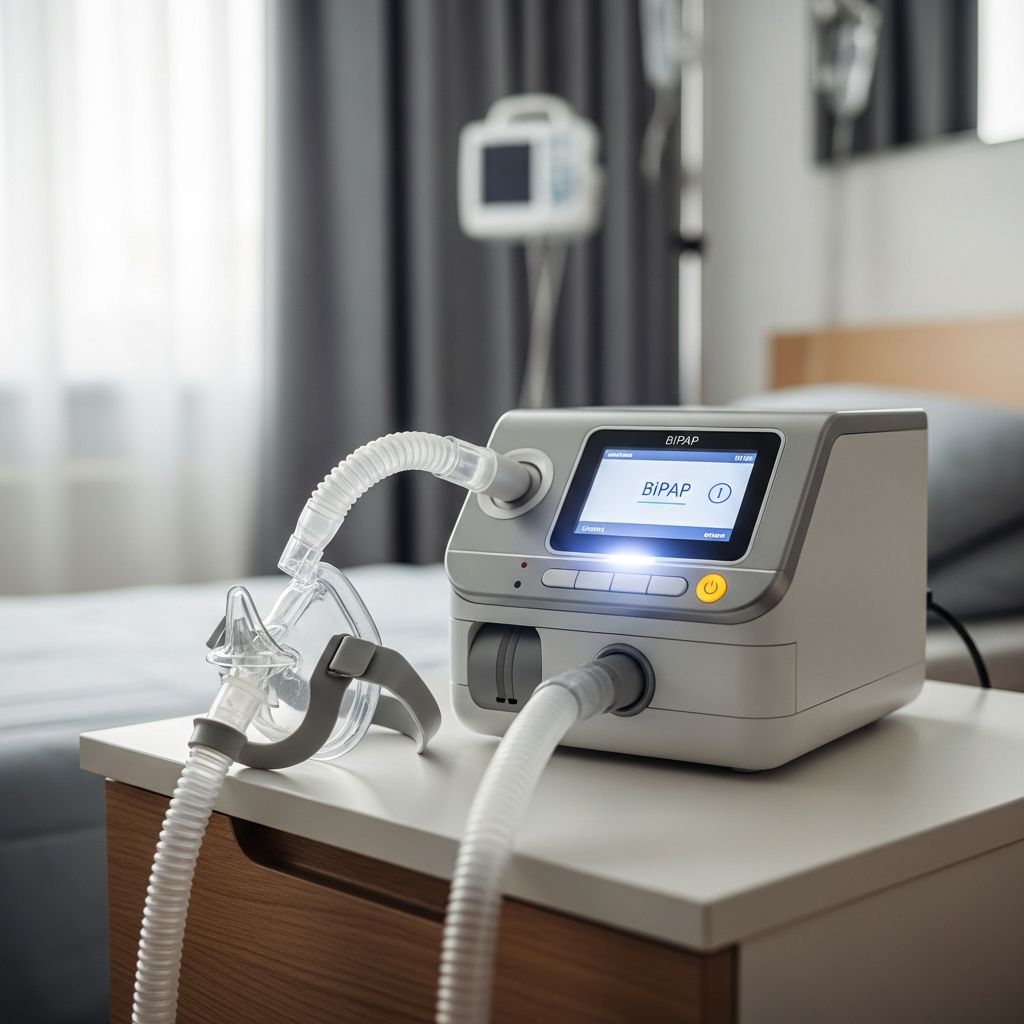
A
BiPAP machine
, or bilevel positive airway pressure device, delivers two distinct pressure levels to assist breathing, making it ideal for conditions like chronic obstructive pulmonary disease (COPD) and obstructive sleep apnea (OSA). Unlike single-pressure systems, BiPAP supports both inhalation and exhalation, improving oxygen intake and carbon dioxide expulsion for patients with compromised lung function.What Is a BiPAP Machine?
BiPAP stands for
bilevel positive airway pressure
, a non-invasive ventilation therapy that uses a mask connected to a tabletop machine via tubing to deliver pressurized air. The device provides higher pressure during inhalation (IPAP, inspiratory positive airway pressure) to open airways and facilitate oxygen entry, and lower pressure during exhalation (EPAP, expiratory positive airway pressure) to ease breathing out. This dual-pressure mechanism mimics natural breathing patterns more effectively than constant pressure, particularly for those with respiratory muscle weakness or lung elasticity issues common in COPD.Developed as an advancement in positive airway pressure (PAP) therapy, BiPAP machines are compact, portable, and suitable for home or hospital use. They regulate breathing during sleep or acute flare-ups by maintaining airway patency and normalizing gas exchange, reducing the work of breathing. Medical professionals prescribe BiPAP after assessing conditions like hypercapnia (elevated CO2 levels) or hypoxemia (low oxygen), ensuring tailored settings for optimal efficacy.
How Does a BiPAP Machine Work?
The core function of a BiPAP machine revolves around its microprocessor-controlled blower that generates pressurized air. Air flows through a heated, flexible tube to a fitted mask covering the nose, mouth, or both. Sensors detect breathing cycles: during inhalation, IPAP (typically 8-20 cm H2O) pushes air into the lungs; during exhalation, EPAP (4-12 cm H2O lower) allows comfortable release.
- Inhalation phase: Higher pressure inflates lungs, overcoming obstructions or stiffness.
- Exhalation phase: Reduced pressure prevents air trapping and fatigue.
- Backup features: Advanced models include timers for apnea events, automatically delivering breaths if the user stops breathing, vital for central sleep apnea or neuromuscular diseases.
Humidifiers prevent airway dryness, while ramp functions gradually increase pressure for comfortable sleep onset. Data tracking via SD cards or apps monitors compliance and efficacy, aiding physician adjustments. In clinical settings, BiPAP integrates with ventilators for rapid deployment during emergencies.
Who Needs a BiPAP Machine?
BiPAP is prescribed for individuals struggling with spontaneous breathing due to various respiratory or neurological conditions. Primary candidates include:
- Patients with
COPD
, where reduced lung elasticity and mucus buildup hinder deep breaths; BiPAP aids during sleep or exacerbations. - Those with
obstructive sleep apnea (OSA)
unresponsive to CPAP, benefiting from adjustable pressures. - Individuals with
central sleep apnea (CSA)
orobesity hypoventilation syndrome (OHS)
, needing breath initiation support. - People with
ALS
or other neuromuscular disorders affecting respiratory muscles. - Acute cases like asthma flare-ups or cardiogenic pulmonary edema in ER/ICU settings.
Not everyone with these conditions requires BiPAP; doctors evaluate via sleep studies, arterial blood gases, or pulmonary function tests. It’s contraindicated in unconscious patients or those unable to protect airways.
BiPAP vs. CPAP: What’s the Difference?
Related Stories



| Feature | BiPAP | CPAP |
|———|——-|——|
|
Pressure Delivery
| Two levels (IPAP for inhale, EPAP for exhale) | Single continuous pressure ||
Best For
| COPD, CSA, neuromuscular issues, hypoventilation | Mild-moderate OSA ||
Exhalation Ease
| Easier due to lower exhale pressure | Constant pressure may feel resistant ||
Backup Rate
| Often includes for apnea | Rare ||
Complexity/Cost
| Higher; more settings | Simpler, lower cost ||
Adherence
| Better for pressure-intolerant users | Standard first-line for OSA |CPAP maintains open airways uniformly, effective for OSA but challenging for exhale in lung diseases. BiPAP’s bilevel support excels where varied pressures reduce work of breathing, with studies showing superior outcomes in COPD survival and reduced hospitalizations.
Benefits of Using a BiPAP Machine
Regular BiPAP use yields significant health improvements:
- Enhanced sleep quality: Regulates patterns, reducing arousals in severe COPD.
- Life extension: Daily use correlates with prolonged survival and fewer admissions.
- Emergency efficacy: Pre-intubation BiPAP lowers hypoxemia and cardiac risks in ER/ICU.
- Gas exchange normalization: Boosts O2, reduces CO2, easing symptoms.
- Non-invasive alternative: Avoids intubation risks, improving recovery.
Research highlights BiPAP’s role in hypoventilation correction and OSA event reduction, with auto-adjusting features optimizing therapy.
Potential Side Effects and Risks
BiPAP is generally safe, but issues arise mainly from mask fit:
- Common: Skin irritation, dry mouth, nasal congestion, eye irritation from leaks.
- Gastrointestinal: Bloating from aerophagia (swallowed air).
- Rare: Sinus pain, claustrophobia, pressure sores.
Mitigate with proper fitting, humidification, and gradual acclimation. Serious risks like aspiration are minimal in screened patients. Hospitals address implementation barriers for timely use.
How to Set Up and Use a BiPAP Machine at Home
Setup involves physician prescription and training:
- Unpack and assemble: Connect tube to machine and mask; add humidifier if equipped.
- Power on: Select settings (prescribed IPAP/EPAP); activate ramp if needed.
- Fit mask: Choose nasal, full-face, or pillows; adjust straps for seal without gaps.
- Test and sleep: Lie down, start therapy; clean daily with soap/water, replace filters monthly.
- Monitor: Review usage reports with doctor.
Insurance often covers with documented need; suppliers provide masks in sizes S-XXL.
When to See a Doctor
Consult if experiencing worsening shortness of breath, mask discomfort, or therapy intolerance. Regular check-ups ensure optimal settings amid weight changes or symptom evolution. Quit smoking and exercise to complement BiPAP for COPD management.
Frequently Asked Questions (FAQs)
Is BiPAP safe for long-term home use?
Yes, BiPAP is safe long-term when prescribed and monitored, improving quality of life without intubation needs.
Can BiPAP cure sleep apnea?
No, it manages symptoms by keeping airways open; underlying causes require lifestyle or surgical interventions.
How often should I clean my BiPAP?
Daily mask/tube cleaning, weekly machine wipe-down, monthly filter changes prevent infections.
Does insurance cover BiPAP machines?
Often yes, with sleep study proof; Medicare covers for diagnosed conditions.
Can children use BiPAP?
Yes, adapted for pediatric OSA or neuromuscular issues under specialist care.
References
- BiPAP for COPD: How it works, benefits, and risks — Medical News Today. 2023-05-10. https://www.medicalnewstoday.com/articles/321651
- BiPAP proven to boost patient outcomes. Next challenge – hospital implementation — UCHealth Today. 2023-08-15. https://www.uchealth.org/today/bipap-proven-to-boost-patient-outcomes-next-challenge-hospital-implementation/
- What Is a BiPAP Machine? Definition, Uses, Side Effects — Healthline. 2024-02-20. https://www.healthline.com/health/what-is-a-bipap-machine
- CPAP and Bi-level PAP Therapy: New and Established Roles — PMC (NCBI). 2011-06-15. https://pmc.ncbi.nlm.nih.gov/articles/PMC3119924/
- What Is a BiPAP — CoxHealth Health Library. 2023-11-01. https://healthinfo.coxhealth.com/Library/HealthSheets/3,S,90237
Similar Articles








Read full bio of medha deb