BiPAP Therapy: Treatment for Sleep Apnea and Breathing Disorders
Comprehensive guide to BiPAP therapy: how it works, benefits, and treatment options for sleep apnea.
Understanding BiPAP Therapy
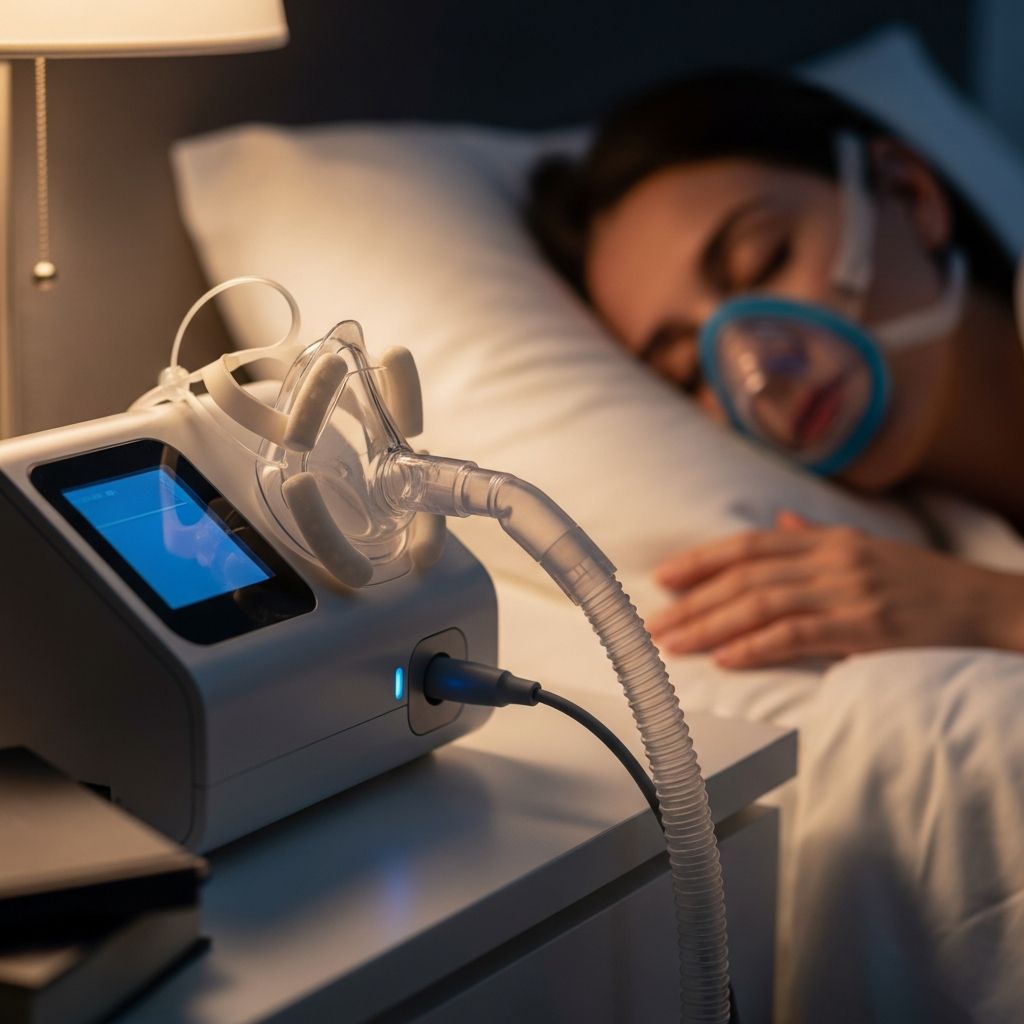
BiPAP (bilevel positive airway pressure) therapy is a non-invasive treatment option designed to help individuals with sleep apnea and other respiratory disorders maintain consistent breathing patterns during sleep. BiPAP machines deliver pressurized air through a mask worn over the nose, mouth, or both, creating two distinct pressure levels: one for inhalation and a lower one for exhalation. This dual-pressure approach distinguishes BiPAP from other positive airway pressure (PAP) devices and offers specific advantages for patients who struggle with conventional continuous positive airway pressure (CPAP) therapy.
The primary goal of BiPAP therapy is to keep the airway open and prevent the collapse or obstruction that occurs during sleep apnea episodes. By maintaining adequate airway patency, BiPAP devices help restore normal breathing patterns, reduce oxygen desaturation events, and improve overall sleep quality and daytime functioning.
How BiPAP Machines Work
BiPAP machines operate using a sophisticated system of dual pressure settings that adapt to the patient’s breathing cycle. The machine delivers higher pressure during inhalation (known as IPAP or inspiratory positive airway pressure) and automatically reduces pressure during exhalation (known as EPAP or expiratory positive airway pressure).
Most BiPAP machines function through a process called spontaneous BiPAP, where the device automatically detects the patient’s breathing patterns and switches between the two pressure levels in response to natural respiration. This automatic adjustment reduces the effort required to exhale against resistance, making the therapy more comfortable and less fatiguing for patients compared to continuous pressure devices.
The pressurized air travels through tubing connected to a mask interface, which is secured to the face using straps or headgear. As air enters the upper airway, it prevents the soft tissues from collapsing, maintaining a patent airway throughout the respiratory cycle. This mechanism is particularly effective for treating obstructive sleep apnea, where airway collapse is the primary pathological event.
Pressure Settings and Customization
BiPAP therapy requires individualized pressure settings determined through overnight sleep studies conducted by sleep medicine specialists. The sleep physiologist monitors breathing patterns, oxygen saturation levels, and apnea events to calculate the optimal IPAP and EPAP pressures needed for each patient.
Typical pressure ranges for BiPAP machines extend up to 30 cm H₂O, with the IPAP setting generally assigned a value equal to the EPAP or 2 cm H₂O above it, creating a minimum pressure differential of 0-2 cm H₂O. For patients with more complex pulmonary conditions such as chronic obstructive pulmonary disease (COPD) or emphysema, machines can be programmed to deliver a backup respiratory rate through either backup rate or timed rate settings, ensuring adequate ventilation even if the patient’s natural respiratory drive is compromised.
Clinical Applications and Treatment Indications
BiPAP therapy is indicated for a diverse range of respiratory conditions affecting both children and adults. The primary indication remains obstructive sleep apnea (OSA), a condition characterized by repeated collapse of the upper airway during sleep, resulting in breathing interruptions and oxygen desaturation events.
Related Stories



Beyond obstructive sleep apnea, BiPAP therapy proves beneficial for:
- Central sleep apnea and mixed sleep apnea patterns
- Decreased air exchange in the lungs due to various causes
- Muscle weakness affecting respiratory function, including muscular dystrophy and amyotrophic lateral sclerosis (ALS)
- Obesity hypoventilation syndrome, where excess weight compromises respiratory mechanics
- Restrictive chest wall disorders limiting lung expansion
- Chronic alveolar hypoventilation with or without chronic respiratory insufficiency
- Snoring and sleep fragmentation
Research demonstrates that BiPAP therapy may slow the decline of forced vital capacity and potentially prolong survival in patients with amyotrophic lateral sclerosis, making it a valuable therapeutic intervention for this progressive neurodegenerative condition.
Advantages of BiPAP Over CPAP
While both CPAP and BiPAP devices serve similar functions in maintaining airway patency, BiPAP offers distinct physiological and comfort-related advantages for specific patient populations. The variable pressure approach of BiPAP reduces the discomfort associated with exhaling against continuous pressure, particularly important when CPAP pressures approach or exceed 15 cm H₂O, at which point exhalation becomes notably uncomfortable for most patients.
BiPAP therapy provides greater tidal volume (VT) and enhanced unloading of respiratory muscles compared to CPAP, resulting in reduced abdominal muscle recruitment during exhalation. The pressure differential between IPAP and EPAP essentially functions as pressure support, augmenting inspired tidal volume and reducing the work of breathing. This advantage proves especially valuable for patients with neuromuscular conditions, obesity hypoventilation syndrome, and other disorders characterized by respiratory muscle weakness or compromised ventilatory mechanics.
However, it is important to note that systematic reviews have concluded that BiPAP therapy does not demonstrate superior adherence rates compared to conventional CPAP therapy, suggesting that both devices offer comparable patient compliance when appropriately matched to individual patient needs and preferences.
Treatment Benefits and Outcomes
Patients receiving appropriate BiPAP therapy experience significant improvements across multiple domains of health and functioning. The primary benefits include:
- Reduced sleep disruption and improved overall sleep quality and architecture
- Effective treatment of obstructive sleep apnea and associated snoring
- Reduced daytime somnolence and improved daytime alertness
- Decreased frequency and severity of morning headaches
- Enhanced daytime cognitive functioning and occupational performance
- Improved health-related quality of life scores
- Reduced cardiac workload and improved cardiovascular hemodynamics
These benefits translate into meaningful improvements in daily functioning, workplace productivity, and overall well-being. Patients often report feeling more refreshed upon awakening and experience enhanced mental clarity throughout the day. The resolution of fragmented sleep patterns facilitates the resumption of normal sleep architecture, including adequate time spent in restorative deep sleep stages.
Mask Types and Interface Options
Successful BiPAP therapy depends partly on selecting an appropriate mask interface that ensures adequate seal while maintaining comfort during extended use. The mask is held securely in place by adjustable straps or a mesh cap (headgear) to maintain proper positioning throughout the night.
Common mask options include nasal masks, oronasal masks covering both nose and mouth, and nasal pillows that deliver air directly into the nostrils. The choice of mask depends on patient preference, anatomy, pressure requirements, and breathing patterns during sleep. A well-fitted mask prevents air leakage while avoiding excessive pressure on facial structures, which could cause discomfort or skin irritation with prolonged nightly use.
Advanced BiPAP Features and Modes
Modern BiPAP devices incorporate several advanced features designed to enhance therapeutic efficacy and patient comfort. Some machines include servo systems that continuously monitor peak airflow patterns and adjust pressure support dynamically. When peak flows fall below average levels, the device recognizes this as a decrescendo pattern preceding central apnea and automatically increases pressure support. Conversely, when peak flow significantly exceeds baseline averages, suggesting hyperpnea or periodic breathing, the device reduces pressure support accordingly. This sophisticated servo mechanism dampens oscillatory breathing patterns and smoothes respiration, particularly beneficial for patients with central sleep apnea components.
Devices with variable pressure support capabilities can adjust IPAP levels instantaneously within physician-prescribed ranges to maintain target tidal volumes, making them particularly effective for managing hypoventilation in obesity hypoventilation syndrome and restrictive chest wall disorders.
Initiating BiPAP Therapy
Beginning BiPAP therapy typically requires an overnight diagnostic or titration sleep study conducted in a sleep laboratory. During this study, sleep medicine specialists monitor multiple physiological parameters including electroencephalography (EEG) to assess sleep stages, electromyography (EMG) to detect muscle atonia, electrooculography (EOG) to track eye movements, chest and abdominal wall motion sensors, airflow sensors, and pulse oximetry to measure oxygen saturation. Electrocardiography may also be included to assess cardiac rhythm during sleep.
Based on data collected during the sleep study, sleep physicians calculate individualized pressure settings that optimize therapeutic efficacy while maintaining comfort. Most patients require only nighttime or sleep-period use of BiPAP, though specific recommendations vary based on individual clinical presentations and severity of respiratory compromise.
Transitioning from CPAP to BiPAP
Patients currently using CPAP therapy may benefit from transitioning to BiPAP if they experience discomfort during exhalation or demonstrate poor adherence related to pressure intolerance. A general clinical guideline suggests that transition to BiPAP is encouraged when CPAP pressure requirements approach 15 cm H₂O, as exhalation against pressures at this level becomes uncomfortable for most patients.
The transition process should be gradual and supervised by sleep medicine professionals. Initial BiPAP settings typically provide minimal pressure differential, which can be incrementally increased as patients adapt to the new therapy. This measured approach facilitates successful transition and maximizes long-term adherence.
Potential Considerations and Side Effects
While BiPAP therapy is generally well-tolerated, some patients experience initial adjustment challenges. Common considerations include mask-related discomfort, pressure-related facial irritation, nasal congestion, and difficulty adapting to the sensation of pressurized air. Most of these issues resolve with appropriate mask selection, proper fit adjustment, and gradual acclimation to therapy.
Patients should maintain regular communication with their healthcare providers regarding therapy tolerance and report any persistent discomfort or difficulties with compliance. Mask cushion replacements, different mask styles, and pressure adjustments can address most adaptation challenges.
Frequently Asked Questions
Q: How does BiPAP differ from CPAP?
A: BiPAP delivers two different pressure levels—higher pressure during inhalation and lower pressure during exhalation—whereas CPAP maintains continuous constant pressure throughout the breathing cycle. This makes BiPAP generally more comfortable for patients requiring higher pressures.
Q: Is BiPAP suitable for all types of sleep apnea?
A: BiPAP effectively treats obstructive and central sleep apnea. It is particularly beneficial for patients with central apnea components and those who experience discomfort with continuous pressure delivery.
Q: How long does it take to adjust to BiPAP therapy?
A: Most patients adapt to BiPAP within 1-4 weeks of nightly use, though some experience immediate comfort. Gradual acclimation protocols and appropriate mask selection accelerate the adaptation process.
Q: Can children use BiPAP therapy?
A: Yes, BiPAP is appropriate for children with obstructive sleep apnea, neuromuscular conditions affecting respiration, and other qualifying respiratory disorders. Pediatric masks and settings are specifically designed for smaller anatomies.
Q: How often should BiPAP settings be reviewed?
A: Sleep physicians typically recommend annual reviews to assess therapy efficacy and adjust settings based on changes in patient condition, weight, or respiratory requirements. More frequent monitoring may be necessary after therapy initiation.
References
- BiLevel Positive Airway Pressure — Stanford Healthcare. 2024. https://stanfordhealthcare.org/medical-treatments/p/positive-airway-pressure-therapies/types/bilevel-positive-airway-pressure.html
- CPAP and Bi-level PAP Therapy: New and Established Roles — National Center for Biotechnology Information. 2011. https://pmc.ncbi.nlm.nih.gov/articles/PMC3119924/
- BiPAP Machine: Uses, Benefits, Side Effects & Alternatives — Cleveland Clinic. 2024. https://my.clevelandclinic.org/health/treatments/24970-bipap
- Positive Airway Pressure Treatment — MedlinePlus, U.S. National Library of Medicine. 2024. https://medlineplus.gov/ency/article/001916.htm
- What Is a BiPAP Machine? — Sleep Foundation. 2024. https://www.sleepfoundation.org/cpap/what-is-a-bipap-machine
- Bilevel Positive Airway Pressure (BPAP) Non-invasive Ventilation — Great Ormond Street Hospital for Children NHS Trust. 2024. https://www.gosh.nhs.uk/conditions-and-treatments/procedures-and-treatments/bilevel-positive-airway-pressure-bpap-non-invasive-ventilation/
Similar Articles








Read full bio of medha deb