Birthmark Vs Mole: Key Differences, Risks, And Care
Understand the differences between birthmarks and moles, their types, risks, and when to see a dermatologist for skin health.
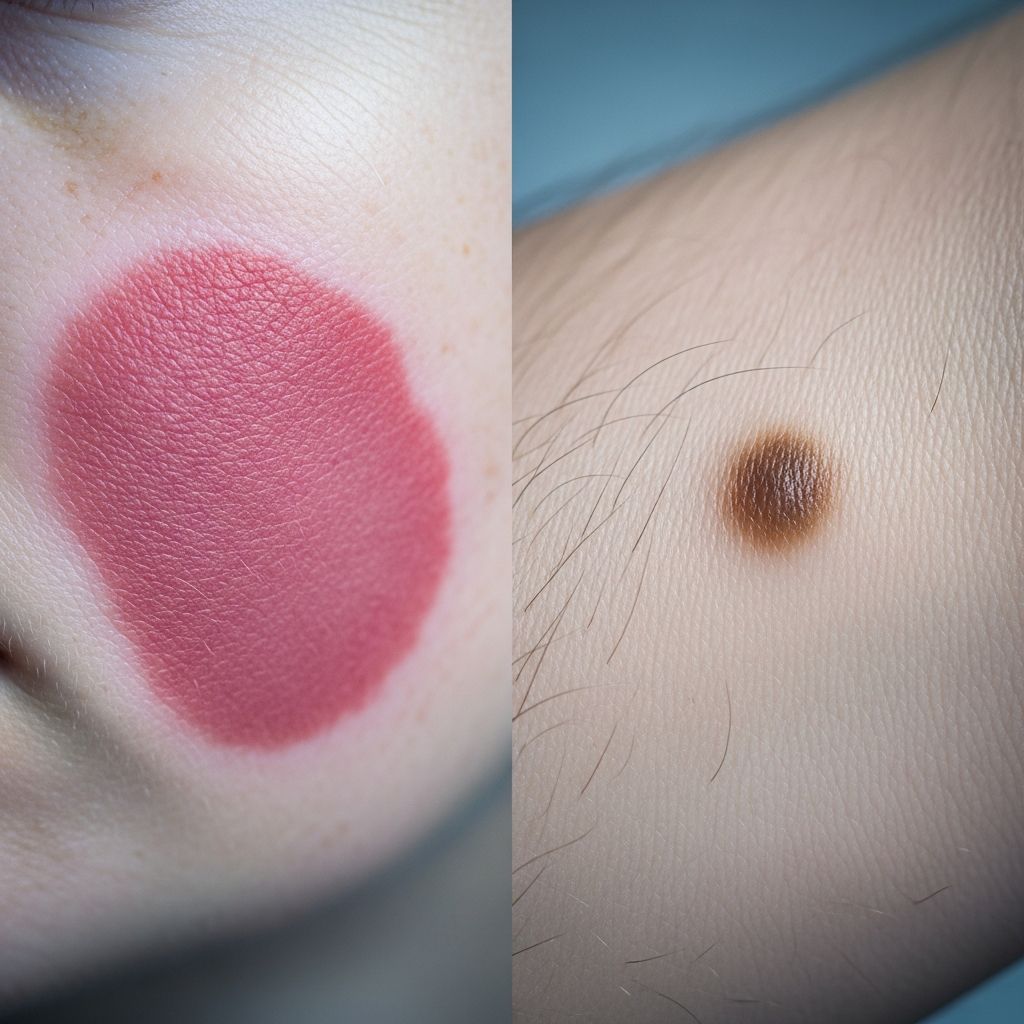
Birthmarks and moles are common skin features that many people have, but they differ in origin, appearance, and potential health implications. While birthmarks are present at birth or appear shortly after, moles often develop later and require monitoring for skin cancer risks like melanoma.
What Is a Birthmark?
A
birthmark
is a benign skin irregularity present at birth or emerging within the first few weeks of life. These markings result from abnormal development of blood vessels, pigment cells, or other skin structures. Birthmarks affect about 10% of babies noticeably, though many are subtle.Birthmarks vary widely in size, shape, color, and texture. They can be flat or raised, covering small spots or large body areas. Most are harmless and cosmetic concerns only, but some may signal underlying issues or evolve over time.
Types of Birthmarks
Birthmarks fall into two main categories: vascular and pigmented.
- Vascular birthmarks arise from malformed blood vessels, appearing red, pink, or purple. Examples include:
- Port-wine stains: Flat, pink-to-purple patches, often permanent unless treated. They may lighten but rarely fade completely.
- Strawberry hemangiomas: Raised, bright red clusters resembling strawberries. These grow rapidly in infancy but usually shrink by age 5-10.
- Salmon patches: Pale pink, flat marks on the face or neck that fade with time, especially noticeable when crying.
- Pigmented birthmarks stem from excess pigment cells (melanocytes), appearing brown, tan, gray, or blue:
- Café-au-lait spots: Light brown, coffee-with-milk-colored flat patches. Multiple spots may indicate genetic conditions like neurofibromatosis.
- Mongolian spots: Blue-gray patches on the lower back or buttocks, common in darker-skinned babies, fading by school age.
- Congenital moles (nevi): Brown or black pigmented spots present at birth, considered both moles and birthmarks.
What Is a Mole?
A
mole
, medically termed a nevus, forms from clusters of melanocytes, the pigment-producing cells. Moles appear as small, dark spots and are normal—most adults have 10-40.Unlike most birthmarks, moles typically develop during childhood, adolescence, or early adulthood, influenced by genetics, sun exposure, and hormones. They can be flat, raised, smooth, hairy, or dome-shaped, ranging from tan to black.
Congenital vs. Acquired Moles
- Congenital moles: Present at birth, classified as small (<1.5 cm), medium (1.5-20 cm), or giant (>20 cm). Giant ones carry higher melanoma risk.
- Acquired moles: Develop postnatally, peaking in number by age 20-30, then fading with age.
Birthmark vs. Mole: Key Differences
While congenital moles are birthmarks, not all birthmarks are moles, and most moles aren’t congenital. Here’s a comparison:
| Aspect | Birthmark | Mole |
|---|---|---|
| Timing | At birth or first month | Childhood/adolescence, sometimes later |
| Causes | Genetic/vascular anomalies | Melanocyte clusters, UV/genetics/hormones |
| Appearance | Pink/red/purple (vascular); brown/gray/blue (pigmented); variable size/shape | Small, round/oval, tan/brown/black; flat/raised |
| Number | Often few/large | 10-40 average |
| Cancer Risk | Low, except large congenital nevi | Monitor for melanoma changes |
Vascular birthmarks are distinctly colored and often larger, while pigmented ones mimic moles but differ in uniformity and origin.
Health Risks and Complications
Most birthmarks and moles pose no health threats. However:
- Birthmarks: Vascular types may ulcerate or bleed rarely. Pigmented ones like multiple café-au-lait spots signal syndromes. Large congenital nevi (>20 cm) have 5-20% melanoma risk lifetime.
- Moles: Primary concern is transformation to melanoma, especially atypical (dysplastic) moles: irregular borders, varied colors, larger size. Risk factors: fair skin, family history, UV exposure, many moles (>50).
Related Stories



Melanoma, the deadliest skin cancer, arises from melanocytes. Early detection via self-checks saves lives—annual dermatologist exams recommended for high-risk individuals.
ABCDE Rule for Moles
Use the
ABCDE
criteria to spot suspicious moles:- A: Asymmetry – Halves don’t match.
- B: Border – Irregular, notched edges.
- C: Color – Varied shades (brown/black/red/white/blue).
- D: Diameter – >6mm (pencil eraser size).
- E: Evolving – Changes in size, shape, color, symptoms (itch, bleed).
Other red flags: bleeding, crusting, pain. Changes in birthmarks warrant checks too.
When to See a Dermatologist
Consult a professional if:
- Any ABCDE signs or rapid changes.
- New mole after age 30.
- Mole/birthmark itches, hurts, bleeds, or oozes.
- Family melanoma history or many atypical moles.
- Cosmetic concerns or large birthmarks.
Dermatologists use dermoscopy, biopsy for diagnosis. Early intervention is key.
Treatment Options
Treatments address cosmetics or risks:
- Laser therapy: For vascular birthmarks (pulsed dye laser fades port-wine stains).
- Surgery/excision: Risky moles, giant nevi.
- Topicals/beta-blockers: Infantile hemangiomas.
- Cryotherapy/electrosurgery: Small benign lesions.
Most don’t need treatment; monitor instead.
Prevention and Skin Care Tips
- Use broad-spectrum SPF 30+ daily, reapply every 2 hours.
- Avoid tanning beds/peak sun (10am-4pm).
- Perform monthly skin self-exams.
- Wear protective clothing/hat/sunglasses.
- High-risk: Professional checks yearly.
Frequently Asked Questions (FAQs)
Are all moles birthmarks?
No. Only congenital moles present at birth qualify as birthmarks; most develop later.
Can birthmarks turn into cancer?
Rarely. Large congenital nevi have elevated melanoma risk, but most birthmarks are benign.
Do moles go away?
Some fade with age; others persist. New ones after 30 or changes need evaluation.
Is sun exposure bad for moles?
Yes, UV rays can damage DNA, raising melanoma risk. Protect skin always.
Should I remove all my moles?
No, unnecessary for benign ones. Remove only if suspicious or bothersome.
Conclusion
Distinguishing birthmarks from moles empowers proactive skin health. Regular monitoring, sun protection, and timely dermatology visits minimize risks. Knowledge prevents complications.
References
- Birthmark Vs Mole: Is There a Difference? — Linia Skin Clinic. 2023. https://liniaskinclinic.com/birthmark-vs-mole-difference/
- Decoding your baby’s birthmark — Vanderbilt Health. 2024. https://my.vanderbilthealth.com/decoding-your-babys-birthmark/
- Birthmarks — Rady Children’s Health. 2023. https://www.rchsd.org/health-article/birthmarks/
- Your Birthmark Might Be Hiding a Secret — Florida Cancer Specialists. 2024. https://flcancer.com/articles/your-birthmark-might-be-hiding-a-secret/
- Birthmark — MedlinePlus (U.S. National Library of Medicine). 2025-01-10. https://medlineplus.gov/birthmarks.html
- Birthmarks: Overview — American Academy of Dermatology (AAD). 2024. https://www.aad.org/public/diseases/a-z/birthmarks-overview
- Moles, Birthmarks, and Skin Tags: When To Seek Dermatological Evaluation — San Diego Dermatology. 2023. https://www.sanddermatology.com/blog/1061105-moles-birthmarks-and-skin-tags-when-to-seek-dermatological-evaluation/
Similar Articles








Read full bio of medha deb