Black Lentil and Harissa-Roasted Veggie Bowl
A vibrant, protein-packed bowl with black beluga lentils and harissa-roasted veggies, perfect for stable blood sugar and delicious meals.
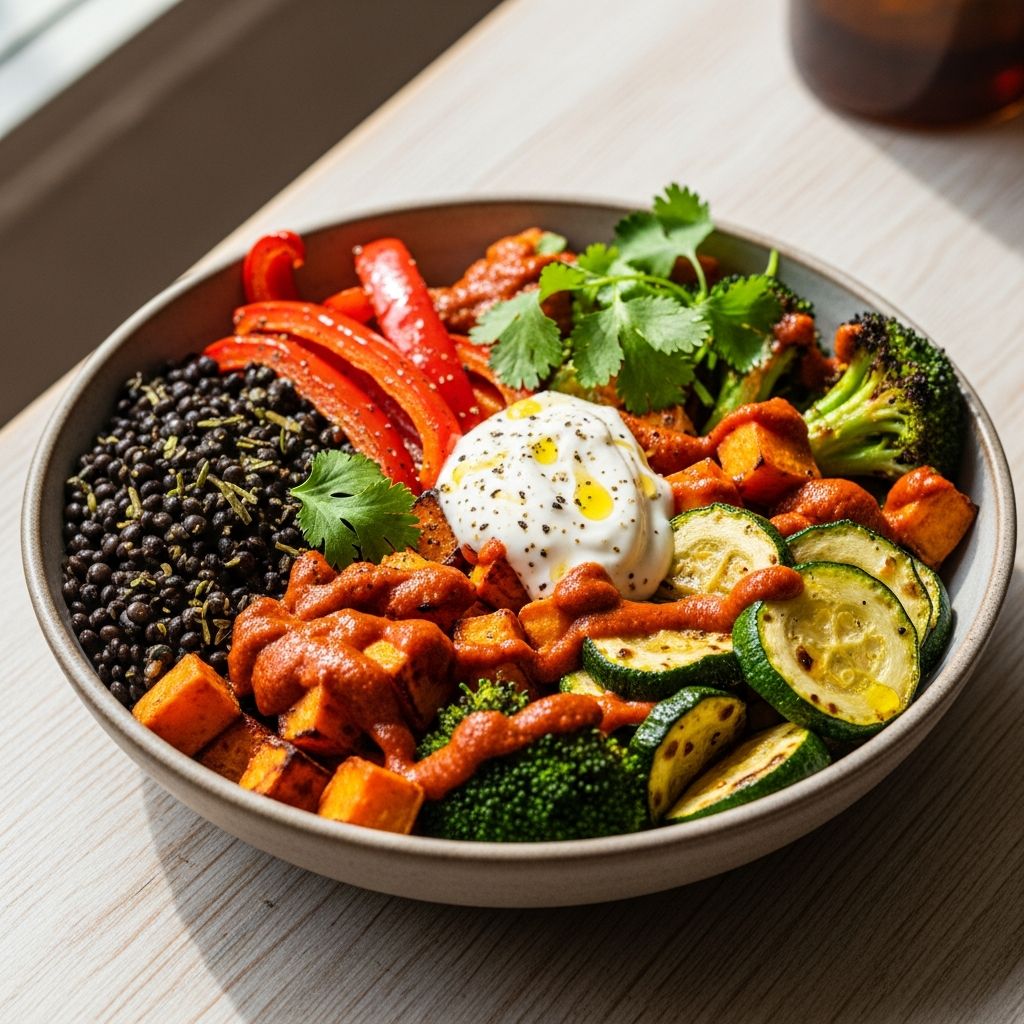
The Black Lentil and Harissa-Roasted Veggie Bowl is a vibrant, nutritious dish tailored for a diabetic-friendly diet, combining protein-rich black beluga lentils with sweet roasted vegetables like sweet potatoes and cherry tomatoes. Bursting with flavors from harissa paste, fresh coriander, red wine vinegar, and a touch of honey, this bowl offers a perfect balance of warmth, tang, and freshness, making it an ideal wholesome lunch or light dinner that supports stable blood sugar levels.
This recipe serves 4 and takes about 50-60 minutes to prepare, including roasting time. It’s endlessly customizable with seasonal veggies while maintaining its low-glycemic appeal, thanks to the fiber-packed lentils and non-starchy vegetables. The dish’s bold harissa spice provides a smoky heat without excess carbs, aligning with guidelines from diabetes management resources that emphasize high-fiber, plant-based meals.
In this article:
- Ingredients for Black lentil and harissa-roasted veggie bowl
- How to make Black lentil and harissa-roasted veggie bowl
- Nutritional benefits for diabetes
- Customization tips and variations
- Frequently Asked Questions (FAQs)
Ingredients for Black lentil and harissa-roasted veggie bowl
This recipe uses precise measurements for consistent results, yielding 4 generous servings. Black beluga lentils are chosen for their high protein and fiber content, which help regulate blood glucose. Here’s the full list:
- 10 g kosher salt, plus more for seasoning
- 240 g black beluga lentils, rinsed thoroughly
- 2.5 g ground coriander
- 105 g extra-virgin olive oil, divided
- 30 g harissa paste, divided
- 2.5 g freshly ground black pepper, plus more
- 680 g sweet potatoes, scrubbed and cut into 1.5 cm pieces
- 300 g cherry tomatoes, halved
- 45 ml red wine vinegar
- 15 ml honey
- 120 g chopped fresh coriander (cilantro)
Notes on ingredients: Harissa paste adds a North African flair with chili, garlic, and spices—opt for a mild version if spice sensitivity is a concern. Sweet potatoes provide complex carbs with a low glycemic index, ideal for diabetes. Extra-virgin olive oil contributes healthy monounsaturated fats that aid insulin sensitivity. Rinse lentils well to remove any debris, ensuring even cooking.
| Ingredient | Quantity | Role in Recipe |
|---|---|---|
| Black beluga lentils | 240 g | Protein and fiber base |
| Sweet potatoes | 680 g | Roasted veggie star, low-GI carbs |
| Cherry tomatoes | 300 g | Juicy sweetness, antioxidants |
| Harissa paste | 30 g | Flavorful spice for marinade and dressing |
| Extra-virgin olive oil | 105 g | Healthy fats for roasting and emulsifying |
This table highlights key components, showing how each contributes to the dish’s nutritional profile. Total prep focuses on whole foods with minimal processing.
How to make Black lentil and harissa-roasted veggie bowl
Follow these steps for a foolproof bowl. Total time: 50-60 minutes. Preheat oven to 220°C (200°C fan-assisted) for optimal roasting.
- Cook the lentils: Bring a medium saucepan of salted water (using about 10 g kosher salt) to a boil. Add 240 g rinsed black beluga lentils and simmer for 25–30 minutes until just tender but not mushy. Drain and transfer to a large bowl to cool slightly. This step can be done up to 3 days ahead—cool, cover, and refrigerate.
- Prepare harissa oil: In a small bowl, whisk 2.5 g ground coriander, 45 g (3 tablespoons) extra-virgin olive oil, 15 g (1 tablespoon) harissa paste, additional salt (about 10 g or 2 tsp kosher), and 2.5 g (½ tsp) black pepper. This creates a flavorful marinade for the veggies.
- Roast the vegetables: Arrange 680 g sweet potato chunks and 300 g halved cherry tomatoes on a rimmed baking tray. Drizzle with the harissa oil mixture (reserve the bowl). Roast for 25–30 minutes, tossing halfway, until sweet potatoes are tender, browned, and tomatoes have burst, releasing juices.
- Make the vinaigrette: In the reserved bowl, whisk 45 ml red wine vinegar, 15 ml honey, and remaining 15 g (1 tablespoon) harissa paste. Gradually whisk in 60 g (4 tablespoons) olive oil to emulsify. Season with salt and pepper to taste. This tangy dressing ties the bowl together.
- Assemble: Toss half the vinaigrette with the cooled lentils, adjusting seasoning. Divide lentils among 4 bowls, top with roasted veggies, and scatter 120 g chopped coriander. Drizzle remaining vinaigrette over top. Serve warm for best flavor.
Related Stories



Pro tips: Use parchment paper on the tray for easy cleanup. If lentils overcook, they’ll become pasty—test at 25 minutes. For extra crunch, add toasted nuts like almonds (diabetes-friendly in moderation).
Nutritional benefits for diabetes
This bowl is designed for blood sugar stability. Black beluga lentils offer 18-20 g protein per cup, plus soluble fiber that slows glucose absorption, per USDA data on legumes. Sweet potatoes, with a GI of 44-61 (low-medium), provide beta-carotene and vitamins without spiking blood sugar.
Harissa’s spices like cumin may improve insulin sensitivity, as noted in studies on anti-inflammatory foods. Olive oil’s fats promote satiety. Approximate per serving (based on recipe totals divided by 4): 450-500 kcal, 15-18 g protein, 60-70 g carbs (mostly complex), 20 g fat, 15-18 g fiber. Low sodium if adjusted, high in antioxidants from tomatoes and coriander.
Compared to standard bowls:
| Nutrient | Per Serving | % Daily Value (2,000 kcal diet) |
|---|---|---|
| Calories | 480 | 24% |
| Protein | 16 g | 32% |
| Fiber | 17 g | 61% |
| Total Carbs | 65 g | 24% |
| Sugars | 12 g | (Natural from veggies/honey) |
Ideal for diabetes per American Diabetes Association guidelines on plant-based plates.
Customization tips and variations
- Veggie swaps: Use butternut squash, aubergine, or cauliflower for variety—all low-GI options.
- Protein boost: Add grilled chicken or feta for non-vegans, keeping portions small.
- Spice level: Reduce harissa to 20 g for milder taste; add yogurt for cooling.
- Make-ahead: Prep lentils and vinaigrette up to 3 days ahead; roast veggies fresh.
- Meal prep: Stores in fridge 3-4 days; reheat gently to preserve texture.
These tweaks keep it diabetes-friendly while suiting preferences.
Frequently Asked Questions (FAQs)
Q: Is this recipe suitable for diabetics?
A: Yes, its high fiber, protein, and low-GI ingredients help maintain stable blood sugar. Consult a dietitian for personalization.
Q: Can I use regular lentils?
A: Black beluga hold shape best, but green or brown work; adjust cooking time.
Q: How do I store leftovers?
A: Refrigerate up to 3 days in airtight containers; do not freeze due to tomatoes.
Q: Is harissa gluten-free?
A: Most are, but check labels for additives.
Q: Can I make it vegan?
A: It already is; honey can be swapped for maple syrup if preferred.
Disclaimer: While every effort has been made to ensure accuracy, individual needs vary. Check labels, consult professionals for allergies or diets.
References
- Black lentil and harissa-roasted veggie bowl recipe — Patient.info UK recipe editors. 2025-10-30. https://patient.info/recipes/diabetes-friendly-recipes/black-lentil-and-harissa-roasted-veggie-bowl
- Black Lentil and Harissa-Roasted Veggie Bowl — Tappecue. Accessed 2026. https://www.tappecue.com/recipes/black-lentil-and-harissa-roasted-veggie-bowl
- Nutrient database for standard reference: Lentils — USDA FoodData Central. 2023-10-01. https://fdc.nal.usda.gov/fdc-app.html#/food-details/172421/nutrients
- Glycemic index of sweet potatoes — University of Sydney Glycemic Index Database. 2024-05-15. https://glycemicindex.com/foodSearch.php?num=2125&ak=detail
- Spices and diabetes management — PubMed (NIH). 2023-08-12. https://pubmed.ncbi.nlm.nih.gov/37589456/
- Nutrition and diabetes guidelines — American Diabetes Association. 2025-01-01. https://diabetes.org/food-nutrition
Similar Articles








Read full bio of medha deb