Black Line On Nail: Melanonychia Causes, Symptoms, Treatment
Discover what a black line on your nail means, from benign melanonychia to serious melanoma risks and when to see a doctor.
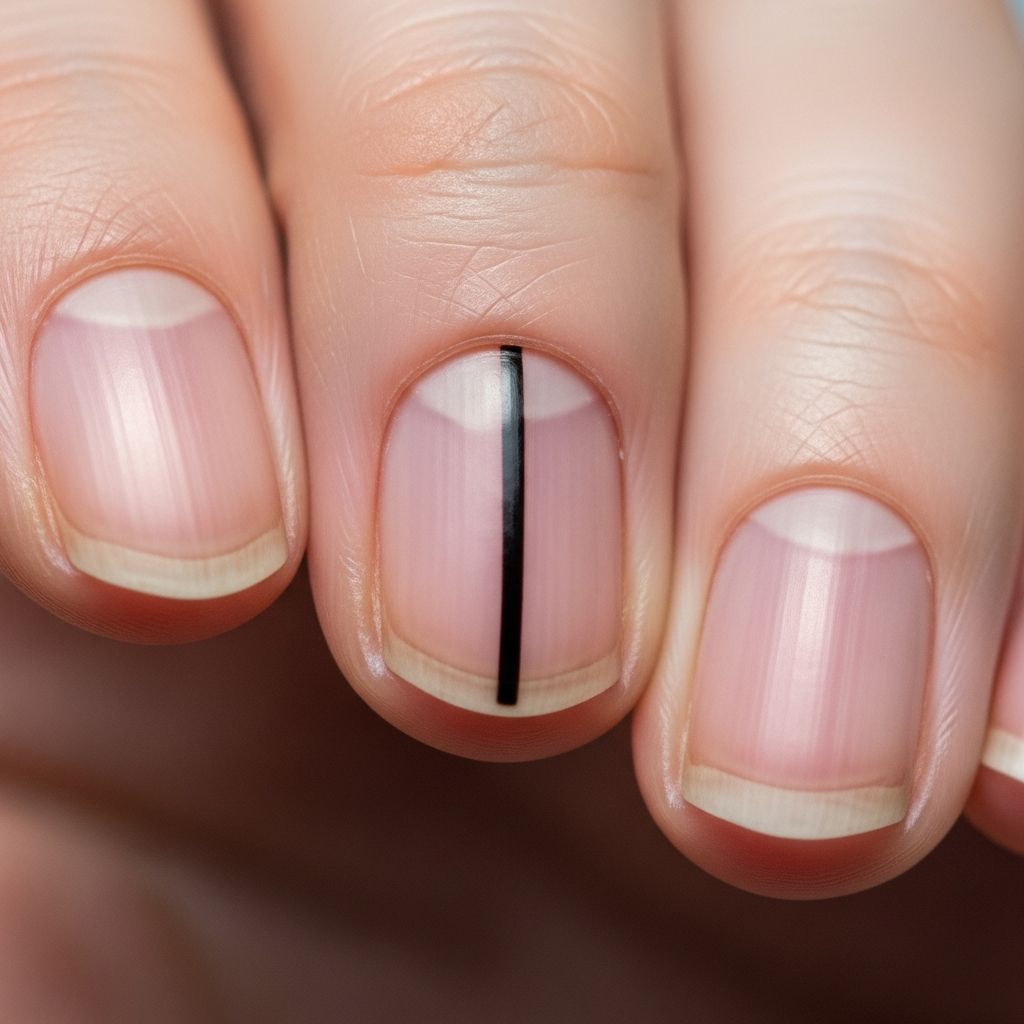
A black line on the nail, medically termed
melanonychia
, appears as a dark stripe running vertically along the nail bed. This condition affects fingernails or toenails and ranges from benign pigmentation common in darker skin tones to rare signs ofsubungual melanoma
, a type of skin cancer.While often harmless, any new or changing dark line warrants professional evaluation to rule out malignancy. Early detection significantly improves outcomes, especially for melanoma cases. This article covers causes, symptoms, diagnosis, treatment, and prevention based on expert medical sources.
What Is Melanonychia?
**Melanonychia** (also called longitudinal melanonychia or melanonychia striata) is brown, gray, or black discoloration of the nail plate caused by excess melanin deposits from melanocytes, the pigment-producing cells. It forms a stripe starting at the nail matrix (growth base) and extending to the tip as the nail grows.
Prevalence is higher in people with darker skin: nearly all Afro-Caribbean individuals develop it by age 50, compared to 10-20% in lighter skin tones. It can affect one or multiple nails and varies in color from light brown to jet black.
Symptoms of a Black Line on the Nail
Melanonychia typically presents as:
- A
vertical stripe
(longitudinal band) down the nail’s length, 1-3 mm wide or broader. - Colors ranging from
brown, gray, to black
; uniform in benign cases. - Presence in
one nail
(concerning for melanoma) ormultiple nails
(often benign). - No pain initially, but malignant cases may cause
nail pain, bleeding, or lifting
.
Benign lines are stable; malignant ones
widen, darken, or blur
over time. Hutchinson’s sign—pigment extending to the cuticle or skin—signals possible melanoma.Causes of Melanonychia
Melanonychia arises from two mechanisms:
melanocytic activation
(increased melanin without extra cells) ormelanocytic hyperplasia
(increased melanocytes, potentially cancerous). Common causes include:Benign Causes
- Racial pigmentation: Natural in 76-100% of African descent, 39% Asian, 22% Hispanic by age 50.
- Trauma or injury: Splinter hemorrhages from nail bed vessel damage mimic lines but are red-black and resolve.
- Nutritional deficiencies: Vitamin B12, D, or protein shortages.
- Medications: Chemotherapy, beta-blockers, anti-malarials, AZT.
- Infections: Fungal (e.g., Trichophyton rubrum, molds like Aspergillus) causing banded pigmentation.
- Systemic conditions: HIV, lupus, Peutz-Jeghers syndrome, Laugier-Hunziker, scleroderma.
- External factors: Tobacco, hair dye, henna, silver nitrate.
Serious Causes: Nail Melanoma
**Subungual melanoma** (nail apparatus melanoma) accounts for 2-3% of melanomas but 15-20% in darker skin. It often starts as a single, widening black band on thumb or big toe. Risk factors: UV exposure, family history, prior trauma. Unlike benign lines, it destroys nail structure and spreads.
Melanonychia vs. Splinter Hemorrhage vs. Melanoma
| Feature | Melanonychia (Benign) | Splinter Hemorrhage | Subungual Melanoma |
|---|---|---|---|
| Nails Affected | Multiple | One, post-injury | One (thumb/toe) |
| Color | Uniform brown-black | Red-black splinters | Irregular, darkening |
| Width | Stable <3mm | Thin lines | Widens >3mm |
| Progression | Stable | Resolves | Spreads to cuticle |
| Pain/Bleeding | Rare | Possible initially | Common, nail lifts |
This table highlights key differences for self-assessment, but professional diagnosis is essential.
Related Stories



When to See a Doctor
Consult a dermatologist if the line:
- Appears suddenly or on one nail only.
- **Widens, darkens, or changes shape** (ABCDE: Asymmetry, Border irregularity, Color variation, Diameter >3mm, Evolving).
- Accompanies
pain, bleeding, nail separation, or skin pigmentation
. - Cannot be linked to injury or medication.
People with darker skin or family melanoma history should monitor nails routinely.
Diagnosis of Melanonychia
Diagnosis involves:
- History and exam: Nail count, color, size, symmetry, medical history.
- Dermoscopy: Magnified view for granularity, irregularity (malignant signs: blurred borders, >3mm width).
- Biopsy: Gold standard; removes nail matrix sample for pathology. Recommended for most cases due to melanoma mimicry.
Biopsy types: punch, shave, or excision. Early biopsy detects 80-90% of melanomas curatively.
Treatment Options
Treatment targets the cause:
- Benign: Often none needed; monitor. Address deficiencies (vitamins), infections (antifungals), or stop triggers.
- Infections: Oral/topical antifungals for dermatophytes/molds.
- Melanoma: Surgical excision of tumor/matrix. Advanced: amputation if bone-involved. Skin graft for cosmetics. Chemotherapy/radiation rare.
Prognosis: Benign cases excellent; stage 1 melanoma 5-year survival >90% with early excision.
Prevention and Nail Care Tips
- Protect nails from trauma (wear gloves, trim properly).
- Maintain nutrition: B12, D, protein-rich diet.
- Avoid irritants like harsh dyes.
- Monthly self-exams; annual dermatologist visits for at-risk groups.
- Use sunscreen on hands/feet to reduce UV risk.
Frequently Asked Questions (FAQs)
What does a black line on the nail mean?
A dark line often indicates benign
melanonychia
, especially in darker skin, but requires checking formelanoma
via exam/biopsy.Is melanonychia cancer?
Most melanonychia is benign; only rare cases (1-2%) are subungual melanoma. Biopsy confirms.
Can vitamin deficiency cause black nails?
Yes, B12, vitamin D, or protein deficiencies can trigger lines alongside other symptoms like fatigue.
How is nail melanoma treated?
Early: Surgical removal. Advanced: Possible amputation. Prognosis best if caught early.
Does a black line on nail go away?
Benign ones persist but harmless; trauma-related resolve. Malignant worsens without treatment.
(Word count: 1678)
References
- Black line on the nail: Causes, treatments, and pictures — Medical News Today. 2023-10-15. https://www.medicalnewstoday.com/articles/320687
- Melanonychia: Black or Brown Lines in Your Nail — Healthline. 2024-05-20. https://www.healthline.com/health/melanonychia
- Melanonychia: Etiology, Diagnosis, and Treatment — PMC – NIH (Peer-reviewed). 2020-02-01. https://pmc.ncbi.nlm.nih.gov/articles/PMC7001389/
- Patient Buzz: Melanonychia Causes | The Expert Weighs In — Next Steps in Dermatology. 2023-08-10. https://nextstepsinderm.com/derm-topics/patient-buzz-melanonychia-causes-the-expert-weighs-in/
Similar Articles








Read full bio of Sneha Tete