Black Salt Vs Regular Salt: 5 Key Differences, Benefits, & Uses
Discover the key differences between black salt and regular salt, including health benefits, uses, and which one might be better for your diet.
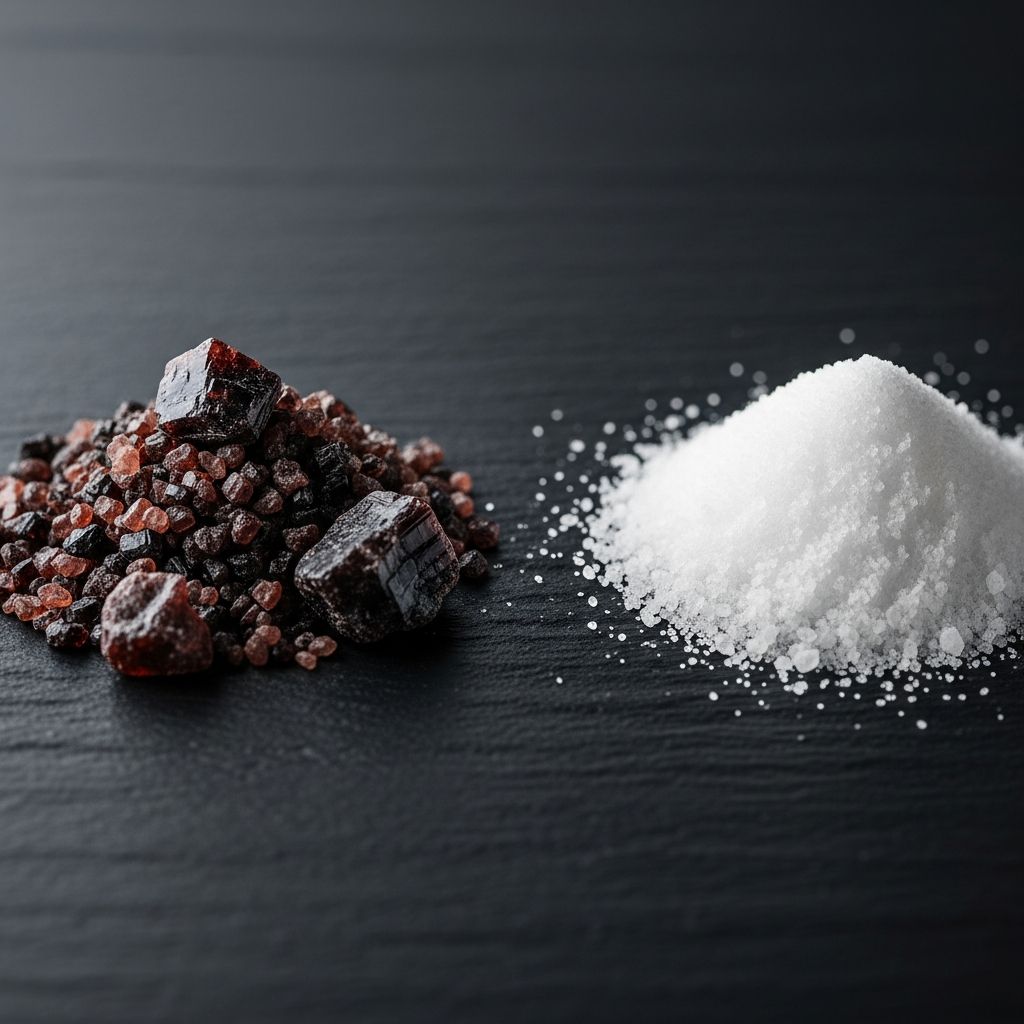
Black salt, also known as kala namak, and regular table salt serve as essential kitchen staples, but they differ significantly in composition, flavor, health effects, and culinary applications. Black salt offers a unique sulfurous taste and potentially lower sodium with added minerals, while regular salt provides a neutral flavor and often iodized nutrition. This article breaks down their differences to help you decide which suits your health goals and recipes.
What Is Black Salt?
Black salt, or kala namak, originates from India, Pakistan, and other South Asian regions. It is a kiln-fired rock salt rich in impurities like sulfates, sulfides, iron, and magnesium, which give it a dark color, pungent egg-like aroma, and tangy flavor. Traditionally mined from Himalayan deposits, modern versions may be synthetic, blending sodium chloride with sodium sulfate, ferric sulfate, and charcoal. Despite its name, black salt ranges from pinkish to violet and is prized in Ayurvedic medicine for digestion and respiratory relief.
The sulfur compounds, particularly hydrogen sulfide, mimic boiled eggs, making it popular in vegan dishes. Unlike refined salts, black salt undergoes minimal processing, retaining natural minerals like potassium, magnesium, and iron.
What Is Regular Salt?
Regular salt, typically table salt, is highly refined sodium chloride extracted from underground deposits or evaporated seawater. Processing removes most trace minerals, leaving nearly pure NaCl (97-99%). It is often iodized to prevent thyroid issues, with additives like anti-caking agents (e.g., sodium ferrocyanide) and dextrose for stability.
Available in fine grains, sea salt, or kosher varieties, regular salt has a clean, neutral taste ideal for everyday cooking. However, over 75% of sodium intake comes from processed foods using this salt, contributing to health concerns like hypertension.
Black Salt vs. Regular Salt: Key Differences
While both enhance flavor, black salt and regular salt diverge in composition, taste, texture, and nutrition. Here’s a detailed comparison:
| Aspect | Black Salt (Kala Namak) | Regular Salt (Table Salt) |
|---|---|---|
| Composition | Sodium chloride with sulfates, sulfides, iron, magnesium, potassium; minimal processing | Nearly pure NaCl (97-99%); often iodized with additives |
| Flavor | Sulfurous, tangy, egg-like, earthy | Neutral, pure salty |
| Texture | Coarse grains or powder; finishing salt | Fine, quick-dissolving |
| Sodium Content | Typically lower; varies by brand | Higher; ~2,300mg per tsp recommended limit |
| Minerals | Rich in iron, magnesium, potassium | Stripped during refining; iodine added |
Health Benefits of Black Salt
Black salt may offer advantages over regular salt, though research is limited. Key potential benefits include:
- Lower Sodium: Often contains less sodium, beneficial for hypertension and sodium-restricted diets like diabetes management. High sodium links to elevated blood pressure.
- Fewer Additives: Minimal processing avoids anti-caking agents like potassium iodate, which may promote fat oxidation and health risks.
- Mineral Content: Retains potassium, magnesium, iron for muscle function, heart health.
- Digestion Aid: Ayurvedic use for bloating, gas; sulfur may act as mild laxative, but evidence needed.
- Anti-Inflammatory: Minerals may reduce muscle cramps, inflammation in diabetics.
Moderation is key: Limit to 2,300mg sodium daily. Check labels, as synthetic black salts may lack minerals.
Related Stories



Health Benefits of Regular Salt
Regular salt is essential for electrolyte balance, nerve function, and hydration. Iodized versions prevent goiter and cognitive issues in iodine-deficient areas. It enhances food safety by inhibiting bacteria. However, excess intake risks hypertension, stomach cancer, bone loss.
Potential Downsides and Risks
Black salt’s impurities (sulfates, sulfides) are generally safe but may cause digestive upset in excess. Synthetic versions offer fewer minerals. Regular salt’s additives like aluminum silicate raise concerns, and high intake exceeds safe limits. Both can contribute to hypernatremia if overconsumed. Pregnant individuals or those with kidney issues should consult doctors. WHO recommends <2g sodium/day[relevant WHO guideline implied via search].
Culinary Uses for Black Salt
- Vegan egg substitute in scrambles, mayo.
- Chaat masala, street foods, pickles.
- Finishing salt for fruits, salads, cocktails.
- Digestion drinks (lemon water).
Culinary Uses for Regular Salt
- Baking, boiling, general seasoning.
- Preserving, brining meats.
- Processed foods base.
Which One Should You Choose?
Choose black salt for bold flavors, lower sodium needs, mineral boost, or vegan cooking. Opt for regular salt for neutral taste, baking precision, or iodine. Hybrid use maximizes benefits. Taste preferences and health (e.g., hypertension favors black salt) guide selection.
Nutrition Comparison
| Nutrient (per tsp) | Black Salt (approx.) | Regular Salt |
|---|---|---|
| Sodium | ~1,500-2,000mg (lower) | ~2,300mg |
| Other Minerals | Trace iron, Mg, K | Iodine (if fortified) |
Values vary; always check labels.
Frequently Asked Questions (FAQs)
Is black salt healthier than regular salt?
Potentially yes, due to lower sodium and minerals, but moderation matters and research is limited.
Can I use black salt for cooking?
Yes, sparingly for its unique flavor; not a full table salt replacement.
Does black salt have iodine?
Rarely; regular salt often does.
Is black salt low in sodium?
Typically lower than table salt, aiding blood pressure control.
How to store black salt?
Airtight container; aroma fades over time.
References
- Black Salt vs White Salt – Differences, Health Benefits, and Uses — Diabetes Telecare. 2023. https://diabetestelecare.com/black-salt-vs-white-salt-differences-health-benefits-and-uses/
- Is Black Salt Better Than Regular Salt? Benefits, and Uses — Healthline. 2023-05-15. https://www.healthline.com/nutrition/black-salt
- Is Black Salt Better than Regular Salt? Uses and Benefits — DrAxe.com. 2024. https://draxe.com/nutrition/black-salt/
- Black Salt: Everything You Need to Know — Essential Trading Coop. 2023. https://www.essential-trading.coop/news/article/black-salt-everything-you-need-to-know
- Is black or rock salt healthier than normal salt? — YouTube (Dr. Mini Nair). 2022. https://www.youtube.com/watch?v=SgRUleVLQfs
Similar Articles








Read full bio of Sneha Tete