Black Widow Spider Bite: 5 Immediate First-Aid Steps
Recognize symptoms, seek immediate care, and understand treatment for potentially serious black widow spider bites.
Black widow spider bites can cause intense pain and muscle spasms due to their potent neurotoxic venom, though fatalities are rare with prompt treatment. Understanding symptoms, first aid, and medical care is crucial for safe recovery.
What Is a Black Widow Spider Bite?
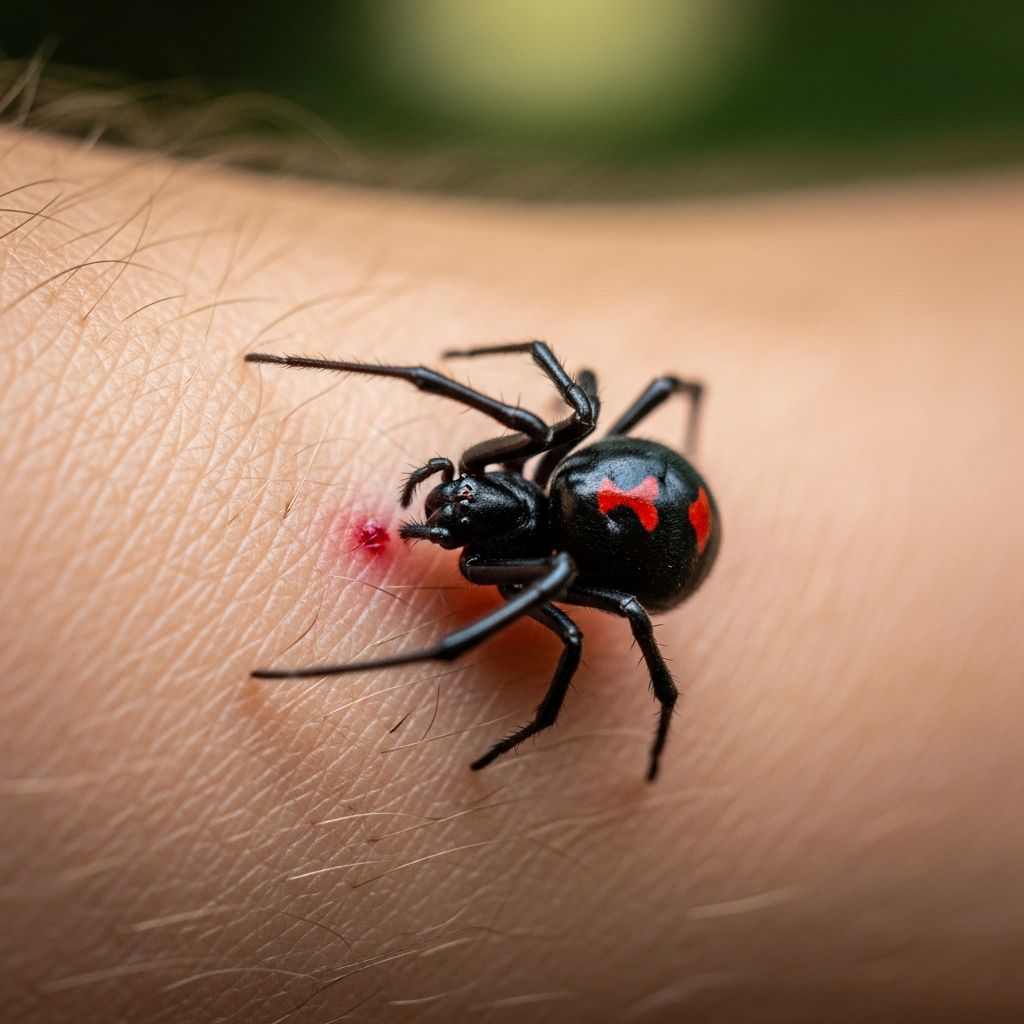
The black widow spider (Latrodectus mactans) is one of the most venomous spiders in North America, recognized by its shiny black body and the iconic red hourglass marking on the female’s abdomen. Females are typically 1.5 inches long, including legs, and their bite delivers alpha-latrotoxin, a neurotoxin that triggers massive neurotransmitter release, leading to muscle contractions and pain.
These spiders inhabit dark, secluded spots like woodpiles, garages, sheds, under rocks, or inside boots and gloves. They rarely bite unless threatened, such as when accidentally disturbed. Bites are most common in warmer months from May to October, peaking in summer.
While males are smaller and less dangerous, only females produce significant venom. Globally, related species like the redback spider in Australia cause similar effects. In the U.S., black widows are found in nearly every state except Alaska.
Black Widow Spider Bite Symptoms
Symptoms vary from mild local reactions to severe systemic effects. Initially, most bites cause immediate sharp pain, like a pinprick, followed by redness, swelling, and two tiny fang marks.
Severe symptoms emerge 30-60 minutes later and peak at 6-12 hours:
- Muscle cramps and spasms starting at the bite site (e.g., hand or foot) and spreading to abdomen, back, chest, or shoulders.
- Intense pain mimicking appendicitis, heart attack, or peritonitis.
- Sweating, chills, fever, nausea, vomiting.
- Headache, restlessness, high blood pressure, rapid heart rate.
- Rarely: seizures, difficulty breathing, stupor, or shock.
Children, elderly, or those with health conditions face higher risks of severe reactions. Pain can persist days to weeks without treatment.
First Aid for Black Widow Spider Bites
Immediate action minimizes venom spread and complications. Stay calm to avoid accelerating circulation.
- Wash the bite with soap and water to prevent infection.
- Apply ice or cool compress for 15 minutes hourly to reduce pain and swelling. Elevate the area if possible.
- Seek medical help immediately: Call poison control (1-800-222-1222), doctor, or go to ER, especially with severe symptoms.
- Avoid: Tourniquets, cutting the wound, or suction—these worsen damage.
- Capture the spider safely for identification without risking another bite.
Over-the-counter pain relievers, antihistamines (e.g., diphenhydramine), or anti-itch creams help mild cases, but never delay professional care.
Black Widow Spider Bite Diagnosis
Diagnosis relies on history, symptoms, and physical exam—no specific lab test exists for the venom.
Doctors assess:
- Bite description, spider ID (photo or specimen ideal).
- Symptom timeline, location, activity at time of bite.
- Vital signs for hypertension, tachycardia; abdominal exam for rigidity.
Differential diagnosis rules out mimics like acute abdomen or myocardial infarction. In severe cases, ECG or blood tests monitor complications.
Black Widow Spider Bite Treatment
Treatment focuses on symptom relief; most recover fully with supportive care.
Related Stories



| Treatment Type | Details | When Used |
|---|---|---|
| Pain Management | NSAIDs, opioids (morphine, fentanyl), calcium gluconate IV. | All cases; severe pain may need narcotics. |
| Muscle Relaxants | Benzodiazepines (lorazepam, diazepam), methocarbamol. | Spasms; often first-line. |
| Antivenom | Latrodectus immune FAB (Analatro); IV administration. | Severe cases: respiratory distress, pregnancy, children, elderly, refractory symptoms. |
| Supportive | Antihypertensives, antiemetics, hydration, tetanus prophylaxis. | Systemic symptoms. |
Antivenom relieves symptoms in 30 minutes but risks anaphylaxis, so reserved for necessity. Hospital admission common for monitoring; most discharged in 24-72 hours.
A real case: A 12-year-old girl bitten on the arm developed severe spasms, hypertension, and pain requiring IV morphine, sedatives, and steroids; she stayed 3 days.
Recovery Time After a Black Widow Spider Bite
Mild bites resolve in days; severe ones take 1-3 days for peak symptoms to subside, with full recovery in 1-2 weeks. Residual muscle pain or weakness may linger weeks.
Follow-up monitors complications like infection or rhabdomyolysis. Most avoid long-term effects; fatalities <1% with care.
Black Widow Spider Bite Prevention
Prevention beats reaction:
- Shake out shoes, gloves, clothing before use.
- Wear gloves handling wood, rocks, debris.
- Seal home cracks; use yellow bug lights outdoors.
- Keep yards clear of junk piles; store firewood away.
- At night, check bedding in infested areas.
Black widows avoid light; they’re nocturnal and non-aggressive.
When to See a Doctor for a Black Widow Spider Bite
Always seek care if suspecting a bite, especially with:
- Spreading cramps, severe pain, abdominal rigidity.
- Breathing issues, high BP, vomiting, fever.
- Bite on face, genitals, or in children/pregnant.
Even mild bites warrant poison control consultation.
Frequently Asked Questions (FAQs)
Are black widow bites fatal?
Rarely; deaths extremely uncommon with treatment, mostly in untreated vulnerable groups.
How long do symptoms last?
Peak at 6-12 hours; resolve days to weeks.
Is antivenom always needed?
No, only for severe/refractory cases due to allergy risk.
Can I treat it at home?
Mild only; severe requires medical intervention.
Do all bites cause severe symptoms?
No, many mild like pinprick with local swelling.
References
- Black Widow Spider Bite Information & Treatment — Columbia Doctors. 2023. https://www.columbiadoctors.org/health-library/condition/black-widow-spider-bite/
- Black Widow Spider Bites Can Be Dangerous — Poison Control. 2024. https://www.poison.org/articles/black-widow-spiders
- Spiders (Black Widow and Brown Recluse) FAQ — American College of Medical Toxicology. 2022-06. https://www.acmt.net/wp-content/uploads/2022/06/FAQ_Spiders.pdf
- Spider Bites – Diagnosis & Treatment — Mayo Clinic. 2024. https://www.mayoclinic.org/diseases-conditions/spider-bites/diagnosis-treatment/drc-20352377
- Black Widow Spider Bite: Care Instructions — MyHealth Alberta. 2023. https://myhealth.alberta.ca/Health/aftercareinformation/pages/conditions.aspx?hwid=abo1644
- Black Widow Spider Toxicity — NCBI StatPearls. 2023-07-17. https://www.ncbi.nlm.nih.gov/books/NBK499987/
Similar Articles








Read full bio of medha deb