Blanch Before You Freeze: 5 Steps To Preserve Vegetables
Learn why blanching vegetables and fruits before freezing preserves flavor, color, texture, and nutrients for optimal home food preservation.
Freezing stands out as one of the most effective methods for preserving the nutritional value, taste, and freshness of fruits and vegetables at home. However, simply placing fresh produce directly into the freezer often leads to disappointing results, such as faded colors, mushy textures, and off-flavors. To overcome these challenges, blanching emerges as a crucial preparatory step. This simple technique ensures that your frozen foods maintain their vibrant appeal and quality for months.
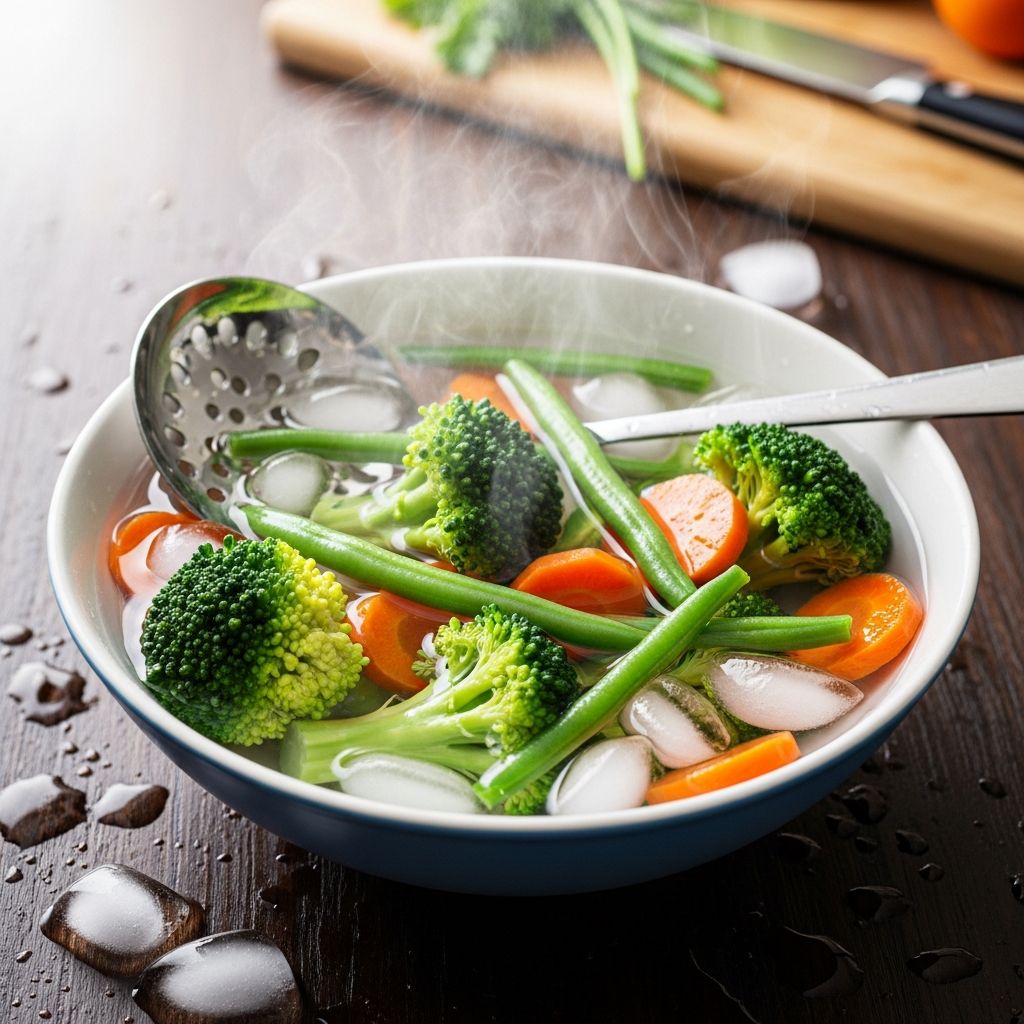
Blanching involves a brief exposure to boiling water or steam followed by rapid cooling in ice water. It deactivates enzymes that cause deterioration during frozen storage, cleans the surface of contaminants, and helps retain essential vitamins. Whether you’re preserving a summer harvest of green beans, broccoli, or apples, understanding blanching unlocks the full potential of home freezing.
What is Blanching?
Blanching is a straightforward two-step process designed to partially cook food just enough to prepare it for freezing without fully cooking it. First, the produce is submerged in boiling water or exposed to steam for a precise, short duration1 typically 1 to 10 minutes depending on the vegetable’s size and type. Immediately after, it is plunged into a bath of ice water to halt the cooking process and preserve crispness.
This method, often called scalding, serves multiple purposes beyond mere heating. It wilts tougher vegetables, making them easier to pack into freezer containers, while brightening colors and removing surface dirt or microorganisms. For home use, water blanching is the most accessible and recommended approach, requiring only a large pot, boiling water, and an ice bath setup.
Timing is critical: under-blanching fails to inactivate enzymes fully, leading to quality degradation in the freezer, while over-blanching results in nutrient loss, softened textures, and diminished flavor. Always consult specific guidelines for each produce type to achieve optimal results.
Why Blanch Food?
Blanching addresses key issues that arise when freezing raw produce. Enzymes naturally present in fruits and vegetables continue to function slowly even at freezer temperatures, breaking down cell walls, altering flavors, and causing discoloration. By denaturing these enzymes, blanching safeguards the food’s integrity.
Key benefits include:
- Preserves flavor, color, and texture: Stops enzymatic reactions that lead to browning, wilting, or rancid tastes, especially in greens like peas and green beans.
- Slows vitamin loss: Retards the degradation of water-soluble vitamins such as vitamin C and B vitamins during prolonged storage.
- Cleanses surfaces: Removes dirt, bacteria, and microorganisms, reducing potential contamination risks upon thawing.
- Improves packability: Softens rigid vegetables for efficient freezing without excess air pockets.
- Extends shelf life: Frozen blanched produce can maintain quality for 8 to 12 months or more.
Without blanching, frozen items may develop off-flavors, lose vibrancy, and become unappealing, though this is primarily a quality concern rather than a direct safety risk.
How to Blanch Vegetables for Freezing
Proper execution of blanching ensures maximum preservation benefits. Begin by selecting fresh, high-quality produce at peak ripeness. Wash thoroughly under cool running water, trim ends, and cut into uniform pieces for even processing.
- Prepare equipment: Use a large pot with 1 gallon of water per pound of vegetables. Add a blanching basket or wire colander that fits inside. For steam blanching, use a pot with a raised basket at least 3 inches above boiling water and a tight lid.
- Boil water: Bring to a rolling boil. Steam blanching starts timing once the lid is secured.
- Blanch: Add prepared vegetables in small batches to avoid dropping the water temperature. Use a timer strictly1 examples include asparagus (2-4 minutes for small spears), broccoli (3 minutes for florets), carrots (3-5 minutes sliced), and green beans (3 minutes).
- Shock in ice water: Transfer immediately to a large bowl of ice water. Cool for the same duration as blanching (e.g., 3 minutes blanch = 3 minutes cool). This prevents carryover cooking.
- Dry and pack: Drain thoroughly, pat dry with towels to remove excess moisture, which can lead to freezer burn. Pack into freezer-safe bags or containers, removing air, and label with date.
Related Stories



Steam blanching uses less water and may retain more nutrients but requires specialized equipment. Water blanching is reliable for beginners.
Blanching Times for Vegetables
Precise timing prevents common pitfalls. The table below provides guidelines based on standard recommendations for common vegetables. Adjust slightly for size, but err on the side of caution to avoid over- or under-processing.
| Vegetable | Preparation | Blanching Time (Minutes) |
|---|---|---|
| Asparagus | Small spears | 2 |
| Asparagus | Large spears | 3-4 |
| Broccoli | Florets 1-1/2 inches | 3 |
| Carrots | 1/2-inch slices | 3 |
| Carrots | Whole small or diced | 5 |
| Green Beans | Snap or cut | 3 |
| Peas | Green peas | 1-2 |
| Potatoes | Diced 1/2 inch | 4-6 |
| Sweet Peppers | Halves or slices | 3 |
These times ensure enzyme inactivation while minimizing nutrient leaching. Always cool equally in ice water.
Blanching Fruits Before Freezing
While most vegetables require blanching, fruits vary. Firm fruits like apples, pears, and peaches benefit from blanching to inactivate enzymes causing browning and to loosen skins for peeling. Dip halves or slices for 1-2 minutes, then ice shock.
Berries (strawberries, blueberries, raspberries) and soft fruits often skip blanching: wash, dry, freeze individually on trays, then bag. This preserves delicate textures without water exposure.
Foods That Don’t Need Blanching
Not all items require this step. Meats, poultry, fish, breads, and most fruits freeze well raw. Vegetables like peppers, cucumbers, and summer squashes may be frozen unblanched for specific uses, accepting some quality trade-offs.
- Berries and soft fruits
- Herbs (chop and freeze in oil)
- Meats and proteins
Common Mistakes to Avoid
Over-blanching: Leads to vitamin loss (especially C and B), faded color, and limp texture.
Under-blanching: Worse than none, as it stimulates enzymes.
Skipping ice bath: Causes overcooking via residual heat.
Poor drying: Excess moisture promotes ice crystals and burn.
Overcrowding pot: Lowers temperature, extending blanch time unevenly.
Frequently Asked Questions (FAQs)
What if I skip blanching vegetables?
Quality suffers—expect dull color, poor texture, and flavor loss, but no direct safety risk.
Water vs. steam blanching?
Water is standard and effective; steam may preserve more nutrients but needs proper equipment.
Can I blanch in microwave?
Not recommended for uniform results; stick to boiling or steaming.
How long does blanched food last in freezer?
8-12 months at 0F (-18C) for best quality.
Does blanching kill all bacteria?
It reduces surface microbes but freezing handles pathogens; cook thoroughly before eating.
Conclusion
Incorporating blanching into your freezing routine elevates home preservation from basic to exceptional. It safeguards nutrition, appearance, and taste, making your freezer a reliable extension of garden-fresh eating year-round. Experiment with small batches to perfect techniques tailored to your produce.
References
- Blanching – is it really necessary before freezing? 1 FitStream. 2023. https://fitstream.eu/en/blanching-is-it-really-necessary-before-freezing/
- Why is Blanching Recommended when Freezing Vegetables? 1 University of Wisconsin Extension. 2019-06-28. https://winnebago.extension.wisc.edu/2019/06/28/why-is-blanching-recommended-when-freezing-vegetables/
- Blanch Before You Freeze 1 Academy of Nutrition and Dietetics. 2023. https://www.eatright.org/food/home-food-safety/safe-cooking-and-prep/blanch-before-you-freeze
- Blanching Vegetables 1 National Center for Home Food Preservation (USDA). 2023. https://nchfp.uga.edu/how/freeze/freeze-general-information/blanching-vegetables/
- Blanching is important part of vegetable freezing process 1 Oklahoma State University Extension. 2021. https://extension.okstate.edu/articles/2021/ellis-veg-blanching.html
- Our Go-To Food Preservation Technique 1 Blanch And Freeze 1 Frosty Garden. 2023. https://frostygarden.com/topics/our-go-to-food-preservation-technique-blanch-freeze/
Similar Articles








Read full bio of medha deb