Blastomycosis-Like Pyoderma: 6 Diagnostic Criteria, Treatment
Exploring the histopathological features, clinical presentation, and differential diagnosis of blastomycosis-like pyoderma, a rare reactive pyoderma.
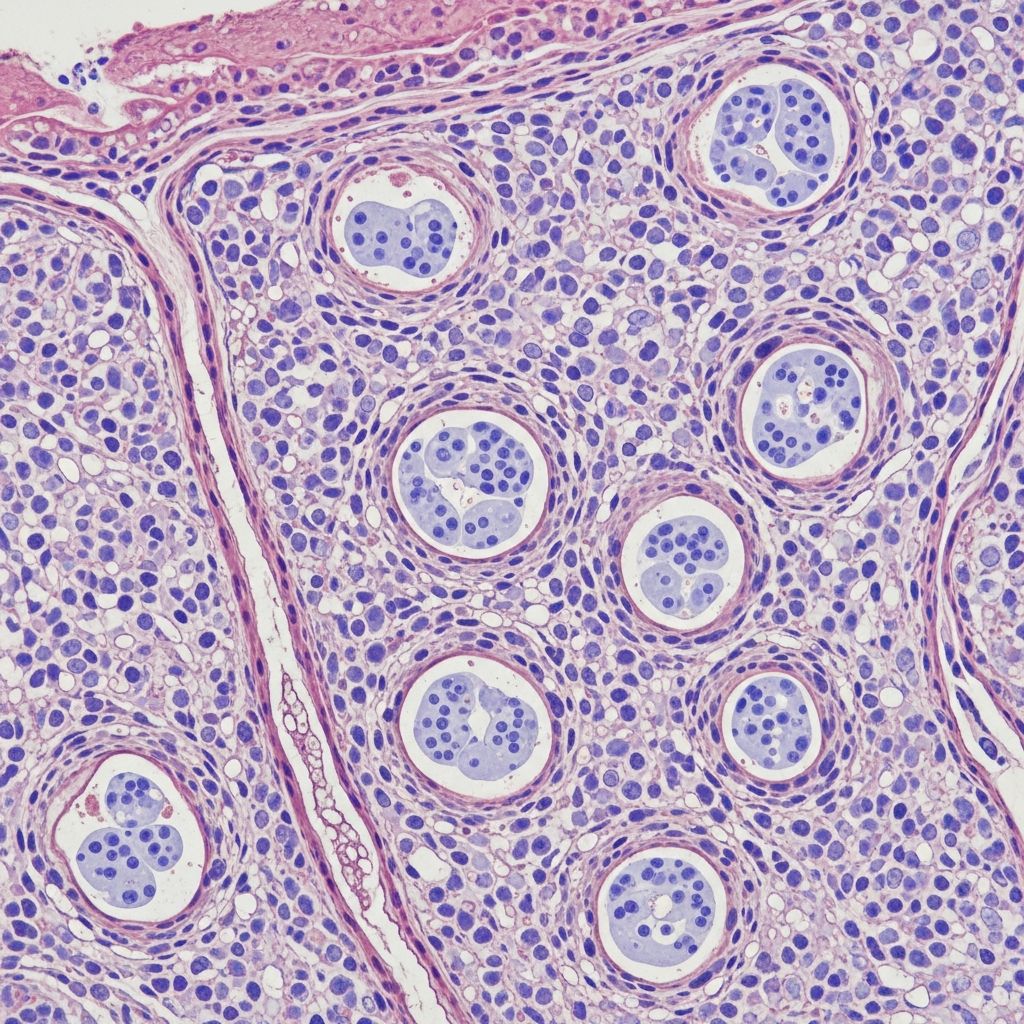
Blastomycosis-like pyoderma (BLP) represents a rare, exaggerated cutaneous response to bacterial infection, characterized by large verrucous plaques mimicking deep fungal infections. This condition typically arises in individuals with underlying immunocompromise, malnutrition, or chronic illness, leading to impressive epidermal hyperplasia and suppuration.
Introduction
Blastomycosis-like pyoderma is a distinctive form of pyoderma that provokes a marked verrucous epidermal reaction pattern accompanied by draining sinuses and pustules. Clinically, it presents as large, vegetating plaques with elevated borders and multiple pustules, often on the trunk and extremities of patients in poor health. Histologically, it features pseudoepitheliomatous hyperplasia that can closely resemble invasive squamous cell carcinoma or fungal infections like blastomycosis. The condition fulfills specific diagnostic criteria proposed by Su et al., including verrucous plaques, neutrophilic abscesses on biopsy, and bacterial growth from tissue cultures without evidence of deep fungi or mycobacteria.
Patients often have predisposing factors such as alcoholism, malnutrition, diabetes, or immunosuppression, which impair local immune responses and allow common skin bacteria to trigger this hypertrophic reaction. Staphylococcus aureus is the most frequently isolated pathogen, though coagulase-negative staphylococci and Enterococcus species have also been reported. Early recognition is crucial to differentiate it from malignancies and guide prolonged antibiotic therapy.
Clinical Features
BLP manifests as multiple, bilateral, symmetrical thick grayish-brown verrucous plaques measuring 2-10 cm, often with heavy crusting, pustules, and ulcers featuring elevated borders. Lesions commonly affect the trunk, extremities, hands, and feet, sometimes coalescing into fleshy plaques. Associated findings include pedal edema, lymphadenopathy, pallor, and signs of malnutrition like anemia, hypoproteinemia, and hypoalbuminemia.
- Verrucous plaques with pustules and elevated borders: Hallmark presentation lasting months to years.
- Symptomology: Mild pain, crusting, and erosion; no systemic fever unless secondary infection.
- Predispositions: Alcoholism, smoking, poor hygiene, nutritional deficiencies (e.g., confirmed by D-xylose test or Giardia in stools).
Lesions evolve from minor trauma sites, spreading via bacterial dissemination on compromised skin. Pathergy test is typically negative, distinguishing it from pyoderma gangrenosum.
Histopathology
Microscopic examination reveals broad verrucous lesions with epidermal papillomatosis, surface erosion, suppuration, and numerous cystic spaces connecting to draining sinuses. Regenerative epithelium may exhibit a pseudo-infiltrative pattern mimicking squamous cell carcinoma, with irregular downward proliferation.
Key histological hallmarks include:
- Epidermal changes: Acanthosis, pseudoepitheliomatous hyperplasia, spongiosis, and psoriasiform dermatitis.
- Dermal findings: Neutrophilic microabscesses within squamous islands, moderate lymphocytic infiltrates, focal neutrophils, and histiocytes.
- Surface features: Subcorneal pustules, parakeratosis, and suppuration.
Gram stains often show gram-positive cocci, and cultures confirm pathogenic bacteria like Staphylococcus aureus or coagulase-negative staphylococci. Special stains (e.g., PAS, GMS, Ziehl-Neelsen) are negative for fungi, mycobacteria, and AFB.
Diagnostic Criteria
Diagnosis relies on Su et al.’s criteria, ensuring exclusion of true infections and neoplasms:
- Large verrucous plaques with multiple pustules and elevated borders.
- Pseudoepitheliomatous hyperplasia with abscesses on biopsy.
- Growth of at least one pathogenic bacterium from tissue culture.
- Negative cultures for deep fungi, atypical mycobacteria, and M. tuberculosis.
- Negative fungal serology.
- Normal blood bromide and iodide levels.
Laboratory workup includes CBC (neutrophilic leukocytosis), serum proteins (hypoalbuminemia), and exclusion of bromoderma via halide levels. Biopsy is mandatory for confirmation.
Differential Diagnosis
BLP’s verrucous morphology overlaps with several entities, necessitating careful clinicopathologic correlation.
Related Stories



| Condition | Key Distinguishing Features |
|---|---|
| Blastomycosis | Similar reaction; perform fungal stains (PAS/GMS positive for broad-based buds). Culture confirms Blastomyces dermatitidis. More common in endemic areas. |
| Keratoacanthoma | Symmetric crateriform architecture; less suppuration, no bacteria on culture. |
| Squamous cell carcinoma | Atypical keratinocytes, invasion beyond hyperplasia; no acute inflammation. |
| Atypical mycobacterial infection/Sporotrichosis | Granulomatous inflammation; AFB or fungal elements on stains/culture. |
| Pyoderma gangrenosum | Rapidly progressive ulcers, pathergy positive; neutrophilic dermatosis without hyperplasia. |
| Actinic comedonal plaque | Less inflammation, prominent solar elastosis; later-stage BLP variant. |
| Bromoderma | History of bromide intake; elevated serum levels. |
Treatment and Prognosis
Management centers on prolonged systemic antibiotics tailored to culture sensitivities, often 2-4 weeks of IV agents like cefotaxime (1g BID) or amoxicillin-clavulanate, combined with wet compresses and curettage. Nutritional support addresses underlying deficiencies. Response is marked by lesion flattening and no new eruptions.
Prognosis is excellent with appropriate therapy, though recurrence occurs if predispositions persist. Rare associations include type 2 diabetes and leukemia.
Frequently Asked Questions (FAQs)
What causes blastomycosis-like pyoderma?
BLP results from an exaggerated tissue reaction to bacterial infection (S. aureus most common) in immunocompromised or malnourished patients.
How is BLP diagnosed?
Via Su’s criteria: clinical verrucous plaques, biopsy showing hyperplasia/abscesses, bacterial culture positivity, and exclusion of fungi/mycobacteria.
Is blastomycosis-like pyoderma contagious?
No, it is a reactive process to common skin bacteria, not directly transmissible like true blastomycosis.
What does BLP look like under the microscope?
Verrucous hyperplasia, draining sinuses, neutrophilic abscesses, and pseudo-infiltrative epithelium without atypia.
How is blastomycosis-like pyoderma treated?
Long-term antibiotics (e.g., cefotaxime), local care, and correction of underlying factors like malnutrition.
Associated Conditions and Risk Factors
BLP frequently occurs in settings of:
- Malnutrition and hypoalbuminemia.
- Alcoholism and smoking.
- Diabetes mellitus, obesity, immunosuppression.
- Nutritional deficiencies (e.g., Giardia-associated malabsorption).
These impair skin immunity, allowing bacterial superinfection to elicit hypertrophic responses.
References
- Blastomycosis-like pyoderma pathology — DermNet NZ. 2023. https://dermnetnz.org/topics/blastomycosis-like-pyoderma-pathology
- Blastomycosis-like pyoderma — PubMed (Arch Dermatol). 1979-11-01. https://pubmed.ncbi.nlm.nih.gov/426522/
- Blastomycosis-Like Pyoderma- A Rare Case Report — PMC – NIH (J Clin Diagn Res). 2016-10-01. https://pmc.ncbi.nlm.nih.gov/articles/PMC5121776/
- Blastomycosis-like pyoderma — Indian J Dermatol Venereol Leprol. 2010. https://ijdvl.com/blastomycosis-like-pyoderma/
- Blastomycosis-like pyoderma pathology image — DermNet NZ. 2023. https://dermnetnz.org/imagedetail/12343-blastomycosis-like-pyoderma-pathology
Similar Articles








Read full bio of Sneha Tete