Blastomycosis Guide: Symptoms, Diagnosis, And Treatment
Comprehensive guide to blastomycosis: symptoms, diagnosis, treatment, and prevention of this systemic fungal infection.
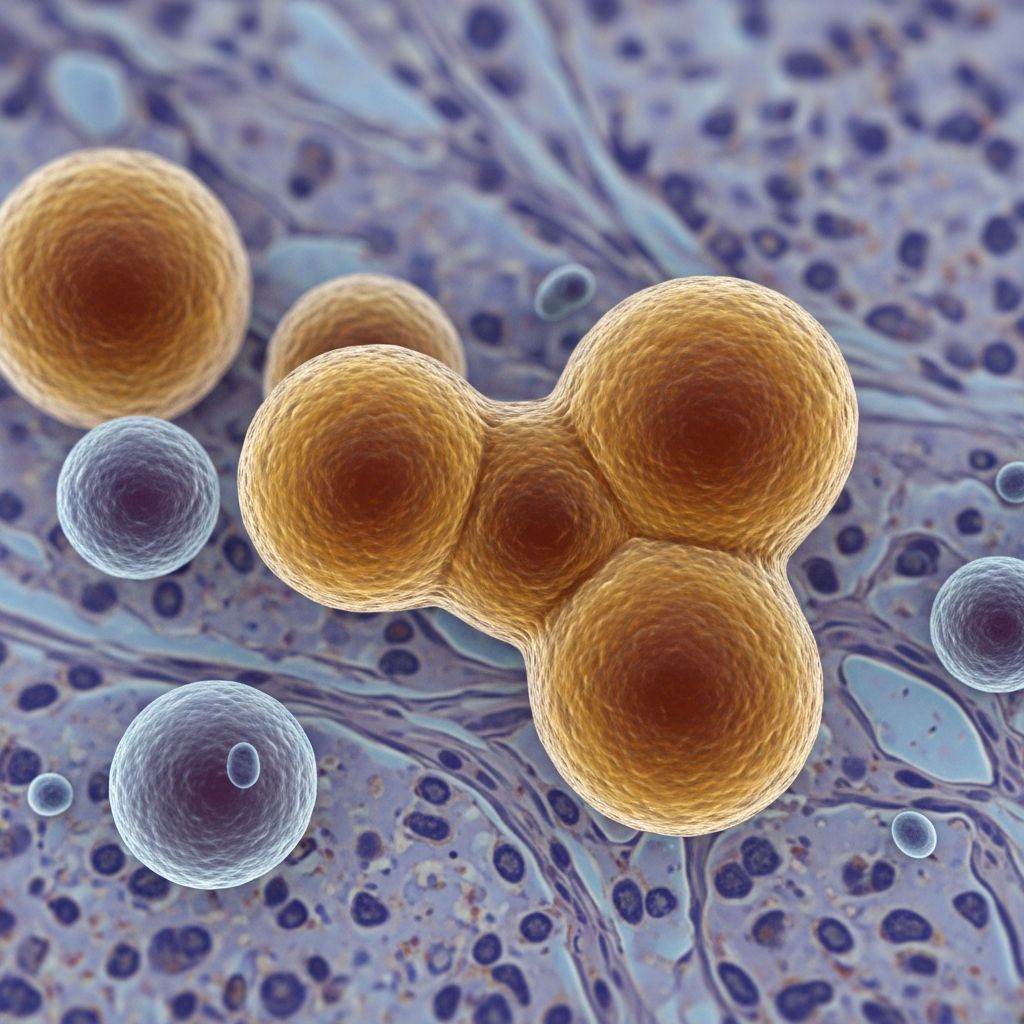
Authoritative facts about blastomycosis (North American blastomycosis, Gilchrist disease): what it is, causes, clinical features, tests, and treatments from DermNet New Zealand dermatology.
What is blastomycosis?
Blastomycosis is a systemic fungal infection caused by the dimorphic fungus Blastomyces dermatitidis. This pathogen exists in a mycelial form in the environment and converts to a yeast form at human body temperature (37°C). It primarily enters the body through inhalation of spores from soil, leading to pulmonary infection that can disseminate to skin, bones, genitourinary tract, and central nervous system. The disease is known as “the great pretender” due to its ability to mimic bacterial pneumonia, tuberculosis, or malignancy. Approximately 50% of infections are asymptomatic, but symptomatic cases range from mild flu-like illness to acute respiratory distress syndrome (ARDS) and death.
Endemic to North America, particularly the Ohio and Mississippi River valleys, Great Lakes region, and southeastern states, blastomycosis thrives in moist soil rich in organic matter near waterways. Outbreaks are linked to soil disruption activities like construction or excavation. Immunocompromised individuals, such as those with HIV/AIDS, organ transplants, or on corticosteroids, face higher risks of severe dissemination.
Who gets blastomycosis?
Blastomycosis affects all age groups, with a male predominance (10:1 ratio), possibly due to occupational exposures like forestry, hunting, or construction in endemic areas. Middle-aged adults are most commonly diagnosed, though pediatric cases occur. Risk factors include:
- Living or traveling in endemic regions (e.g., Midwest, Southeast US, parts of Canada).
- Outdoor activities involving soil disturbance.
- Immunosuppression (HIV, cancer, transplants).
- Close contact with infected dogs, as canine blastomycosis is common in endemic zones.
Incidence is estimated at 1–40 cases per 100,000 in high-risk areas, with underreporting due to diagnostic delays.
What causes blastomycosis?
Blastomyces dermatitidis is the causative dimorphic fungus. In nature, it grows as mold, producing conidia (spores) aerosolized by disturbing contaminated soil. Inhaled conidia convert to broad-based budding yeasts (8–15 μm) in the lungs, evading phagocytosis and disseminating hematogenously. Virulence factors include cell wall β-glucan and BAD1 adhesin, promoting immune evasion. No human-to-human transmission occurs; rare lab-acquired cases reported.
What are the clinical features of blastomycosis?
Pulmonary blastomycosis
The lungs are the primary site in 70–90% of symptomatic cases. Acute pneumonia (3–6 weeks post-exposure) resembles community-acquired pneumonia with fever, chills, cough, dyspnea, myalgias, and chest pain. Chest X-rays show patchy infiltrates or lobar consolidation.
Chronic pulmonary form (>6 weeks) mimics tuberculosis or cancer: persistent cough (often hemoptyic), weight loss, night sweats, low-grade fever. Radiographs reveal cavitary lesions, nodules, masses, or fibrosis. ARDS develops in 10–20% of severe cases, with high mortality.
Cutaneous blastomycosis
Skin involvement occurs in 40–80% of disseminated cases, either primary (rare, via trauma) or secondary. Lesions begin as painless papules or nodules, evolving into verrucous (warty) plaques with raised borders or ulcerative craters with heaped-up edges. Central healing with microabscesses and pseudoepitheliomatous hyperplasia is characteristic. Common sites: face, arms, legs. Lesions are non-pruritic but may drain pus.
Osteoarticular blastomycosis
Affects 10–30% of disseminated cases, targeting vertebrae (60%), long bones, pelvis. Symptoms: localized pain, swelling, sinus tracts with drainage. Radiographs show lytic lesions with periosteal reaction.
Related Stories



Genitourinary blastomycosis
Prostate involvement in 10–30% of men causes prostatitis with dysuria, hematuria, or epididymitis. Renal abscesses or orchitis possible.
Central nervous system blastomycosis
Rare (5–10%), more in immunocompromised. Presents as meningitis (headache, fever, altered mental status) or mass lesions (focal deficits, seizures). CSF shows pleocytosis, high protein, low glucose; yeasts grow in 45% cultures.
Other sites
Larynx (hoarseness), thyroid, heart (endocarditis), abdomen (peritonitis). Multi-organ dissemination in severe cases.
How is blastomycosis diagnosed?
Diagnosis requires high suspicion in endemic exposures with unresolving pneumonia. Average delay: 1–3 months; 40% >1 month.
Microbiology
- Culture: Gold standard. Sputum, tissue, pus, fluids plated on Sabouraud agar; mold at 25°C (4–5 weeks), yeast at 37°C. Definitive ID via conversion.
- Microscopy: KOH, calcofluor white, GMS, PAS stains reveal 8–15 μm yeasts with thick walls, single broad-based buds (pathognomonic). Sensitivity 40–90% in tissues.
Antigen detection
Urine/serum Blastomyces antigen (MVista EIA): 80–95% sensitive for disseminated/pulmonary; cross-reacts with histoplasmosis. CSF antigen useful for meningitis.
Antibody tests
Low sensitivity (50%); not recommended for diagnosis.
Imaging
Chest X-ray/CT: infiltrates, masses, cavities. MRI/CT for extrapulmonary.
Biopsy
Skin/bone/mucosal: granulomatous inflammation with yeasts.
| Method | Sensitivity | Specificity | Time |
|---|---|---|---|
| Culture | 70-90% | High | Weeks |
| Microscopy | 40-90% | High | Hours |
| Antigen (urine) | 80-95% | 85% | Days |
What is the treatment for blastomycosis?
Treatment is mandatory; spontaneous resolution rare in symptomatic cases. IDSA/ATS guidelines base therapy on site/severity.
Mild-moderate pulmonary/non-meningeal disseminated
Itraconazole 200–400 mg/day PO for 6–12 months. Monitor LFTs; therapeutic levels 1–2 μg/mL.
Severe/life-threatening/ARDS/CNS
Liposomal amphotericin B 5 mg/kg/day IV (3–7 days or total 7.5–15 mg/kg), then itraconazole step-down 6–12 months.
Special cases
- Pregnancy: Amphotericin B (avoid azoles).
- Immunosuppressed: Longer therapy, suppression.
- Osteoarticular/CNS: 12+ months itraconazole ± amphotericin.
- Relapse (5–10%): Re-treat, susceptibility testing.
Response: Symptom resolution, negative cultures/antigen. Cure rates 80–95% with adherence.
What is the outcome for blastomycosis?
Untreated mortality 20–60% (disseminated/CNS >90%). With treatment, overall 5–10%; higher in ARDS/immunocompromised (20–40%). Relapse in 5%, late complications (fibrosis, Addisonian crisis). Survivors may have residual lung damage.
How can blastomycosis be prevented?
No vaccine. Prevention:
- Avoid soil disruption in endemic areas; use masks for high-risk activities.
- Early suspicion/treatment in at-risk patients.
- Monitor immunosuppressed/ pet owners in endemic zones.
Clinical images of blastomycosis
(Note: Images typically show verrucous skin plaques with raised borders, pulmonary infiltrates on CXR, yeast forms on microscopy. Refer to high-res dermoscopy/pathology slides.)
Frequently asked questions about blastomycosis
Q: Is blastomycosis contagious?
A: No, it spreads via environmental spores, not person-to-person.
Q: How long after exposure do symptoms appear?
A: 3–6 weeks (21–90 days).
Q: Can blastomycosis resolve without treatment?
A: Yes in ~50% asymptomatic; symptomatic cases rarely self-resolve and risk dissemination.
Q: What if antibiotics fail for pneumonia?
A: Suspect fungal etiology like blastomycosis in endemic areas; test for fungi.
Q: Is blastomycosis fatal?
A: Potentially, but treatable; mortality <10% with prompt antifungals.
References
- Clinical manifestations and treatment of blastomycosis — Chapman SW et al. Clin Chest Med. 2017-09-01. https://pmc.ncbi.nlm.nih.gov/articles/PMC5657236/
- Blastomycosis Symptoms and Diagnosis — American Lung Association. 2023. https://www.lung.org/lung-health-diseases/lung-disease-lookup/blastomycosis/blastomycosis-symptoms-and-diagnosis
- Blastomycosis — NORD (National Organization for Rare Disorders). 2024-05-17. https://rarediseases.org/rare-diseases/blastomycosis/
- About Blastomycosis — Minnesota Department of Health. 2025. https://www.health.state.mn.us/diseases/blastomycosis/basics.html
- Blastomycosis — Saccente M, Woods GL. StatPearls [Internet]. 2023-07-17. https://www.ncbi.nlm.nih.gov/books/NBK441987/
- Blastomycosis (Gilchrist’s disease) — Cleveland Clinic. 2024. https://my.clevelandclinic.org/health/diseases/blastomycosis
Similar Articles








Read full bio of medha deb