Bleeding And Bruising: Symptoms, Causes, And Care Guide
Comprehensive guide to understanding causes, symptoms, diagnosis, treatment, and prevention of bleeding and bruising disorders.
Introduction – Bleeding
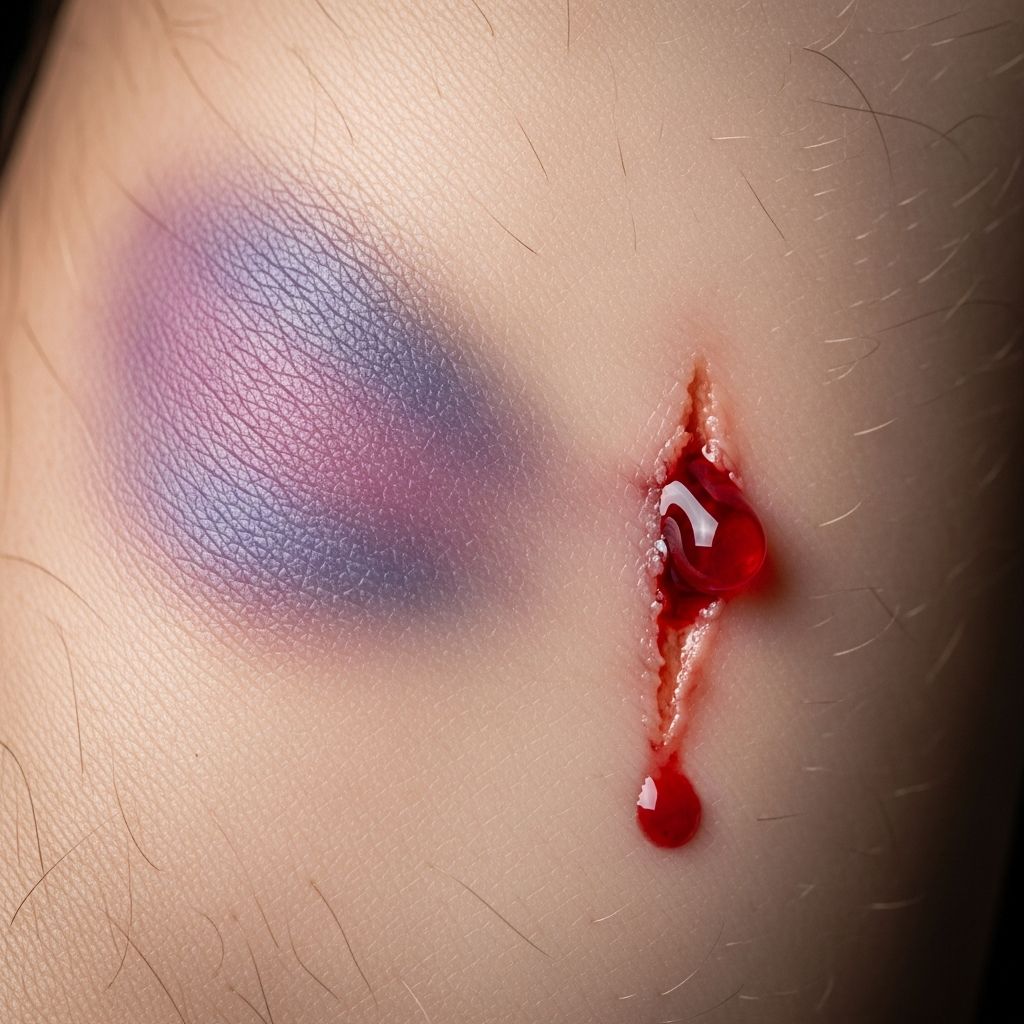
Bleeding, also called haemorrhage, is the term used to describe blood escaping from the blood vessels. Bleeding from the skin occurs if there is an injury to the skin surface, and it may sometimes occur spontaneously. Smaller areas of bleeding are known as
petechiae
(each spot is < 2 mm) andpurpura
(2 mm to 1 cm). These manifestations indicate leakage from small capillaries into the skin without skin disruption.Larger areas of bleeding under the skin are called
ecchymoses
(plural of ecchymosis, >1 cm), commonly referred to as bruises. Subungual haemorrhage, or bleeding under a nail plate, results in painful or unnoticed purplish-black discolouration. The discolouration may persist for months as the nail carries the blood with it as it grows out.Introduction – Bruising
A
bruise
, also known asecchymosis
or acontusion
, occurs when small blood vessels (capillaries) under the skin bleed, while the overlying skin remains intact. The injury causes blood to leak and collect near the skin surface, causing bluish-black skin discolouration.Deeper bruising results in a
haematoma
— a collection of blood that lies within body tissues or cavities. Bruises typically evolve in colour over time: starting red, turning blue-purple, then green-yellow as haemoglobin breaks down, before fading.Demographics
Anyone can bleed from a cut or develop a bruise after an injury. The severity of bleeding depends on the impact of an injury. Repeated bleeding from a skin lesion with minimal provocation can be a sign of skin cancer, most often basal cell carcinoma.
Occasional bruises are normal and do not warrant medical attention. Bleeding and bruises are more common in certain individuals, such as:
- The elderly, due to skin thinning and vessel fragility (e.g., senile purpura)
- People taking anticoagulants or antiplatelet drugs (e.g., warfarin, aspirin, heparin)
- Those with bleeding disorders like haemophilia or von Willebrand disease
- Patients on systemic corticosteroids
- Individuals with nutritional deficiencies (vitamin C, K)
- Children, who bruise more from play injuries
- Athletes or those in contact sports
Bruising occurs more readily in certain sites where blood accumulates easily, such as when a relatively minor bump results in a black eye.
Causes
After an injury, the body immediately attempts to stop any blood loss through three key responses: vascular spasm, platelet plug formation, and coagulation cascade. Defects in any of these can lead to spontaneous or excessive bleeding and bruising.
Platelet Disorders
Platelets can be dysfunctional or decreased in number. This can be due to conditions, such as:
- Thrombocytopenia (low platelet count, e.g., from leukemia, ITP)
- Drug-induced (aspirin, NSAIDs)
- Viral infections
- Bone marrow failure
Blood Vessel Defects
Blood vessel defects, where the vessels are twisted or enlarged, include:
Related Stories



- Actinic purpura (senile purpura from photodamage)
- Amyloidosis
- Connective tissue disorders (Ehlers-Danlos, scurvy)
- Vasculitis
- Purpura fulminans (thrombotic)
Clotting Factor Deficiencies
A clotting factor deficiency may be due to drugs that affect clotting factors (e.g.,
warfarin
,heparin
,rivaroxaban
,apixaban
). These are often prescribed for atrial fibrillation or a recent blood clot in veins or lungs.A clotting factor deficiency can also be a result of a medical condition, such as:
- Haemophilia A or B
- Von Willebrand disease
- Liver disease
- Vitamin K deficiency
The use of systemic or topical steroids can also increase the likelihood of bruising. Larger blood vessels, such as arteries, lead to more profuse and prolonged bleeding than smaller ones, such as capillaries. Rare causes include psychogenic (Gardner-Diamond syndrome) or heparin-induced necrosis.
Symptoms
Once bleeding has stopped, a blackish crust or scab forms while the wound heals underneath. For bruises:
- Typically, a bruise first appears as a reddish patch, which develops over a few hours into a blue, black or purple discolouration.
- It may feel tender immediately after bruising, and the area may be swollen.
- Over a few days, the colour fades to a yellowish-green, as the leaked blood breaks down.
Bleeding into the skin may look like small red dots (petechiae), larger purple patches (purpura), or bruises that do not blanch on pressure. Seek attention if bruises are large (>5 cm), recurrent without trauma, or in unusual locations.
Tests
Usually, tests are not required for bruises. However, if a broken bone is suspected, an
X-ray
may be required.If bruises are occurring for no reason or extremely frequently, blood tests may be required to confirm a platelet defect and determine if there is an underlying medical problem. Common tests include:
| Test | Purpose |
|---|---|
| Full blood count (FBC) | Check platelet count, haemoglobin |
| Coagulation screen (PT, APTT) | Assess clotting factors |
| Bleeding time or PFA | Platelet function |
| Von Willebrand factor assay | Specific deficiencies |
| Skin biopsy (rare) | Rule out vasculitis or amyloid |
Imaging like ultrasound may detect haematomas.
Medical Care
Urgent medical care is required if the bruising is associated with swelling and extreme pain, as it could indicate a fracture in the underlying bone. A medical assessment is also indicated for:
- Bleeding that does not stop with pressure
- Recurrent spontaneous bruises/petechiae
- Bruises in infants or without recalled trauma (non-accidental injury?)
- Associated symptoms: fever, joint pain, weight loss, lymphadenopathy
- Bruises on trunk/back (less common sites)
Treatment
There is no particular medical treatment for bruises. However, there are some techniques that can be used at home to reduce swelling and speed up the process of healing:
- RICE protocol: Rest, Ice (20 min hourly), Compression, Elevation
- Arnica cream or vitamin K cream (topical)
- Avoid NSAIDs like aspirin/ibuprofen, as they worsen bleeding
- Paracetamol for pain
For underlying causes: treat thrombocytopenia (e.g., steroids for ITP), reverse anticoagulants (vitamin K for warfarin), manage chronic conditions.
Outcome
Bleeding into the skin is usually minor and heals on its own within about two weeks. Persistent discolouration may leave haemosiderin staining. Complications like infection or compartment syndrome are rare but serious. Prognosis depends on underlying cause—benign for traumatic, guarded for malignancies.
Prevention
- Wear protective gear in sports
- Monitor anticoagulant therapy (INR checks)
- Protect fragile skin (long sleeves, padding for elderly)
- Balanced diet (vitamins C/K)
- Avoid trauma-prone activities if high risk
Frequently Asked Questions
Q: When should I see a doctor for a bruise?
A: Seek care if bruise is large, painful, recurrent without injury, or with other symptoms like bleeding gums or fatigue.
Q: Do blood thinners always cause bruising?
A: They increase risk, but not everyone bruises; dose monitoring helps.
Q: Can bruises indicate cancer?
A: Rarely, but unexplained petechiae/bruises warrant blood tests to rule out leukemia or other disorders.
Q: How long do petechiae last?
A: 1-2 weeks; persistent ones need evaluation.
Q: Is senile purpura dangerous?
A: Benign but cosmetic; sun protection prevents worsening.
References
- Bleeding and Bruising — DermNet NZ. 2023-10-15. https://dermnetnz.org/topics/bleeding-and-bruising
- Bleeding Into the Skin: Symptoms, Causes & Treatment — Cleveland Clinic. 2024-05-20. https://my.clevelandclinic.org/health/diseases/22820-bleeding-into-the-skin
- Purpura — DermNet NZ. 2023-08-12. https://dermnetnz.org/topics/purpura
- Senile Purpura — DermNet NZ. 2023-11-05. https://dermnetnz.org/topics/senile-purpura
- Purpura Fulminans — NCBI StatPearls. 2024-07-01. https://www.ncbi.nlm.nih.gov/books/NBK532865/
Similar Articles








Read full bio of medha deb