Blistering Skin Conditions: Causes, Diagnosis, Treatment Guide
Comprehensive guide to causes, symptoms, diagnosis, and treatments of various blistering skin disorders.
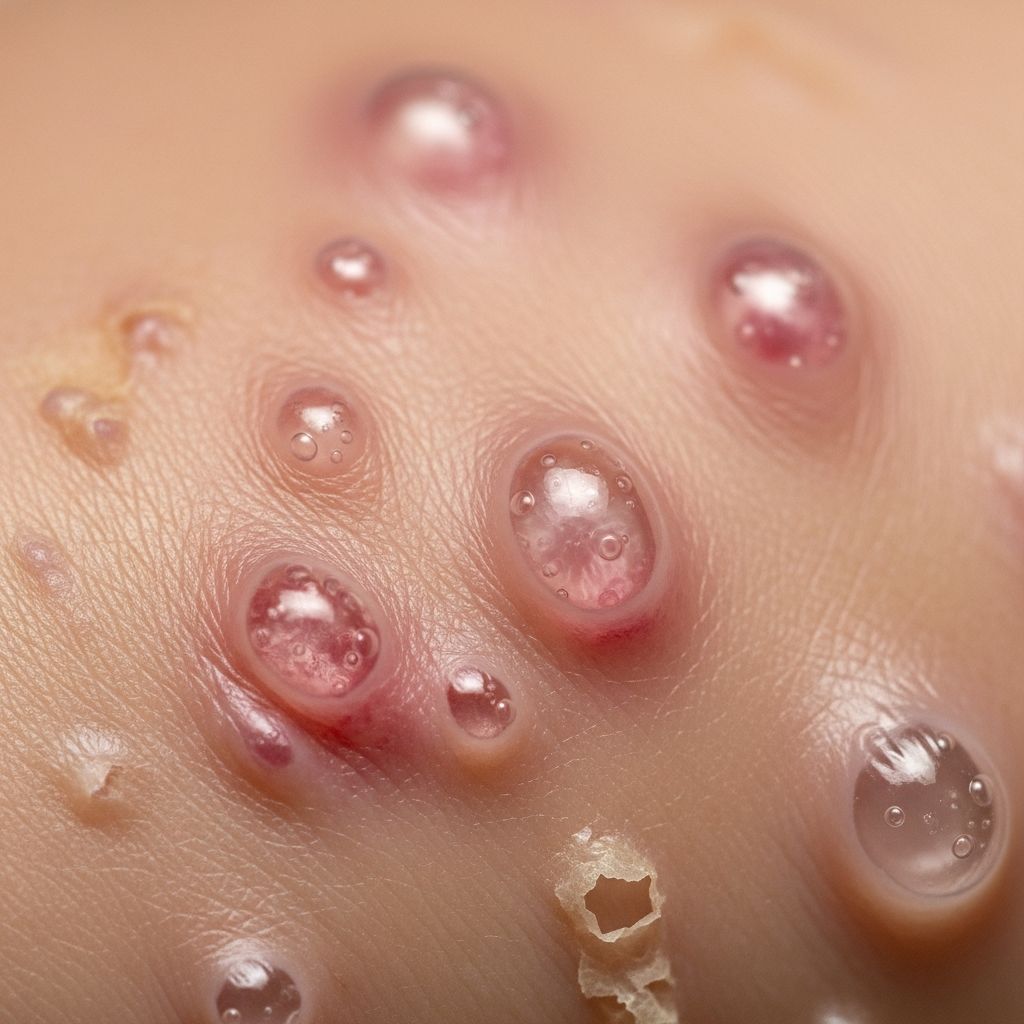
Blistering skin conditions encompass a range of disorders characterized by the formation of vesicles or bullae on the skin or mucous membranes. These can arise from infectious, autoimmune, or mechanical causes, often requiring prompt diagnosis to prevent complications like infection or scarring[10].
What are blistering skin conditions?
Blistering skin conditions involve fluid-filled lesions known as blisters, which form due to separation at different levels of the skin.
Vesicles
are small blisters less than 5 mm in diameter, whilebullae
exceed 5 mm. These conditions may be acute, resolving spontaneously, or chronic, persisting and necessitating long-term management. Common triggers include autoimmune attacks on skin adhesion proteins, infections, or friction.Who gets blistering skin conditions?
These disorders affect individuals across all ages, but certain types predominate in specific groups. Autoimmune blistering diseases like
pemphigus vulgaris
andbullous pemphigoid
typically occur in adults over 50-60 years, with pemphigoid more common in the elderly.Dermatitis herpetiformis
often links to celiac disease in younger adults, while inherited forms like epidermolysis bullosa manifest from birth. Risk factors include genetics, gluten sensitivity, and environmental triggers.What causes blistering skin conditions?
Causes vary by condition:
- Autoimmune: Antibodies target desmogleins (pemphigus) or hemidesmosomes (pemphigoid), leading to acantholysis or subepidermal separation.
- Infectious: Herpes viruses, varicella-zoster (shingles), or bacteria like Staphylococcus.
- Mechanical: Friction blisters from burns or trauma.
- Drug-induced: Medications triggering fixed drug eruptions or linear IgA disease.
- Associated: Gluten intolerance in dermatitis herpetiformis.
Diagnosis often requires identifying the precise level of blister formation via biopsy[10].
Types of blistering skin conditions
Blistering disorders are classified by blister level:
Intraepidermal blistering diseases
Blisters form within the epidermis due to loss of keratinocyte adhesion (acantholysis).
- Pemphigus vulgaris: Flaccid blisters rupture easily, forming painful erosions on skin and mucosa. Oral involvement is common initially.
- Pemphigus foliaceus: Superficial, scaly blisters on seborrheic areas (face, scalp, chest). Less mucosal involvement.
- Hailey-Hailey disease: Recurrent vesicles in intertriginous areas due to ATP2C1 mutations[10].
- Grover disease (transient acantholytic dermatosis): Itchy papules and vesicles on trunk in older males[10].
Subepidermal blistering diseases
Blisters occur below the epidermis, often tense and inflamed.
- Bullous pemphigoid: Tense bullae on flexures in elderly. Intense itch precedes blisters.
- Dermatitis herpetiformis: Intensely pruritic vesicles on extensors (elbows, knees). Linked to celiac disease.
- Linear IgA bullous dermatosis: “Cluster of jewels” blisters on trunk and limbs. Drug-induced cases common.
- Epidermolysis bullosa acquisita: Mechano-bullous on trauma-prone areas; inflammatory variant mimics bullous pemphigoid.
- Mucous membrane pemphigoid: Scarring erosions primarily on mucosa (eyes, mouth, genitals).
Inherited blistering disorders
Genetically determined, often presenting at birth with fragile skin.
- Epidermolysis bullosa (EB): Mutations in adhesion genes cause easy blistering from minor trauma. Subtypes: EB simplex, junctional, dystrophic.
Other blistering eruptions
- Acute: Stevens-Johnson syndrome/toxic epidermal necrolysis (drug reactions), erythema multiforme, viral exanthems (coxsackie, herpes)[10].
- Infectious: Impetigo, herpes zoster, hand-foot-mouth disease.
- Contact: Phytophotodermatitis, irritant contact dermatitis[10].
Clinical features distinguishing blistering skin conditions
| Condition | Nikolsky Sign | Blister Type | Site | Mucosa |
|---|---|---|---|---|
| Pemphigus vulgaris | Positive | Flaccid | Diffuse, oral | Frequent |
| Bullous pemphigoid | Negative | Tense | Flexures | Rare |
| Dermatitis herpetiformis | Negative | Vesicles | Extensors | Rare |
| Linear IgA | Negative | Tense/Annular | Trunk, limbs | Often |
**Nikolsky sign** (epidermal detachment with pressure) is positive in pemphigus but negative in subepidermal diseases[10]. Itch is prominent in pemphigoid and dermatitis herpetiformis.
Related Stories



Diagnosis of blistering skin conditions
Key steps include:
- History and exam: Onset, itch, sites, mucosa, drugs, family history.
- Salt-split skin indirect immunofluorescence: Distinguishes epidermal vs dermal antibody binding[10].
- Skin biopsy: For routine H&E (blister level), direct immunofluorescence (Ig/deposits)[10].
- Blood tests: Antibodies (anti-BP180/230 in pemphigoid, anti-desmoglein in pemphigus).
- Cultures: For suspected infection[10].
Treatment of blistering skin conditions
Tailored to cause and severity.
General wound care
- Keep blisters intact; clean gently, apply non-adherent dressings.
- Antibiotics for secondary infection.
Autoimmune blistering diseases
First-line: High-potency topical corticosteroids (clobetasol) for mild cases; prednisone (0.5-1 mg/kg/day) for moderate-severe.
Steroid-sparing agents: Mycophenolate mofetil, azathioprine, methotrexate.
Advanced: Rituximab (anti-CD20), IVIG, dupilumab for pemphigoid.
- Pemphigus: Rituximab + prednisone standard.
- Dermatitis herpetiformis: Dapsone + gluten-free diet.
Supportive care
Pain relief, nutrition for oral involvement, ophthalmology referral for eye disease.
Frequently Asked Questions (FAQs)
Q: Are blistering skin conditions contagious?
A: Autoimmune types like pemphigus are not contagious; infectious ones (e.g., herpes) are.
Q: How long do blisters from autoimmune diseases last?
A: With treatment, weeks to months; untreated, they can persist and recur.
Q: Can blisters heal without scarring?
A: Superficial intraepidermal blisters often heal without scars; subepidermal or deep ones may scar, especially mucous membrane pemphigoid.
Q: Is there a cure for bullous pemphigoid?
A: No cure, but treatments control symptoms effectively, often leading to remission.
Q: When should I see a dermatologist for blisters?
A: If widespread, painful, mucosal, non-healing, or recurrent.
References
- Blistering Diseases — UChicago Medicine. 2023. https://www.uchicagomedicine.org/conditions-services/dermatology/treatments-and-services/blistering-diseases
- The Most Common Blistering Disorders of the Skin — Epiphany Dermatology. 2023. https://www.epiphanydermatology.com/medical-dermatology/common-blistering-disorders-of-the-skin/
- Blistering Skin Disease Treatment — Spectrum Dermatology. 2023. https://www.specdermatl.com/blistering-skin/
- Blisters: Symptoms and Treatment — Wilmington Skin Surgery Center. 2023. https://www.wilmingtonskinsurgerycenter.com/conditions/blisters
- Autoimmune Blistering Diseases — National Organization for Rare Disorders (NORD). 2024-01-15. https://rarediseases.org/rare-diseases/autoimmune-blistering-diseases/
- Blisters: Causes, Treatment, Prevention — Cleveland Clinic. 2023-05-10. https://my.clevelandclinic.org/health/diseases/16787-blisters
Similar Articles








Read full bio of Sneha Tete