Blood Clots: What They Are and What They Do
Understand blood clots: how they form, where they occur, symptoms, and serious complications.
Blood clots are semi-solid or gel-like masses that form in your arteries and veins. While blood clots serve an important purpose in your body—helping to control bleeding and protect you from blood loss—they can also cause serious medical complications when they form inappropriately or block blood flow. Understanding what blood clots are, how they develop, and when they become dangerous is essential for maintaining your cardiovascular health and recognizing warning signs that require immediate medical attention.
What Are Blood Clots?
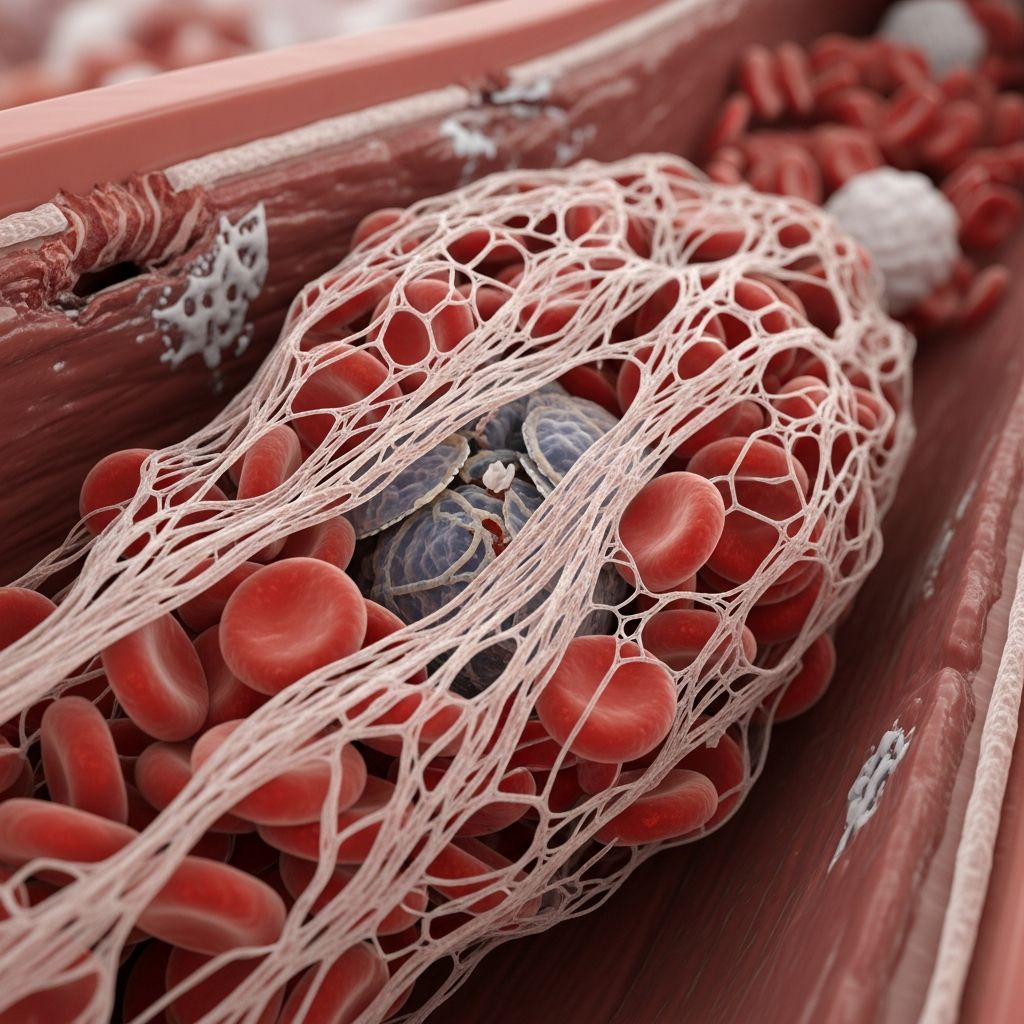
Blood clots are formed from two main components: platelets and fibrin. Platelets are small, colorless fragments of cells that your bone marrow produces, and they play a crucial role in the clotting process. Fibrin is a blood protein that has a sticky consistency and resembles long strings when viewed under magnification. These two elements work together in a coordinated process to seal injured areas of your blood vessels, preventing excessive bleeding and promoting healing.
The clotting process is a natural and necessary bodily function. When you experience an injury that breaks the skin or damages blood vessels, your body immediately initiates a cascade of events designed to stop the bleeding. Platelets rush to the injury site and adhere to the damaged vessel wall, forming a temporary plug. Simultaneously, fibrin is produced and creates a mesh-like network that traps additional platelets and red blood cells, forming a stable clot that seals the wound. This process is vital for survival and occurs thousands of times throughout your life without causing problems.
The Composition and Function of Blood Clots
The structure of a blood clot is remarkably sophisticated. Platelets aggregate together in response to vessel damage, and the fibrin protein creates an intricate web that strengthens the clot and provides structural integrity. This semi-solid mass remains in place long enough for your body to repair the damaged blood vessel, after which the clot naturally dissolves through a process called fibrinolysis. Once the vessel heals, your body breaks down the clot and reabsorbs its components.
However, blood clots can sometimes form when there is no injury to stop. This inappropriate clot formation can be triggered by various conditions including prolonged immobility, certain medical conditions, surgical procedures, or underlying blood clotting disorders. When clots form in the wrong place or at the wrong time, they can significantly interfere with normal blood flow and oxygen delivery to vital organs.
Where Blood Clots Can Form
Blood clots can develop in virtually any location within your circulatory system, though certain areas are more commonly affected than others. Understanding the different types of clots based on location helps explain why some are more dangerous than others.
Blood Clots in the Veins
Venous blood clots typically form in the veins of your arms and legs. The most common type is deep vein thrombosis (DVT), which occurs when a clot forms in a deep vein, usually in the lower leg, thigh, or pelvis. DVT is particularly concerning because the clot can potentially break loose, travel through your bloodstream, and lodge in your lungs, causing a life-threatening condition known as pulmonary embolism.
Related Stories



Blood Clots in the Arteries
Arterial blood clots are potentially more immediately dangerous because arteries carry oxygen-rich blood to your vital organs. When a blood clot forms in an artery, it can quickly block blood flow to critical tissues. Arterial clots in the lungs can cause pulmonary embolism, one of the most serious complications of blood clotting disorders.
Blood Clots in the Heart and Brain
Blood clots that affect the heart can cause a heart attack by blocking blood flow to the heart muscle itself. Similarly, blood clots that travel to the brain and lodge in cerebral blood vessels can cause a stroke, cutting off oxygen supply to brain tissue and potentially resulting in permanent neurological damage or death. These centralized clots represent medical emergencies requiring immediate intervention.
Symptoms of Blood Clots
Recognizing the symptoms of blood clots is crucial for early detection and treatment. The specific symptoms you experience depend on where the clot is located and how much it obstructs blood flow.
Symptoms of Deep Vein Thrombosis
If you develop a blood clot in a deep vein, you may experience:
- Leg pain, particularly in the calf or thigh
- Swelling in the affected leg
- Warmth or redness in the affected area
- Change in skin color, ranging from pale to red or bluish
- Tenderness or sensitivity to touch in the affected leg
Symptoms of Pulmonary Embolism
Blood clots in the lungs present different warning signs:
- Sudden, sharp chest pain
- Shortness of breath
- Rapid or irregular heartbeat
- Coughing, possibly with blood-tinged sputum
- Dizziness or lightheadedness
Symptoms of Heart and Brain Clots
Chest pain or pressure, along with shortness of breath, can indicate blood clots in the heart. Stroke symptoms from brain clots include facial drooping, arm weakness, speech difficulties, and loss of consciousness. Any of these symptoms require emergency medical attention.
Risk Factors and Causes of Blood Clots
Blood clots develop for various reasons, and understanding these risk factors can help you take preventive measures. Some people develop clots because of temporary situations like immobility, while others have underlying medical conditions or genetic predispositions that increase their clotting risk.
Common Causes and Risk Factors
- Prolonged immobility from bed rest, long flights, or extended car rides
- Recent surgery or hospitalization
- Pregnancy and the postpartum period
- Oral contraceptives or hormone replacement therapy
- Smoking and tobacco use
- Obesity
- Cancer and cancer treatment
- Heart disease
- Previous blood clots or family history of clotting disorders
- Inherited blood clotting disorders such as Factor V Leiden or prothrombin gene mutation
- Severe infections or sepsis
- Trauma or injury
Serious Complications of Blood Clots
When blood clots form in inappropriate locations or prevent normal blood flow, they can trigger life-threatening complications that demand immediate medical intervention.
Deep Vein Thrombosis (DVT)
DVT occurs when a blood clot forms in a deep vein, typically in the lower leg. While not immediately life-threatening, DVT is dangerous because the clot can potentially dislodge and travel through your bloodstream to more critical locations. DVT can also cause long-term complications including chronic leg swelling and post-thrombotic syndrome if not properly treated.
Pulmonary Embolism (PE)
This is one of the most serious complications of blood clotting disorders. A pulmonary embolism occurs when a blood clot travels through the venous system and becomes lodged in the pulmonary arteries of the lungs. This blocks blood flow to the lungs, preventing oxygen exchange and causing acute respiratory distress. Pulmonary embolism can be fatal and requires emergency treatment.
Stroke
When blood clots reach the cerebral circulation and block blood vessels in the brain, they cause a stroke. This cuts off oxygen supply to brain tissue, potentially resulting in permanent disability or death. The severity depends on the size of the clot and which brain vessel is affected.
Myocardial Infarction (Heart Attack)
Blood clots in the coronary arteries can block blood flow to the heart muscle, causing a heart attack. This is one of the leading causes of death in developed countries and requires immediate emergency medical care.
Blood Clotting Disorders
Some people have underlying conditions that make their blood more prone to clotting than normal. These blood clotting disorders, also called hypercoagulable states or thrombophilia, represent a significant risk factor for developing inappropriate clots.
Thrombophilia can be inherited, meaning you are born with a genetic predisposition to clot more easily, or acquired, developing later in life due to other medical conditions or circumstances. Common inherited clotting disorders include Factor V Leiden, prothrombin gene mutation, and deficiencies in natural anticoagulants like protein C or protein S. Acquired thrombophilia can result from cancer, autoimmune diseases, severe infections, or other medical conditions.
Diagnosis of Blood Clots
If you experience symptoms suggestive of a blood clot or have risk factors for clot formation, your healthcare provider will perform a comprehensive evaluation.
Physical Examination
Your provider will check your vital signs and examine the affected area for signs of swelling, warmth, redness, or color changes. They will also review your medical history and discuss any symptoms you’re experiencing.
Imaging Tests
Several imaging techniques can visualize blood clots:
- Ultrasound (Duplex ultrasound): Uses sound waves to visualize blood flow and detect clots in veins
- Computed Tomography (CT scan): Provides detailed images to identify clots in the lungs or other locations
- Venography: Involves injecting contrast dye and taking X-rays to visualize veins
- Ventilation-Perfusion (V/Q) scan: Assesses lung blood flow to detect pulmonary embolism
Blood Tests
Laboratory tests can help determine if your blood clots too easily and identify underlying clotting disorders. These tests measure clotting factors, platelet counts, and specific genetic mutations associated with increased clotting risk.
Treatment Options for Blood Clots
Treatment approaches depend on the type, location, and severity of the blood clot, as well as your overall health status.
Anticoagulant Therapy (Blood Thinners)
Anticoagulants are the primary treatment for most blood clots. These medications make it harder for your blood to clot and prevent existing clots from growing larger or traveling through your bloodstream. Common anticoagulants include warfarin, heparin, low-molecular-weight heparin, and newer direct oral anticoagulants (DOACs).
It’s important to understand that anticoagulants don’t dissolve existing clots; rather, they allow your body’s natural fibrinolytic system to break down the clot over time. When anticoagulant treatment is successful, clots gradually shrink and may leave small scar tissue in the affected vessel.
Thrombolytic Therapy
In some emergency situations, particularly with massive pulmonary embolism or stroke, thrombolytic medications that actively dissolve clots may be used. These “clot-busting” drugs work by activating your body’s natural clot-dissolving mechanisms.
Mechanical Interventions
In certain cases, particularly when anticoagulation is contraindicated or ineffective, mechanical devices may be used. Inferior vena cava (IVC) filters can trap clots before they reach the lungs, and catheter-based thrombectomy can physically remove large clots.
Prevention of Blood Clots
If you have risk factors for blood clots or a personal or family history of clotting disorders, several measures can help prevent clot formation:
- Move regularly and avoid prolonged immobility
- Maintain a healthy weight
- Quit smoking if applicable
- Stay hydrated
- Wear compression stockings if recommended
- Take prescribed medications exactly as directed
- Attend all follow-up appointments and lab work
- Elevate your legs periodically to improve circulation
- Perform leg exercises during long flights or car rides
Frequently Asked Questions
Q: Can blood clots go away on their own?
A: Yes, your body can naturally dissolve blood clots over time through a process called fibrinolysis. However, sometimes clots don’t completely disappear and instead shrink and become scar tissue in your veins. Medical treatment with anticoagulants helps facilitate this process and prevents complications.
Q: How long does it take for a blood clot to form?
A: Blood clots can form within minutes in response to vessel injury, but pathological clots that develop without injury can form over hours or days depending on the underlying cause.
Q: Are all blood clots dangerous?
A: Not all blood clots are immediately dangerous. Surface clots and those that form in response to injury serve protective functions. However, deep vein clots or clots that block major blood vessels can be life-threatening and require treatment.
Q: What should I do if I suspect a blood clot?
A: Seek medical attention immediately, especially if you experience chest pain, shortness of breath, sudden leg swelling, or other concerning symptoms. Don’t wait to see if symptoms resolve on their own.
Q: Can you have a blood clot without symptoms?
A: Yes, some blood clots, particularly in the initial stages, may not cause noticeable symptoms. This is why screening may be recommended for high-risk individuals.
When to Seek Medical Care
You should contact your healthcare provider immediately if you experience sudden leg swelling, persistent leg pain, chest pain, shortness of breath, or other symptoms suggestive of a blood clot. Go to the emergency room if you experience severe chest pain, difficulty breathing, or loss of consciousness. Early diagnosis and treatment significantly improve outcomes and reduce the risk of life-threatening complications.
References
- Blood Clots: What They Are and What They Do — Cleveland Clinic. 2024. https://my.clevelandclinic.org/health/body/17675-blood-clots
- Deep Vein Thrombosis (DVT) — Cleveland Clinic. 2024. https://my.clevelandclinic.org/health/diseases/16911-deep-vein-thrombosis-dvt
- Blood Clotting Disorders: Types, Signs and Treatment — Cleveland Clinic. 2024. https://my.clevelandclinic.org/health/diseases/16788-blood-clotting-disorders-hypercoagulable-states
- Thrombosis: Symptoms & Treatment — Cleveland Clinic. 2024. https://my.clevelandclinic.org/health/diseases/22242-thrombosis
- Thrombophilia: Symptoms & Treatment — Cleveland Clinic. 2024. https://my.clevelandclinic.org/health/diseases/21797-thrombophilia
- Anticoagulants (Blood Thinners) — Cleveland Clinic. 2024. https://my.clevelandclinic.org/health/treatments/22288-anticoagulants
- Management of lower-extremity venous thromboembolism — Cleveland Clinic Journal of Medicine, 91(4), 229. 2024. https://www.ccjm.org/content/91/4/229
Similar Articles








Read full bio of Sneha Tete