Blood Oxygen Level: What It Is & How To Increase It
Understanding blood oxygen levels, normal ranges, measurement methods, and natural ways to improve your oxygen saturation.
Understanding Blood Oxygen Level
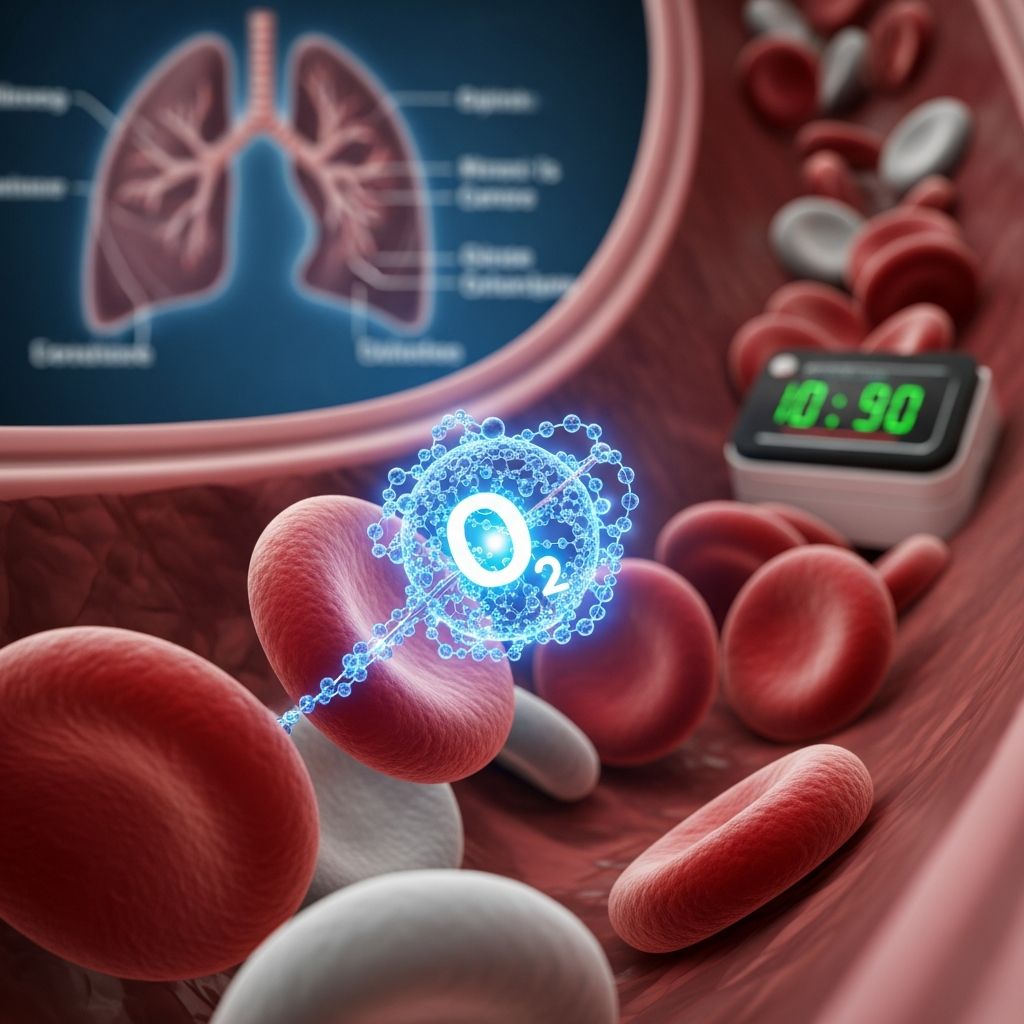
Blood oxygen level refers to the amount of oxygen present in your bloodstream after you breathe in oxygen through your lungs. This oxygen travels through your respiratory system and enters your blood, where it becomes essential for every cellular function in your body. Once oxygen reaches your cells and is utilized for various metabolic processes, those cells produce carbon dioxide as a waste product. Your bloodstream then transports this carbon dioxide back to your lungs, where you exhale it through your mouth or nose, completing the respiratory cycle.
Your body maintains a tightly regulated oxygen saturation level because insufficient blood oxygen, known as hypoxemia, can lead to serious health complications and damage to vital organ systems, particularly your brain and heart. When your lungs and circulatory system are not functioning optimally, your blood oxygen levels drop, signaling that medical attention may be necessary.
Normal Blood Oxygen Level Ranges
For most healthy individuals, a normal pulse oximeter reading for oxygen saturation levels falls between 95% and 100%. However, these ranges can vary depending on your individual health status and living conditions. If you have chronic lung diseases such as COPD (Chronic Obstructive Pulmonary Disease) or pneumonia, your normal oxygen saturation level may be lower than the standard range, and your healthcare provider will establish acceptable oxygen levels specific to your condition.
Additionally, if you reside in an area with high elevation, your oxygen saturation levels may naturally be lower than those living at sea level due to the decreased oxygen availability in the atmosphere. A reading of 92% or higher is generally considered acceptable, while anything below 92% warrants a call to your healthcare provider. If your oxygen saturation drops to 88% or lower, seek emergency medical care immediately.
How Blood Oxygen Levels Are Measured
Pulse Oximetry
A pulse oximeter is a non-invasive device that measures your oxygen saturation level quickly and conveniently. Any healthcare provider can apply a pulse oximeter to check your blood oxygen saturation, and you can also use one on yourself or someone else at home. The device typically clips onto your finger, though forehead probes are also available and may be particularly useful during exercise testing. Within seconds, a pulse oximeter reveals your oxygen saturation level as a percentage reading, making it an ideal tool for rapid assessment.
It is important to note that pulse oximeters are not always perfectly accurate. Your actual blood oxygen saturation level may be 2% to 4% higher or lower than what the oximeter reads. This variance is why medical professionals sometimes recommend more precise testing when accuracy is critical for treatment decisions.
Arterial Blood Gas (ABG) Test
For a more accurate measurement of blood oxygen levels, healthcare providers can measure your blood oxygen level as part of a comprehensive test known as an arterial blood gas (ABG) test. Unlike most blood tests that draw samples from veins, an ABG test requires a blood sample from an artery because arterial blood contains higher oxygen levels than venous blood. A respiratory therapist will typically draw the blood sample from an artery in your wrist.
Related Stories



Before performing an arterial blood draw, your provider may perform an Allen test to ensure that both arteries in your wrist are open and functioning properly. The Allen test involves holding your hand high with a clenched fist while your provider applies pressure to the arteries in your wrist for several seconds. This simple procedure verifies adequate blood circulation before the sample collection.
The ABG test measures multiple parameters beyond oxygen saturation, including the level of carbon dioxide in your blood, the balance of acids and bases (pH balance), and other important blood gas values. Having too much or too little acid in your blood can be harmful to your health, making this comprehensive assessment valuable for patients with respiratory or metabolic concerns.
Pre-Test Considerations
If you are receiving supplemental oxygen therapy, your provider may turn off your oxygen for approximately 20 minutes before the blood draw in a test called a room air test. This allows your provider to assess your baseline oxygen levels without the assistance of supplemental oxygen. However, if you are unable to breathe adequately without supplemental oxygen, your provider will not perform this test to avoid causing distress or oxygen deprivation.
Results from a blood sample oxygen level test are usually available immediately, typically within minutes, allowing for rapid clinical decision-making.
Conditions Requiring Blood Oxygen Testing
Your healthcare provider may recommend blood oxygen testing if you have specific lung conditions to ensure that your current treatment is working effectively. These conditions include asthma, pneumonia, heart disease, COPD, and sleep apnea. If you are receiving oxygen therapy while hospitalized, your provider will likely monitor your blood oxygen level continuously to ensure you are receiving the appropriate amount of oxygen for your clinical needs.
Understanding Low Blood Oxygen Levels (Hypoxemia)
A lower-than-normal blood oxygen level is medically termed hypoxemia. Since oxygen is essential to all of your body’s functions, hypoxemia is often concerning and requires prompt medical evaluation. The lower your oxygen level drops, the greater the likelihood for complications in body tissue and organs. Hypoxemia can cause symptoms including headache, difficulty breathing, rapid heart rate, and bluish discoloration of the skin.
Low blood oxygen levels indicate that your lungs and/or circulatory system may not be working as they should. Common causes of hypoxemia include ventilation-perfusion mismatch, where airflow into your lungs (ventilation) and blood flow to your lungs (perfusion) are not properly balanced, usually caused by underlying heart or lung conditions.
Natural Ways to Increase Blood Oxygen Levels
There are several practical strategies to naturally increase the amount of oxygen in your blood without relying on medical interventions:
- Regular aerobic exercise: Engaging in cardiovascular activities strengthens your lungs and improves oxygen uptake efficiency, allowing your body to extract and utilize oxygen more effectively.
- Deep breathing exercises: Practicing slow, intentional deep breathing increases the volume of oxygen entering your lungs with each breath, enhancing oxygen absorption into your bloodstream.
- Improved air quality: Spending time in environments with clean air and adequate ventilation reduces the inhalation of pollutants that can interfere with oxygen absorption.
- Proper hydration: Maintaining adequate fluid intake helps your blood flow more efficiently, facilitating better oxygen transport throughout your body.
- Healthy diet: Consuming iron-rich foods and foods containing vitamin C supports hemoglobin production and oxygen carrying capacity in your blood.
- Adequate sleep: Quality sleep allows your respiratory system to function optimally and supports overall metabolic health.
- Smoking cessation: Quitting smoking dramatically improves your oxygen saturation levels, as smoking damages lung tissue and reduces oxygen absorption capacity.
When to Seek Medical Attention
Monitoring your blood oxygen levels at home is an important health practice, particularly if you have respiratory conditions or are at risk for hypoxemia. If you are using an oximeter at home and your oxygen saturation level is 92% or lower, contact your healthcare provider for guidance and evaluation. If your reading drops to 88% or lower, this represents a medical emergency, and you should get to the nearest emergency room as soon as possible.
It is also important to remember that low oxygen is just one sign of serious medical conditions. Even if you have a healthy blood oxygen level, do not ignore other possible symptoms such as persistent cough or shortness of breath, as these may indicate underlying health problems requiring medical attention.
Oxygen Therapy Considerations
If you have consistently low oxygen levels, your healthcare provider may recommend supplemental oxygen therapy. A healthy oxygen level is generally considered 95% or higher, though this varies based on individual medical conditions.[10] Supplemental oxygen therapy may be administered through various delivery methods including nasal cannulas, face masks, or other oxygen delivery systems, depending on your specific needs and oxygen requirements.[10]
Accuracy and Limitations of Pulse Oximetry
While pulse oximeters are valuable screening tools, they have recognized limitations. Research has shown that pulse oximetry can commonly underestimate arterial blood oxygen saturation, particularly during exercise or in certain patient populations. Factors that may affect pulse oximeter accuracy include increased carboxyhemoglobin levels (particularly relevant in smokers), age, lung function parameters, and exercise intensity. For the most accurate assessment of your blood oxygen status, an arterial blood gas test provides superior precision compared to pulse oximetry.
Living with Chronic Low Oxygen
Individuals with chronic respiratory diseases requiring ongoing oxygen therapy should work closely with their healthcare providers to establish personalized oxygen saturation goals. Your provider will explain what oxygen levels are acceptable for your specific condition and may adjust your treatment plan as needed. Regular monitoring and compliance with prescribed therapies are essential for maintaining adequate tissue oxygenation and preventing complications from prolonged hypoxemia.
Frequently Asked Questions
Q: What is the difference between SpO₂ and SaO₂?
A: SpO₂ (peripheral capillary oxygen saturation) is measured non-invasively using a pulse oximeter, while SaO₂ (arterial oxygen saturation) is measured through an arterial blood gas test and is generally more accurate. Pulse oximetry readings may differ by 2-4% from actual arterial saturation levels.
Q: Is 92% oxygen saturation considered normal?
A: A reading of 92% or higher is generally acceptable, though normal is typically 95-100% for healthy individuals. If you have chronic lung disease, your acceptable levels may be different based on your provider’s recommendations.
Q: Can I check my oxygen level at home?
A: Yes, you can purchase a pulse oximeter for home use. However, if your reading is 92% or lower, contact your provider, and if it’s 88% or lower, seek emergency care immediately.
Q: What causes low blood oxygen levels?
A: Low oxygen levels can result from lung diseases such as pneumonia or COPD, heart conditions, sleep apnea, ventilation-perfusion mismatches, or other systemic conditions affecting respiratory or circulatory function.
Q: Does high altitude affect blood oxygen levels?
A: Yes, living in high-altitude areas with lower atmospheric oxygen availability can result in naturally lower oxygen saturation levels compared to sea-level residents.
References
- Pulse Oximetry and Arterial Oxygen Saturation during Cardiopulmonary Exercise Testing — National Institutes of Health, National Center for Biotechnology Information. 2018. https://pmc.ncbi.nlm.nih.gov/articles/PMC6138536/
- Blood Oxygen Level: What It Is & How To Increase It — Cleveland Clinic. 2022-02-18. https://my.clevelandclinic.org/health/diagnostics/22447-blood-oxygen-level
- Pulse Oximetry: Function, Method & Readings — Cleveland Clinic. https://my.clevelandclinic.org/health/diagnostics/pulse-oximetry
- Should You Get a Pulse Oximeter to Measure Blood Oxygen Levels? — Cleveland Clinic. https://health.clevelandclinic.org/should-you-get-a-pulse-oximeter-to-measure-blood-oxygen-levels
- Hypoxemia: Causes, Symptoms, Diagnosis & Treatment — Cleveland Clinic. https://my.clevelandclinic.org/health/diseases/17727-hypoxemia
- Supplemental Oxygen Therapy: Types, Benefits & Complications — Cleveland Clinic. https://my.clevelandclinic.org/health/treatments/23194-oxygen-therapy
- Even Temporary Oxygen Shortage Remodels the Heart, Increasing Stroke Risk — Cleveland Clinic Lerner Research Institute. https://www.lerner.ccf.org/news/article/?title=Even+temporary+oxygen+shortage+remodels+the+heart%2C+increasing+stroke+risk%2C+new+study+shows
Similar Articles








Read full bio of Sneha Tete