Blood Thinners: Anticoagulants and Antiplatelets
Discover how anticoagulants and antiplatelets prevent dangerous clots, their key differences, common medications, and vital safety tips for heart health.
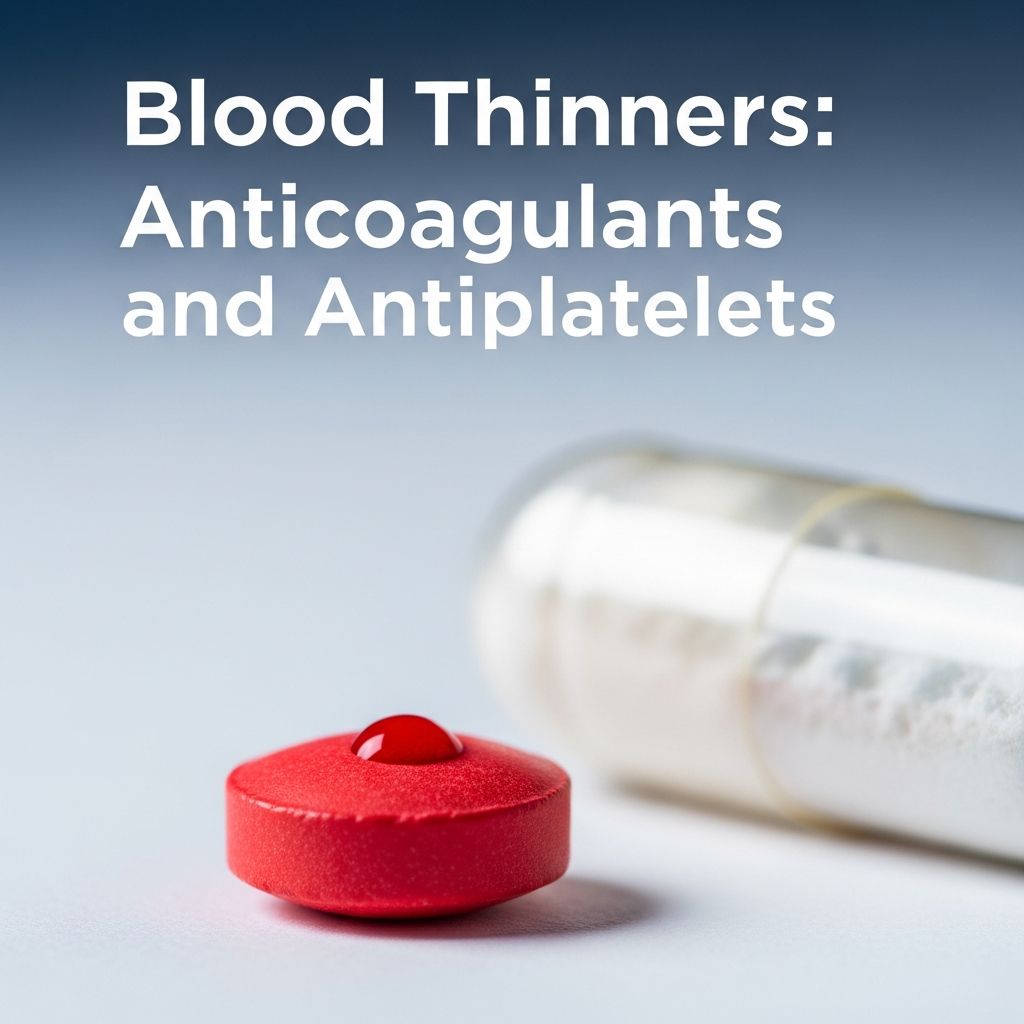
Anticoagulants and antiplatelets are crucial medications that help prevent harmful blood clots, reducing risks of heart attacks, strokes, and other vascular events. These drugs target different parts of the clotting process: antiplatelets stop platelets from clumping, while anticoagulants interfere with clotting proteins.
Understanding the Clotting Process
The human body relies on a delicate balance of clotting to stop bleeding from injuries while preventing excessive clot formation that blocks blood vessels. Platelets, small cell fragments in the blood, initiate clotting by sticking together at injury sites, forming a primary plug. This process is amplified by chemicals like adenosine diphosphate (ADP) and thromboxane A2, which recruit more platelets.
Following the platelet plug, coagulation proteins create a fibrin mesh that stabilizes the clot. In arteries, high shear forces from fast blood flow make platelets dominant, especially in atherosclerosis where plaques rupture and trigger thrombosis. Venous clots form under lower flow, relying more on coagulation factors.
- Arterial thrombosis: Platelet-driven, linked to high shear and plaque disruption.
- Venous thrombosis: Coagulation factor-dominant, often in stagnant blood.
Key Differences Between Antiplatelets and Anticoagulants
Antiplatelets primarily inhibit platelet activation and aggregation, ideal for arterial clot prevention in conditions like heart attacks or ischemic strokes. Anticoagulants disrupt the coagulation cascade, better suited for venous clots such as deep vein thrombosis (DVT) or pulmonary embolism (PE).
| Aspect | Antiplatelets | Anticoagulants |
|---|---|---|
| Target | Platelets clumping | Clotting proteins/factors |
| Primary Use | Heart attack, stroke prevention | DVT, PE, atrial fibrillation |
| Examples | Aspirin, clopidogrel | Warfarin, heparin, DOACs |
| Bleeding Risk | Moderate | Higher |
This distinction guides clinical choices, though combinations may be used post-stent or in high-risk patients.
Common Antiplatelet Medications
Aspirin, the most widely used antiplatelet, irreversibly blocks cyclooxygenase-1 (COX-1), reducing thromboxane A2 production and platelet activation for days.
P2Y12 Inhibitors
These block ADP receptors on platelets, halting amplification of aggregation. Clopidogrel, a prodrug metabolized by liver enzymes, takes days for full effect but risks resistance in some due to CYP2C19 variations.
Prasugrel activates faster (within 30 minutes) with less variability, suited for acute coronary syndromes (ACS), though it carries higher bleeding risk in elderly or low-weight patients.
Ticagrelor, reversible and direct-acting, provides rapid onset without metabolic dependence, used in ACS with stronger efficacy than clopidogrel.
Cangrelor offers intravenous blockade for bridging during procedures.
Glycoprotein IIb/IIIa Inhibitors
These potent agents block the final common pathway by preventing fibrinogen binding to GPIIb/IIIa receptors, used intravenously in high-risk percutaneous coronary interventions (PCI).
Other Agents
Dipyridamole inhibits phosphodiesterase, raising cyclic AMP levels and blocking thromboxane synthase, often combined with aspirin for stroke prevention.
Anticoagulant Therapies Explained
Anticoagulants target the coagulation cascade, where vitamin K-dependent factors (II, VII, IX, X) drive fibrin formation.
Vitamin K Antagonists
Warfarin inhibits vitamin K epoxide reductase, depleting active clotting factors. It requires INR monitoring (target 2-3 for most) due to dietary interactions and genetic variability.
Heparins and Low Molecular Weight Heparins (LMWH)
Unfractionated heparin binds antithrombin, accelerating inhibition of thrombin (IIa) and factor Xa. LMWH like enoxaparin has longer half-life, predictable dosing, and subcutaneous administration, ideal for DVT treatment.
Related Stories



Direct Oral Anticoagulants (DOACs)
Apixaban and rivaroxaban inhibit factor Xa directly; dabigatran targets thrombin. DOACs offer fixed dosing without routine monitoring, lower intracranial bleed risk than warfarin, but need reversal agents like andexanet for emergencies.
Clinical Applications and When to Use Each
Antiplatelets shine in secondary prevention post-myocardial infarction (MI), PCI with stenting, or peripheral artery disease. Dual therapy (aspirin + P2Y12 inhibitor) is standard for 6-12 months post-ACS.
Anticoagulants prevent strokes in atrial fibrillation (CHA2DS2-VASc score ≥2), treat acute DVT/PE, or protect during prolonged immobility.
In triple therapy scenarios (e.g., stent in anticoagulated patient), balance ischemic and bleeding risks carefully.
- Post-PCI: Dual antiplatelet therapy (DAPT).
- Atrial fibrillation: Oral anticoagulant.
- Mechanical heart valve: Warfarin.
Managing Risks and Side Effects
Bleeding is the primary concern. Antiplatelets increase gastrointestinal bleeds; anticoagulants raise intracranial hemorrhage risk.
Monitor for:
- Bruising, nosebleeds, blood in urine/stool.
- Drug interactions (e.g., NSAIDs with antiplatelets).
- Reversal: Platelet transfusion for antiplatelets; protamine for heparin; idarucizumab for dabigatran.
Patient factors like age, renal function, and genetics influence choice.
Lifestyle Tips for Safe Use
Maintain consistent vitamin K intake on warfarin; avoid falls and contact sports. Inform all providers of therapy before procedures.
Regular blood tests ensure efficacy; apps track doses.
Frequently Asked Questions (FAQs)
What if I miss a dose?
Take as soon as remembered unless near next dose; consult prescriber for warfarin.
Can I take ibuprofen with these meds?
Avoid with antiplatelets due to bleed risk; use acetaminophen instead.
Are generics safe?
Yes, bioequivalent for most.
How long is treatment?
Varies: lifelong for some AFib, 3-6 months for provoked DVT.
What about alcohol?
Moderate; excess increases bleeding.
Future Directions in Therapy
Ongoing trials explore safer DOACs, oral factor XI inhibitors for lower bleed risk, and personalized antiplatelet regimens via platelet function testing.
References
- Anticoagulation module 2: antiplatelet therapy — British Journal of Cardiology. 2021-10-01. https://bjcardio.co.uk/2021/10/anticoagulation-module-2-antiplatelet-therapy-6/
- Antiplatelet Drugs: Types, Uses & Side Effects — Cleveland Clinic. 2023-01-15. https://my.clevelandclinic.org/health/drugs/22955-antiplatelet-drugs
- Antiplatelets, Anticoagulants, and Thrombolytics | Clinical Medicine — YouTube (Osmosis). 2022-05-10. https://www.youtube.com/watch?v=8E5VwvN0MCU
- Oral Anticoagulants and Antiplatelet Drugs — Drug Office, Hong Kong Government. 2023-06-20. https://www.drugoffice.gov.hk/eps/do/en/consumer/news_informations/dm_25.html
- Antiplatelet vs. Anticoagulant Blood Thinners — GoodRx (citing clinical guidelines). 2024-02-12. https://www.goodrx.com/classes/anticoagulants/antiplatelet-vs-anticoagulant
- Lets Talk About Anticoagulants and Antiplatelet Agents — American Stroke Association. 2022-11-01. https://www.stroke.org/-/media/Stroke-Files/Lets-Talk-About-Stroke/Prevention/Anticoagulants-and-Antiplatelet-Agents-ucm_310825.pdf
Similar Articles








Read full bio of Sneha Tete