Blood Vessels: Types, Function & Anatomy
Comprehensive guide to blood vessels: understanding arteries, veins, capillaries, and circulatory function.
Understanding Blood Vessels: The Foundation of Your Circulatory System
Blood vessels are essential channels that transport blood throughout your entire body, forming a critical component of your cardiovascular system. These remarkable conduits work in conjunction with your heart and lungs to deliver oxygen to vital organs and tissues while simultaneously removing waste products. Your body contains approximately 60,000 miles of blood vessels, creating an intricate network that reaches every corner of your body. To put this into perspective, this extensive system is long enough to circle the Earth more than twice. Together, your heart and blood vessels form your circulatory system, which operates as a closed loop that begins and ends at your heart.
Blood vessels regulate your blood pressure and perform countless other vital functions that maintain your health and well-being. Understanding the different types of blood vessels and how they function is essential to appreciating the complexity and efficiency of your circulatory system.
The Three Main Types of Blood Vessels
Your circulatory system relies on three primary types of blood vessels, each serving distinct and equally important functions. These vessels work together seamlessly to ensure blood reaches every part of your body efficiently.
Arteries: Carrying Oxygen-Rich Blood Away from Your Heart
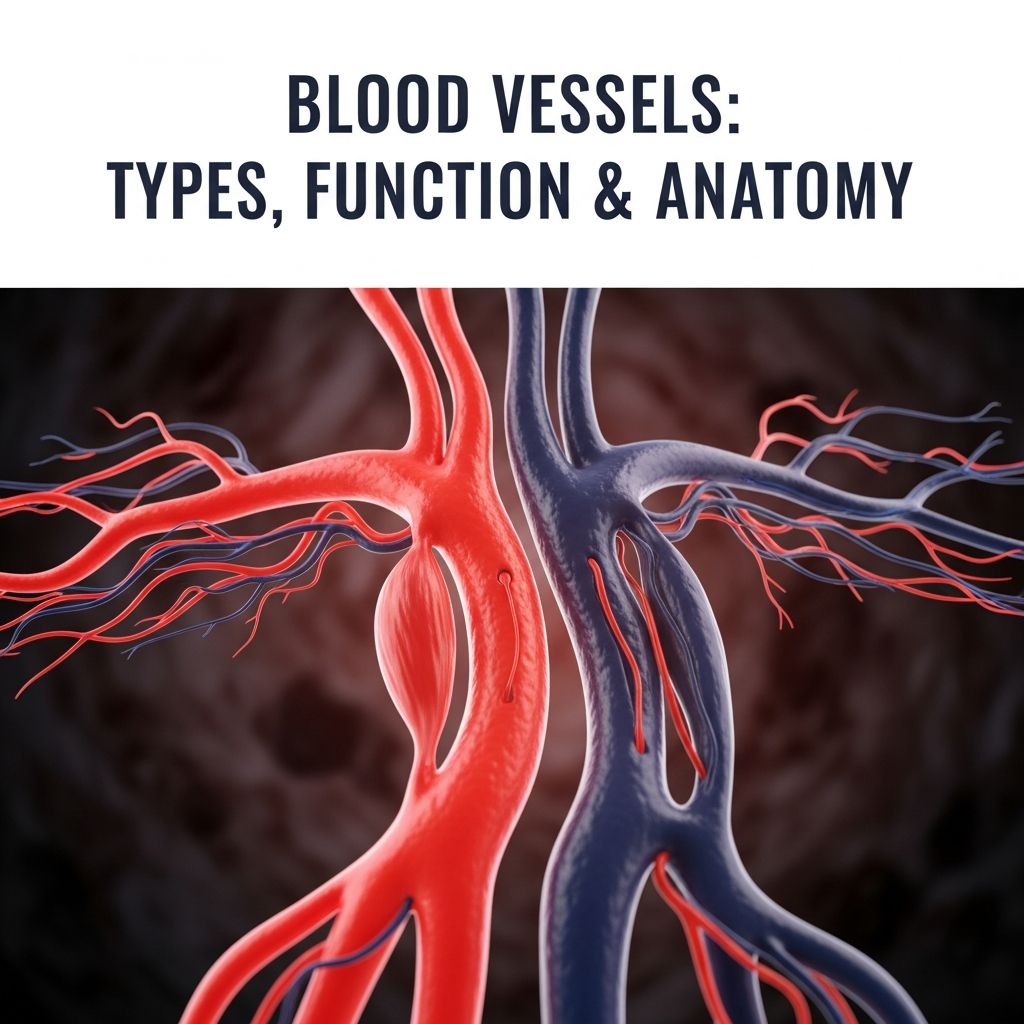
Arteries are specialized blood vessels responsible for carrying oxygen-rich blood away from your heart to all regions of your body. These vessels begin at the heart and branch into progressively smaller channels, ensuring that oxygen-rich blood reaches every organ and tissue. The largest artery in your body is the aorta, which emerges directly from the left ventricle of your heart.
Arteries possess a unique structural composition that allows them to withstand the forceful pressure generated by your heart’s contractions. Their walls are composed of thick, muscular tissue and elastic fibers that enable them to expand and contract with each heartbeat. This elasticity is crucial for maintaining steady blood pressure throughout your body.
One important distinction to note is that while most arteries carry oxygen-rich blood, there is a notable exception: your pulmonary arteries. These vessels transport oxygen-poor blood from your heart to your lungs, where the blood receives oxygen before returning to your heart.
Veins: Returning Oxygen-Poor Blood to Your Heart
Veins represent the second major category of blood vessels and perform the opposite function of arteries. These vessels collect oxygen-poor blood from throughout your body and return it to your heart. The vena cava is the largest vein in your body and serves as the primary vessel for this return journey.
The vena cava consists of two sections: the superior vena cava, located in the upper right portion of your chest, collects blood from your head, neck, arms, and upper body. The inferior vena cava, positioned near the right side of your diaphragm, gathers blood from your legs, feet, abdomen, and pelvis.
Like arteries, veins have a notable exception to the standard rule of carrying oxygen-poor blood. Your pulmonary veins, typically four in number, carry oxygen-rich blood from your lungs back to your heart. Each pulmonary vein drains blood from a different section of your lungs.
Veins in your legs contain special one-way valves that prevent blood from flowing backward, ensuring that blood moves continuously in the correct direction toward your heart. This is particularly important because blood in your legs must work against gravity to return to your heart.
Related Stories



Capillaries: The Bridge Between Arteries and Veins
Capillaries represent the smallest blood vessels in your body and serve as the crucial connection point between arteries and veins. While they are microscopic in size, capillaries are essential for facilitating the exchange of oxygen and nutrients for waste products at the cellular level.
Your body contains billions of capillaries, and they comprise the majority of your blood vessel network. Blood flows from your arteries into smaller vessels called arterioles, which then connect to capillaries. These tiny vessels have thin walls that allow oxygen and nutrients to pass through into surrounding tissues, while simultaneously allowing waste products and carbon dioxide to be absorbed back into the bloodstream.
The Structure of Blood Vessels
All blood vessels share a similar fundamental architecture, with walls composed of specialized tissues designed to withstand varying levels of blood pressure and flow. Understanding this structure provides insight into how these vessels function so effectively.
Blood vessel walls typically consist of three distinct layers of tissue:
The Tunica Intima (Inner Layer): This innermost layer provides a smooth surface that allows blood to flow without obstruction. Its smooth texture reduces friction and prevents blood clots from forming.
The Tunica Media (Middle Layer): Composed of smooth muscle tissue and elastic fibers, this layer is responsible for regulating the diameter of blood vessels. When muscles contract (vasoconstriction), vessels narrow and blood pressure increases. When muscles relax (vasodilation), vessels widen and blood pressure decreases.
The Tunica Adventitia (Outer Layer): This outermost layer consists of connective tissue that provides structural support and protection to the vessel.
The center of a blood vessel, through which blood flows, is called the lumen. The diameter of the lumen varies depending on the type of vessel. Large vessels like your aorta and vena cava have wider lumens to accommodate the substantial volume of blood flowing through them. Smaller vessels, such as capillaries, have correspondingly narrower lumens.
How Blood Flows Through Your Body
Your circulatory system operates through two interconnected circuits: the pulmonary circuit and the systemic circuit. Each circuit serves a specific purpose in maintaining your health.
The Pulmonary Circuit: This circuit manages blood flow between your heart and lungs. Oxygen-poor blood travels from your heart to your lungs, where it receives oxygen and releases carbon dioxide waste. This refreshed, oxygen-rich blood then returns to your heart, ready to be pumped throughout your body.
The Systemic Circuit: This larger circuit distributes oxygen-rich blood from your heart to all tissues and organs throughout your body. After delivering oxygen and collecting waste products, blood returns to the heart through veins to complete the cycle.
The Great Vessels of the Heart
Four major blood vessels connect directly to your heart and play vital roles in your circulatory system. These are known as the great vessels and include your aorta, pulmonary trunk, pulmonary veins, and vena cava.
| Great Vessel | Connection Point | Blood Flow Direction | Function |
|---|---|---|---|
| Aorta | Left ventricle | Heart to body | Carries oxygen-rich blood to the entire body |
| Pulmonary Artery | Right ventricle | Heart to lungs | Carries oxygen-poor blood to lungs |
| Pulmonary Veins | Left atrium | Lungs to heart | Carries oxygen-rich blood from lungs |
| Vena Cava | Right atrium | Body to heart | Returns oxygen-poor blood to heart |
Additional Blood Vessel Types
Beyond the three primary types, your circulatory system includes specialized smaller vessels that bridge different vessel sizes:
Arterioles: These small arteries connect larger arteries to capillaries. They control blood flow by adjusting their diameter based on your body’s needs.
Venules: These tiny veins collect blood from capillaries and direct it toward larger veins. Venules are approximately 16 times smaller than typical veins but wider than capillaries. They play an important role in moving oxygen-poor blood containing waste from capillaries back toward your heart.
Blood Pressure and Blood Vessel Function
Blood pressure is directly influenced by the diameter of your blood vessels. Your body maintains blood pressure through two primary mechanisms:
Vasodilation: When blood vessels expand or widen, resistance decreases and blood pressure lowers. This process occurs when smooth muscles in the vessel walls relax.
Vasoconstriction: When blood vessels narrow or tighten, resistance increases and blood pressure rises. This happens when smooth muscles in the vessel walls contract.
These mechanisms allow your body to dynamically adjust blood flow to different regions based on current needs. During exercise, for example, blood vessels in your muscles dilate to increase oxygen delivery, while vessels in less active areas constrict.
Common Conditions Affecting Blood Vessels
Various conditions can impact the health and function of your blood vessels. Some people are born with congenital blood vessel conditions, while others develop vessel-related problems later in life.
Atherosclerosis: Characterized by the buildup of plaque in artery walls, atherosclerosis narrows vessels and restricts blood flow.
Varicose Veins: These are enlarged, twisted veins that typically appear in the legs. They result from weakened vein walls and malfunctioning valves.
Deep Vein Thrombosis (DVT): Blood clots form in deep veins, potentially restricting blood flow and posing serious health risks.
Aneurysms: Weakened areas in blood vessel walls can bulge and potentially rupture, requiring medical intervention.
Hypertension: Chronically elevated blood pressure damages blood vessel walls over time.
Maintaining Healthy Blood Vessels
Keeping your blood vessels healthy is essential for overall cardiovascular health. Regular physical activity strengthens your cardiovascular system and promotes healthy blood vessel function. A balanced diet rich in fruits, vegetables, and lean proteins supports vessel health. Managing stress, avoiding tobacco use, and maintaining a healthy weight all contribute to optimal blood vessel function.
Frequently Asked Questions About Blood Vessels
Q: How many blood vessels are in the human body?
A: Your body contains approximately 60,000 miles of blood vessels, including billions of capillaries, arterioles, and venules in addition to 160 arteries and 200 major veins. Most of these are microscopic capillaries that facilitate oxygen and nutrient exchange at the cellular level.
Q: What is the difference between arteries and veins?
A: The primary difference is the type of blood they carry and the direction of flow. Arteries carry oxygen-rich blood away from your heart to your body, while veins carry oxygen-poor blood back toward your heart. Arteries have thicker, more muscular walls to withstand higher pressure, while veins have thinner walls and contain one-way valves to prevent backflow.
Q: Why are capillaries so important?
A: Capillaries are essential because they facilitate the exchange of oxygen and nutrients for waste products at the cellular level. Despite being microscopic, they comprise the majority of your blood vessel network and are responsible for the actual delivery of oxygen to your tissues.
Q: What role do pulmonary veins play in your circulatory system?
A: Pulmonary veins are exceptions to the typical rule of veins carrying oxygen-poor blood. These four veins carry oxygen-rich blood from your lungs back to your heart, where it is pumped throughout your body via the systemic circuit.
Q: How do blood vessel walls regulate blood pressure?
A: The smooth muscle tissue in the middle layer of blood vessel walls contracts and relaxes to adjust vessel diameter. Vasoconstriction (narrowing) increases blood pressure, while vasodilation (widening) decreases blood pressure. This dynamic regulation helps your body maintain appropriate blood pressure for different activities and conditions.
Q: What are the deep veins in your legs, and why are they important?
A: Deep veins are located within leg muscles and along bones, and they perform the crucial work of returning oxygen-poor blood to your heart. In your legs, deep veins hold approximately 90% of the blood that travels back to your heart and contain one-way valves to maintain proper blood flow direction.
Q: How does blood flow from arteries to veins?
A: Blood flows from large arteries into progressively smaller arterioles, which then connect to microscopic capillaries. From capillaries, blood enters tiny venules, which connect to progressively larger veins that eventually lead back to your heart through the vena cava.
References
- Great Vessels of the Heart: Anatomy & Function — Cleveland Clinic. 2025. https://my.clevelandclinic.org/health/body/17057-your-heart–blood-vessels
- How Your Circulatory System Works — Cleveland Clinic. 2025. https://my.clevelandclinic.org/health/body/circulatory-and-cardiovascular-system
- Veins: Anatomy and Function — Cleveland Clinic. 2025. https://my.clevelandclinic.org/health/body/23360-veins
- Blood Vessels: Types, Function & Anatomy — Cleveland Clinic. 2025. https://my.clevelandclinic.org/health/body/21640-blood-vessels
- Varicose veins — Cleveland Clinic Journal of Medicine, Vol. 91, No. 7. 2024. https://www.ccjm.org/content/91/7/401
- Heart & Blood Vessels: Blood Flow — Cleveland Clinic. 2025. https://my.clevelandclinic.org/health/articles/17059-how-does-blood-flow-through-your-body
- Arteries: What They Are, Anatomy & Function — Cleveland Clinic. 2025. https://my.clevelandclinic.org/health/body/22896-arteries
Similar Articles








Read full bio of Sneha Tete