Blount’s Disease: Causes, Symptoms, and Treatment
Understanding Blount's disease: A progressive bowleg condition affecting children's bone growth.
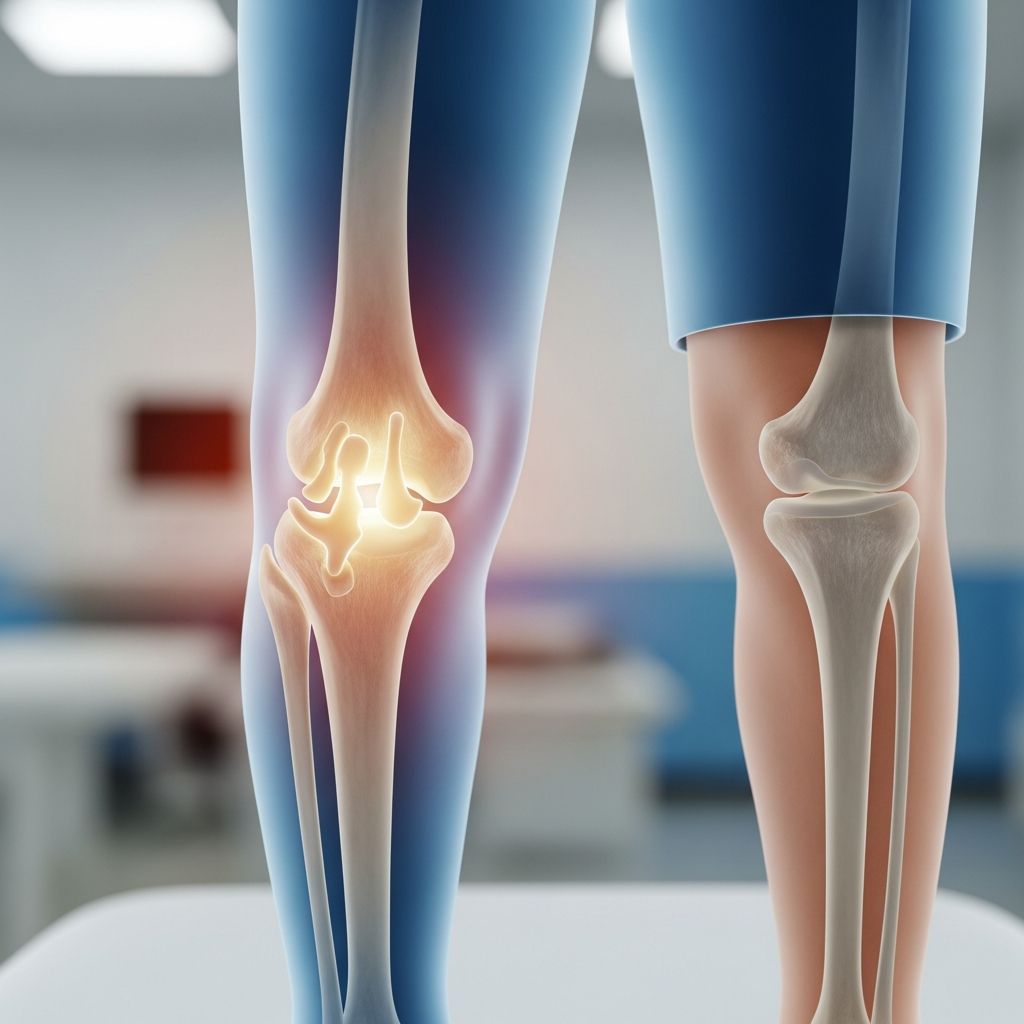
Blount’s disease, also known as tibia vara or infantile tibia vara, is a developmental growth disorder that affects the tibia (shin bone) in children and adolescents. This condition causes progressive bowing of the lower leg below the knee, resulting in a distinctive inward bend that worsens over time if left untreated. Unlike normal childhood bowlegs, which naturally straighten as children grow, Blount’s disease is a progressive deformity that requires medical attention and intervention. Understanding this condition is crucial for parents and caregivers to ensure early detection and appropriate treatment.
What is Blount’s Disease?
Blount’s disease is a condition that results from an abnormality in the growth plate of the upper tibia, leading to disrupted bone formation and the characteristic bowlegged appearance. The condition is caused by excessive compressive forces on the proximal medial metaphysis of the tibia, which disrupts normal cartilage growth and leads to altered enchondral bone formation. This mechanical overload causes growth inhibition specifically on the medial (inner) side of the upper tibia, resulting in progressive varus deformity.
The condition can affect one leg (unilateral) or both legs (bilateral), with bilateral presentation being more common in early-onset cases. Blount’s disease manifests in two distinct forms: infantile (early-onset) and adolescent (late-onset), each with different characteristics, age of onset, and progression patterns.
Types and Classification of Blount’s Disease
Blount’s disease is classified based on the age at which the condition develops, with each type having distinct characteristics and progression patterns.
Early-Onset Blount’s Disease
Early-onset Blount’s disease develops in children under four years of age, typically appearing between one and three years of age. This form is the most common presentation and tends to be more severe. Approximately 80% of early-onset cases are bilateral, meaning both legs are affected. The condition often becomes noticeable after a child begins walking, particularly in children who start walking before 12 months of age.
Late-Onset Blount’s Disease
Late-onset Blount’s disease develops after age four and can be further subdivided into juvenile (ages 4-10) and adolescent (after age 10) forms. This type is less common than early-onset disease and typically presents as either unilateral or bilateral deformity. Late-onset disease may progress more slowly than early-onset disease but still requires professional monitoring and treatment.
Risk Factors and Causes
While the exact cause of Blount’s disease remains not entirely understood, multiple factors have been identified as contributing to its development. The condition is believed to be multifactorial, with mechanical factors playing a primary role.
Primary Risk Factors
Childhood Obesity: The most significant risk factor for Blount’s disease is childhood obesity. Excess weight increases compressive forces on the growth plates, particularly the medial proximal tibial physis, disrupting normal bone development. Children who are overweight or gain weight rapidly face substantially higher risk of developing this condition.
Early Walking: Children who begin walking before 12 months of age have an increased risk of developing Blount’s disease. Early weight-bearing on immature growth plates can accelerate the development of deformity.
Genetic Factors: Research suggests that genetic predisposition may play a role in the development of Blount’s disease, though the exact genetic mechanisms remain under investigation.
Other Contributing Factors
Additional causes and risk factors include metabolic disorders such as rickets, renal failure, skeletal dysplasias (developmental abnormalities), infections, and achondroplasia (a form of dwarfism).
Pathophysiology: How Blount’s Disease Develops
Understanding the biological mechanisms behind Blount’s disease provides insight into why prevention and early treatment are crucial. The condition develops through a specific pathophysiological process.
Related Stories



According to the Heuter-Volkmann principle, Blount’s disease results from growth inhibition caused by excessive compressive forces on the medial proximal tibia. This increased mechanical load damages the cartilage of the epiphysis and delays ossification (bone formation), preventing normal development of the medial aspect of the tibia.
The excessive compression causes structural and functional alterations in the cartilage, leading to abnormal chondrocyte activity and disruption of the normal endochondral ossification process. As the medial growth plate fails to develop normally while the lateral (outer) side continues to grow, an increasingly severe varus deformity develops. This creates a three-dimensional deformity that combines tibial varus (inward bowing), procurvatum (anterior bowing), internal tibial rotation, and potential limb length discrepancies.
Clinical Presentation and Symptoms
The presentation of Blount’s disease varies depending on whether it is early-onset or late-onset, unilateral or bilateral, and the stage of disease progression.
Visible Deformity
The hallmark symptom of Blount’s disease is a severe, progressive inward bend of the lower leg below the knee. The bowing is distinct and angular rather than the gentle curve seen in normal childhood bowlegs. The deformity is progressive and does not self-correct as the child grows, unlike typical childhood bowing that straightens within the first two years of life.
The deformity may be accompanied by a palpable bony protuberance on the medial proximal tibial metaphysis that can be felt on physical examination.
Pain and Functional Limitations
In younger children with early-onset disease, bowing typically does not cause pain. However, adolescents with late-onset disease may experience knee pain that worsens with physical activity. As the deformity progresses, gait abnormalities develop, and children may experience difficulty with mobility and physical activities.
Secondary Complications
Untreated or severe Blount’s disease can lead to early-onset knee osteoarthritis as a result of the abnormal biomechanics and joint alignment. Additionally, the altered growth patterns can result in limb length discrepancies, where one leg becomes shorter than the other due to disrupted growth.
The Langenskiöld Classification System
The Langenskiöld classification system provides a standardized method for staging the severity of infantile Blount’s disease based on radiographic findings. This system helps clinicians assess progression and guide treatment decisions. The stages indicate increasing severity and medial physeal collapse:
| Stage | Age Range | Radiographic Findings |
|---|---|---|
| Stage I | Age 2-3 | Irregularities in the metaphyseal ossification zone; slow epiphyseal development on the medial aspect of the tibia |
| Stage II | Age 2.5-4 | Medial and/or distal beaking of the medial epiphysis; sharp depression of the medial physeal line |
| Stage III | Age 4-6 | Deepening of the metaphyseal beak depression; development of metaphyseal “step”; increased wedge-shaping of medial epiphysis |
| Stage IV | Age 5-10 | Narrowing of the physis; enlargement of the epiphysis; deepening metaphyseal “step” |
| Stage V | Age 9-11 | Clear separation of epiphysis into two parts; partially double epiphysial plate; medially sloping articular surface |
| Stage VI | Age 10-13 | Ossification of the medial physis with cessation of growth; normal lateral tibial growth continues |
A physeal bar becomes evident from stage V onward, representing a more permanent structural change in the growth plate. Deformities greater than 16 degrees have a 95% chance of progression if left untreated.
Diagnosis of Blount’s Disease
Early and accurate diagnosis is essential for successful treatment outcomes. The diagnostic process combines clinical evaluation with imaging studies.
Clinical Assessment
Diagnosis begins with a thorough patient history and physical examination. Healthcare providers assess the child’s walking patterns, family history, weight status, and age at which bowing first appeared. Physical examination includes direct observation of the leg alignment and palpation of the proximal tibial metaphysis to detect the characteristic bony protuberance.
Imaging Studies
Standing-alignment X-rays form the cornerstone of diagnosis and staging. These radiographs provide images of the leg from hip to ankle, allowing clinicians to assess the mechanical axis of the deformity and determine its location and severity. The radiographic findings are compared against the Langenskiöld classification to determine the stage of disease in early-onset cases.
Advanced imaging is not routinely performed in late-onset Blount’s disease unless complications are suspected. However, in complex cases or when planning surgical intervention, advanced imaging may be utilized.
Treatment Options
Treatment of Blount’s disease depends on several factors, including the child’s age, disease stage, severity of deformity, and progression rate. Early intervention offers the best outcomes.
Conservative Management
In early stages of disease, particularly in younger children (stages I-III), conservative management may be attempted. This includes weight management counseling and close monitoring with repeated radiographs to assess for progression. For children in early stages with mild deformity and no evidence of rapid progression, observation with regular follow-up may be appropriate.
Surgical Intervention
Surgical treatment becomes necessary when conservative management fails or when disease progression is rapid and significant. Surgical options include osteotomy procedures that realign the tibia and correct the varus deformity. The timing and specific surgical technique depend on the child’s age, stage of disease, and individual factors. Early surgical intervention in appropriate cases can prevent progression to later stages with more severe deformities and potential long-term complications.
When to Seek Medical Attention
Parents should consult a pediatric orthopedic specialist if they notice their child has persistent inward bowing of the legs that does not improve by age two to three, progressive worsening of leg bowing over time, or if their child is overweight and beginning to show signs of bowleggedness. Early medical evaluation ensures appropriate diagnosis and timely initiation of treatment.
Frequently Asked Questions
Q: Is Blount’s disease the same as normal childhood bowlegs?
A: No. Normal childhood bowlegs are a natural phase of development that typically straighten by age two to three years. Blount’s disease is a progressive condition that worsens over time and does not self-correct without treatment.
Q: Can Blount’s disease be prevented?
A: While not all cases can be prevented, maintaining healthy weight in children and avoiding early intensive weight-bearing activities may reduce risk, particularly in children with family history of the condition.
Q: What is the prognosis for children with Blount’s disease?
A: Prognosis depends on age of onset, stage at diagnosis, and compliance with treatment. Early diagnosis and intervention generally result in better outcomes and prevention of long-term complications.
Q: Will my child need surgery?
A: Not all children require surgery. Treatment decisions depend on age, disease stage, severity, and progression. Your pediatric orthopedic specialist will recommend the most appropriate treatment plan for your child’s specific situation.
Q: How often should my child be monitored?
A: Monitoring frequency depends on the treatment plan. Children receiving conservative management require regular follow-up appointments, typically every 3-6 months, with repeated radiographs to assess for progression.
References
- Blount’s Disease – Physiopedia — Physiopedia. Accessed 2025. https://www.physio-pedia.com/Blount%27s_Disease
- Blount’s Disease Symptoms, Causes & Treatment — Cleveland Clinic. https://my.clevelandclinic.org/health/diseases/22424-blounts-disease
- Blount Disease – StatPearls — National Center for Biotechnology Information (NCBI). https://www.ncbi.nlm.nih.gov/books/NBK560923/
- Blount’s Disease Bowleg Treatment: HSS Pediatric Orthopedics — Hospital for Special Surgery (HSS). https://www.hss.edu/health-library/conditions-and-treatments/blounts-disease
- Bowed Legs (Genu Varum, Blount’s Disease) — American Academy of Orthopaedic Surgeons (AAOS) OrthoInfo. https://orthoinfo.aaos.org/en/diseases–conditions/bowed-legs-blounts-disease/
Similar Articles








Read full bio of Sneha Tete