Blue Toe Syndrome: Causes, Symptoms, And Urgent Treatment
Understanding the causes, symptoms, diagnosis, and treatment of blue toe syndrome, a critical vascular condition requiring prompt medical attention.
Introduction
**Blue toe syndrome**, also known as
occlusive vasculopathy
ortrash foot
, is a form ofacute digital ischaemia
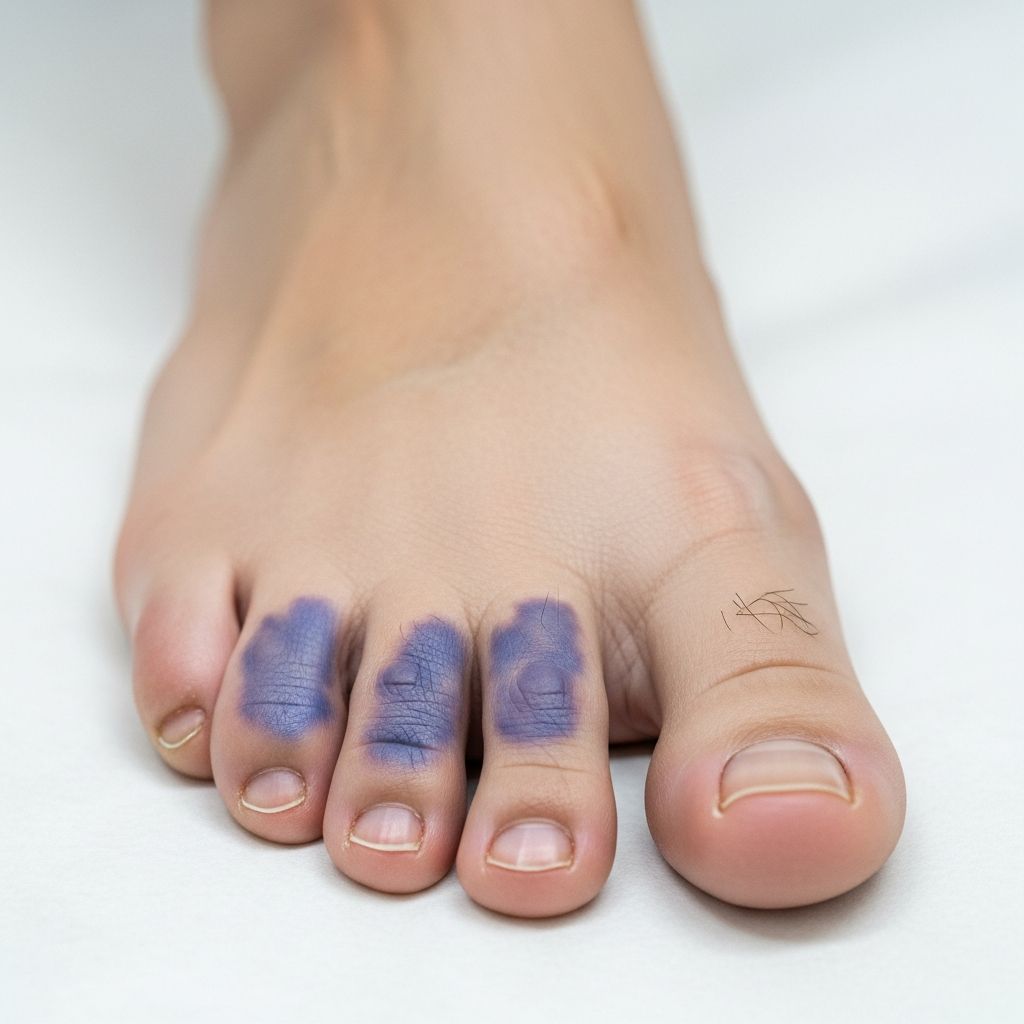
affecting one or more toes, resulting in a characteristicblue or violet discoloration
. This condition arises from impaired blood flow to the toes, leading to tissue ischaemia without preceding trauma or generalized cyanosis such as from hypoxaemia or methaemoglobinaemia. It predominantly affects older adults, particularly men post-vascular procedures, presenting with suddenpain
anddiscoloration
despite preserved proximal pulses.The hallmark is
small vessel occlusion
in the distal arteries of the feet, causing the “3 Ps”: suddenPain
,Purple (blue) discoloration
of toes, andPalpable pulses
proximally. Early recognition is crucial to prevent complications like necrosis or amputation, as the underlying cause often stems from proximal embolic sources like aortic plaques.What is blue toe syndrome?
Blue toe syndrome (BTS) represents
acute or subacute tissue ischaemia
due to occlusion of small distal vessels in the toes and feet. The blue hue results from deoxygenated blood stasis, often with livedo reticularis—a lace-like purplish pattern on the skin. Unlike generalized cyanosis, BTS is focal, sparing larger areas unless progressive.It was first described by Karmody et al. in 1976, highlighting its vascular aetiology. The condition can be unilateral or bilateral, affecting single or multiple toes, and is frequently iatrogenic following catheterization or surgery.
Causes
The impairment of blood flow in blue toe syndrome stems from
embolization
,thrombosis
,vasospasm
, orvessel wall abnormalities
. These mechanisms are not mutually exclusive; for instance, abnormal blood can trigger vasculitis and subsequent thrombosis.Embolic causes
- Atheroemboli (cholesterol crystal emboli): Most common, from proximal atherosclerotic plaques in the aorta, iliac, or femoral arteries dislodging crystalline debris into distal vessels.
- Cardiac emboli: From atrial fibrillation, endocarditis, or mural thrombi post-myocardial infarction.
- Iatrogenic emboli: Post-angiography, vascular surgery, or endovascular procedures.
Thrombotic causes
- Hypercoagulable states: Antiphospholipid syndrome, protein C/S deficiency, malignancy-associated thrombosis.
- Local thrombosis: In situ clotting due to endothelial injury or stasis.
Inflammatory/vasculitic causes
- Syphilis, pyogenic sepsis, Behçet disease, other vasculitides (e.g., polyarteritis nodosa).
- Calciphylaxis: Calcific vasculopathy in renal failure patients, narrowing vessels.
Venous causes
Phlegmasia cerulea dolens: Massive iliofemoral venous thrombosis causing arterial compromise and blue toes with leg oedema. Risk factors include malignancy, pregnancy, oral contraceptives, and immobility.
Risk factors
- Advanced age (>50 years), male gender.
- Atherosclerosis, hypertension, diabetes, smoking, hyperlipidemia.
- Recent vascular interventions.
Clinical features
Patients typically present with
sudden onset
ofsevere toe pain
,coldness
, andbluish-purple discoloration
of one or more toes. The skin may showpetechiae
,livedo reticularis
, orcyanotic patches
on soles. Despite distal ischaemia,pedal pulses
are often palpable, distinguishing BTS from proximal arterial occlusion.- Pain: Intense, burning, worse with dependency; may radiate proximally.
- Skin changes: Blue-violet toes, mottling, coolness; progression to ulceration or gangrene if untreated.
- Systemic signs: Fever, eosinophilia (in atheroemboli), or leg swelling (venous aetiology).
Related Stories



Symptoms evolve over hours to days; multiple toes or feet may be involved progressively.
Complications
Untreated BTS leads to
tissue necrosis
,gangrene
, andamputation
risk, especially with delayed presentation. Systemic embolization can cause renal, splenic, or mesenteric ischaemia. Recurrent episodes heighten morbidity in atherosclerotic patients. Phlegmasia cerulea dolens risks compartment syndrome and limb loss.Diagnosis
Diagnosis relies on
clinical suspicion
confirmed by imaging to identify embolic sources. History (recent procedures, risk factors) and exam (intact pulses, focal ischaemia) are key. Rule out differentials: trauma, frostbite, vasculitis, Raynaud’s, acrocyanosis.Investigations
| Test | Purpose |
|---|---|
| CT Angiography (CTA) | Gold standard for aortic/iliac plaques, aneurysms; preferred imaging. |
| Duplex Ultrasound | Non-invasive for proximal stenoses, venous thrombosis. |
| Echocardiography | Cardiac sources (vegetations, thrombi). |
| Blood tests | Eosinophilia (atheroemboli), hypercoagulability screen, renal function. |
| Biopsy | Rarely, for vasculitis/calciphylaxis confirmation. |
A multidisciplinary approach involving vascular surgery, dermatology, and rheumatology aids complex cases.
Treatment
Treatment targets the
underlying cause
, relieves occlusion, manages pain, and prevents recurrence. Urgent intervention is essential to avert necrosis.Medical management
- Anticoagulation/Antiplatelets: Heparin/LMWH for thromboembolism; aspirin/clopidogrel + high-dose statins (e.g., atorvastatin 40mg) for atheroemboli.
- Iloprost infusion: Prostacyclin analogue improves microcirculation, reduces pain in cholesterol emboli.
- Symptom control: Analgesics, blood pressure/cholesterol optimization, smoking cessation.
- Supportive: Elevation, warming (avoid extremes), wound care.
Surgical/Interventional
- Embolectomy/Thrombectomy: For acute clots.
- Stenting/Bypass: Proximal stenoses.
- Amputation: Non-viable tissue.
Prevention
In high-risk patients (atherosclerosis): dual antiplatelets, statins, risk factor modification (hypertension, diabetes control). Follow stenotic lesions closely to prevent recurrence.
Frequently asked questions
Q: Who is at risk for blue toe syndrome?
A: Older adults (>50), especially men with atherosclerosis, recent vascular procedures, or hypercoagulable states.
Q: Is blue toe syndrome an emergency?
A: Yes; prompt treatment prevents amputation. Seek vascular specialist immediately.
Q: Can blue toe syndrome affect both feet?
A: Yes, if bilateral embolic source like aortic plaques.
Q: What does blue toe syndrome look like?
A: Blue/purple toes with pain, livedo reticularis, cool skin; pulses often intact.
Q: How is blue toe syndrome treated?
A: Cause-specific: antiplatelets/statins for atheroemboli, anticoagulants for thrombi, surgery if needed.
References
- Blue toe syndrome — DermNet NZ. 2023. https://dermnetnz.org/topics/blue-toe-syndrome
- Blue Toe Syndrome — PMC (PubMed Central). 2024-03-15. https://pmc.ncbi.nlm.nih.gov/articles/PMC10910321/
- Blue Toe Syndrome: Causes and Management — JAMA Internal Medicine. 2000-05-28. https://jamanetwork.com/journals/jamainternalmedicine/fullarticle/616761
- Blue Toe Syndrome — Consultant360. 2023. https://www.consultant360.com/articles/blue-toe-syndrome
- Blue toe syndrome — Journal of Vascular Society of Great Britain and Ireland. 2023. https://jvsgbi.com/blue-toe-syndrome/
- Blue Toe Syndrome — National Institutes of Health (via PMC). 2024. https://pmc.ncbi.nlm.nih.gov/articles/PMC10910321/
Similar Articles








Read full bio of medha deb