Body Piercing: Safe Practices, Risks, And Aftercare Guide
Explore the history, procedures, risks, and aftercare of body piercing for safe adornment practices.
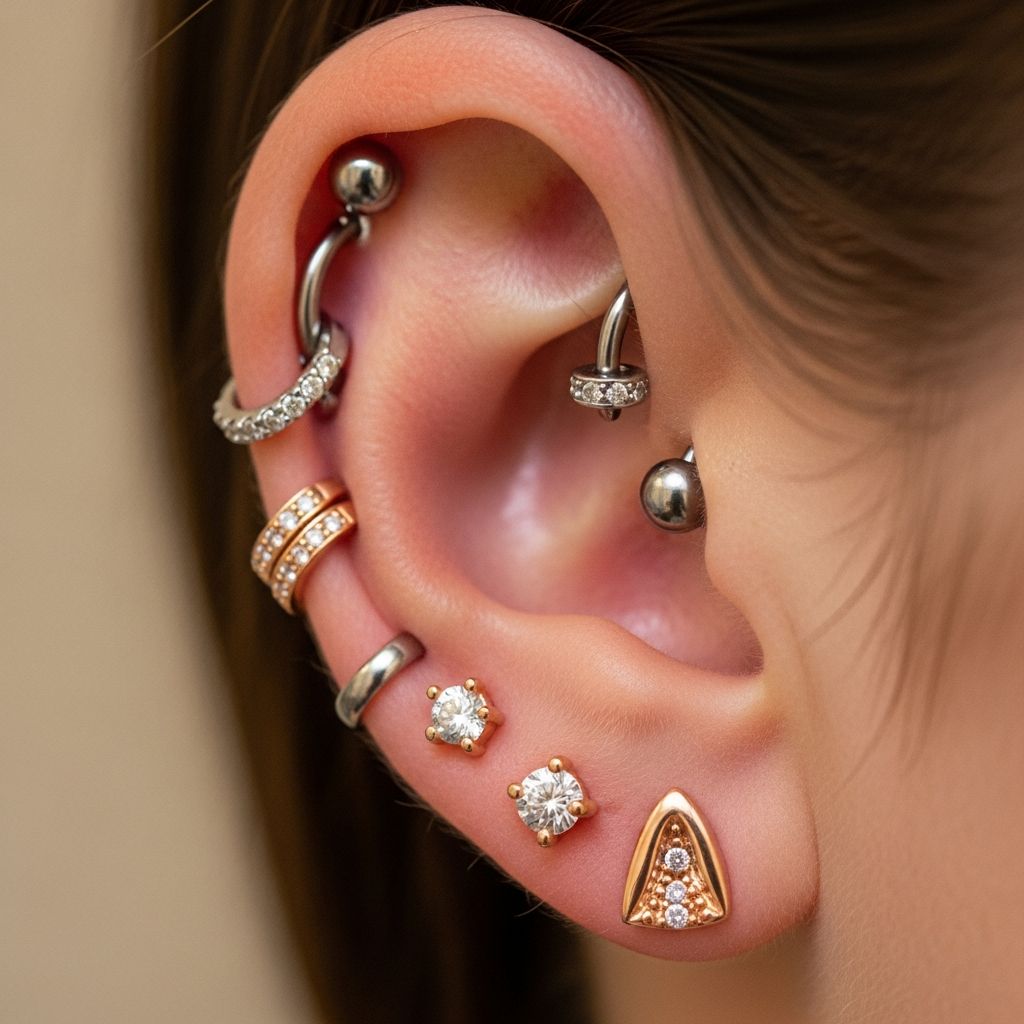
Body piercing involves creating an opening through the skin or mucous membrane to insert jewelry for aesthetic, cultural, or personal reasons. This form of body modification carries risks of infection, scarring, and other complications due to slow wound healing around foreign objects.
Introduction
Body piercing is the deliberate perforation of the skin or cartilage to accommodate jewelry, ranging from simple studs to elaborate designs. Practiced for millennia across cultures, it serves purposes like self-expression, rebellion, or tradition. In modern Western societies, its popularity surges among young adults, often linked to identity exploration rather than psychopathology. The presence of jewelry impedes natural healing, especially in areas with poor blood supply like cartilage, increasing vulnerability to adverse effects.
Healing is prolonged because the piercing acts as a foreign body, disrupting tissue repair. Mucosal and deep piercings heighten infection risks, while oral piercings can cause swelling that obstructs airways. Despite these concerns, millions engage in piercing annually, underscoring the need for education on safe practices.
Demographics
The prevalence of body piercing is highest among adolescents and young adults, particularly females. A study of medical students found 86.2% were female, with a mean age of 24 years, and most received their first piercing at median age 15 without parental knowledge or medical oversight. In Western populations, incidence correlates with risk-taking behaviors and identity-seeking, though not low self-esteem.
Multiple piercings (over four) or intimate sites like nipples and genitalia signal higher emotional distress risks. Cultural variations exist: traditional piercings feature in religious rites, Ayurvedic practices for pain relief, or symbolic ceremonies worldwide. In Brazil, navel piercings predominate among young women for aesthetic appeal, reflecting social emphasis on body image.
- Prevalence peaks: Ages 15-24, females > males.
- First piercing: Often adolescent, unsupervised (91.4%).
- Common sites: Navel (53.5%), ear (41.4%) in studied groups.
- Materials: Metal alloys/stainless steel, dumbbell shapes (51.7%).
Global trends show rising acceptance, but unregulated ‘backyard’ procedures persist, amplifying complications.
Contraindications
Certain conditions render body piercing unsafe, demanding careful screening. Absolute contraindications include active local infections, inflammatory skin diseases, or systemic issues like pregnancy and immunosuppression.
| Category | Conditions | Rationale |
|---|---|---|
| Absolute | Local infection, inflammatory disease, pregnancy, immunosuppression, keloid scarring tendency, atopic dermatitis, dermographism | High infection/scarring risk; contraindicated during sports. |
| Moderate | Known metal allergies (e.g., nickel), bleeding disorders, diabetes, intoxication, peer pressure | Increased allergy, hemorrhage, or poor healing risks. |
| Relative | Recent vaccinations, mucosal sites in high-risk individuals | Potential for delayed healing or systemic spread. |
Allergy-prone individuals must avoid nickel, cobalt, chromium, or latex products used in procedures. Piercings are inadvisable for those with poor hygiene adherence or in friction-prone areas.
Regulations
Body piercing regulation falls under public health authorities, varying by region. In New Zealand, the Ministry of Health issues Guidelines for the Safe Piercing of Skin, emphasizing sanitation and age limits (16-18 years minimum, parental consent for younger). Few standards are enforced globally; U.S. and European councils impose age restrictions, but adolescent piercings (beyond ears) often evade oversight.
Commercial piercings occur in studios, but unregulated home jobs pose dangers. Clients should verify provider credentials, sanitation (gloves, disposable tools), and consent forms. Studies show 84.5% of piercings in professional studios, with 94.8% using gloves, yet only 46.6% received registration forms. Intoxication or pressure compromises consent; education is key.
Related Stories



- Age limits: 16-18+; parental consent for minors (ears excepted).
- Best practices: Sterile equipment, aftercare instructions, no backyard ops.
- Client advice: Research multiple studios, check reviews.
Procedures
Safe piercing uses a sterile hollow needle to create a channel, inserting jewelry immediately. Professionals wear gloves (94.8%), use disposable materials (85.4%), and may apply topical anesthetics (25.9%). Common tools: piercing needle, clamps, receiving tube. Sites like earlobes heal faster than cartilage or navel due to blood flow.
- Consultation: Discuss site, jewelry, allergies, health history.
- Marking & clamping: Precise site selection, skin stabilization.
- Piercing: Single-motion needle insertion; jewelry placement.
- Aftercare: Clean 1-2x daily with antimicrobial soap; avoid pools, touching.
Oral piercings require alcohol-free antiseptic rinses; ice for swelling. Healing times: earlobes 6-8 weeks, cartilage 3-12 months, navel 6-9 months. Studios provide leaflets (54.4% in one study).
Side Effects and Risks
Complications affect 10-30% of cases, peaking in first 6 months. Acute issues: pain, bleeding, edema, infection. Chronic: scarring, keloids, dermatitis.
Immediate Complications
- Pain, syncope, bleeding, hematoma.
- Airway obstruction (oral swelling).
- Embedded jewelry.
Cutaneous Adverse Effects
- Infections: Bacterial (staph, strep), viral (HPV, HSV), fungal; 22.4% in studies.
- Scarring: Hypertrophic/keloid (higher in cartilage/navel), frequent in females.
- Allergic: Contact dermatitis to metals (nickel sensitivity).
- Other: Migration, rejection, trauma/friction.
Navel piercings showed highest local issues (infection, pain), though not statistically superior. Cartilage risks infection due to poor vascularity. Systemic risks: endocarditis, hepatitis if unsterile. Unqualified procedures exacerbate issues via poor sanitation.
| Site | Healing Time | Common Complications |
|---|---|---|
| Earlobe | 6-8 weeks | Infection, allergy |
| Cartilage | 3-12 months | Infection, scarring |
| Navel | 6-9 months | Pain, edema, infection |
| Oral | 4-12 weeks | Swelling, tooth damage |
Aftercare
Proper aftercare minimizes risks. Clean 1-2x daily with saline/antimicrobial soap; oral sites with antiseptic mouthwash. Avoid pools/spas, makeup, alcohol on site. Rotate jewelry only after initial healing; seek medical help for pus, excessive bleeding.
- Sea salt soaks: 5-10 min daily.
- No tight clothing over site.
- Monitor for redness, pus, fever.
- Healing varies: factors include site, hygiene, immunity.
Preventive education reduces complications; professionals must inform on risks.
Frequently Asked Questions (FAQs)
Q: Is body piercing safe?
A: When performed professionally with aftercare, risks are low but include infection (10-30%) and scarring. Avoid if contraindicated.
Q: How long does healing take?
A: Earlobes: 6-8 weeks; cartilage/navel: months. Full healing requires consistent care.
Q: Can piercings cause allergies?
A: Yes, especially to nickel/cobalt; test for sensitivities first.
Q: What’s the most common complication?
A: Infection and local inflammation, highest in first 6 months, navel sites.
Q: Are piercings regulated everywhere?
A: Varies; follow local health guidelines, choose licensed studios.
References
- Piercings in medical students and their effects on the skin — PMC – NIH. 2014-10-15. https://pmc.ncbi.nlm.nih.gov/articles/PMC4230659/
- Body piercing — DermNet NZ. 2023-01-01. https://dermnetnz.org/topics/body-piercing
- Cutaneous Adverse Reactions to Tattoos and Piercings — Actas Dermo-Sifiliográficas. 2009-01-01. https://actasdermo.org/en-cutaneous-adverse-reactions-tattoos-piercings-articulo-S1578219009701465
- Body Piercing — JAMA Network. 2000-06-14. https://jamanetwork.com/journals/jama/fullarticle/198264
- Body Piercing — Journal of Midwifery & Women’s Health. 2017-01-01. https://onlinelibrary.wiley.com/doi/10.1111/jmwh.12682
- North American Contact Dermatitis Group Data From 2007 to 2010 — Liebertpub. 2014-01-01. https://www.liebertpub.com/doi/10.1097/DER.0000000000000066
Similar Articles








Read full bio of medha deb