Boils, Carbuncles And Furunculosis: Causes & Treatment
Understand causes, symptoms, treatments, and prevention of painful boils, carbuncles, and recurrent furunculosis infections.
A
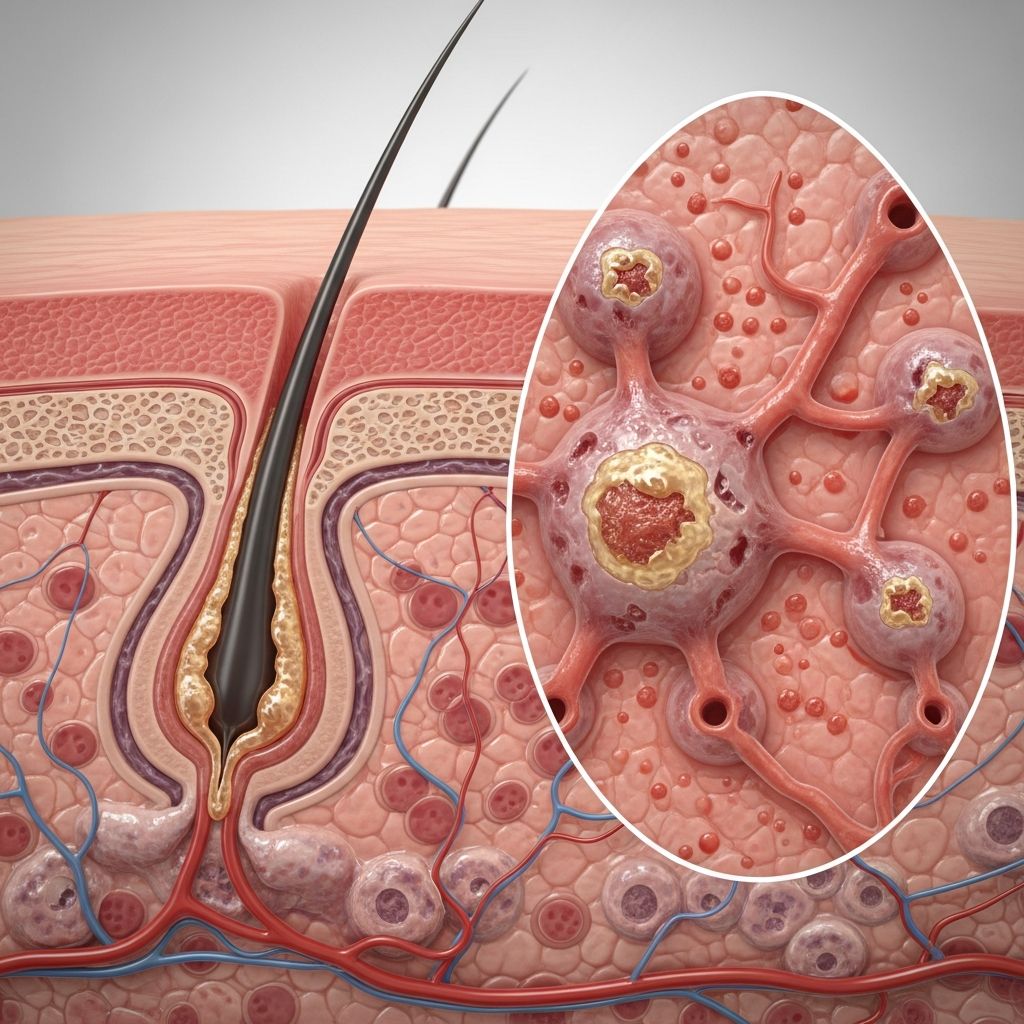
boil
(furuncle) is a common skin infection affecting a single hair follicle, while acarbuncle
involves multiple adjacent follicles forming a larger, deeper abscess.Furunculosis
refers to recurrent or multiple boils, often signaling underlying issues like bacterial carriage.What is a boil?
A boil, or furuncle, develops when bacteria infect a hair follicle and surrounding skin, leading to a painful, pus-filled lump. This infection causes inflammation, redness, and swelling as the body fights the invading germs. Boils typically start as tender red nodules and evolve into pus-filled abscesses with a central ‘head’. Unlike simple pimples, boils penetrate deeper into the skin, involving subcutaneous tissue and often causing significant discomfort.
Carbuncles form when several boils merge, creating a larger interconnected infection that spreads subcutaneously. These are more severe, frequently occurring on the neck, back, or thighs, and may cause systemic symptoms like fever and fatigue due to deeper tissue involvement. Chronic furunculosis involves repeated episodes of boils, sometimes in crops over weeks or months, affecting otherwise healthy individuals or those with risk factors.
What does a boil look like?
Initially, a boil appears as a small, red, tender bump resembling a large pimple. Over 2-5 days, it enlarges, becomes more painful, and develops a white or yellow pus-filled center (pustule). The surrounding skin is warm, erythematous, and swollen. Fluctuance—a soft, boggy feel—indicates pus accumulation.
- Early stage: Red, inflamed nodule 5-10mm in size.
- Mature stage: Pus head forms; pain peaks.
- Resolving stage: Pus drains, crust forms, lesion shrinks.
Carbuncles present as broader swellings (1-5cm) with multiple drainage points, deeper suppuration, and potential scarring. They may feel firm initially, then soften as pus collects. Recurrent boils in furunculosis often appear on extremities, buttocks, or face, leaving pitted scars after healing.
What causes boils?
Boils are primarily caused by
Staphylococcus aureus
bacteria entering through minor skin breaks like cuts, abrasions, or hair follicles blocked by sweat or friction. These germs multiply in the warm, moist environment beneath the skin, evading initial immune defenses.Key risk factors include:
- Weakened immunity: Conditions like diabetes, HIV, obesity, or immunosuppressive drugs impair bacterial clearance.
- Skin conditions: Atopic dermatitis, scabies, or excoriations predispose follicles to infection.
- Bacterial carriage: Up to 30% of people carry S. aureus (including PVL-producing strains) in the nose or skin, increasing recurrence risk. Household spread is common in furunculosis.
- Other triggers: Poor hygiene, tight clothing, insect bites, or MRSA strains in healthcare settings.
In furunculosis, persistent nasal or skin colonization drives recurrence; family members may also carry the bacteria. Evidence links diabetes to more severe boils, though not always to initial onset.
Boil treatment
Treatment depends on size, location, and patient health. Small boils often resolve with home care, while larger ones or carbuncles require medical intervention.
Home treatment for small boils
Apply warm compresses (flannel in warm—not hot—water) for 10-15 minutes, 3-4 times daily to reduce pain and encourage drainage. Keep the area clean with soap and water; avoid squeezing to prevent spread.
- Use over-the-counter pain relievers like paracetamol or ibuprofen.
- Cover with loose bandage if draining.
- Practice good hygiene: frequent handwashing, loose clothing.
Related Stories



Medical treatment
For larger boils, carbuncles, or facial lesions: Incision and drainage (I&D) by a doctor using sterile needle or scalpel releases pus, relieving pressure. Packing with gauze aids ongoing drainage.
Antibiotics are reserved for systemic symptoms, multiple sites, or immunocompromised patients:
| Condition | Antibiotic Options | Duration |
|---|---|---|
| Simple boils | Often none needed | – |
| Carbuncles/multiple | Flucloxacillin or erythromycin (penicillin allergy) | 7 days |
| Furunculosis | Flucloxacillin guided by culture; longer courses (2-8 weeks) | 2+ weeks |
MRSA suspected? Use trimethoprim-sulfamethoxazole or clindamycin.
Chronic furunculosis management
Swab nose/skin for carriage; decolonize with mupirocin nasal ointment and chlorhexidine baths for patient and household contacts. Prolonged antibiotics or referral to infectious disease specialist if recurrent. Address underlying factors like diabetes control.
What will happen if I do nothing?
Small boils may resolve spontaneously in 1-2 weeks as pus drains naturally, with pain subsiding post-rupture. However, risks include:
- Spread: Bacteria disseminate to new sites or bloodstream (sepsis, rare but serious).
- Scarring: Especially with carbuncles or picking.
- Complications: Cellulitis, abscess, endocarditis in vulnerable patients.
Never lance yourself—risks worsening infection. Seek care if boil enlarges, fever develops, or affects face/genitals. Carbuncles rarely self-resolve and often need drainage to prevent fever and weakness. In furunculosis, inaction perpetuates cycles.
Prevention of boils
Minimize entry points and bacterial load:
- Wash hands/skin regularly with antibacterial soap.
- Avoid sharing towels/razors; launder clothes in hot water.
- Moisturize dry skin; treat underlying eczema.
- For carriers: Nasal mupirocin 2x/day for 5 days, bleach baths (1/2 cup in tub) twice weekly.
- Control diabetes, maintain hygiene in sweaty areas.
Household decolonization reduces recurrence by 50% in studies.
When to see a doctor
- Boil >5cm, on face/spine, or not draining after 2 weeks.
- Fever, chills, swollen lymph nodes.
- Recurrent boils (>3 in 3 months).
- Diabetes, immunosuppression, or infant/elderly patient.
Frequently Asked Questions (FAQs)
Can I pop a boil myself?
No—squeezing spreads infection. Use warm compresses and see a doctor for drainage.
Are boils contagious?
Drainage pus can spread bacteria via contact or fomites; practice hygiene to avoid.
How long do boils last?
1-2 weeks untreated; faster with treatment.
Do antibiotics always cure boils?
No—drainage is key; antibiotics for severe cases.
Can furunculosis be permanent?
Not usually; decolonization and hygiene prevent recurrence.
References
- Boils, Carbuncles and Furunculosis — Patient.info. 2023. https://patient.info/skin-conditions/boils-carbuncles-and-furunculosis
- Overview: Boils and carbuncles — InformedHealth.org – NCBI Bookshelf. 2023-08-08. https://www.ncbi.nlm.nih.gov/books/NBK513141/
- Recurrent furunculosis – challenges and management: a review — PMC. 2014. https://pmc.ncbi.nlm.nih.gov/articles/PMC3934592/
- Furuncles and Carbuncles — Merck Manuals Professional Edition. 2023. https://www.merckmanuals.com/professional/dermatologic-disorders/bacterial-skin-infections/furuncles-and-carbuncles
- Furunculosis (Boil) — Dermatology Advisor. 2023. https://www.dermatologyadvisor.com/home/decision-support-in-medicine/dermatology/furunculosis-boil/
- Boils and Carbuncles | Doctor — Patient.info Doctor. 2023. https://patient.info/doctor/dermatology/boils-and-carbuncles
- Boils and carbuncles – Diagnosis & treatment — Mayo Clinic. 2023-10-23. https://www.mayoclinic.org/diseases-conditions/boils-and-carbuncles/diagnosis-treatment/drc-20353776
Similar Articles








Read full bio of medha deb