Bone-Anchored Hearing Aids: Surgical Solutions for Hearing Loss
Restore hearing through bone conduction technology with minimally invasive BAHA surgery.
Understanding Bone-Anchored Hearing Aids (BAHA)
Bone-anchored hearing aids (BAHA) represent a significant advancement in auditory technology for individuals who have not found success with traditional hearing aids. These surgically implanted devices may partially restore hearing for people with certain types of hearing loss by utilizing a fundamentally different approach than conventional amplification methods. Instead of amplifying sound through the middle ear, BAHA devices send soundwaves directly through the bones of your skull into the cochlea, the spiral structure in your inner ear that plays a key role in hearing. This innovative bone conduction method creates an entirely new hearing pathway, bypassing the outer and middle ear to deliver sound signals more effectively for specific conditions.
The technology behind BAHA devices represents a departure from traditional hearing aids in both form and function. While conventional hearing aids work through air conduction—amplifying sound vibrations that travel through the ear canal and middle ear—BAHA devices use bone conduction to transmit sound signals using vibrations that travel directly through the skull bone to the inner ear. This makes BAHA particularly effective for individuals with conductive hearing loss, mixed hearing loss, or single-sided deafness, where traditional air conduction amplification may prove inadequate.
How BAHA Hearing Aids Work
Understanding the mechanics of bone-anchored hearing aids requires knowledge of how bone conduction differs from traditional hearing methods. The device captures sound from the environment and converts it into vibrations that are transmitted through the skull bone directly to the cochlea. This bypasses any damage or obstruction in the outer and middle ear, allowing sound to reach the inner ear through an alternative pathway.
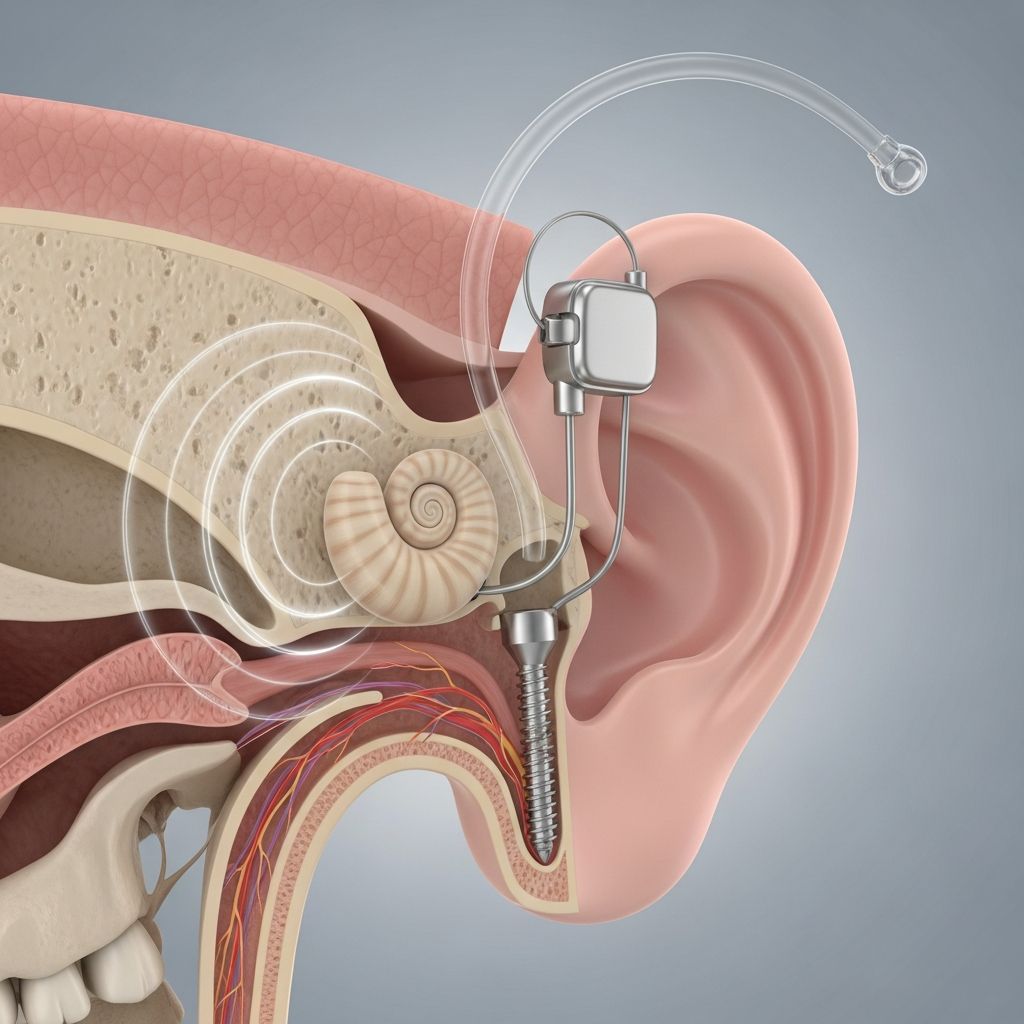
The process begins with the sound processor, which detects ambient sounds and converts them into vibrations. These vibrations are then transmitted through the titanium implant to the bone behind your ear. The skull bones naturally conduct these vibrations to the cochlea, where they stimulate the hair cells responsible for hearing. From there, the signal travels along the auditory nerve to the brain, where it is processed as sound. This elegant solution works particularly well because bone is an excellent conductor of sound vibrations, making it an ideal medium for transmitting audio signals.
BAHA Components and Types
A traditional BAHA device consists of three primary components working together to deliver sound:
- A titanium implant surgically placed in the mastoid bone behind the ear
- An external connector (abutment) that protrudes through the skin
- A sound processor that attaches to the external connector and performs the actual sound detection and conversion
The titanium implant is crucial because it undergoes osseointegration, a biological process where the bone fuses with the implant to provide long-term stability and effective sound transmission.
There are two main types of bone conduction hearing systems available today. The first type includes a titanium abutment that protrudes through the skin, requiring regular cleaning and maintenance of the surgical site. The second type uses a fully implantable design where the titanium implant is covered by skin, reducing the need for ongoing wound care. Your otolaryngologist and audiologist can help determine which option best suits your specific situation, considering factors such as your age, medical history, type of hearing loss, and personal preferences.
Who Is a Candidate for BAHA?
BAHA hearing aids may work for people with specific types of hearing loss. Ideal candidates typically have conductive hearing loss, mixed hearing loss (a combination of conductive and sensorineural components), or single-sided deafness. These conditions can result from various underlying causes such as chronic ear infections, ear canal abnormalities, ossicular chain problems, or permanent hearing loss in one ear with normal hearing in the other.
To be considered for a bone-anchored hearing aid, candidates generally must meet the following criteria:
- Mixed or conductive hearing loss with 30dB or greater air-bone gaps
- Bone conduction pure tone average of 55 dB or better
- Adequate bone thickness at the implant site (verified through imaging)
- Realistic expectations about hearing outcomes
- Ability to maintain the device properly
- Good overall health suitable for minor surgery
Related Stories



Before committing to surgery, your healthcare provider may recommend trying a nonsurgical bone conduction hearing aid during an office visit. This trial period allows you to experience how the device works and determine if bone conduction technology is suitable for your needs before proceeding with surgical implantation.
The BAHA Surgical Procedure
BAHA surgery is a minimally invasive outpatient procedure that typically takes between 30 to 60 minutes, depending on the specific type of bone-anchored hearing system you receive. The procedure is usually performed under local or general anesthesia, and most patients are discharged the same day.
During the surgical procedure, your otolaryngologist will:
- Make an incision into the skin behind the ear, typically in the mastoid bone region
- Drill a small space into the mastoid bone to accommodate the titanium implant
- Insert the titanium abutment (connector) into the drilled space
- For devices with an abutment, position the connector so it slightly protrudes for eventual skin healing and future sound processor attachment
- Close the incision with stitches and apply sterile surgical dressing
The surgical technique is designed to minimize tissue trauma while ensuring secure placement of the titanium implant. The precision of this procedure is critical because the stability of the implant directly affects the quality of sound transmission through bone conduction.
Osseointegration and Healing Process
After BAHA surgery, a crucial biological process called osseointegration must occur before you can begin using your device. During osseointegration, your natural bone fuses to the titanium implant, creating a stable foundation for sound transmission. This fusion is absolutely necessary before the sound processor can be attached to the external connector, as it ensures that vibrations are effectively transmitted through the implant to the surrounding bone.
The healing timeline varies depending on several factors, including the type of BAHA you choose and your individual healing capacity. Generally, osseointegration takes approximately one to three months to complete. During this initial healing period, you may experience some soreness and redness around the implant site, which is completely normal.
Initial recovery typically takes about three to seven days. During this time, you should:
- Keep the surgical site clean and dry
- Follow all post-operative care instructions provided by your surgeon
- Avoid strenuous activities and heavy lifting
- Take prescribed medications as directed
- Attend follow-up appointments as scheduled
Once osseointegration is complete and your provider confirms full healing, they will attach the external sound processor to your implant. At this time, your audiologist will customize the device settings to optimize your hearing and teach you how to properly remove and reattach your processor.
Advantages of Bone-Anchored Hearing Aids
Bone-anchored hearing aids offer several significant advantages for appropriate candidates:
- High success rates: Research studies indicate success rates of 90% or higher, making BAHA one of the most effective hearing solutions available.
- Minimally invasive: Unlike some other hearing implants, BAHA surgery is a relatively simple outpatient procedure with quick recovery times
- Effective for specific conditions: BAHA excels at treating conductive and mixed hearing loss where traditional hearing aids may fail
- No ear canal involvement: Unlike conventional hearing aids, BAHA requires no part of the device to be placed in the ear canal, reducing feedback and discomfort
- Bilateral hearing possible: Bone conduction hearing aids can be used for one or both ears, and can be combined with traditional hearing aids on the opposite ear if needed
- Improved sound quality: Many users report clearer sound and better speech discrimination compared to traditional hearing aids
- Long-term stability: The osseointegrated implant provides a permanent, stable foundation for sound transmission
Disadvantages and Surgical Risks
While BAHA devices offer impressive benefits, it is important to understand the potential disadvantages and risks associated with the procedure.
The primary disadvantage is that bone-anchored hearing aids require surgical implantation. Although BAHA surgery is minimally invasive, like all surgical procedures it does carry some risk. Possible complications may include:
- Infection at the surgical site
- Skin reactions or sensitivity around the implant area
- Implant extrusion or failure
- Excessive granulation tissue formation
- Numbness or altered sensation near the surgical site
- Bleeding or hematoma formation
- Need for revision surgery
Additionally, if people with bone-anchored hearing aids sustain head trauma (such as a blow to the head), there could be more serious consequences, including infection, implant failure, or the need for repeat surgery. To reduce your risk for this type of trauma, wear a helmet while playing contact sports or while riding a bike or motorcycle. Patients should also maintain proper wound care and follow all post-operative instructions carefully to minimize complications.
BAHA vs. Other Hearing Solutions
When considering BAHA, it is helpful to understand how it compares to other hearing technology options:
| Feature | BAHA | Traditional Hearing Aid | Cochlear Implant |
|---|---|---|---|
| Transmission Method | Bone conduction | Air conduction | Direct nerve stimulation |
| Surgical Requirement | Yes (minimally invasive) | No | Yes (major surgery) |
| Best For | Conductive/mixed hearing loss | Various hearing losses | Severe sensorineural loss |
| Ear Canal Use | No involvement | Requires ear canal placement | No ear canal involvement |
| Success Rate | 90%+ for appropriate candidates | Variable | 85-90% |
A BAHA hearing aid sends soundwaves to your inner ear through bone vibrations, whereas a cochlear implant bypasses your inner ear entirely and directly stimulates your auditory nerve. People who have inner ear damage may benefit more from cochlear implants, while those with intact inner ear function but conductive or mixed hearing loss typically respond better to BAHA devices.
Frequently Asked Questions
Q: How long does BAHA surgery take?
A: BAHA surgery typically takes between 30 to 60 minutes, depending on the specific type of bone-anchored hearing system you receive. It is usually performed as an outpatient procedure with same-day discharge.
Q: When can I start using my BAHA device after surgery?
A: You cannot use your BAHA immediately after surgery. You must wait for osseointegration to occur, which typically takes one to three months. Once your bone has fused to the titanium implant, your audiologist will activate the device and customize the settings.
Q: What is osseointegration?
A: Osseointegration is the biological process where your natural bone fuses to the titanium implant, creating a stable foundation for sound transmission. This fusion is necessary before the sound processor can be attached.
Q: Am I a candidate for BAHA?
A: You may be a candidate if you have conductive hearing loss, mixed hearing loss, or single-sided deafness. Your otolaryngologist can evaluate your specific situation and determine eligibility based on your hearing loss, bone thickness, and overall health.
Q: What are the success rates for BAHA?
A: Research studies indicate success rates of 90% or higher for BAHA devices in appropriate candidates, making it one of the most effective hearing solutions available.
Q: How do I care for my BAHA device?
A: Care requirements depend on the type of BAHA you have. Devices with an abutment require regular cleaning of the surgical site. Your audiologist and surgeon will provide detailed care instructions specific to your device.
Q: Can I use BAHA in both ears?
A: Yes, bone conduction hearing aids can be used for one or both ears. If needed, you can also combine BAHA with a traditional hearing aid on the opposite ear.
Conclusion
Bone-anchored hearing aids represent an innovative solution for individuals with conductive hearing loss, mixed hearing loss, or single-sided deafness who have not found success with traditional hearing aids. With high success rates of 90% or higher, minimally invasive surgery, and the ability to restore meaningful hearing through bone conduction technology, BAHA devices have transformed the lives of thousands of patients.
If you believe you might benefit from a bone-anchored hearing aid, the first step is to consult with your otolaryngologist or audiologist. They can perform a comprehensive evaluation, assess your candidacy, and discuss whether BAHA is an appropriate option for your specific hearing loss. During an office visit, you may even have the opportunity to trial a nonsurgical bone conduction device to experience how the technology works before making a surgical commitment.
Hearing loss can have a significant negative impact on your quality of life, but modern solutions like BAHA offer hope and effective treatment options. By working closely with your healthcare team and making an informed decision about your hearing care, you can take the next step toward improved hearing and better quality of life.
References
- Bone-Anchored Hearing Aids (BAHA) — Cleveland Clinic. 2023-11-21. https://my.clevelandclinic.org/health/treatments/14794-bone-anchored-auditory-implant
- Bone-Anchored Auditory Implant — Cleveland Clinic Hearing Implant Program. 2025. https://my.clevelandclinic.org/departments/head-neck/depts/hearing-implant-program
- Bone Conduction Hearing Aids: How Do They Work? Candidacy, Types, Models, and Features — Hearing Health Matters. 2024. https://hearinghealthmatters.org/hearing-aid-reviews/2024/bone-conduction-hearing-aids-how-do-they-work-candidacy-types-models-and-features/
- All About Bone Anchored Implants — HearingLife. 2025. https://www.hearinglife.com/hearing-blog/hearing-technology/bone-anchored-implants
Similar Articles








Read full bio of Sneha Tete