Bones: Structure, Types, Anatomy & Essential Functions
Complete guide to human bones: types, anatomy, functions, and how to keep them healthy.
Understanding Your Body’s Skeletal Framework
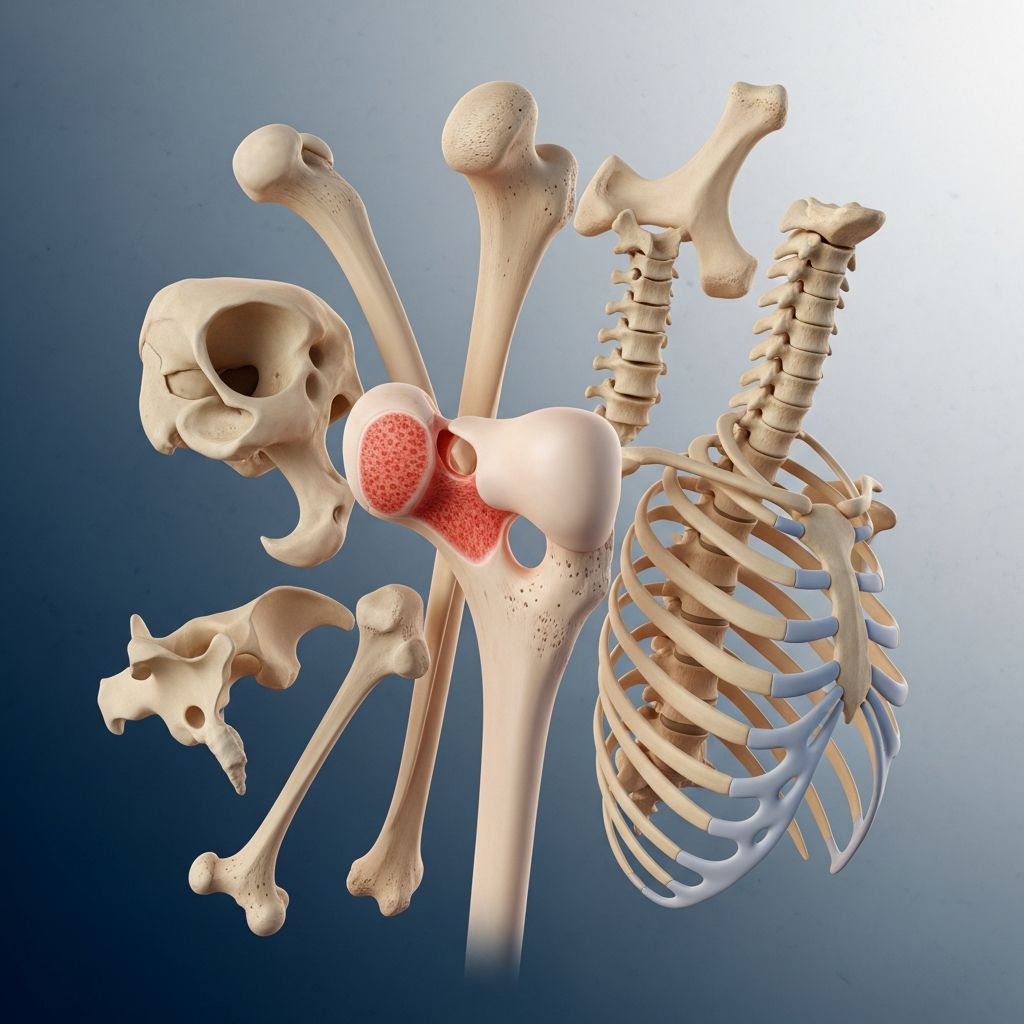
Your bones are far more than the rigid structures you might imagine. They represent a living, dynamic system that constantly works to support your body, protect vital organs, and enable movement. The human skeletal system is an engineering marvel—strong enough to support your weight while remaining light enough to allow freedom of motion. Whether you’re walking, running, or simply maintaining your posture, your bones are working behind the scenes to make it all possible.
The skeletal system serves multiple critical functions beyond structural support. Bones store essential minerals like calcium and phosphorus, produce red and white blood cells through bone marrow, and work in coordination with muscles and joints to create the precise movements that define human capability. Understanding your bones helps you appreciate the importance of maintaining their health throughout your lifetime.
How Many Bones Do Humans Have?
The adult human body contains between 206 and 213 bones, though the most commonly cited number is 206. This number varies slightly from person to person due to individual differences in skeletal anatomy. Interestingly, babies are born with approximately 300 bones, many of which are made of cartilage rather than hard bone tissue. As children grow, many of these bones fuse together, resulting in the smaller number of bones in adults.
The variation in bone count occurs because some people have extra ribs or vertebrae, or their bones may fuse differently than average. Additionally, as people age, certain small bones may fuse together, potentially changing their individual bone count. This remarkable transformation from 300 bones to 206 is a fascinating aspect of human development and skeletal maturation.
Distribution of Bones Throughout Your Body
Your bones are distributed throughout your body in a highly organized manner. Each hand contains 27 bones, providing the intricate structure necessary for the complex movements your hands can perform. Each foot contains 26 bones, giving your feet the flexibility and support needed for walking, running, and balance. Together, your hands and feet account for 106 bones, demonstrating just how many small bones contribute to your body’s functionality.
The remaining bones are distributed throughout your axial skeleton—the central core of your body—which includes 80 bones in your head, neck, back, and chest. Your appendicular skeleton comprises the remaining bones, including those in your shoulders, pelvis, and limbs. This distribution creates an organized system where bones work in harmony to provide both support and mobility.
Types of Bones in Your Body
Bones are classified into four main categories based on their shape and structure. Each type serves specific functions within your body, and understanding these categories helps explain why certain bones are located where they are and why they have particular characteristics.
Long Bones
Long bones are the longest bones in your body and are predominantly found in your arms and legs. These bones have a shaft (diaphysis) and two ends (epiphyses), giving them their characteristic elongated appearance. Long bones are designed to provide maximum length and support for movement. Examples include your femur (thighbone), tibia (shinbone), humerus (upper arm bone), radius (forearm bone on the thumb side), and ulna (forearm bone on the pinky side). Long bones contain a hollow core filled with bone marrow, which produces blood cells and stores fats.
Related Stories



Short Bones
Short bones are thinner and weaker than long bones, with a more compact structure. They’re typically cube-shaped or similar in length and width. Short bones are designed for stability rather than length. Examples include the carpal bones in your wrists, tarsal bones in your ankles, and vertebrae in your spine. These bones provide crucial support while allowing for controlled, limited movement in specific directions.
Flat Bones
Flat bones are wider and less round than other bone types, featuring a broad, flat surface. These bones provide large areas for muscle attachment and protection of internal organs. Examples include your ribs, which protect your heart and lungs; your sternum (breastbone); your scapulae (shoulder blades); and your skull bones, which protect your brain. The flat structure of these bones makes them ideal for creating protective barriers and providing attachment points for muscles.
Sesamoid Bones
Sesamoid bones are small bones embedded in tendons or muscles, usually located near joints. The most well-known sesamoid bone is your patella (kneecap), which sits in the tendon of your quadriceps muscle. These bones reduce friction and protect tendons from wear. Other sesamoid bones are found throughout your body in various tendons and muscles, providing reinforcement where tendons experience significant stress.
Bone Anatomy and Structure
Understanding the internal structure of bones reveals why they’re so effective at their jobs. Despite appearing as solid, lifeless structures, bones are complex living tissues with multiple layers and components, each serving specific purposes.
External Structure
The periosteum is the sheath covering the outside of your bones that supplies them with blood, nerves, and cells that help them grow and heal. This specialized membrane is crucial for bone development and repair. The periosteum is thicker in children and younger people and gradually thins as you age and your bones stop growing. When you sustain a bone injury or fracture, the periosteum is responsible for initiating the healing process and regrowing your bone as you recover.
Bone Cells and Growth
Your bones contain specialized cells that work together to maintain their health and strength. Osteoblasts are bone-building cells that create new bone tissue and add growth to existing bone. These cells are shaped like cubes and work by depositing bone matrix—a collection of minerals and proteins—into spaces where bone needs to grow or be repaired. Osteoclasts, which are larger and dome-shaped, break down old or damaged bone tissue to make room for new, healthier tissue.
These two cell types work in a carefully orchestrated cycle. Osteocytes, cells embedded within mature bone tissue, respond to changes in tension and pressure. When they detect stress or damage, they trigger a chemical reaction that alerts osteoblasts and osteoclasts to repair damage and grow new bone in the affected area. This continuous process of breakdown and renewal keeps your bones healthy even after they reach their adult size.
Internal Structure
Bone tissue exists in two forms: compact bone and spongy bone. Compact bone forms the hard outer layer of bones, providing strength and rigidity. Spongy bone, located within the compact bone layer, has a porous, honeycomb-like structure that’s lighter than compact bone. The center of many bones contains bone marrow, which produces red blood cells that carry oxygen, white blood cells that fight infection, and platelets that help with blood clotting.
The Axial Skeleton
Your axial skeleton comprises 80 bones forming the central core of your body, including bones in your skull, ears, neck, back, and ribcage. This skeletal division is named from the word “axis,” referring to the vertical line running through your body. The axial skeleton protects your brain, spinal cord, heart, lungs, and other important organs while providing support and cushioning.
Skull Bones
Your skull contains 22 bones divided into two sets: eight cranial bones and 14 facial bones. The cranial bones form the top and back of your skull and support and protect your brain. The facial bones make up your face and form an entrance to your body, housing your sensory organs.
Vertebral Column
Your spine includes 24 vertebrae plus your sacrum and tailbone (coccyx). The vertebral column extends from the base of your skull to your pelvis and is grouped into five sections: cervical (neck), thoracic (mid-back), lumbar (lower back), sacral, and coccygeal (tailbone) vertebrae. The spine protects your spinal cord while providing structure for your entire body.
Thoracic Cage
Your ribcage consists of 12 pairs of ribs and the sternum (breastbone). This protective structure encloses your heart, lungs, and other vital organs while still allowing for the expansion needed for breathing.
How Bones Support Movement and Function
Bones don’t work in isolation; they function as part of an integrated system with muscles, cartilage, and connective tissues. Where two bones meet, they form joints, which are articulation points that allow movement. Different types of joints permit different ranges of motion—from the fixed joints in your skull that prevent movement, to the highly mobile synovial joints in your shoulders and hips that enable complex movements.
Synovial joints have the most freedom to move and are made of a cavity in one bone that another bone fits into. Slippery hyaline cartilage covers the ends of bones, and a fluid-filled synovial membrane lubricates and protects the joint, allowing movement with minimal friction. This sophisticated system enables the precise, coordinated movements that humans are capable of performing.
Bone Health and Maintenance
Maintaining strong, healthy bones is essential for overall wellness. Several factors contribute to bone health throughout your life. Regular weight-bearing exercise stimulates bone formation and helps maintain bone density. A diet rich in calcium, vitamin D, and phosphorus provides the minerals your bones need. Avoiding smoking and excessive alcohol consumption protects your bone tissue from damage.
Bone health is particularly important during childhood and early adulthood when bone mass is building, and again as you age when bone density naturally decreases. Women, especially after menopause, and older adults are at increased risk for conditions like osteoporosis, where bones become brittle and prone to fractures. Maintaining healthy bones throughout your life reduces your risk of injury and supports your independence and quality of life.
Common Bone-Related Conditions
Various health conditions can affect your skeletal system. Osteoporosis causes bones to become fragile and more susceptible to fractures. Arthritis damages the cartilage covering bone ends, causing pain and reduced mobility. Fractures are breaks in bone tissue that require proper healing. Infections, tumors, and metabolic disorders can also affect bone health. Any condition affecting your bones impacts the cells within them, including osteoblasts and osteoclasts that maintain bone health.
Frequently Asked Questions
Q: Why do babies have more bones than adults?
A: Babies are born with approximately 300 bones, many made of cartilage. As they grow, these bones fuse together and harden into bone tissue, resulting in approximately 206 bones in adulthood. This process allows babies’ skeletons to be flexible during birth and development.
Q: Can bones repair themselves?
A: Yes, bones have remarkable healing abilities. When a bone fractures, osteocytes trigger osteoblasts to form new bone tissue while osteoclasts remove damaged tissue. The periosteum plays a crucial role in this healing process, producing new bone cells to mend the injury.
Q: What role does bone marrow play?
A: Bone marrow is the soft tissue inside bones that produces red blood cells (carrying oxygen), white blood cells (fighting infection), and platelets (aiding blood clotting). It also stores fat for energy. Different bones produce different types of blood cells.
Q: How can I maintain healthy bones?
A: Maintain bone health through weight-bearing exercise, consuming adequate calcium and vitamin D, avoiding smoking and excessive alcohol, and getting regular medical checkups. These habits help preserve bone density and strength throughout your life.
Q: Why are bones important beyond structure?
A: Beyond providing structural support, bones protect vital organs like your brain, heart, and lungs. They also produce blood cells, store essential minerals, and work with muscles to enable movement and maintain overall body function.
Conclusion
Your bones represent one of your body’s most sophisticated systems—living tissue that constantly renews itself while providing the structural support necessary for all human movement and activity. From the 206 bones in your adult body to the specialized cells that maintain them, your skeletal system is a testament to the complexity of human biology. By understanding how your bones work and maintaining them through proper nutrition, exercise, and lifestyle choices, you invest in your long-term health and independence. Your bones aren’t just the framework of your body; they’re dynamic, living systems that deserve care and attention throughout your entire life.
References
- Osteoblasts & Osteoclasts: Function, Purpose & Anatomy — Cleveland Clinic. 2024. https://my.clevelandclinic.org/health/body/24871-osteoblasts-and-osteoclasts
- Periosteum: What It Is, Anatomy & Function — Cleveland Clinic. 2024. https://my.clevelandclinic.org/health/body/22740-periosteum
- Axial Skeleton: What Bones it Makes Up — Cleveland Clinic. 2024. https://my.clevelandclinic.org/health/body/22344-axial-skeleton
- Joints in the Human Body: Anatomy, Types & Function — Cleveland Clinic. 2024. https://my.clevelandclinic.org/health/body/25137-joints
- Bones: How Many Do Humans Have, Types, Anatomy & Function — Cleveland Clinic. 2024. https://my.clevelandclinic.org/health/body/25176-bones
- 15 Facts About Your Bones and Skeletal System — Cleveland Clinic. 2024. https://health.clevelandclinic.org/facts-about-the-skeletal-system
Similar Articles








Read full bio of medha deb