Botulinum Toxin Type A for Chronic Migraine
Understanding Botox as an FDA-approved preventive treatment for chronic migraine
What is Botulinum Toxin Type A?
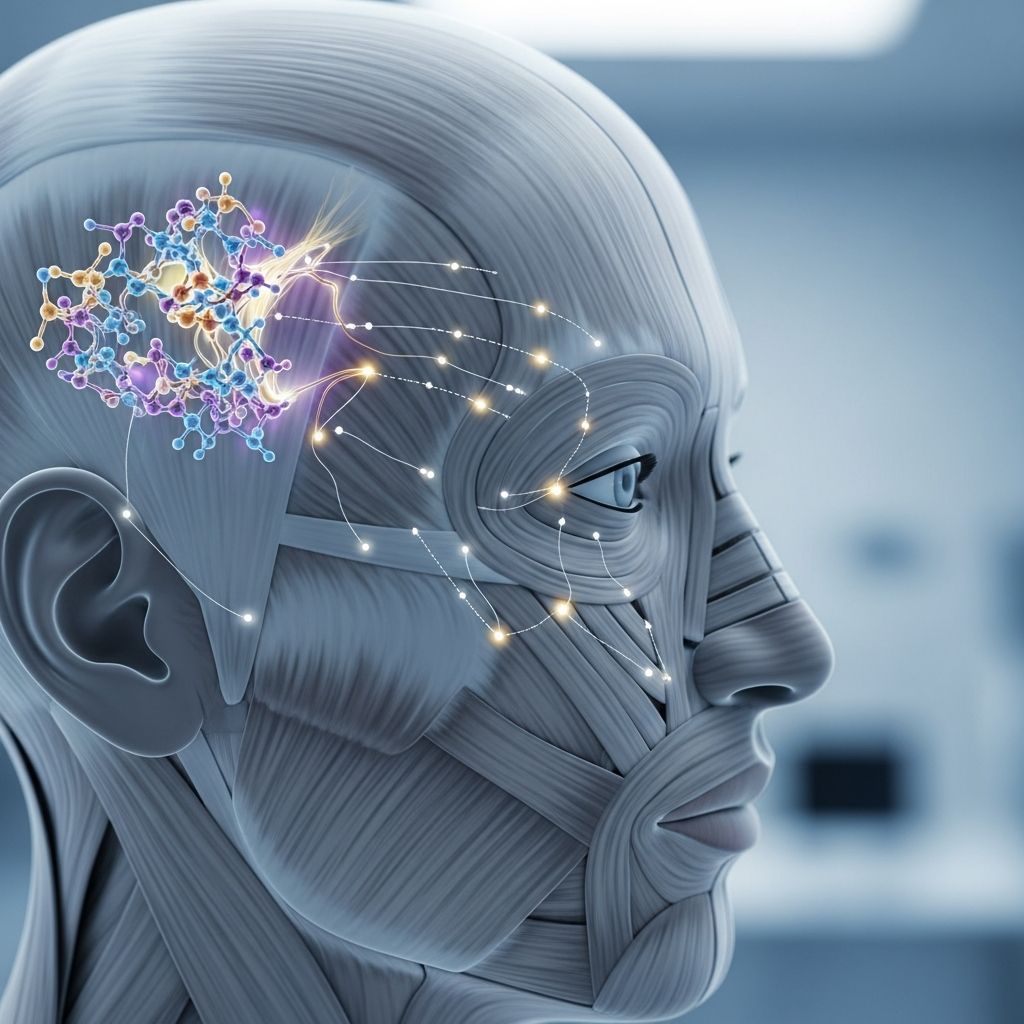
Botulinum toxin type A, commonly known as Botox, is a purified protein produced by the bacterium Clostridium botulinum. While widely recognized for cosmetic applications, Botox has a significant medical application in treating chronic migraine. In fact, it is the only FDA-approved preventive treatment specifically designed for chronic migraine management. The medication works by blocking certain nerve signals that contribute to pain transmission, making it a unique therapeutic option for individuals suffering from frequent migraine attacks.
The discovery of Botox’s effectiveness for migraine was somewhat serendipitous. In 1998, plastic surgeon Dr. William Binder noticed that patients receiving Botox injections for facial lines experienced significant improvements in their concurrent migraine or chronic headache pain. This observation led to extensive clinical research, ultimately resulting in FDA approval for chronic migraine treatment.
Who Can Benefit from Botox for Migraine?
Botox is specifically approved for use in adults with chronic migraine, defined as experiencing 15 or more headache days per month, with each headache lasting four or more hours. This distinguishes chronic migraine from episodic migraine, where individuals experience fewer than 15 headache days monthly. Chronic migraine represents one of the most disabling and burdensome human conditions, affecting approximately 1 to 2% of the population.
Before your doctor recommends Botox treatment, certain criteria must be met:
- You have tried at least three other preventive treatments without adequate relief
- You are not taking acute pain medications too frequently, as this can lead to medication overuse headache
- You have a confirmed diagnosis of chronic migraine
Importantly, Botox treatment should only be administered by specialists with appropriate training in migraine management, as the injection technique and dosage differ significantly from cosmetic applications.
How Does Botox Work for Migraine?
The mechanism of action for botulinum toxin in chronic migraine prevention differs from its cosmetic effects. Rather than simply relaxing facial muscles, Botox functions as a preventive agent by targeting pain pathways. The medication is injected around pain fibers involved in headache generation, where it enters nerve endings and blocks the release of chemicals essential for pain transmission.
In chronic migraine, sensory nerves become inflamed and hypersensitive due to various molecules released by these nerves. Botox creates a “calming” effect on pain by blocking this inflammatory process, effectively reducing peripheral and central nociceptive sensitization through reversible chemical denervation of pericranial sensitive nerve fibers. Animal studies have demonstrated that Botox modifies the electrical activity of pain networks in the face and neck region. By preventing activation of pain networks in the brain, Botox stops migraine headaches before they start.
While muscle relaxation may play a secondary role, current evidence indicates that the primary mechanism involves interrupting pain signal transmission rather than muscular effects.
Related Stories



How Effective is Botox for Chronic Migraine?
Clinical efficacy for Botox in chronic migraine treatment has been extensively studied and well-documented. The largest and longest migraine therapeutic trial, the Phase III Research Evaluating Migraine Prophylaxis Therapy (PREEMPT) program, demonstrated both efficacy and safety. According to this landmark research, Botox can reduce migraine frequency by 30 to 50% for many patients. This translates practically: if you experience 20 headache days monthly, Botox treatment may reduce this to 10 to 14 days per month.
However, response varies among patients, and the benefits accumulate over time. In the PREEMPT pooled analyses, approximately half of patients responded to the first treatment cycle, showing at least a 50% reduction in headache days (49.3%), 50% reduction in cumulative headache hours (54.2%), and a clinically meaningful improvement of five or more points on the Headache Impact Test-6 (HIT-6) scale (56.3%).
Significantly, early treatment with Botox proved more effective than delayed treatment initiation. Patients receiving Botox in both the double-blind and open-label phases demonstrated greater headache day frequency reduction at week 56 compared to those starting later in the trial. Furthermore, efficacy increases considerably over time during long-term treatment, with continued improvements observed across repeated Botox administration cycles.
Beyond reducing headache frequency, additional benefits often emerge:
- Reduced severity of migraine attacks
- Easier control of attacks with acute pain medications
- Decreased baseline headache or neck pain intensity
- Improved tolerance to migraine triggers
- Enhanced overall functional capacity
- Reduced depressive symptoms associated with chronic pain
Botox Effectiveness in Special Populations
Research has demonstrated Botox effectiveness in specific patient subgroups. For individuals with medication overuse at baseline, Botox proved effective in reducing headache days, migraine days, cumulative headache hours, and improving HIT-6 scores. Long-term trials focusing on medication overuse showed not only sustained but increased benefits with repeated administrations. Extending treatment from 6 to 18 months produced further significant improvements in headache index (12%), analgesic consumption (41%), pain intensity (22%), and quality of life measures. Additionally, eight Botox treatments over 24 months, particularly at the 195-unit dose, significantly reduced headache days, migraine days, medication intake days, and HIT-6 scores.
How is Botox Administered?
Botox for chronic migraine involves a specific injection protocol that differs substantially from cosmetic applications. The standard treatment consists of 31 fixed-site injections distributed across seven head and neck muscles, administered every 12 weeks. The typical dose is 155 units, with an additional 40 units optionally administered to the temporalis, occipitalis, or trapezius muscles using a follow-the-pain treatment approach, based on the clinician’s assessment.
The injection sites are strategically chosen to target pain-sensitive areas, and the procedure typically takes approximately 15 minutes. Most patients tolerate the procedure well with minimal discomfort. Treatment sessions are scheduled every three months to maintain effectiveness, and individuals can return to normal activities immediately following injection.
Timeline for Results
One critical consideration for Botox treatment is that results are not immediate. Patients should not expect maximum benefit from their first treatment session. According to migraine specialists, benefits typically become noticeable after the second or third treatment cycles, as the full effect requires time to develop. Some benefits, such as reduced attack severity or improved baseline pain intensity, may appear sooner than effects on frequency.
Most patients experience gradual improvement over the first 12 weeks following injection, with optimal benefits emerging after multiple treatment cycles. Consistent treatment every 12 weeks is essential for maintaining effectiveness.
Safety and Side Effects
Botox demonstrates excellent safety and tolerability in chronic migraine treatment. The PREEMPT clinical program revealed a high completion rate (72.6%) with very low discontinuation due to adverse events (4.6%). Most reported side effects are mild to moderate and typically temporary.
Common side effects may include:
- Injection site reactions (redness, bruising, swelling)
- Neck pain or stiffness
- Headache following injection
- Muscle weakness in injected areas
- Flu-like symptoms
Serious adverse events are rare but may include spread of toxin effect, causing muscle weakness beyond injection sites. Individuals with neuromuscular disorders should discuss potential risks with their healthcare provider before treatment.
Who Should Not Receive Botox?
While generally safe, certain individuals should not receive Botox for migraine treatment. Contraindications include:
- Pregnancy or breastfeeding
- Allergy to botulinum toxin or albumin
- Neuromuscular disorders such as myasthenia gravis or Lambert-Eaton syndrome
- Infection at injection sites
- Insufficient trial of at least three other preventive medications
Additionally, Botox is not approved for episodic migraine (fewer than 15 headache days monthly) or for migraine prevention in individuals under 18 years of age.
Tracking Your Progress
To assess Botox effectiveness accurately, maintaining a migraine diary is strongly recommended. Documentation should include:
- Number of headache days per month
- Number of migraine days with typical symptoms
- Headache severity ratings (mild, moderate, severe)
- Duration of headaches
- Acute medication usage
- Functional impact on daily activities
Regular diary entries help both patients and healthcare providers evaluate treatment response and determine whether continued therapy or dose adjustments are necessary.
Cost and Insurance Coverage
Botox for chronic migraine is a significant investment, with treatment costs typically ranging from $1,200 to $3,000 per session every 12 weeks. Many insurance plans cover Botox when prescribed by qualified specialists and when patients meet specific diagnostic criteria. However, prior authorization is often required, and documentation of failed trials with at least three other preventive medications must be submitted. Patients should contact their insurance provider to understand coverage details and potential out-of-pocket expenses.
Long-Term Considerations
For individuals considering long-term Botox therapy, several factors warrant consideration. Treatment efficacy may change over time, with some patients developing antibodies against the toxin, though this remains uncommon. Regular follow-up appointments with your specialist ensure optimal dosing and injection technique. Additionally, some patients may eventually achieve sufficient migraine control to discontinue treatment, while others require indefinite continuation for sustained benefit.
Frequently Asked Questions
Q: How quickly does Botox start working for migraine?
A: Botox does not provide immediate relief. Most patients begin noticing improvements after the first two weeks, with maximum benefits typically emerging after the second or third treatment cycles (6-9 months of therapy). Some benefits like reduced attack severity may appear earlier than frequency reduction.
Q: Can Botox be used for episodic migraine?
A: No, Botox is FDA-approved exclusively for chronic migraine (15 or more headache days monthly). It has not demonstrated efficacy for episodic migraine treatment and is not approved for this indication.
Q: How often do I need Botox injections?
A: Standard treatment involves Botox injections every 12 weeks (approximately every three months). Consistent scheduling is important for maintaining effectiveness, as results diminish if treatments are delayed.
Q: Will Botox make my face look frozen?
A: No, the injections used for migraine treatment are administered differently than cosmetic applications, using different doses and injection sites. Patients receiving Botox for migraine typically do not experience cosmetic effects or facial freezing.
Q: What happens if Botox doesn’t work for me?
A: If Botox proves ineffective after adequate trials (typically 2-3 treatment cycles), your specialist may recommend alternative preventive treatments such as monoclonal antibodies targeting calcitonin gene-related peptide (CGRP), topiramate, propranolol, or other options.
Q: Can I stop Botox treatment anytime?
A: Yes, you can discontinue treatment at any time. However, migraine symptoms typically return to baseline levels within weeks or months after treatment cessation, as the effects are temporary and reversible.
Q: Are there any foods or medications I should avoid while receiving Botox?
A: Avoid blood thinners like aspirin and ibuprofen for several days before injection to minimize bruising. Inform your specialist of all medications, supplements, and medical conditions. Most other medications do not interact with Botox treatment.
References
- Onabotulinum toxin A in the treatment of chronic migraine — National Center for Biotechnology Information/PubMed Central. 2017. https://pmc.ncbi.nlm.nih.gov/articles/PMC5628659/
- Botulinum toxin in the management of chronic migraine: clinical evidence — National Center for Biotechnology Information/PubMed Central. 2017. https://pmc.ncbi.nlm.nih.gov/articles/PMC5367647/
- Botox injections for migraine — The Migraine Trust. 2024. https://migrainetrust.org/live-with-migraine/healthcare/treatments/botox/
- Botox for Migraine — American Migraine Foundation. 2024. https://americanmigrainefoundation.org/resource-library/botox-for-migraine/
- Botox for Migraine: How Does It Work and How Effective Is It? — Migraine Canada. 2024. https://migrainecanada.org/botox-for-migraine-how-does-it-work-and-how-effective-is-it/
- BOTOX (onabotulinumtoxinA) – Chronic Migraine Treatment — Official Botox Chronic Migraine Information. 2024. https://www.botoxchronicmigraine.com
- Chronic Migraine – Dosing and Administration — Botox One. 2024. https://www.botoxone.com/chronic-migraine/dosing
Similar Articles








Read full bio of medha deb