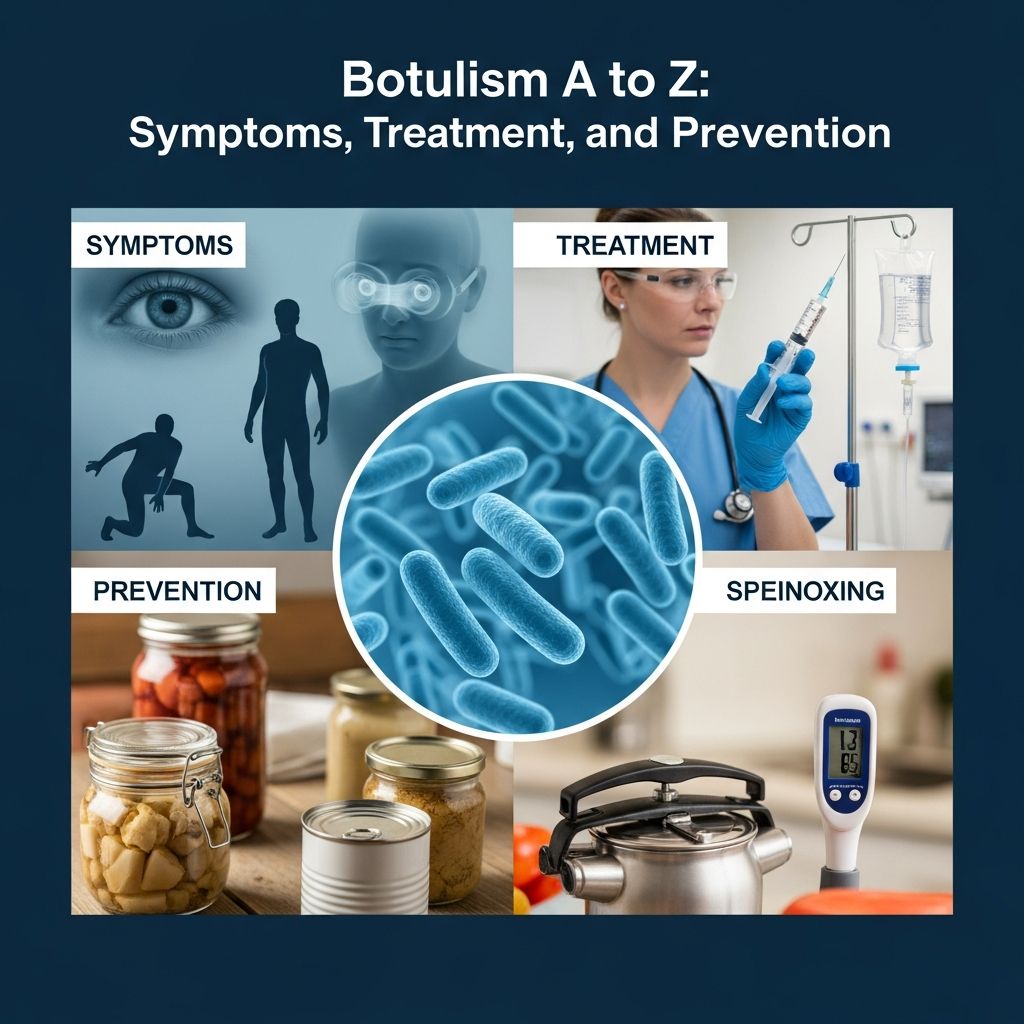
Botulism A to Z: Symptoms, Treatment, and Prevention
Complete guide to botulism: causes, symptoms, diagnosis, treatment and prevention strategies.
Understanding Botulism: A Comprehensive Guide
Botulism is a rare but potentially life-threatening paralytic illness caused by exposure to botulinum toxin, a potent neurotoxin produced by the bacterium Clostridium botulinum. This serious medical condition affects the nervous system and can lead to severe complications if left untreated. Understanding the causes, symptoms, and treatment options is crucial for early intervention and recovery.
What is Botulism?
Botulism is a paralytic syndrome that results from exposure to botulinum toxin, one of the most potent biological toxins known to science. The condition interferes with the communication between nerves and muscles, leading to progressive paralysis. There are several types of botulism, each with distinct characteristics and transmission routes.
Types of Botulism
Medical professionals recognize several distinct forms of botulism:
- Foodborne botulism: The most common form, resulting from consuming foods contaminated with botulinum toxin
- Wound botulism: Develops when Clostridium botulinum spores enter the body through wounds and produce toxin internally
- Infant botulism: Occurs when infants ingest spores that germinate in the intestinal tract, particularly from honey consumption
- Inhalational botulism: A rare form resulting from inhaling botulinum toxin
Causes and Risk Factors
Clostridium botulinum bacteria naturally reside in soil and water environments, forming heat-resistant spores that can contaminate fresh foods. These spores are anaerobic organisms that cannot survive in the presence of oxygen. The primary risk factor for botulism is consuming improperly processed or stored foods that contain botulinum toxin.
How Contamination Occurs
Food contamination typically happens during improper home canning processes. When foods are not heated to sufficient temperatures during canning, the heat-resistant spores survive and may germinate inside sealed containers. The bacteria then multiply and produce botulinum toxin within the anaerobic environment of the sealed container.
Commercial canning plants maintain strict temperature controls, heating foods to 120°C (248°F) to ensure spore destruction. Home canning without a pressure cooker cannot reliably achieve these temperatures. An exception exists for acidic foods with a pH below 4.6, such as tomatoes, which can be safely processed by boiling.
High-Risk Foods
Foods most commonly associated with botulism include:
- Improperly canned vegetables, particularly low-acid vegetables like beans and corn
- Home-preserved meats and fish
- Improperly stored garlic in oil
- Honey (particularly concerning for infants)
- Fermented foods prepared without proper safety measures
Symptoms and Progression
Botulism symptoms typically develop within six hours or less after consuming contaminated food, though the onset can vary based on the amount of toxin ingested. The condition follows a characteristic pattern of progression, beginning with gastrointestinal symptoms and advancing to neurological manifestations.
Initial Symptoms
The first signs of botulism often include nausea and vomiting, which may be accompanied by gastrointestinal distress. Patients frequently report experiencing:
- Fatigue and general malaise
- Headache
- Dizziness
- Abdominal cramps
Related Stories



Neurological Manifestations
As the condition progresses, neurological symptoms emerge. The paralysis typically follows a descending pattern, beginning with the cranial nerves and progressing downward:
Vision changes: The muscles controlling the eyelids may become paralyzed, causing drooping eyelids. Blurred vision and double vision frequently occur as the toxin affects the muscles controlling eye movement.
Speech and swallowing difficulties: The paralysis progressively affects muscles used for speech. Patients may experience a dry mouth, throat constriction, difficulty swallowing, and slurred speech.
Generalized weakness: Muscle weakness spreads throughout the body, causing fatigue and decreased coordination.
Respiratory complications: The most critical stage occurs when the paralysis affects respiratory muscles. Approximately half of botulism deaths result from paralysis of the respiratory muscles, leading to respiratory failure. Patients remain conscious throughout most of the illness, making this stage particularly frightening.
Infant Botulism
Infant botulism presents differently from adult forms and may result from consuming honey contaminated with Clostridium botulinum spores. Symptoms in infants include:
- Constipation (often the first symptom)
- Poor feeding ability
- Weak cry
- Decreased muscle tone (floppy baby syndrome)
- Progressive weakness
Children under one year of age should never be given honey due to this significant risk.
Diagnosis
Accurate diagnosis of botulism is crucial for timely treatment. Healthcare providers rely on clinical evaluation and specific laboratory tests to confirm the diagnosis.
Clinical Evaluation
Physicians typically begin with a detailed patient history, including recent food consumption and the onset of symptoms. The characteristic descending paralysis pattern and the presence of multiple affected individuals who consumed the same food strengthen the clinical suspicion.
Laboratory Confirmation
Laboratory tests may include:
- Stool culture and toxin detection
- Food sample analysis for botulinum toxin
- Electromyography (EMG) to confirm neuromuscular junction dysfunction
Treatment and Management
Early diagnosis significantly improves survival outcomes. Treatment focuses on neutralizing circulating toxin and supporting vital functions until the body naturally eliminates the toxin and regenerates nerve connections.
Antitoxin Therapy
The primary medical treatment involves administering botulism antitoxins, which contain equine antibodies that neutralize the toxin in the bloodstream. These antitoxins must be given promptly, ideally before the toxin has attached to nerve endings, as they cannot dislodge toxin already bound to nerve terminals.
For infant botulism, Botulism Immune Globulin (BIG-IV) is used instead of traditional antitoxins, as it contains human antibodies and is specifically formulated for this age group.
Supportive Care
Supportive medical care forms the cornerstone of botulism treatment, particularly as the disease progresses:
Respiratory support: Patients with respiratory muscle involvement require artificial respiration. A tracheotomy (creating an opening in the trachea) may be necessary to facilitate mechanical ventilation.
Nutritional support: Tube feeding becomes essential for patients unable to swallow safely, ensuring adequate nutrition and preventing aspiration pneumonia.
Monitoring: Intensive care unit admission allows continuous monitoring of vital signs and respiratory function.
Adjunctive Treatments
Guanidine hydrochloride is a chemical agent that can counteract botulinum toxin effects on nerve endings and has been used successfully in some cases. However, due to its own toxicity, it must be administered with careful medical supervision.
Recovery Outlook
Patients who survive the acute paralytic phase typically recover completely. Recovery occurs as the body naturally regenerates nerve endings and re-establishes neuromuscular connections. The recovery process can take weeks to months, with gradual improvement in muscle function. Few patients who reach the stage of severe paralysis survive without mechanical ventilation support, but those who do recover fully without permanent sequelae.
Prevention Strategies
Preventing botulism requires understanding proper food preservation techniques and following safety guidelines for food storage.
Safe Canning Practices
To prevent foodborne botulism:
- Use pressure cookers for home canning of low-acid foods, achieving temperatures of at least 120°C (248°F)
- For acidic foods, boiling is sufficient to destroy botulinum toxin, though pressure canning is preferable
- Follow established canning recipes and procedures from reliable sources
- Discard any canned foods with signs of spoilage or improper sealing
- Heat home-canned foods to 70°C (158°F) for two minutes before consumption to destroy any residual toxin
General Food Safety
Additional prevention measures include:
- Never giving honey to children under one year of age
- Properly storing foods in appropriate temperature conditions
- Avoiding consumption of foods with unusual odors, appearance, or texture
- Being cautious with fermented foods that have not been prepared following established safety guidelines
Wound Care
To prevent wound botulism:
- Seek immediate medical attention for deep or contaminated wounds
- Maintain proper wound hygiene and follow medical recommendations
- Avoid injection drug use and associated injection injuries
Frequently Asked Questions
Q: Is botulism contagious?
A: No, botulism itself is not contagious from person to person. However, contaminated food sources can affect multiple individuals who consume them.
Q: How quickly does botulism develop?
A: Symptoms typically appear within six hours or less after consuming contaminated food, though the exact timeline depends on the amount of toxin ingested.
Q: Is there a vaccine for botulism?
A: No widely available vaccine exists for the general population. However, certain high-risk individuals may receive experimental vaccines under specific circumstances.
Q: Can botulinum toxin be destroyed by cooking?
A: Yes, unlike the bacterial spores, botulinum toxin is readily destroyed by heat and remains potent only if not heated to at least 70°C (158°F) for two minutes.
Q: What is the mortality rate of botulism?
A: With prompt treatment and modern intensive care, the mortality rate has decreased significantly. However, without treatment, botulism can be fatal, particularly when respiratory muscles are paralyzed.
Q: How long does recovery from botulism take?
A: Recovery can take weeks to months as the body regenerates nerve endings and re-establishes neuromuscular connections. Complete recovery is typical for survivors.
References
- Botulism | Description, Cause, Symptoms, & Treatment — Britannica Editors. 2025-10-10. https://www.britannica.com/science/botulism
- Where No Botulinum Toxin Has Gone Before — Harvard Medical School. https://hms.harvard.edu/news/where-no-botulinum-toxin-has-gone
Similar Articles








Read full bio of Sneha Tete