Bow Legged (Genu Varum): Causes, Symptoms & Treatment
Understanding bow legs in children: causes, when to worry, and treatment options.
What Are Bow Legs?
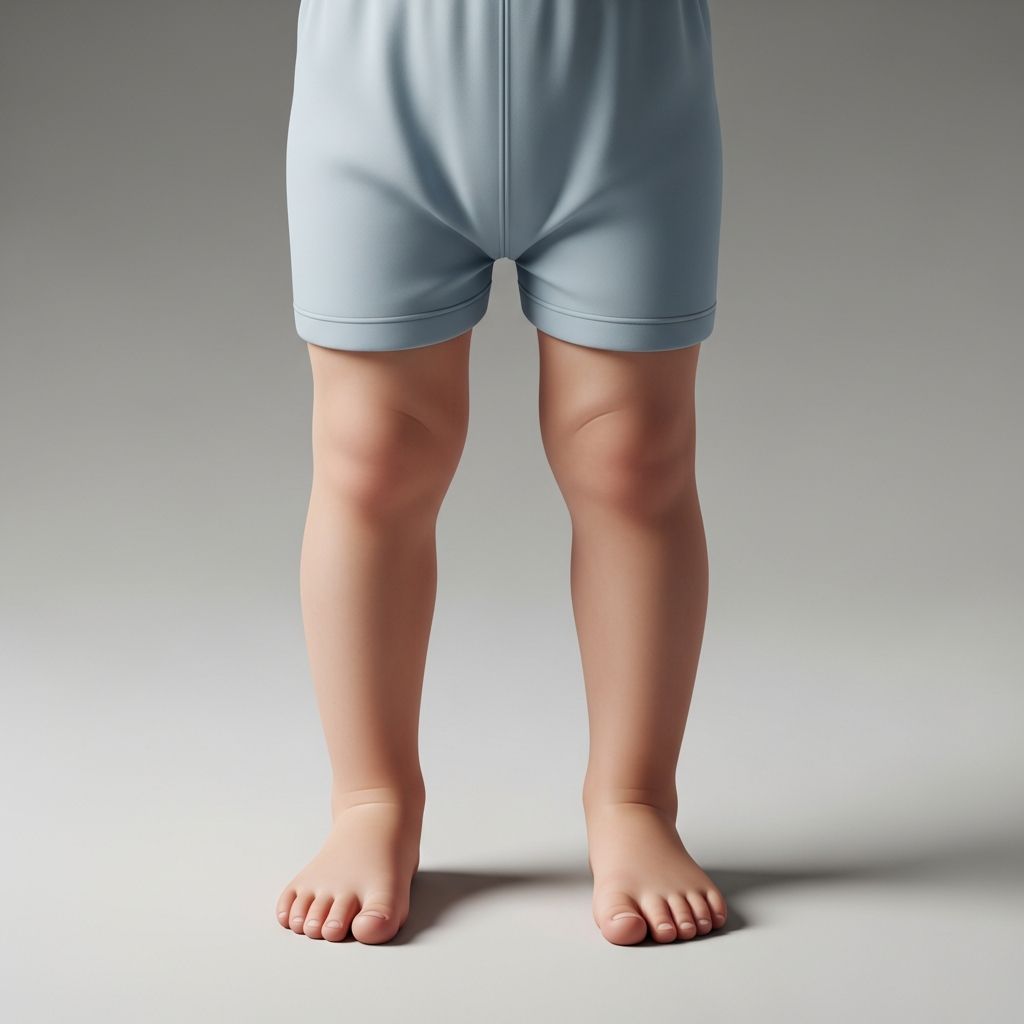
Bow legs, medically known as genu varum, is a common condition in infants and young children where one or both knees curve outward, creating a wider space than normal between the knees and lower legs. When a child stands with their feet and ankles together, the knees remain wide apart, giving the legs an appearance similar to a bow. This distinctive curvature is particularly noticeable when children walk, as their legs may resemble the shape of an archery bow.
The condition is generally not serious in most cases, especially in very young children. Bow legs are a normal part of development for many infants and toddlers, and the majority of children naturally outgrow this condition without requiring any medical intervention. However, understanding the causes, recognizing when professional evaluation is necessary, and knowing available treatment options can help parents make informed decisions about their child’s health.
Why Do Babies Develop Bow Legs?
Babies are frequently born with bow legs due to the confined space in the uterus during fetal development. While in the womb, the developing fetus must fit into a cramped environment, which requires certain bones to rotate and position themselves in ways that differ from their final adult alignment. This intrauterine positioning is entirely natural and expected, and most babies’ legs gradually straighten as they grow.
The most common cause of bow legs in infants is a condition called physiologic genu varum, which is a normal developmental variation. This type of bow legs typically requires no treatment and resolves on its own as the child matures and the bones develop properly. As babies begin walking and their leg muscles strengthen, the natural forces of growth and weight-bearing typically encourage proper alignment.
When Do Bow Legs Typically Resolve?
Most babies with bow legs experience significant improvement in their leg alignment as they grow. Research indicates that physiologic bow legs typically begin to show initial signs of correction around 18 to 24 months of age in children who presented with the condition before 18 months. Complete resolution of the bowing generally occurs by approximately 30 months of age. For children who first present with bow legs between 18 and 23 months, correction typically begins between 24 and 30 months, with full resolution by around 36 months of age.
As babies start walking—typically between 11 and 18 months—their legs should gradually begin straightening. This natural straightening process is aided by the increased weight-bearing and muscular development that occurs as children become more active. In most cases, by the time a child reaches 2 years of age, the legs have substantially straightened without any need for treatment.
Symptoms and Signs of Bow Legs
The primary symptom of bow legs is the visible outward curvature of the knees. Key indicators include:
– Wide spacing between the knees when standing with feet and ankles together- Visible bowing appearance when walking- Legs that look similar to the shape of a bow or parenthesis- In most cases, bow legs do not cause pain or discomfort
Importantly, bow legs typically do not affect a child’s ability to crawl, walk, or run normally. Most children with physiologic bow legs develop and function without any complications related to their leg alignment. However, if a child experiences knee pain, hip pain, difficulty walking, or other concerning symptoms, medical evaluation is warranted.
Related Stories



When Should You Contact a Healthcare Provider?
While most cases of bow legs resolve naturally, certain situations warrant professional medical evaluation. Parents should contact their child’s healthcare provider if:
– Bow legs persist or worsen after age 2- The child experiences pain in the knees, hips, or legs- There is significant asymmetry, with one leg more bowed than the other- The bowing appears severe or progressive- The child has difficulty walking, running, or participating in normal activities- There are signs of other underlying conditions
Your child’s healthcare provider will determine whether the bowing is physiologic and expected to resolve on its own, or whether further evaluation by a pediatric orthopedic specialist is necessary.
Diagnosis of Bow Legs
Healthcare providers typically diagnose bow legs through a combination of methods. For children under 2 years of age, a physical examination combined with a detailed medical history is usually sufficient. The provider will assess the degree of bowing and monitor how it changes over time during regular well-child checkups.
For children over 2 years of age or when pathologic bowing is suspected, imaging studies may be ordered. These may include standing-alignment X-rays or EOS imaging of the leg bones from the hip to the ankle. Such imaging helps the orthopedic specialist determine the exact location of the deformity, its magnitude, and the mechanical axis of the leg. A simple clinical assessment technique using fingerbreadth measurements can also help document progression or resolution of the bowing during follow-up visits.
If a child’s healthcare provider suspects an underlying condition such as Blount’s disease or rickets, additional tests and specialist referrals may be recommended.
Treatment Options for Bow Legs
Treatment approaches for bow legs depend on the child’s age, the severity of the bowing, the underlying cause, and how the condition is progressing.
No Treatment Necessary (Ages Under 2)
For babies and toddlers under 2 years of age with physiologic bow legs, no treatment is typically necessary unless the condition is severe. Instead, healthcare providers recommend a watch-and-wait approach, monitoring the child’s progress during regular well-child checkups to ensure the bowing is resolving as expected.
Conservative Treatment Options
If bow legs persist after age 2, conservative treatment options may be recommended depending on the cause:
– Special shoes: Custom-designed footwear may help with weight distribution and leg alignment- Splints: These devices can help gently guide the legs toward proper alignment- Braces: Orthotic devices worn during daily activities can provide gradual correction- Casts: In some cases, casting may be used for more significant deformities
Treatment for Blount’s Disease
Blount’s disease, also called tibia vara, is a pathologic form of bow legs where abnormal bone growth causes progressive worsening of the deformity. This condition typically becomes apparent between ages 2 and 4, though it can also develop in overweight adolescents or teenagers. Blount’s disease requires more aggressive treatment than physiologic bow legs.
For severe bowing before age 3, healthcare providers typically recommend bracing with a hip-knee-ankle-foot orthotic (HKAFO) or knee-ankle-foot orthotic (KAFO). These braces are typically worn 23 hours per day and are adjusted approximately every two months as the bone gradually straightens to correct the bowlegged position.
Surgical Treatment
If bowing continues despite conservative treatments or if the deformity is severe, surgery may be necessary to prevent further damage and correct the issue. Surgical options are determined based on the specific anatomy and severity of the deformity. An osteotomy, a surgical procedure that realigns the knee by cutting and repositioning bone, may be performed to correct persistent bow legs and prevent complications such as progressive knee arthritis.
For adults who experienced untreated bow legs throughout childhood, osteotomy surgery can be performed to realign the knee and prevent or delay the need for knee replacement surgery, as untreated bow legs can lead to overloading of the inner knee compartment and progressive arthritis over time.
Role of Physical Therapy
Physical therapy plays an important role in managing bow legs, particularly following surgical intervention. Therapists can help strengthen the muscles that support proper leg alignment, improve range of motion, and teach families exercises and techniques to support optimal development and function.
Long-Term Outlook and Prognosis
The long-term outlook for children with bow legs is generally excellent. Most infants and toddlers with physiologic bow legs outgrow the condition completely by age 2 without experiencing any lasting effects. Children who have had bow legs typically develop into adults with normal leg alignment and full functional capacity.
Even children who require treatment for persistent or pathologic bow legs generally go on to lead normal, healthy, and active lives after appropriate intervention. With early identification and appropriate management, the condition does not typically cause long-term complications or limit a person’s activities and quality of life.
Prevention of Long-Term Complications
Early recognition and appropriate treatment of bow legs can help prevent long-term complications. Left untreated over many years, bow legs may lead to progressive knee arthritis, knee instability, pain, and increased deformity in adulthood. Prompt evaluation by a healthcare provider and adherence to recommended treatment protocols help ensure optimal outcomes and prevent these complications.
Frequently Asked Questions
Q: Is bow legs a serious condition?
A: In most cases, bow legs in infants and young children is not serious. Most babies naturally outgrow the condition by age 2 without treatment or lasting effects. However, bow legs that persist beyond age 2 or show signs of progression should be evaluated by a healthcare provider.
Q: Will my baby’s bow legs affect their ability to walk?
A: No, physiologic bow legs do not affect a child’s ability to crawl, walk, run, or participate in normal childhood activities. Children with bow legs develop motor skills normally and have no functional limitations.
Q: At what age should I be concerned about bow legs?
A: Most healthcare providers recommend contacting your child’s doctor if bow legs have not improved by age 2, or if you notice the bowing worsening, becoming asymmetrical, or causing pain or difficulty with movement.
Q: What is Blount’s disease?
A: Blount’s disease is a growth disorder affecting the growth plates near the inside of the knee, causing progressive bow-leggedness that typically appears between ages 2 and 4. Unlike physiologic bow legs, Blount’s disease requires active treatment with bracing or surgery.
Q: Can bow legs return in adulthood?
A: Physiologic bow legs that resolved in childhood do not return in adulthood. However, adults with untreated bow legs from childhood may experience progressive knee arthritis requiring intervention.
Q: What types of specialists treat bow legs?
A: Pediatric orthopedic specialists are doctors who specialize in treating bone conditions in children, including bow legs. Your primary care provider can refer you to an orthopedic specialist if needed.
References
- Bow Legged (Genu Varum): What Is It, Causes & Treatment — Cleveland Clinic. Accessed December 2025. https://my.clevelandclinic.org/health/diseases/22049-bow-legged
- Management of bow legs in children: A primary care protocol — PubMed/National Center for Biotechnology Information. 2017. https://pubmed.ncbi.nlm.nih.gov/28459895/
- Bowlegs: Symptoms, Causes, Diagnosis and Treatment — Hospital for Special Surgery (HSS). Accessed December 2025. https://www.hss.edu/health-library/conditions-and-treatments/list/bowlegs
- Rickets: Symptoms, Causes & Treatment — Cleveland Clinic. Accessed December 2025. https://my.clevelandclinic.org/health/diseases/22459-rickets
Similar Articles








Read full bio of Sneha Tete