Boxer’s Fracture: Symptoms, Causes & Treatment
Complete guide to boxer's fractures: understand causes, symptoms, diagnosis, and effective treatment options.
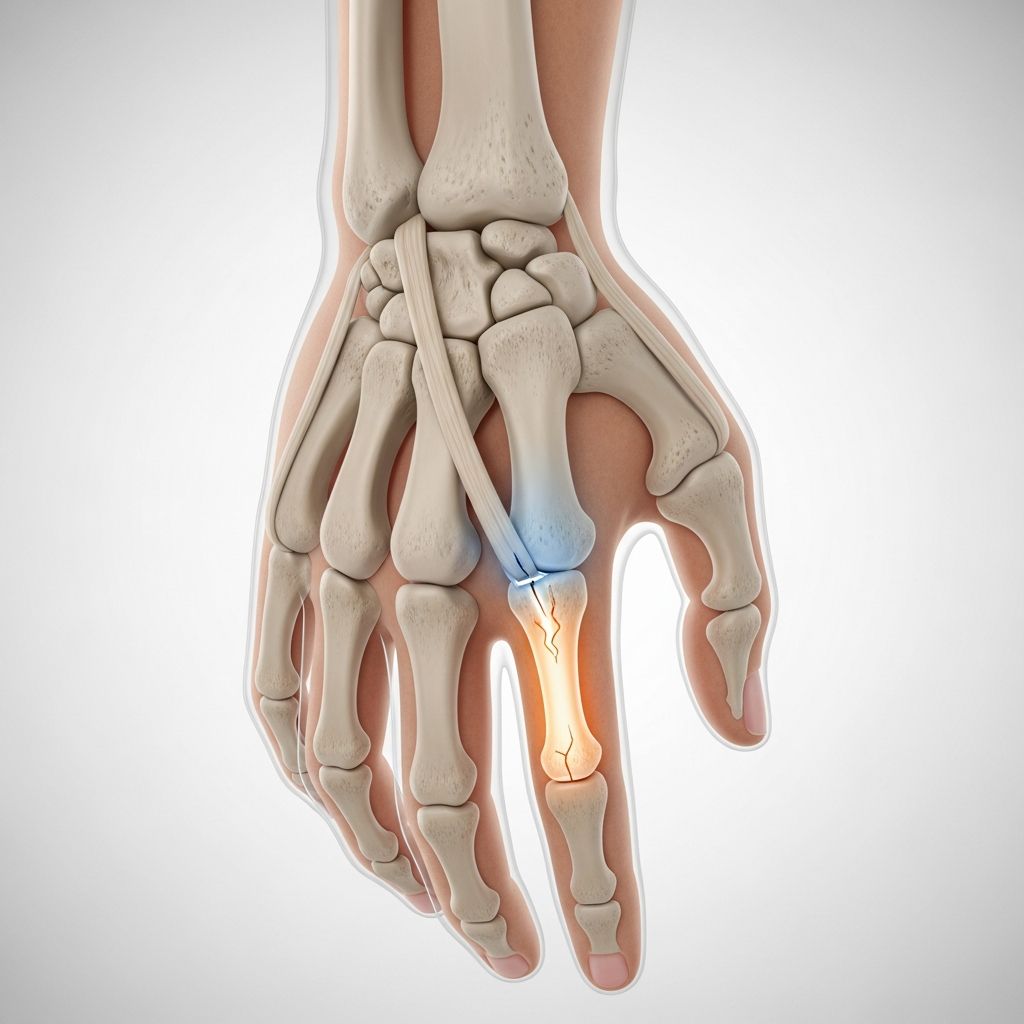
A boxer’s fracture is a broken bone in your hand. Boxer’s fractures get their name from how they usually happen — punching something hard with a closed fist. They’re a common sports injury, but can also happen when you punch a wall or other hard surface when you’re angry or frustrated. This type of injury occurs specifically in the metacarpal bones, which are the long bones in your hand that connect your wrist to your fingers.
What Is a Boxer’s Fracture?
A boxer’s fracture is a fracture of the neck of the fifth metacarpal bone, which is the bone that connects to your pinky finger. More specifically, the injury affects the metacarpal neck, which is the area that connects the main shaft of the bone to the head. While the fifth metacarpal is most commonly affected, fractures can also occur in the fourth metacarpal, which connects to the ring finger. The metacarpal bones are crucial structures that allow for hand function and gripping strength.
The term “boxer’s fracture” was originally used to describe only breaks in the fifth metacarpal. However, the definition has expanded to include fractures of the fourth and fifth metacarpals occurring at or just below the knuckle. This type of break is sometimes also called a “brawler’s fracture.” Understanding the anatomy of this injury helps explain why proper treatment is so important for maintaining hand function.
Causes of Boxer’s Fracture
The most common cause of a boxer’s fracture is punching something hard with a closed fist. This typically occurs when someone throws a punch improperly or with significant force directed at an immovable object. Several specific scenarios can lead to this injury:
- Punching a wall in frustration or anger
- Punching another person during a fight or altercation
- Throwing a punch during boxing or martial arts training with improper technique
- Getting hit directly on the back of your hand with force
- Smacking a flat hand against a hard surface
- Dropping something heavy on your knuckles
- Hand crush injuries from accidents or impact trauma
While punching is the most common cause, it’s important to note that a boxer’s fracture can occur without throwing a punch. Any significant impact to the knuckle area with enough force can cause this injury. The injury is particularly common in teenagers and young adults, as well as in individuals who engage in combat sports or who may have difficulty managing anger or frustration in healthy ways.
Symptoms of Boxer’s Fracture
Boxer’s fracture symptoms typically develop quickly after the injury occurs. Most symptoms appear within the first 24 hours following the trauma. You may experience one or multiple symptoms depending on the severity of your fracture:
- Pain concentrated in the hand, particularly around the affected knuckle
- Painful bruising that may develop quickly
- Swelling on both sides of the hand that can appear rapidly
- Tenderness near the base of the affected finger
- Difficulty moving the pinky or ring finger, or complete inability to move these fingers
- The knuckle appearing flat and no longer protruding as it normally would
- A “sunken” appearance of the knuckle due to the broken head of the metacarpal being pushed toward the palm
- The affected finger appearing shorter than before the injury
- Difficulty forming a fist or gripping with the injured hand
- Numbness or tingling sensations in the affected finger
- Coldness in the affected finger or hand
- A popping or snapping sound at the time of the break
- Cuts or abrasions on the knuckle area
- The affected finger appearing bent, crooked, or out of alignment with other fingers
Related Stories



The severity of your symptoms depends on the complexity of your fracture. You might experience only mild pain and swelling, or your symptoms could be more severe. If you experience any of these symptoms following hand trauma, seek medical attention immediately. A healthcare provider needs to examine and diagnose your injury, even if you’re unsure whether your bone is actually broken.
Diagnosis of Boxer’s Fracture
Diagnosing a boxer’s fracture requires both a physical examination and imaging tests. When you visit your healthcare provider, they will follow a comprehensive diagnostic process:
Medical History and Symptom Assessment: Your doctor will ask about your symptoms, how the injury occurred, and your medical history. This information helps them understand the mechanism of injury and determine the appropriate diagnostic approach.
Physical Examination: Your healthcare provider will carefully examine your hand, looking for specific signs including:
- Breaks or cuts in the skin
- Swelling and bruising patterns
- A bump or deformity below the affected finger
- Deformed or flattened appearance of the knuckle
- Different shape of the hand, particularly on the outer side
- Pain response when the area is palpated
- Range of motion limitations
- Strength and sensation in the affected hand and fingers
- Misalignment or deformity of the finger
Imaging Studies: Your doctor will order imaging tests to confirm the diagnosis and determine the exact nature of the fracture. Common imaging options include:
- X-rays: The most common and typically the primary imaging tool used to visualize the fracture and confirm the diagnosis
- CT scans: May be used for more complex fractures or to get detailed images of the bone structure
- MRI: Sometimes ordered to assess soft tissue damage and provide additional detail about the fracture
Types of Boxer’s Fractures
Healthcare providers classify boxer’s fractures into different categories based on specific characteristics:
Open vs. Closed Fractures: Your healthcare provider will determine whether you have an open or closed fracture. A closed fracture means the bone is broken but doesn’t break through your skin. An open fracture occurs when the bone breaks through your skin, creating an open wound. Open fractures usually take longer to heal and carry an increased risk of infections and other serious complications, requiring more aggressive treatment and follow-up care.
Displaced vs. Nondisplaced Fractures: These terms describe the alignment of the broken bone pieces. In a nondisplaced fracture, the bone fragments remain relatively in place. A displaced fracture means the pieces of bone have moved significantly, creating a gap at the fracture site. In displaced fractures, the bone is crooked and not lined up correctly, which typically requires more intervention to restore proper alignment.
Treatment Options for Boxer’s Fracture
Treatment for a boxer’s fracture depends on several factors, including the severity of the fracture, whether it’s displaced or nondisplaced, and whether the fracture is open or closed. Your healthcare provider will develop a treatment plan tailored to your specific injury.
Conservative Treatment: Many boxer’s fractures can be successfully treated with nonsurgical approaches. Conservative treatment typically includes:
- Immobilization with a splint, cast, or hand brace to keep the fracture stable and allow healing
- Rest and activity modification to prevent further injury
- Ice application to reduce swelling and pain
- Elevation of the hand above heart level to minimize swelling
- Over-the-counter pain medications as recommended by your healthcare provider
- Regular follow-up appointments to monitor healing progress
Surgical Treatment: More severe fractures, particularly displaced fractures or those involving multiple bones, may require surgical intervention. Surgical options can include:
- Reduction: Realigning the broken bone pieces to their proper position
- Fixation: Using pins, plates, or screws to hold the bone in place while it heals
- Surgical repair of any associated soft tissue damage
Recovery Timeline
The healing timeline for a boxer’s fracture varies depending on the severity of the injury and the treatment approach used. Generally, the fracture will typically heal within 3 to 4 weeks from the date of injury for uncomplicated cases. However, full recovery may take longer.
During the recovery period, your healthcare provider may recommend specific milestones:
- At the 3-week mark, you may begin to wean out of the brace when there is no longer any pain when the area over the metacarpal neck is pressed
- You may experience some wrist or finger stiffness and weakness for 1 to 2 weeks after the brace is removed
- If stiffness and weakness continue after 2 weeks, contact your orthopedic clinic
- Physical therapy may be recommended to restore strength, flexibility, and function to your hand
- Gradual return to normal activities and sports, guided by your healthcare provider
Long-Term Effects and Complications
If a boxer’s fracture is left untreated, it can lead to several complications. An untreated fracture can cause an abnormal-looking finger and hand. Gradually, you may experience decreased ability to grip, chronic pain, and reduced hand function. There may be a small difference in how your knuckle looks on the injured hand, and you may even notice a bump on the back of the hand. These cosmetic differences should not limit hand movement if the fracture heals properly, but they can be aesthetically concerning to some patients.
Proper treatment significantly reduces the risk of these long-term complications and helps ensure optimal hand function and appearance following recovery.
Frequently Asked Questions
Q: Can you get a boxer’s fracture without punching?
A: Yes, you can get a boxer’s fracture without throwing a punch. Smacking a flat hand against a hard surface, dropping something heavy on your knuckles, or getting your hand crushed can all cause this type of fracture.
Q: How long does a boxer’s fracture take to heal?
A: A boxer’s fracture typically heals within 3 to 4 weeks from the date of injury. However, complete recovery and return to normal activities may take longer, potentially several weeks to months depending on the severity of the injury.
Q: Do I need surgery for a boxer’s fracture?
A: Not all boxer’s fractures require surgery. Many can be successfully treated with conservative methods such as splinting, casting, rest, and ice. However, more severe, displaced, or open fractures may require surgical intervention to ensure proper healing and restore hand function.
Q: What should I do immediately after a boxer’s fracture injury?
A: Go to the emergency room as soon as you injure your hand and notice any boxer’s fracture symptoms. Apply ice, elevate your hand, and avoid using the injured hand. Even if you’re unsure whether your bone is broken, a healthcare provider needs to examine and diagnose your injury.
Q: Will my finger look normal after a boxer’s fracture heals?
A: Most fingers return to normal appearance and function after proper healing. However, there may be a small difference in how the knuckle looks, and you might notice a slight bump on the back of the hand. These minor cosmetic differences typically don’t affect hand movement or function.
Q: Can a boxer’s fracture cause permanent damage?
A: If treated promptly and properly, a boxer’s fracture typically heals without permanent damage. However, an untreated or improperly treated fracture can lead to chronic pain, reduced gripping ability, and long-term hand dysfunction.
References
- Boxer’s Fracture: Symptoms, Causes & Treatment — Cleveland Clinic. 2024. https://my.clevelandclinic.org/health/diseases/boxers-fracture
- Boxer’s Fracture Symptoms and Treatment — Baptist Health. 2024. https://www.baptisthealth.com/care-services/conditions-treatments/boxers-fracture
- Boxer’s Fracture: Treatment, Recovery, and Long-Term Effects — Healthline. 2024. https://www.healthline.com/health/boxers-fracture
- Boxer’s Fracture: Treatment, Diagnosis, and Recovery — Medical News Today. 2024. https://www.medicalnewstoday.com/articles/319297
- Boxers Fracture: Signs and Symptoms — American Society for Surgery of the Hand. 2024. https://www.assh.org/handcare/condition/boxers-fracture
- Boxer’s Fracture — University of Rochester Medical Center. 2024. https://www.urmc.rochester.edu/encyclopedia/Content?contentTypeID=134&ContentID=515
- Boxer’s Fracture: Causes, Signs & Treatment — Resurgens Orthopaedics. 2024. https://www.resurgens.com/education/boxers-fracture
Similar Articles








Read full bio of Sneha Tete