Dental Braces: 4 Key Types, How They Work & Care Tips
Complete guide to dental braces: types, benefits, care tips, and treatment timeline.
Understanding Dental Braces
Braces are orthodontic devices designed to straighten misaligned teeth and correct bite problems. They work by applying consistent, gentle pressure to gradually move teeth into their proper positions over time. Whether you have crowded teeth, gaps, or bite issues, braces can help transform your smile and improve your oral health. Understanding how braces function, the types available, and how to care for them is essential for anyone considering orthodontic treatment.
How Braces Work
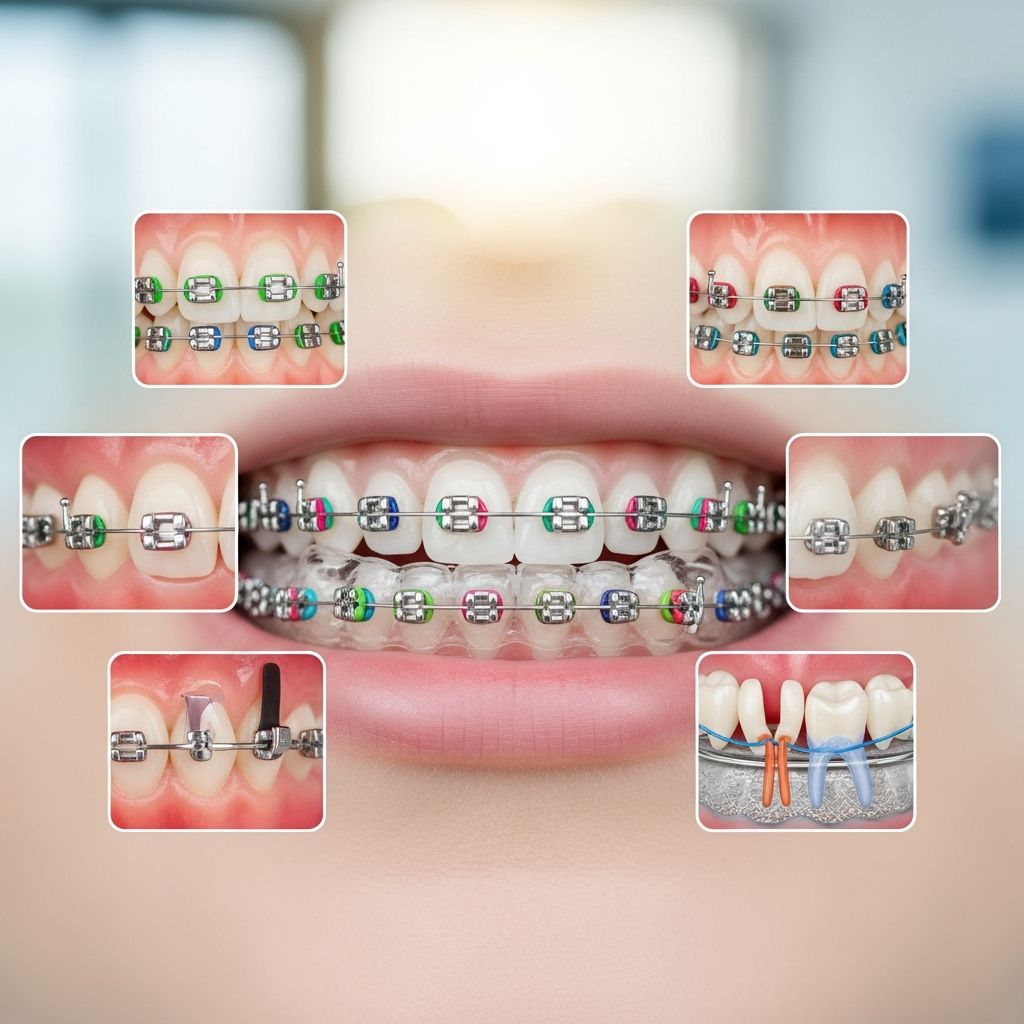
Braces function through a sophisticated system of components that work together to move teeth gradually. The process begins when an orthodontist bonds small brackets to the front surface of each tooth using dental cement. These brackets serve as anchors for a thin metal wire, called an archwire, which is threaded through each bracket. The archwire is then secured using metal bands placed on the back molars and clear or colored elastics attached to the brackets.
Over time, the archwire applies gentle, continuous pressure to your teeth, causing them to shift slowly into the desired position. As pressure is applied, the bone surrounding each tooth begins to reabsorb and remodel, allowing the tooth to move. Your orthodontist will periodically tighten the wire and make adjustments to maintain consistent pressure and guide teeth in the correct direction. This gradual process typically takes anywhere from 12 months to 3 years, depending on the complexity of your case.
Types of Braces Available
Traditional Metal Braces
Metal braces are the most common and widely recognized type of orthodontic treatment. They consist of stainless steel brackets bonded to each tooth and connected by a metal archwire. Metal braces are highly effective for treating even severe orthodontic problems and offer excellent control for tooth movement. They are typically the most affordable option and require no special maintenance beyond regular brushing and flossing. Treatment duration with metal braces typically ranges from 18 to 24 months on average.
Clear Ceramic Braces
Clear or tooth-colored ceramic braces offer a more aesthetically pleasing alternative to traditional metal braces. The brackets are made from ceramic material that blends with your natural tooth color, making them significantly less noticeable. However, the archwire connecting them may still be visible. Clear braces work similarly to metal braces in terms of effectiveness and typically require 12 to 36 months for treatment completion. They are slightly more delicate than metal braces and may cause more initial discomfort, but they remain an excellent choice for patients concerned about appearance during treatment.
Lingual Braces
Lingual braces are placed on the inside surfaces of your teeth, making them completely invisible from the front. This type of brace is ideal for professionals and individuals who want maximum discretion during treatment. Because they are positioned behind the teeth, they can be more challenging to clean and may initially affect speech. Treatment duration is similar to traditional braces, ranging from 18 to 24 months.
Self-Ligating Braces
Self-ligating braces use a special clip or door mechanism instead of elastics to hold the archwire in place. This design reduces friction and may allow for faster tooth movement. They also require fewer adjustments and may result in shorter treatment times. Self-ligating braces are easier to clean since there are no elastics to trap food particles, and they may be more comfortable for some patients.
Related Stories



Getting Braces: The Initial Process
Before receiving braces, you’ll need to schedule a consultation with an orthodontist. During this visit, the orthodontist will examine your teeth, bite, and overall oral health. If you have cavities, gum disease, or other dental issues, these must be treated before braces are applied. Once cleared for treatment, the orthodontist will create a personalized treatment plan tailored to your specific needs.
The actual placement of braces typically takes about one to two hours. The orthodontist will clean and dry your teeth, apply a special bonding adhesive to each tooth, and carefully position the brackets. Once all brackets are in place, the archwire is threaded through and secured with elastics or other fasteners. The back molars may receive metal bands for additional support.
What to Expect After Getting Braces
It’s normal to experience some discomfort after braces are placed or adjusted. Your teeth and gums may feel tender or sore for a few days as they adjust to the new pressure. Your orthodontist may recommend over-the-counter pain relievers such as acetaminophen or ibuprofen to manage discomfort. The good news is that this tenderness typically subsides within a week.
Some patients experience slight irritation on their cheeks, lips, or tongue from the brackets or wires rubbing against soft tissues. Orthodontic wax can be applied over brackets to reduce this irritation. Rinsing your mouth with salt water can also help soothe irritated areas. If significant irritation persists, contact your orthodontist for adjustments.
Daily Care and Maintenance
Brushing and Flossing
Proper oral hygiene is crucial when wearing braces. Food particles easily become trapped around brackets and wires, increasing your risk of cavities and gum disease. Here are essential brushing and flossing tips:
Brush your teeth at least twice daily, preferably after every meal, using a soft-bristled toothbrush or electric toothbrush. Angle your brush toward the gum line and gently brush all tooth surfaces, including above and below the brackets. Use fluoride toothpaste to strengthen your enamel and help prevent tooth decay. Pay special attention to removing all food particles trapped in the spaces around brackets and wires.
Floss at least once daily, using a floss threader or specialized orthodontic floss to navigate around wires and brackets. Interdental brushes or small proxy brushes are also helpful for cleaning tight spaces that traditional floss cannot reach. Taking extra time to floss properly prevents plaque buildup and maintains healthy gums throughout your treatment.
Dietary Considerations
Your orthodontist will provide a list of foods to avoid while wearing braces. Hard, sticky, or crunchy foods can damage brackets and wires or become stuck in your braces. Avoid foods like popcorn, hard candy, caramel, nuts, and crunchy vegetables. Cut food into small, manageable pieces and chew carefully. It’s also wise to limit sugary drinks and snacks, as they increase your risk of tooth decay when you have braces.
Regular Orthodontic Appointments
Routine visits to your orthodontist are essential for successful treatment. Typically, appointments are scheduled every 4 to 8 weeks, depending on your treatment plan. During these visits, your orthodontist will:
- Tighten or adjust wires to maintain continuous pressure on your teeth
- Replace elastics and make other necessary adjustments
- Reposition brackets if needed
- Check your overall oral health and address any concerns
- Monitor your progress to ensure treatment stays on schedule
Attending all scheduled appointments is critical for keeping your treatment on track and achieving optimal results within the planned timeframe.
Treatment Duration
The length of braces treatment varies significantly based on several factors. On average, braces remain in place for 1 to 3 years. The exact duration depends on the severity of your misalignment, the amount of space available for teeth to move, the distance teeth must travel, and your commitment to following your orthodontist’s instructions.
Simpler cases with minor crowding or spacing issues may be completed in as little as 12 to 18 months. More complex cases involving severe crowding, significant bite problems, or the need for jaw adjustment may require 24 to 36 months or longer. Your orthodontist will provide a realistic treatment timeline during your initial consultation based on your specific condition.
After Braces: Retainers and Long-Term Care
Once your braces are removed, your journey to maintaining a straight smile isn’t complete. Your orthodontist will fit you with a retainer, a custom-made removable appliance that holds your teeth in their new positions. Retainers are typically made from clear plastic or a combination of metal wires and plastic.
Most patients need to wear their retainer full-time for the first 6 months after braces are removed. After this initial period, you can typically transition to wearing your retainer only during sleep. However, many orthodontists recommend lifetime retainer wear, particularly during sleep, to prevent your teeth from gradually shifting back to their original positions.
Taking care of your retainer is important for its longevity and effectiveness. Clean it daily with a soft toothbrush and store it in its protective case when not wearing it. Avoid exposing your retainer to heat, and replace it if it becomes damaged or no longer fits properly.
Managing Discomfort During Treatment
While minor discomfort is normal during braces treatment, several strategies can help manage it. Over-the-counter pain relievers like ibuprofen or acetaminophen can reduce soreness after adjustments. Eating soft foods during the first few days after getting braces or having them adjusted can also help.
Applying a cold compress to your jaw for 10 to 15 minutes can reduce inflammation and discomfort. Rinsing your mouth with warm salt water several times daily soothes irritated gums and oral tissues. If you experience broken wires, loose brackets, or severe pain that doesn’t improve within a few days, contact your orthodontist immediately for emergency care.
Frequently Asked Questions
How long will I need to wear braces?
Most patients wear braces for 12 to 36 months, with the average being around 2 years. The exact duration depends on the complexity of your case, how closely you follow your orthodontist’s instructions, and your tooth and bone health.
Will braces hurt?
You may experience mild discomfort or soreness after getting braces or having them adjusted, but this typically subsides within a few days. Severe pain is not normal and should be reported to your orthodontist.
Can I play sports with braces?
Yes, you can participate in sports while wearing braces. However, wearing a mouthguard is strongly recommended to protect your braces and teeth from injury during contact sports.
What should I avoid eating with braces?
Avoid hard, sticky, or crunchy foods that can damage your braces, including popcorn, hard candy, nuts, and crunchy vegetables. Also limit sugary foods and drinks to reduce your cavity risk.
How often do I need to see my orthodontist?
Most orthodontists schedule appointments every 4 to 8 weeks for adjustments and progress monitoring. Regular visits are essential for successful treatment.
Can I get braces if I have cavities or gum disease?
Any existing dental problems must be treated before braces are applied. Braces applied to unhealthy teeth can lead to complications, so your dentist will ensure your mouth is healthy first.
Are there alternatives to traditional braces?
Yes, alternatives include clear aligners, lingual braces, and ceramic braces. Your orthodontist can discuss which option best suits your needs and lifestyle.
Do I need to wear a retainer after my braces are removed?
Yes, retainers are essential for maintaining your results. Most patients should wear retainers full-time for the first 6 months, then nightly for life, or as recommended by their orthodontist.
References
- Braces: Types & How They Work — Cleveland Clinic. 2024. https://my.clevelandclinic.org/health/treatments/24601-teeth-braces
- What Is Orthodontics? — Cleveland Clinic. 2024. https://my.clevelandclinic.org/health/treatments/24285-orthodontics
- Clear Braces: Types, Benefits & How To Clean — Cleveland Clinic. 2024. https://my.clevelandclinic.org/health/treatments/23568-clear-braces
- How to Care for Your Teeth with Braces Cleveland Treatments — Buckeye Dental Today. 2024. https://buckeyedentaltoday.com/how-to-care-for-your-teeth-with-braces-cleveland/
- Which is Better Invisalign or Braces — Cleveland Dental Associates. 2024. https://www.clevelanddentalassociates.com/cleveland-tx/which-is-better-invisalign-or-braces/
- Comprehensive Guide to Teeth Straightening Treatments in Cleveland — Aligner Co. 2024. https://alignerco.com/pages/comprehensive-guide-to-teeth-straightening-treatments-in-cleveland
Similar Articles








Read full bio of medha deb