Brain Food for Children: Nutrition Tips for Optimal Development
Discover essential nutrients and foods that support healthy brain development in children.
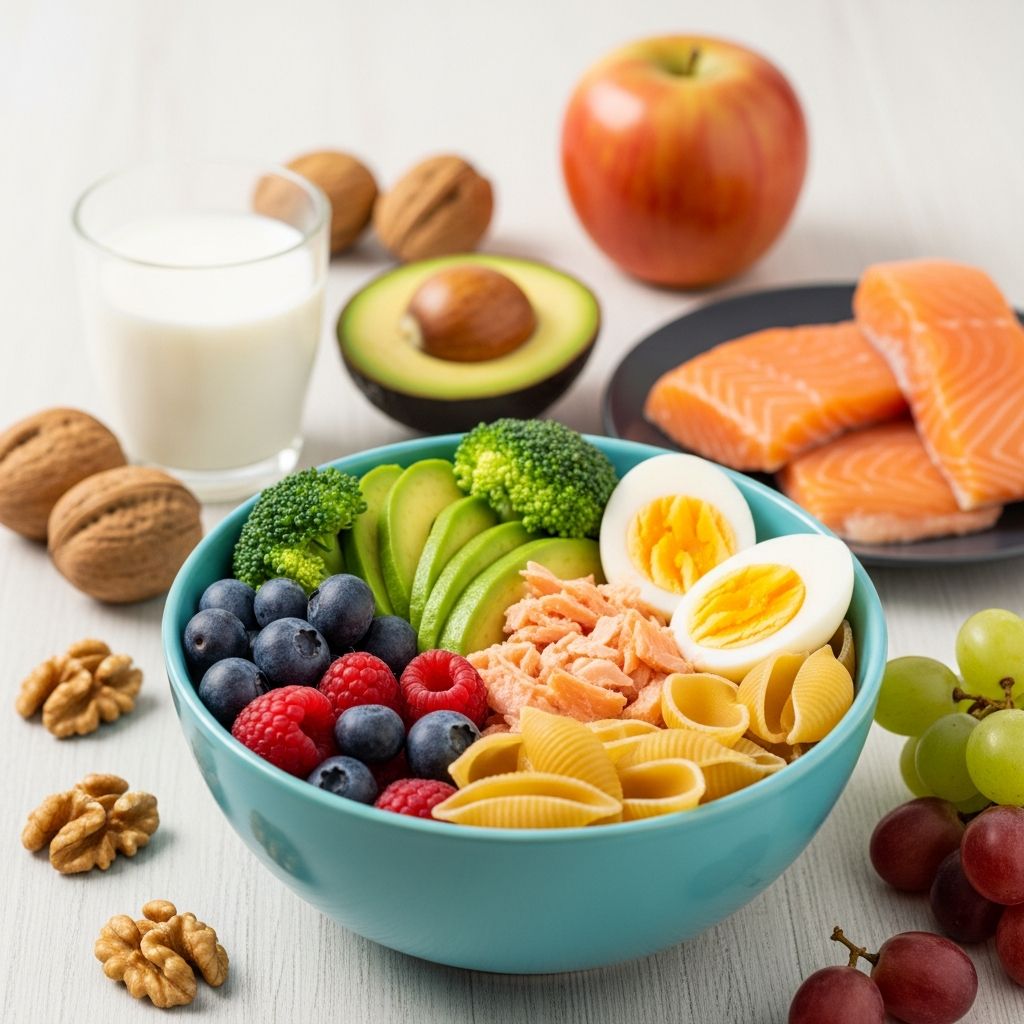
The developing brain requires specific nutrients to build neural connections, support cognitive function, and establish a foundation for lifelong learning. During childhood, nutritional choices directly influence brain morphology, cognitive performance, and mental health trajectories. Research demonstrates that dietary patterns established early in life have profound and lasting effects on brain development, making nutrition one of the most important factors parents can control to support their children’s intellectual growth and emotional wellbeing.
The Critical Link Between Diet and Brain Development
The brain is the body’s most metabolically active organ, consuming approximately 20 percent of the body’s total energy. In children, this demand is even higher as the brain undergoes rapid development and organization. Dietary patterns in childhood have been associated with neurodevelopment and cognitive performance, with research showing that high-quality diets are linked to larger brain volumes and better cognitive outcomes. Children who follow prudent dietary patterns characterized by whole grains, soft fats, and dairy products demonstrate larger total brain volumes and greater cerebral gray matter volumes compared to their peers consuming less nutritious foods.
The relationship between nutrition and brain development extends beyond simple brain size. Studies show that dietary quality influences the structure and organization of specific brain regions critical for learning, memory, and executive function. Children with higher diet quality exhibit greater brain gyrification—the folding patterns of the brain’s surface—particularly in the dorsolateral prefrontal cortex, an area essential for decision-making, planning, and cognitive control. These structural differences in brain morphology actually mediate the association between dietary patterns and intelligence quotient, suggesting that nutrition influences cognitive performance through measurable changes in brain architecture.
Essential Nutrients for Developing Brains
Certain micronutrients and macronutrients are particularly vital for brain development and should be prioritized in children’s diets:
Omega-3 Fatty Acids
Omega-3 fatty acids, particularly docosahexanoic acid (DHA) and eicosapentaenoic acid (EPA), are fundamental building blocks of brain cell membranes. A meta-analysis of 15 randomized controlled trials involving 2,525 children found that supplementation with omega-3s during pregnancy or infancy improved motor skills and mental developmental scores in children. These essential fatty acids support the formation of myelin, the insulation around nerve fibers that enables rapid neural communication, and they facilitate the development of synapses—the connections between brain cells that underpin learning and memory.
Natural dietary sources of omega-3 fatty acids include wild-caught salmon, hemp seeds, flax seeds, and walnuts. Incorporating these foods regularly into children’s diets provides the bioavailable forms of these critical nutrients without the need for supplementation in most cases.
B Vitamins
B vitamins, particularly B6, B12, and folate, play crucial roles in neurotransmitter synthesis, methylation reactions, and myelin formation. Vitamin B12 is essential for proper nervous system function and is found primarily in animal products like eggs, dairy, fish, and meat. Children following vegetarian or vegan diets require careful attention to B12 sources or supplementation to prevent deficiency-related neurological complications.
Folate supports DNA synthesis and cellular division, processes that are occurring at extraordinary rates during childhood brain development. Leafy greens, legumes, and fortified grains provide excellent sources of folate that contribute to optimal neural development.
Iron
Iron is essential for oxygen transport and plays a critical role in brain energy metabolism. Iron deficiency during childhood can impair cognitive development, affecting attention, memory, and learning capacity. Leafy green vegetables, black beans, chickpeas, and edamame provide plant-based iron sources, while red meat offers highly bioavailable heme iron. Combining iron-rich foods with vitamin C sources enhances iron absorption.
Vitamin D
Vitamin D receptors are present throughout the brain, and this nutrient influences neurotransmitter synthesis and immune function in the central nervous system. Eggs and dried mushrooms provide dietary vitamin D, though sun exposure remains the most efficient natural source. Maintaining adequate vitamin D levels supports mood regulation, cognitive function, and long-term brain health.
Dietary Patterns That Support Brain Development
Research identifies specific dietary patterns that consistently support healthy brain development. A prudent dietary pattern—one rich in whole grains, soft fats, and dairy products—is positively associated with larger global brain volumes and improved cognitive outcomes. This pattern emphasizes whole, minimally processed foods that provide sustained energy and stable nutrient delivery to the developing brain.
In contrast, Western-style dietary patterns high in processed foods, added sugars, and saturated fats are associated with lower global brain volumes and reduced cognitive performance. Early consumption of such patterns, particularly in infancy, is associated with altered white matter development, potentially affecting the connectivity between different brain regions.
The Importance of Whole Foods
Whole foods provide complex combinations of nutrients, fiber, and phytonutrients that work synergistically to support brain health. Unlike processed foods that provide isolated nutrients without the supporting co-factors needed for optimal utilization, whole foods deliver nutrients in their natural context, maximizing absorption and biological effectiveness. Emphasizing whole grains, legumes, vegetables, fruits, nuts, seeds, and quality proteins creates a nutritional foundation for brain development.
Practical Foods to Incorporate into Children’s Diets
Parents seeking to optimize their children’s nutrition for brain development should focus on incorporating specific food categories:
Protein Sources
High-quality proteins provide amino acids necessary for neurotransmitter synthesis and brain cell structure. Fish, particularly wild-caught salmon, offers both protein and omega-3 fatty acids. Eggs contain choline, which supports memory and learning. Legumes including black beans, chickpeas, and lentils provide plant-based protein along with folate and fiber.
Vegetables and Greens
Leafy green vegetables such as spinach, kale, and Swiss chard are nutritional powerhouses containing iron, folate, and various phytonutrients that support brain function. Colorful vegetables including broccoli, bell peppers, and sweet potatoes provide antioxidants that protect developing brain cells from oxidative stress.
Fruits and Berries
Berries particularly contain anthocyanins and other antioxidants that support cognitive function and may enhance memory formation. Whole fruits provide fiber, natural sugars for sustained energy, and micronutrients essential for brain metabolism.
Whole Grains
Whole grains provide sustained glucose release, supporting stable brain energy without the spikes and crashes associated with refined carbohydrates. Brown rice, oats, quinoa, and whole wheat products supply B vitamins, magnesium, and fiber that support optimal brain function.
Nuts and Seeds
Beyond providing omega-3 fatty acids, nuts and seeds offer vitamin E, magnesium, and other nutrients supporting brain cell protection and function. Walnuts, almonds, hemp seeds, and flax seeds make nutritious snacks and additions to meals.
Foods to Limit
Just as certain foods support brain development, others may interfere with optimal cognitive function. Sugary drinks and processed foods high in added sugars provide empty calories that crowd out nutrient-dense options. Excessive processed foods high in saturated fats and sodium may impair brain development and contribute to inflammation. Limiting these items while emphasizing whole foods creates a dietary pattern that maximizes brain development potential.
Timing of Nutrition Matters
Research demonstrates that dietary patterns at different developmental stages have distinct effects on brain structure and function. Infancy represents a critical window during which brain development is most rapid and most susceptible to nutritional influences. The dietary pattern consumed during infancy influences white matter development, affecting the connectivity infrastructure of the brain throughout life.
Mid-childhood represents another important developmental period during which dietary patterns influence overall brain size, gray matter volume, and cortical organization. Even at this stage, shifting to higher-quality dietary patterns can support improved brain development and cognitive outcomes. This suggests that it is never too late to improve children’s nutrition for brain health benefits.
Practical Implementation for Parents
Supporting children’s brain development through nutrition need not be complicated. Parents can start by identifying one or two high-quality whole foods to add to their family’s regular meals. Gradually introducing new foods, particularly omega-3 sources and varied vegetables, allows children to develop preferences for nutritious options. Making brain-healthy foods visible and accessible—such as keeping nuts and seeds easily available for snacking—increases consumption without requiring constant encouragement.
Involving children in meal planning, grocery shopping, and food preparation can increase their engagement with healthy eating and help them develop lifelong nutrition habits. Explaining to children that certain foods support their brain function and help them concentrate, learn, and perform well academically often resonates more effectively than generic health messages.
Special Considerations
Children with dietary restrictions due to allergies, intolerances, or ethical preferences require particular attention to ensure adequate nutrient intake. Vegetarian and vegan children may need supplemental vitamin B12 and should emphasize varied legume consumption for protein and folate. Children with multiple food allergies benefit from working with a registered dietitian to ensure nutritional adequacy while managing safety concerns.
Frequently Asked Questions
Q: At what age should parents start focusing on brain-healthy nutrition?
A: Brain development begins in utero and continues through the late teenage years. Parents should prioritize nutrition from pregnancy through adolescence, with particular attention to infancy and early childhood when brain development is most rapid and most susceptible to nutritional influences.
Q: Do children need omega-3 supplements if they don’t like fish?
A: Plant-based sources of omega-3s including walnuts, flax seeds, hemp seeds, and chia seeds provide alpha-linolenic acid that the body can convert to DHA and EPA, though conversion efficiency is limited. If children consistently refuse fish, a combination of plant sources plus an algae-based omega-3 supplement may be appropriate, ideally discussed with a pediatrician.
Q: Can improving diet in mid-childhood still improve brain development?
A: Yes. Research shows that dietary patterns at age eight years are associated with differences in brain morphology and cognitive performance, indicating that improving nutrition during mid-childhood continues to support brain development even after the critical infancy period.
Q: How much time does it take to see benefits from dietary changes?
A: While structural brain changes occur over months to years, many children show improvements in focus, mood, and behavior relatively quickly—sometimes within weeks—when transitioning to higher-quality diets. Long-term brain development benefits continue to accumulate with sustained improved nutrition.
Q: Are expensive ”brain-boosting” supplements necessary?
A: For most children consuming a reasonably varied diet of whole foods, specialized supplements are unnecessary. Whole foods provide nutrients in optimal combinations with supporting co-factors. A daily multivitamin with minerals may provide insurance for children with limited food variety, but shouldn’t replace dietary improvement efforts.
Q: What should parents do if their child is a picky eater?
A: Start with mild-flavored whole foods like pasta with olive oil, scrambled eggs, smoothies with frozen fruit and yogurt, and familiar vegetables prepared in appealing ways. Repeated, pressure-free exposure to new foods increases acceptance over time. Working with a pediatric feeding specialist may help for significant feeding challenges.
References
- Dietary patterns, brain morphology and cognitive performance in children — National Center for Biotechnology Information (NCBI), National Institutes of Health. 2023-06-15. https://pmc.ncbi.nlm.nih.gov/articles/PMC10232626/
- Tufts/Harvard meta-analysis supports omega-3s for child brain development — Nutraingredients. 2016-04-06. https://library.fabresearch.org/viewItem.php?id=10226
- Harvard Nutritionist: Best Brain Foods For Kids — CNBC Make It. 2022-10-01. https://www.cnbc.com/video/2022/10/01/harvard-nutritionist-best-brain-foods-for-kids.html
Similar Articles








Read full bio of Sneha Tete