Brain: Parts, Function, How It Works & Conditions
Explore the brain's complex structure, vital functions, and how this remarkable organ controls your entire body.
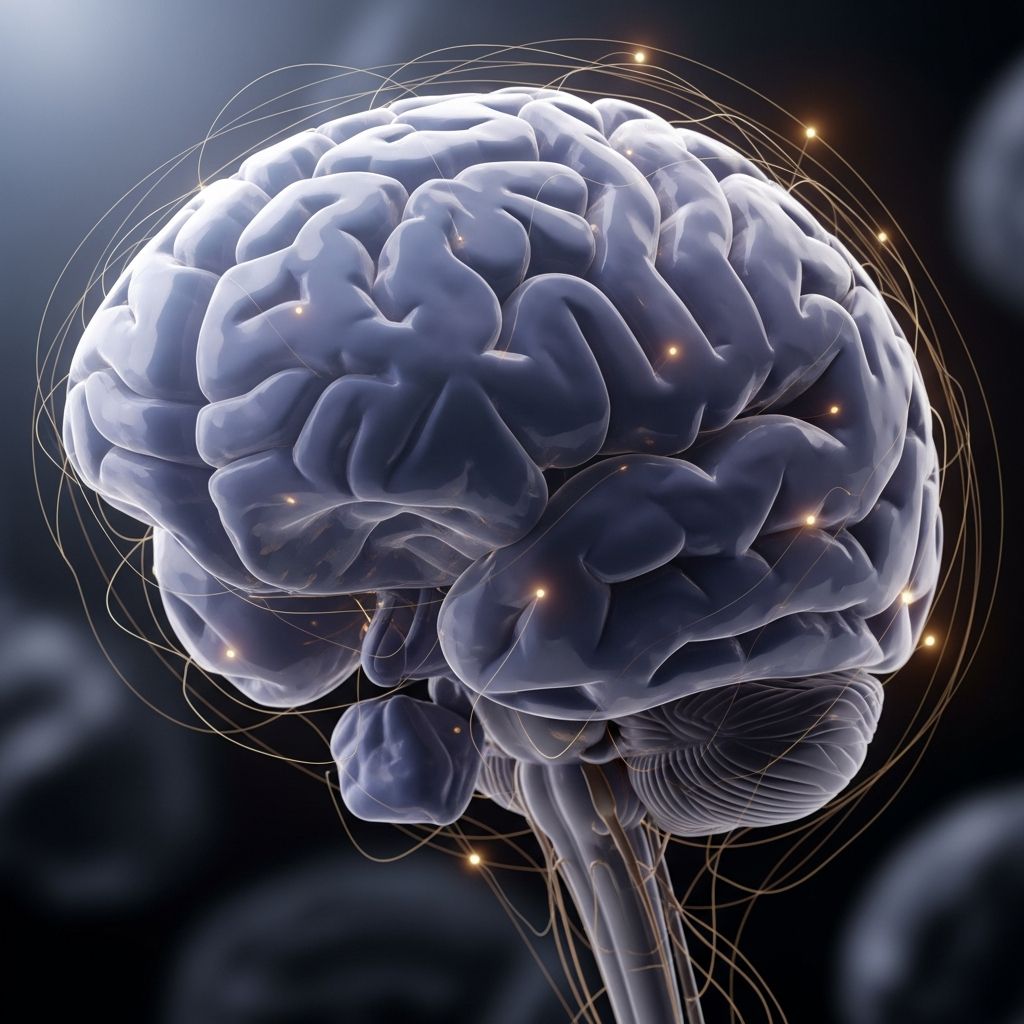
Understanding Your Brain: The Command Center of Your Body
Your brain is one of the most complex organs in your body, serving as the central command center that regulates everything you do, from your senses and emotions to your thoughts, memories, movement, and behavior. This remarkable three-pound organ contains approximately 86 billion neurons and works continuously to process information, make decisions, and control virtually every function necessary for survival and daily living.
Your brain connects directly to your spinal cord, and together they form your central nervous system (CNS). This integrated network allows your brain to send, receive, and process signals that carry information from your five senses—sight, smell, sound, touch, and taste. Additionally, your brain identifies signals from inside your body, such as pain, temperature, and heart rate, interpreting this information so you can understand and associate meaning with your environment.
The Three Main Parts of Your Brain
Your brain is organized into three major sections, each with distinct structures and specialized functions that work together to maintain your health and enable complex behaviors.
The Cerebrum: Your Brain’s Largest Division
The cerebrum is the largest part of your brain and handles many different functions, including muscle movements, language, processing sensory information, and managing conscious thoughts and actions. This upper portion of your brain is divided into two hemispheres—left and right—with each hemisphere containing four distinct lobes that have different responsibilities.
Each lobe of the cerebrum specializes in processing different types of information. The frontal lobe manages thinking, emotions, personality, judgment, self-control, and muscle control. The temporal lobe processes sensory information related to hearing, language, and emotions. The parietal lobe serves as a major sensory processing hub, combining information from multiple senses into usable forms.[10] Finally, the occipital lobe at the back of your brain handles vision and visual processing.
The cerebrum works closely with other brain structures, particularly your cerebellum, to coordinate your daily activities. For example, when you pick up a pencil, your cerebrum sends signals to the muscles in your arms while your cerebellum calculates and controls your movements to ensure your hand reaches the pencil accurately.
The Cerebellum: Your Movement Coordinator
While much smaller than the cerebrum, your cerebellum holds more than half of the neurons in your entire body, making it a densely packed processing center. For centuries, scientists believed the cerebellum’s sole function was coordinating muscle movements. However, advances in brain imaging technology have revealed that your cerebellum does significantly more than that.
Modern research shows that different parts of your cerebellum become active depending on what you’re doing at any given moment. Scientists have discovered that your cerebellum plays important roles in emotions and decision-making processes, extending far beyond movement coordination. This small but mighty structure helps regulate a wide range of functions and processes in both your brain and body, working seamlessly with other brain regions to ensure smooth, coordinated actions.
Related Stories



The Brainstem: Your Vital Functions Manager
Your brainstem connects your brain to your spinal cord and sits near the bottom of your brain. This crucial structure contains three distinct parts—the midbrain, pons, and medulla oblongata—that work together to regulate vital body functions you don’t have to think about consciously, such as breathing and heart rate.
The brainstem helps regulate balance, coordination, and reflexes while sending messages back and forth between your brain and the rest of your body. It manages many involuntary actions that occur automatically, including breathing, heart rate regulation, blood pressure control, body temperature regulation, and sleep-wake cycles. Your brainstem also contains your reticular activating system (RAS), a network of neurons that works with your thalamus to manage alertness, attention, and consciousness.
Additionally, your brainstem contains 10 of your 12 cranial nerves (nerves that start in your brain), specifically cranial nerves 3 through 12, which help control movements, sensations, taste, and hearing.
Brain Protection and Structure
Your brain is one of your most precious and vulnerable organs, so your body has evolved multiple protective mechanisms. A bony structure called your cranium surrounds your brain and forms part of your skull. Your brain floats in a protective liquid called cerebrospinal fluid (CSF), which acts as a cushion against impact and injury.
Between your brain and skull, you have three layers of tissue called the meninges. These protective layers work with your cranium and cerebrospinal fluid to shield your brain from trauma and injury, allowing you to move through the world with relative safety.
How Your Brain Communicates: The Nervous System Network
Your brain has 12 cranial nerves that carry messages by sending electrical impulses back and forth between your brain, organs, and muscles. Information from your body passes through these nerves to your brain, and signals travel from your brain to the rest of your body, creating a two-way communication system that enables all bodily functions.
This neural communication network operates through electrical and chemical signals, allowing your brain to process information at remarkable speeds. When you experience something—seeing a color, feeling warmth, hearing a sound—that sensory information travels through nerves to your brain, where it’s processed and interpreted, enabling you to understand and respond to your environment.
The Cerebral Cortex: Your Brain’s Processing Hub
Your cerebral cortex is involved in many high-level functions, such as reasoning, emotion, thought, memory, language, and consciousness. This outer layer of your cerebrum is divided into four main lobes, each responsible for processing different types of information and contributing to your overall cognitive abilities.
The Four Lobes and Their Functions
Frontal Lobe: Located at the front of your brain behind your forehead, your frontal lobe contains special areas including the motor cortex (responsible for body movement), the prefrontal cortex (which manages executive functions like thinking and problem-solving), and Broca’s area (involved in speech production).
Parietal Lobe: Positioned between your frontal and occipital lobes and above your temporal lobe, your parietal lobe contains the somatosensory cortex, which receives sensory information from all over your body, allowing you to perceive touch, temperature, and pain.
Temporal Lobe: Located on the sides of your head, your temporal lobe processes auditory information, language comprehension, and emotional responses.
Occipital Lobe: Situated at the back of your brain, your occipital lobe processes visual information and is essential for sight and visual interpretation.
Functional Organization of the Cerebral Cortex
Researchers also classify the cerebral cortex by three main types of functional areas that work together to process information and generate responses.
Sensory Areas: These regions receive sensory information from your senses and environment, processing sight, sound, smell, taste, and touch. These areas allow you to perceive and become aware of the world around you.
Motor Areas: Located mainly in your frontal lobe, these areas control voluntary muscle movement, enabling you to perform intentional actions from simple movements to complex motor tasks.
Association Areas: Spread throughout all four lobes, these areas connect and add complexity to functions, integrating information from multiple sources to enable higher-level thinking, decision-making, and behavioral responses.
Other Important Brain Structures
The Basal Ganglia
The basal ganglia are a group of brain structures linked together that handle complex processes affecting your entire body. While best known for their role in controlling your body’s voluntary movements, experts now recognize they also play important roles in learning, emotional processing, and problem-solving.
These structures work as a filtering system, approving or rejecting movement signals your brain sends, eliminating unnecessary or incorrect signals so you can control specific muscles without affecting nearby muscles. The basal ganglia also process information about how you evaluate goals and risks, affecting your emotions, motivation, and ability to learn and form habits.
The Limbic System
Your limbic system is your emotional nervous system, comprising a group of brain structures that regulate your emotions, memory, and behaviors. This system is crucial for emotional responses, memory formation, and the drive system that motivates your actions.
Brain Conditions and Damage
Damage to any area of your cerebral cortex typically results from tumors, trauma, autoimmune diseases, or a cerebrovascular accident (brain bleed or stroke). The symptoms of brain damage depend entirely on which area of the cerebral cortex is affected, as different regions control different functions.
For example, damage to the motor cortex might result in weakness or paralysis, while damage to Broca’s area could affect speech production. Damage to the occipital lobe might impact vision, while temporal lobe damage could affect hearing or language comprehension. Understanding the brain’s localized functions helps medical professionals diagnose and treat brain injuries more effectively.
How Your Brain Processes Information
Your brain’s fundamental job is to send, receive, and process signals sent through your central nervous system. These signals are messages carrying information from your five senses as well as from internal body systems. Your brain continuously interprets and translates this information, enabling you to understand your surroundings and respond appropriately.
This processing happens through complex neural networks where billions of neurons communicate through electrical and chemical signals. Different brain regions specialize in different types of processing, yet they work in coordinated harmony to create your unified experience of consciousness and awareness.
Frequently Asked Questions
Q: What does the cerebrum do?
A: Your cerebrum is the largest part of your brain and handles conscious thoughts and actions, including muscle movements, language, sensory processing, emotions, and decision-making. It works closely with other brain structures to coordinate your daily activities and enable complex behaviors.
Q: What is the brainstem responsible for?
A: Your brainstem regulates vital body functions including breathing, heart rate, blood pressure, body temperature, and sleep-wake cycles. It also manages balance, coordination, reflexes, and contains many of your cranial nerves.
Q: How does the cerebellum contribute to brain function?
A: Although small, your cerebellum contains over half your body’s neurons and coordinates muscle movements, calculates precise motor control, and plays roles in emotions and decision-making.
Q: What protects your brain?
A: Your brain is protected by your cranium (skull), cerebrospinal fluid that cushions your brain, and three layers of tissue called the meninges that lie between your brain and skull.
Q: How many lobes does the cerebral cortex have?
A: Your cerebral cortex has four lobes: the frontal lobe (thinking and motor control), parietal lobe (sensory processing), temporal lobe (hearing and language), and occipital lobe (vision).
Q: What happens when the brain is damaged?
A: Brain damage can result from tumors, trauma, autoimmune diseases, or strokes. Symptoms depend on which brain area is affected, as different regions control different functions like movement, speech, vision, or memory.
References
- Cerebral Cortex: What It Is, Function & Location — Cleveland Clinic. Accessed 2025-12-01. https://my.clevelandclinic.org/health/articles/23073-cerebral-cortex
- Brainstem: What It Is, Function, Anatomy & Location — Cleveland Clinic. Accessed 2025-12-01. https://my.clevelandclinic.org/health/body/21598-brainstem
- Cerebellum: What It Is, Function & Anatomy — Cleveland Clinic. Accessed 2025-12-01. https://my.clevelandclinic.org/health/body/23418-cerebellum
- Basal Ganglia: What It Is, Function & Anatomy — Cleveland Clinic. Accessed 2025-12-01. https://my.clevelandclinic.org/health/body/23962-basal-ganglia
- Brain: Parts, Function, How It Works & Conditions — Cleveland Clinic. Accessed 2025-12-01. https://my.clevelandclinic.org/health/body/22638-brain
Similar Articles








Read full bio of Sneha Tete