Brain Surgery: Types, Procedures & Recovery
Comprehensive guide to brain surgery: understanding procedures, risks, and recovery.
Understanding Brain Surgery
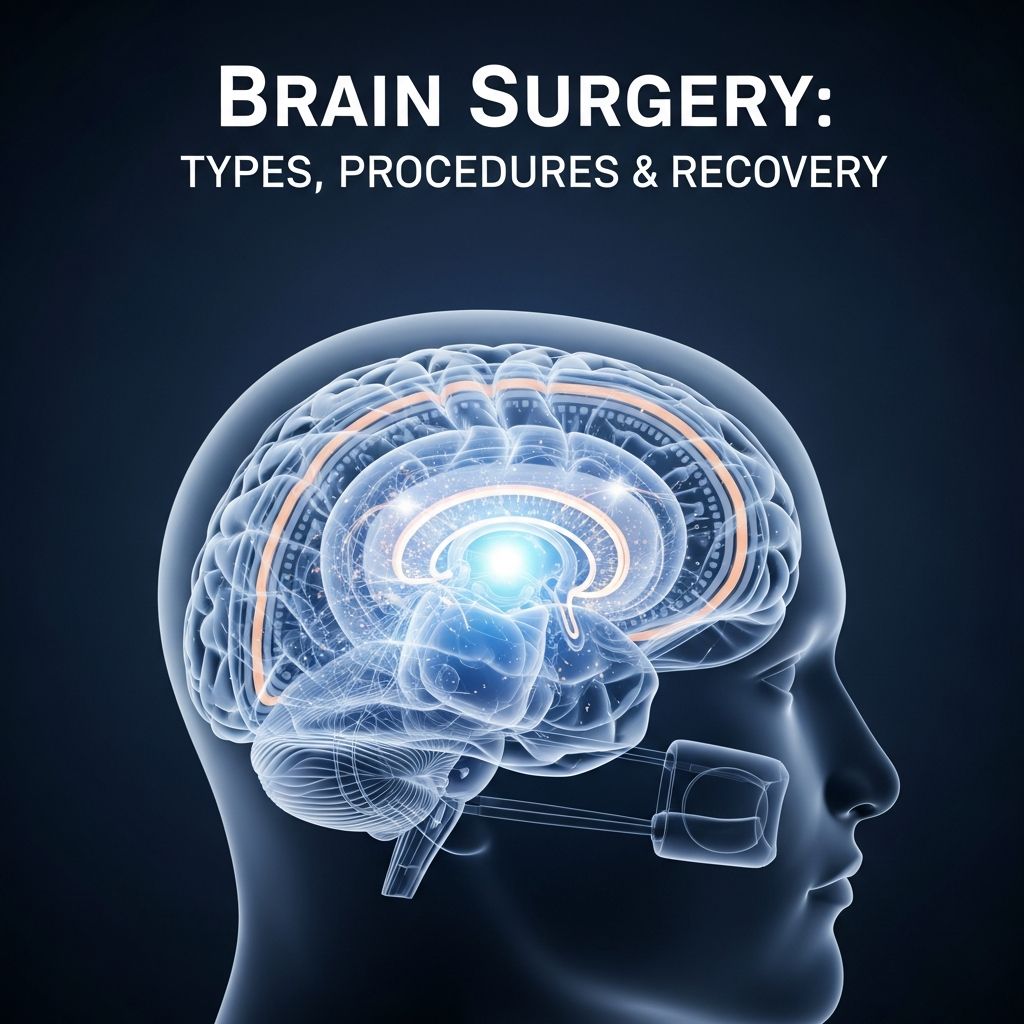
Brain surgery is a complex medical procedure that involves accessing the brain to treat various neurological conditions. Whether you’re facing a brain tumor, epilepsy, vascular malformation, or another neurological disorder, understanding what brain surgery entails can help you prepare mentally and physically for the procedure. Brain surgery requires specialized expertise, advanced technology, and a multidisciplinary approach to ensure the best possible outcomes. Our neurosurgeons have years of training and fellowship experience in performing complex brain surgeries with precision and safety.
Types of Brain Surgery
Several different types of brain surgery exist, each designed to address specific neurological conditions. The type of surgery recommended depends on the location, size, and nature of the condition being treated.
Craniotomy
A craniotomy is one of the most common types of brain surgery where a surgeon removes a portion of the skull to access the brain tissue. During this procedure, your surgeon will carefully remove a section of bone from your skull, perform the necessary treatment on the brain, and then replace the bone flap before closing the incision. Craniotomy is used to treat brain tumors, blood clots, epilepsy, and other conditions affecting brain function. The procedure typically takes several hours, depending on the complexity of your condition.
Endoscopic Surgery
Endoscopic surgery represents an innovative, minimally invasive approach to treating skull base tumors, pituitary adenomas, and other brain lesions. This technique involves using an endoscope, a thin tube with a camera, to visualize and treat brain tumors through small incisions. Endoscopic surgery offers several advantages, including smaller incisions, reduced tissue trauma, faster recovery times, and less postoperative pain compared to traditional open surgery approaches.
Awake Craniotomy with Brain Mapping
Awake craniotomy with brain mapping is a sophisticated surgical technique that allows neurosurgeons to remove brain tumors while preserving critical neurological functions. During this procedure, you remain partially awake and responsive, allowing your surgical team to test brain function during tumor removal. Brain mapping technology identifies areas of the brain responsible for movement, speech, sensation, and other essential functions, ensuring that vital brain regions are protected during surgery. This approach significantly reduces the risk of postoperative neurological deficits.
Deep Brain Stimulation (DBS)
Deep brain stimulation is a surgical treatment that involves implanting a device that delivers electrical current directly to specific areas of the brain. This procedure is used to treat movement disorders such as Parkinson’s disease, essential tremor, and dystonia, as well as certain psychiatric conditions. Unlike procedures that remove or destroy brain tissue, DBS modulates brain activity to alleviate symptoms, making it an effective reversible treatment option for patients with specific neurological conditions.
Laser Interstitial Thermal Therapy (LITT)
Laser interstitial thermal therapy is a minimally invasive technique that uses laser energy to ablate, or destroy, abnormal brain tissue. This procedure is particularly useful for treating deep-seated brain lesions, epilepsy, and certain brain tumors that may be difficult to access through conventional surgery. LITT requires only a small burr hole in the skull and offers faster recovery times compared to traditional open brain surgery.
Preparation for Brain Surgery
Proper preparation is essential to ensure a successful surgical outcome. Your neurosurgery team will conduct comprehensive preoperative evaluations to assess your overall health and neurological status.
Imaging Studies
Before your surgery, your provider will order detailed imaging studies, including magnetic resonance imaging (MRI) and computed tomography (CT) scans of your brain. These imaging studies help your neurosurgeon identify the exact location of the lesion or abnormality, determine the optimal surgical approach, and plan the safest trajectory for accessing the target tissue. Advanced imaging techniques such as MRI spectroscopy, MRI tractography, and perfusion MRI provide additional information about brain function and blood flow.
Related Stories



Preoperative Consultations
Your surgical team will discuss the following important topics before your procedure:
- The specific surgical approach that will be used
- Risks and benefits specific to your condition
- Anesthesia options and what to expect
- Medications you should continue or discontinue before surgery
- Fasting requirements before your procedure
- What to bring to the hospital and what to expect during admission
Preoperative Testing
Your surgical team may recommend various preoperative tests to ensure you’re healthy enough for surgery. These may include blood work, electrocardiogram (EKG), chest X-ray, and other tests depending on your age and medical history. If you have certain neurological conditions, your team may also perform specialized neurological testing.
What Happens During Brain Surgery
Understanding the surgical process can help reduce anxiety and prepare you mentally for your procedure. The exact steps depend on the type of surgery, but general principles remain consistent across most brain surgical procedures.
Anesthesia Administration
For most brain surgeries, general anesthesia is administered to ensure you remain asleep and comfortable throughout the procedure. An anesthesiologist will monitor your vital signs, oxygen levels, and brain activity throughout surgery. For awake craniotomy procedures, light sedation may be used initially, with portions of the surgery performed while you’re awake but comfortable.
Surgical Positioning and Frame Application
Once you’re under anesthesia, your head will be positioned securely using a stereotactic frame or other fixation device. This frame keeps your head immobile and provides precise positioning for the surgical approach. The frame is essential for maintaining accuracy throughout the procedure, particularly when targeting deep brain structures.
Imaging and Trajectory Planning
Your surgical team will use intraoperative imaging, including CT or MRI scans, to confirm head positioning and identify the exact trajectory for electrode or instrument placement. Advanced surgical navigation systems combine preoperative imaging data with real-time information to guide your surgeon to the target tissue with millimeter precision. Some centers use augmented reality technology to create 3D anatomical models that help the surgical team plan the best approach.
Incision and Skull Opening
Your neurosurgeon will make a small incision in your scalp, carefully positioning it to minimize visible scarring while providing optimal access to the target tissue. After cleaning the surgical site with antiseptic solution, local anesthetic is injected around the incision area. Using a surgical drill, your surgeon creates a small opening in the skull bone. During this phase, you may hear or feel vibrations if you’re undergoing awake craniotomy, but you should not experience pain, as the brain tissue itself has no pain receptors.
Tissue Treatment
Once the surgical opening is created, your neurosurgeon carefully accesses the target tissue. Depending on your diagnosis, this may involve removing a tumor, treating an aneurysm, removing scar tissue causing epilepsy, or placing electrodes for deep brain stimulation. Your surgical team uses specialized instruments, microscopes, and neuromonitoring devices to ensure precision and safety. If you’re undergoing awake craniotomy with brain mapping, your surgical team will test brain function periodically during tumor removal to ensure vital areas are preserved.
Closure and Recovery
After completing the necessary treatment, your surgical team will carefully close the surgical site. If a bone flap was removed (craniotomy), it will be replaced and secured with special plates or sutures. The scalp incision is then closed with sutures or surgical staples. Your head will be cleaned and bandaged, and you’ll be transferred to the recovery area for immediate postoperative monitoring.
Recovery After Brain Surgery
Recovery from brain surgery is a gradual process that requires patience, proper wound care, and adherence to your surgical team’s recommendations. Recovery timelines vary depending on the type of surgery and your individual healing response.
Hospital Stay
Most patients spend one to three nights in the hospital following brain surgery, depending on the procedure complexity and your postoperative condition. During your hospital stay, your medical team will monitor your neurological status, pain levels, and recovery progress. You’ll receive pain management medications, antibiotics if needed, and assistance with basic activities as you gradually regain strength.
Initial Recovery Period
The first two weeks after brain surgery are critical for recovery. During this time, you should:
- Rest frequently and avoid strenuous activities
- Keep your surgical incision clean and dry
- Follow medication instructions carefully
- Attend all scheduled follow-up appointments
- Report any concerning symptoms to your surgical team immediately
Gradual Return to Activities
You can gradually increase your activity level as tolerated. Light walking indoors can usually begin within a few days of surgery. Most patients can resume light outdoor activities within two to three weeks. However, strenuous exercise, heavy lifting, and contact sports should be avoided for at least six to eight weeks, depending on your surgeon’s recommendations.
Timeline for Full Recovery
While you may feel significantly better within two to three weeks, complete healing from brain surgery typically takes six to twelve weeks or longer. Some patients experience gradual improvements over several months as swelling decreases and the brain heals completely. The timeline for full recovery depends on the type of surgery, the extent of the procedure, your age, overall health, and how well you follow postoperative instructions.
Potential Risks and Complications
Like all surgical procedures, brain surgery carries potential risks. Understanding these risks helps you make informed decisions about your treatment and recognize warning signs that require immediate medical attention.
Common Risks
- Infection: Surgical site infections or meningitis may occur, requiring antibiotic treatment
- Bleeding: Intracranial bleeding or hematoma formation can occur during or after surgery
- Swelling: Brain edema commonly occurs after surgery and typically resolves within days to weeks
- Seizures: Postoperative seizures may occur in some patients, particularly after tumor surgery
- Neurological deficits: Temporary or permanent changes in speech, movement, sensation, or cognitive function
Rare but Serious Complications
- Stroke or blood clot formation
- Cerebrospinal fluid leak
- Hydrocephalus requiring additional treatment
- Vision or hearing changes
- Permanent disability in severe cases
Risk Reduction Strategies
Working with experienced neurosurgeons at comprehensive medical centers significantly reduces surgical risks. Advanced neuromonitoring technology, intraoperative imaging, brain mapping, and minimally invasive techniques all contribute to improved safety outcomes. Careful patient selection, thorough preoperative evaluation, and strict adherence to postoperative instructions also help minimize complications.
Minimally Invasive Brain Surgery Advances
Modern neurosurgery increasingly emphasizes minimally invasive approaches that reduce tissue trauma, decrease infection risk, and accelerate recovery. These advanced techniques include endoscopic surgery, laser interstitial thermal therapy, and awake craniotomy with brain mapping. Minimally invasive approaches often allow patients to return to normal activities more quickly than traditional open surgery while achieving comparable treatment efficacy.
Multidisciplinary Team Approach
Comprehensive brain surgery requires collaboration among multiple specialties. Your surgical team typically includes neurosurgeons, neuroradiologists, anesthesiologists, neurophysiologists, nurses, and other specialists. This multidisciplinary approach ensures that all aspects of your care are coordinated, and the best treatment strategies are employed for your specific condition. Patient-centered care with individualized treatment planning tailored to your unique needs and goals is essential for achieving optimal outcomes.
Frequently Asked Questions
Q: How long does brain surgery typically take?
A: The duration varies depending on the type and complexity of the procedure, but most brain surgeries last between two to four hours. Some complex procedures may take longer.
Q: Will I have a visible scar after brain surgery?
A: Your neurosurgeon places the incision in a location that minimizes visibility, often within the hairline. The scar typically becomes less noticeable over time as hair grows back and the incision heals.
Q: How long before I can return to work after brain surgery?
A: Most patients can return to light work or desk jobs within four to six weeks. Return to physically demanding work depends on your specific procedure and recovery progress, typically requiring eight to twelve weeks or more.
Q: What medications will I need after brain surgery?
A: Common postoperative medications include pain relievers, antibiotics, anti-inflammatory drugs, and anti-seizure medications if applicable. Your surgical team will provide specific medication instructions.
Q: Can complications develop months after brain surgery?
A: While most complications occur within the immediate postoperative period, some issues like seizures or hydrocephalus can develop later. Maintain regular follow-up appointments and report any concerning symptoms promptly.
Q: Is brain surgery always necessary for brain tumors?
A: Not always. Treatment depends on tumor type, size, and location. Some tumors may be treated with radiation therapy or chemotherapy alone, while others require surgery, often combined with additional treatments.
References
- Deep Brain Stimulation (DBS): What It Is, Purpose & Procedure — Cleveland Clinic. 2024. https://my.clevelandclinic.org/health/treatments/21088-deep-brain-stimulation
- Craniotomy: What It Is, Procedure, Recovery & Risks — Cleveland Clinic. 2024. https://my.clevelandclinic.org/health/treatments/24902-craniotomy
- Brain Tumor & Neuro-Oncology Center — Cleveland Clinic. 2024. https://my.clevelandclinic.org/departments/neurological/depts/brain-tumor-neuro-oncology
- Neurosurgery — Cleveland Clinic Florida. 2024. https://my.clevelandclinic.org/florida/departments/neurological/depts/neurosurgery
- Brain Tumor and Pituitary Center — Cleveland Clinic Florida. 2024. https://my.clevelandclinic.org/florida/departments/neurological/depts/brain-tumor
- Surgical Treatments and Technologies — American Brain Tumor Association. 2024. https://www.abta.org/treatment_center_loc/cleveland-clinic/
- Cranial Neurosurgery Program — Cleveland Clinic Abu Dhabi. 2024. https://www.clevelandclinicabudhabi.ae/en/institutes-and-specialties/neurological/cranial-neurosurgery
Similar Articles








Read full bio of Sneha Tete