Brain Tumor Treatment Guide: Surgery, Radiation, And Drugs
Comprehensive guide to advanced brain tumor treatment strategies and innovative therapies.
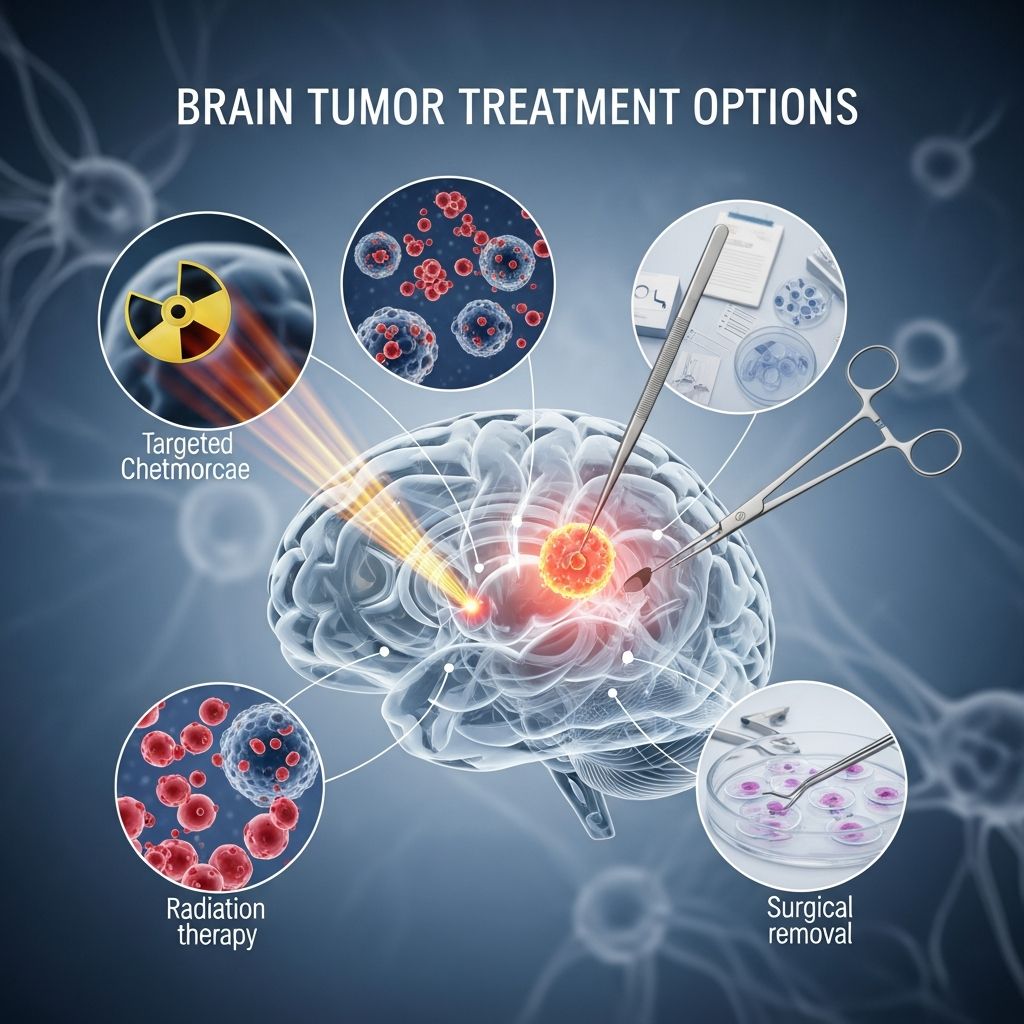
Understanding Brain Tumor Treatment
Brain tumors represent a significant medical challenge due to their complexity and location within the central nervous system. Treatment approaches for brain tumors vary considerably based on factors including tumor type, size, location, grade, and the patient’s overall health status. A multidisciplinary team of specialists, including neurosurgeons, neuro-oncologists, radiation oncologists, and neuroradiologists, collaborates to develop personalized treatment plans. The primary goals of treatment are to remove or destroy the tumor while preserving neurological function and quality of life.
Surgical Treatment Options
Surgery remains a cornerstone of brain tumor treatment and is often the first intervention when feasible. The primary objective of surgical resection is to remove as much of the tumor as possible while minimizing damage to healthy brain tissue. Modern surgical techniques have evolved significantly to enhance both safety and efficacy.
Craniotomy and Tumor Resection
A craniotomy is a surgical procedure in which a portion of the skull is temporarily removed to access the brain tumor. Neurosurgeons carefully plan the surgical approach based on imaging studies and the tumor’s location relative to critical brain structures. The goal is to achieve maximum safe resection, removing as much tumor tissue as possible without compromising vital functions.
Awake Craniotomy
Awake craniotomy is an advanced surgical technique where patients remain conscious during portions of the surgery. This approach allows surgeons to perform real-time brain mapping and monitor neurological function during tumor removal. By testing patient responses during surgery, surgeons can precisely identify and preserve eloquent brain areas responsible for speech, movement, and sensory function, significantly reducing the risk of postoperative neurological deficits.
Minimally Invasive Approaches
Endoscopic surgery and other minimally invasive techniques are increasingly utilized for select brain tumors. These approaches involve smaller incisions and reduced trauma to surrounding brain tissue compared to traditional open surgery. Endoscopic procedures are particularly valuable for tumors located in deep brain structures or the ventricular system.
Intraoperative Imaging
Intraoperative MRI provides real-time imaging guidance during surgery, allowing surgeons to visualize the extent of tumor removal and identify residual disease. This technology enhances surgical precision and the completeness of tumor resection while protecting healthy brain tissue.
Radiation Therapy
Radiation therapy uses high-energy beams to damage and destroy cancer cells. For brain tumors, radiation therapy is often administered following surgery to target remaining tumor cells and reduce recurrence risk. Multiple advanced radiation techniques are available to optimize treatment delivery.
External Beam Radiation Therapy
External beam radiation therapy (EBRT) directs radiation from outside the body toward the tumor. Standard approaches include three-dimensional conformal radiation therapy (3D-CRT) and intensity-modulated radiation therapy (IMRT), both of which shape radiation beams to conform to tumor contours while sparing surrounding healthy tissue.
Stereotactic Radiosurgery
Stereotactic radiosurgery delivers highly focused radiation in one or a few treatments to a precisely defined target. This technique is particularly useful for small, well-defined tumors and provides excellent local control rates. Stereotactic radiosurgery can be delivered using various platforms and is often used for recurrent tumors or metastatic disease.
Proton Therapy
Related Stories



Proton therapy utilizes protons instead of photons to deliver radiation. Because protons release most of their energy at a specific depth (the Bragg peak), this modality allows dose concentration at the tumor while reducing radiation exposure to surrounding healthy brain tissue. Proton therapy is particularly valuable in pediatric patients and selected adult cases.
Chemotherapy and Targeted Drug Therapy
Chemotherapy drugs work by interfering with cancer cell growth and division. However, delivering chemotherapy to brain tumors is complicated by the blood-brain barrier, which prevents many systemic drugs from reaching the tumor. Innovative approaches have been developed to overcome this challenge.
Systemic Chemotherapy
Systemic chemotherapy administered intravenously or orally represents a standard treatment component for many brain tumors. Common chemotherapy agents used in brain tumor treatment include temozolomide (TMZ), which crosses the blood-brain barrier effectively and is widely used for glioblastomas and other malignant gliomas.
Interstitial Chemotherapy
Interstitial chemotherapy represents an innovative local treatment strategy that bypasses the blood-brain barrier by delivering chemotherapy directly to the tumor site. BCNU polymer implants (Gliadel wafers) are placed directly into the tumor resection cavity at the time of surgery, allowing direct chemotherapy delivery with minimal systemic toxicity. Clinical trials have demonstrated improved survival rates, particularly for recurrent glioblastoma, with six-month survival rates of 56% in the BCNU polymer group versus 36% in the placebo group. The polymers are safe, with no evidence of systemic side effects typically associated with standard chemotherapy.
Targeted Molecular Therapy
Recent advances in molecular biology have led to the development of targeted therapies that specifically inhibit cancer-causing mutations. Vorasidenib represents a significant breakthrough in brain tumor treatment, approved by the FDA as a targeted therapy for IDH-mutant low-grade gliomas. This drug works by inhibiting the activity of the mutated IDH gene, slowing tumor growth. In a Phase 3 clinical trial involving 331 patients, vorasidenib significantly improved progression-free survival in patients with grade 2 IDH-mutant glioma and delayed the time to next intervention compared to placebo. This represents the first major therapeutic advance in decades for low-grade glioma patients. The possibility of delaying radiation therapy with this drug could be beneficial for selected patients with slow-growing IDH-mutant gliomas, potentially reducing radiation-related damage to healthy brain tissue.
Advanced Treatment Technologies
Laser Interstitial Thermal Therapy
Laser interstitial thermal therapy (LITT) is a minimally invasive technique that uses focused laser energy to heat and destroy tumor tissue. This approach offers precise ablation with rapid recovery and reduced morbidity compared to open surgery.
Brain Mapping and Neuromonitoring
Intraoperative brain mapping and neuromonitoring technologies help surgeons identify and preserve eloquent brain areas during tumor resection. These technologies enhance surgical safety and functional outcomes.
Advanced Imaging Modalities
Specialized imaging techniques including MRI spectroscopy, MRI tractography, and perfusion MRI provide detailed information about tumor biology, blood flow, and relationship to critical brain structures. These imaging modalities guide surgical planning and help assess treatment response.
Treatment Planning and Multidisciplinary Approach
Optimal brain tumor treatment requires coordination among multiple specialists. Neurosurgeons, neuro-oncologists, radiation oncologists, neuroradiologists, and specialty nurses collaborate to develop individualized treatment plans. Each patient’s plan considers tumor characteristics, patient age and health status, and treatment goals, which may include cure, disease control, or symptom management.
Johns Hopkins medical centers annually treat over 1,000 primary brain tumor patients and more than 300 patients with secondary (metastatic) brain tumors, with approximately 800 undergoing surgical intervention. This extensive experience enables comprehensive, evidence-based care delivery.
Combination Treatment Strategies
Most brain tumors require combination treatment. A typical approach for malignant gliomas involves surgical resection followed by radiation therapy and chemotherapy. For example, BCNU polymer implants used in conjunction with radiation therapy have been found safe as initial therapy for malignant glioma, achieving median survival of 42 weeks with eight patients alive at one year and four patients alive beyond 18 months.
For metastatic brain tumors, local chemotherapy combined with surgery and external beam radiation has demonstrated effectiveness. Laboratory studies in mice revealed that local chemotherapy effectively treats intracranial melanoma, colon carcinoma, and breast carcinoma, with survival prolonged when combined with external beam radiation in renal cell carcinoma, breast cancer, and lung carcinoma. Multi-institutional clinical trials for metastatic brain tumors have yielded positive results, achieving 100% local control rates in newly diagnosed patients treated with surgery and Gliadel plus or minus radiation therapy.
Clinical Trials and Emerging Therapies
Clinical trials offer patients access to investigational treatments that may provide additional benefit. Current clinical trials at leading medical centers investigate treatments for oligodendroglioma, BRAF-mutant gliomas, and craniopharyngioma, among other tumor types. These trials evaluate novel drug combinations, immunotherapy approaches, and other innovative strategies to improve outcomes.
Treatment Side Effects and Management
While brain tumor treatments save lives, they can produce side effects that require careful management. Radiation therapy may cause fatigue, hair loss, and cognitive changes. Chemotherapy can result in nausea, low blood cell counts, and hair loss. BCNU polymers are notable for minimal systemic side effects compared to conventional chemotherapy, with no significant decreases in blood cell counts or neurotoxicity observed in clinical trials. Modern supportive care measures help manage these effects and maintain quality of life.
Frequently Asked Questions
Q: What is the most common type of primary brain tumor in adults?
A: Glioblastoma is the most common primary malignant brain tumor in adults. However, low-grade gliomas are increasingly recognized as important tumor types, particularly IDH-mutant variants, which occur most commonly in younger adults and have different biologic behavior and treatment responses.
Q: How long does brain tumor treatment typically take?
A: Treatment duration varies based on tumor type and approach. Surgery may take several hours. Radiation therapy typically continues for 4-6 weeks with daily treatments. Chemotherapy may continue for months or longer. Total treatment may span several months to over a year depending on the specific protocol.
Q: Can chemotherapy be delivered directly to brain tumors?
A: Yes, interstitial chemotherapy delivers drugs directly to the tumor site, bypassing the blood-brain barrier. BCNU polymer implants represent an FDA-approved approach for delivering chemotherapy directly into the tumor resection cavity, minimizing systemic side effects.
Q: What is the role of targeted therapy in brain tumor treatment?
A: Targeted therapies like vorasidenib inhibit specific cancer-causing mutations, such as the IDH gene mutation. These drugs can slow tumor growth and potentially delay the need for radiation therapy, reducing damage to healthy brain tissue.
Q: Are there less invasive treatment options for brain tumors?
A: Yes, minimally invasive approaches including endoscopic surgery, laser interstitial thermal therapy, and stereotactic radiosurgery offer alternatives to traditional open craniotomy for selected tumors, resulting in faster recovery and reduced morbidity.
Q: How are treatment plans individualized for brain tumor patients?
A: Treatment plans are developed by multidisciplinary teams considering tumor type, grade, location, size, patient age, health status, and treatment goals. Advanced imaging and molecular testing guide these decisions to optimize outcomes.
References
- Interstitial chemotherapy for malignant gliomas: the Johns Hopkins experience — National Center for Biotechnology Information (NCBI). 2014. https://pmc.ncbi.nlm.nih.gov/articles/PMC4086528/
- FDA approves brain cancer therapy that relies on Johns Hopkins research — Johns Hopkins University Hub. 2024-08-07. https://hub.jhu.edu/2024/08/07/brain-cancer-therapy-vorasidenib/
- Johns Hopkins University School of Medicine Brain Tumor Treatment Center — American Brain Tumor Association (ABTA). https://www.abta.org/treatment_center_loc/johns-hopkins-university-school-of-medicine/
Similar Articles








Read full bio of medha deb