Brain Tumor Types: Understanding Primary and Secondary Tumors
Comprehensive guide to brain tumor classification, types, and characteristics for patients and families.
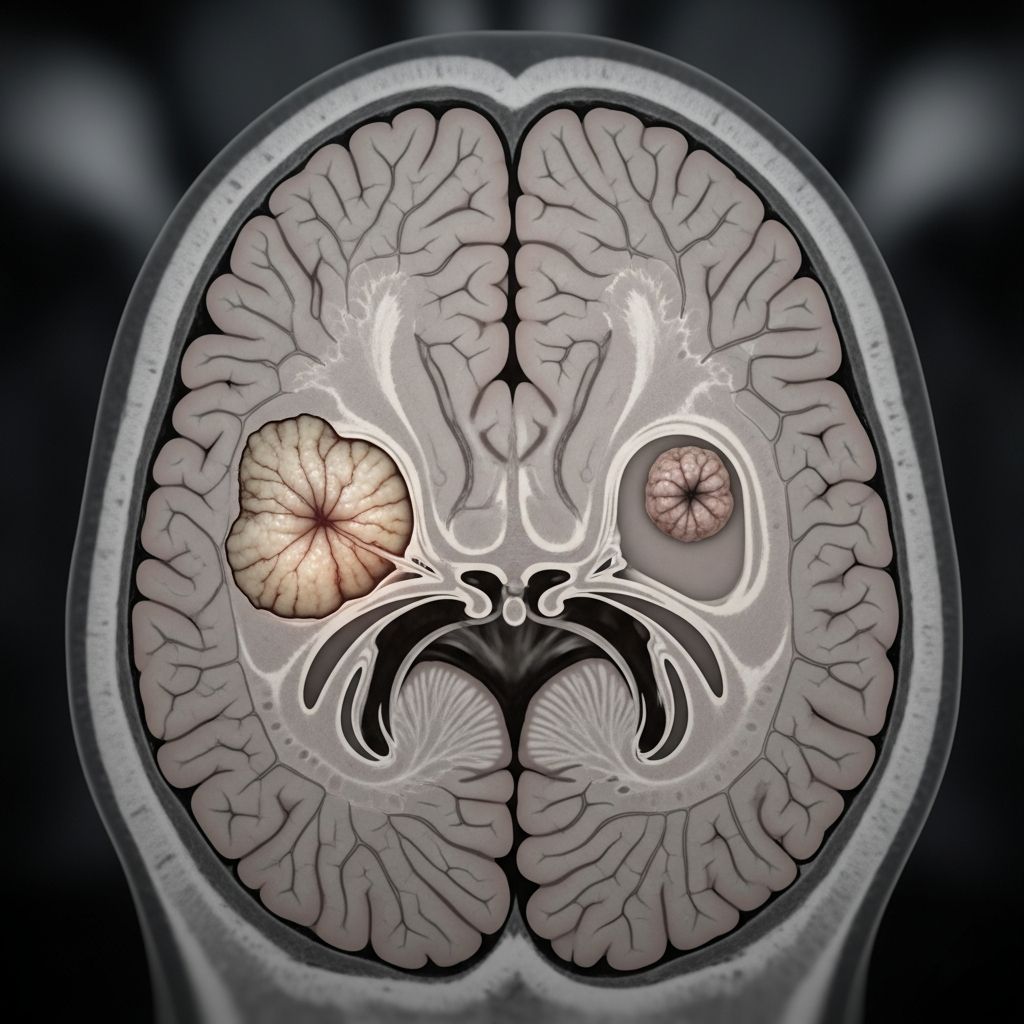
Understanding Brain Tumor Types
Brain tumors represent a diverse group of diseases encompassing over 100 different types of tumors that affect the brain and spinal cord. Not all brain tumors are created equal—they vary significantly in their origin, behavior, aggressiveness, and response to treatment. Understanding the different types of brain tumors is essential for patients, families, and healthcare providers to make informed decisions about diagnosis and treatment options.
Brain tumors are classified into two primary categories: primary brain tumors, which originate in the brain itself, and secondary brain tumors, which are metastases that spread to the brain from cancers that started elsewhere in the body. This classification system helps medical professionals understand tumor behavior, predict outcomes, and determine the most appropriate treatment strategies.
Primary Brain Tumors
Primary brain tumors are those that develop directly from cells within the brain and central nervous system. Among adults, certain types are significantly more common than others. The most prevalent primary brain tumors include meningiomas, accounting for 46.1% of all primary brain tumors, glioblastomas at 16.4%, and pituitary tumors at 14.5%. Understanding each type provides crucial insight into their characteristics and treatment approaches.
Gliomas
Gliomas represent the largest group of primary brain tumors and develop from glial cells, which are the supportive cells found throughout the brain tissue. These tumors resemble the normal glial cells from which they originate, and they can be further subdivided into several specific types based on the particular glial cells involved.
Astrocytomas
Astrocytomas develop from astrocytes, star-shaped glial cells that provide structural and metabolic support to neurons. These tumors range significantly in aggressiveness, from slow-growing low-grade tumors to highly aggressive high-grade variants. The grading system helps determine the tumor’s growth rate and malignancy potential.
Oligodendrogliomas
Oligodendrogliomas arise from oligodendrocytes, cells responsible for producing myelin that insulates nerve fibers in the brain. Like astrocytomas, these tumors can be classified as low-grade or high-grade depending on their microscopic appearance and behavior patterns.
Glioblastoma
Glioblastoma represents the most aggressive form of glioma and is the most common primary malignant brain tumor in adults. Characterized by rapid cell division, microvascular proliferation, and areas of necrosis, glioblastomas pose significant treatment challenges. Recent advances in genetic understanding have improved classification and treatment options for some glioblastoma variants.
IDH-Mutant Gliomas
A significant breakthrough in brain tumor classification came from the discovery of IDH gene mutations, identified by researchers at Johns Hopkins. Approximately 80% of low-grade gliomas contain an IDH mutation, which generally indicates a better prognosis than non-mutant gliomas. These include IDH-mutant astrocytomas and oligodendrogliomas, which occur most commonly in younger adults and tend to be slower-growing with longer survival rates compared to aggressive high-grade gliomas. The FDA approval of vorasidenib, a targeted therapy specifically designed to inhibit the mutated IDH gene, represents a major advancement in treating these tumors, potentially delaying the need for radiation and chemotherapy in select patients.
Related Stories



Meningiomas
Meningiomas develop from cells lining the meninges, the protective membranes that cover the brain and spinal cord. These tumors tend to develop on the surface of the brain and account for nearly half of all primary brain tumors in adults. While many meningiomas are benign and slow-growing, some exhibit more aggressive behavior and may require additional therapies beyond surgery.
Most meningiomas are successfully treated through surgical removal, as they typically develop on the brain’s surface, making them accessible to neurosurgeons. However, some meningiomas may demonstrate aggressive characteristics requiring additional treatment such as radiation therapy. The location and size of the tumor, along with its histological grade, determine the most appropriate treatment approach.
Pituitary Tumors
Pituitary tumors develop in the pituitary gland, a small endocrine gland located at the base of the brain that produces hormones regulating various body functions. These tumors account for approximately 14.5% of primary brain tumors in adults. Most pituitary tumors are benign and grow slowly, though they can cause significant hormonal imbalances and neurological symptoms depending on their size and location.
Secondary Brain Tumors (Metastases)
Metastatic brain tumors, or brain metastases, represent cancers that have spread to the brain from primary tumors located elsewhere in the body. These tumors do not originate in the brain itself but rather establish secondary colonies as part of advanced systemic cancer. Brain metastases are actually more common than primary brain tumors, occurring in approximately 10-15% of cancer patients.
The most common sources of brain metastases include lung cancer, breast cancer, skin cancer (melanoma), and gastrointestinal tract cancers. These tumors often indicate advanced disease and typically develop when cancer cells break away from the primary tumor, enter the bloodstream, and establish growth in the brain tissue. Treatment approaches for brain metastases may include surgery, radiation therapy, chemotherapy, targeted therapy, or a combination of these approaches, depending on the number, size, and location of the metastases.
Embryonal Tumors
Embryonal tumors are primitive, high-grade neoplasms that resemble cells encountered during the development of the central nervous system. These tumors have a strong predilection for children and young patients, making them a significant concern in pediatric oncology. They are highly aggressive and require intensive, multimodal treatment approaches.
Medulloblastoma
Medulloblastoma is the most common malignant primary brain tumor in children. This highly aggressive embryonal tumor typically requires aggressive treatment including chemotherapy and radiation therapy. Due to the propensity of medulloblastomas to disseminate along the cerebrospinal fluid, extensive irradiation may be necessary, and treatment protocols often include whole-brain and spinal cord radiation in addition to systemic chemotherapy.
Ependymomas
Ependymomas are solid tumors that develop from ependymal cells lining the ventricles of the brain and can also occur in the spinal cord. While these tumors may sometimes be completely removed through surgery due to their solid nature, their location can make complete resection difficult or impossible. Depending on the extent of surgical removal and tumor grade, patients may require additional aggressive therapies such as radiation and chemotherapy to improve survival outcomes.
Other Brain Tumor Types
Beyond the major categories described above, numerous other brain tumor types exist, though they are less common. These include acoustic neuromas (schwannomas), which develop from nerve tissue; craniopharyngiomas, which arise near the pituitary gland; and various other rare tumors. A subset of tumors remains difficult to classify even after thorough pathological examination, and these diagnoses are issued in descriptive fashion, leading to broad categories that exclude more common tumor entities.
Brain Tumor Classification System
Brain tumors are classified according to their resemblance to normal cell components of the brain and spinal cord. This classification helps pathologists, oncologists, and neurosurgeons understand tumor behavior and predict clinical outcomes. The World Health Organization (WHO) classification system assigns grades from I to IV, with Grade I representing benign tumors with excellent prognosis and Grade IV representing highly malignant tumors with poor prognosis.
Grade assessment depends on several microscopic features including:
– Mitotic rate (frequency of cell division)- Nuclear atypia (abnormal appearance of cell nuclei)- Presence of microvascular proliferation (abnormal blood vessel growth)- Areas of necrosis (dead tumor tissue)- Cellular differentiation (how similar tumor cells are to normal cells)
Treatment Considerations
Treatment approaches vary considerably depending on the tumor type, grade, location, and individual patient factors. Common treatment modalities include:
– Surgical resection to remove as much tumor as possible- Radiation therapy to target remaining tumor cells- Chemotherapy to attack cancer cells throughout the body- Targeted therapy, such as IDH inhibitors for appropriate tumor types- Immunotherapy in select cases- Interstitial chemotherapy and other innovative local treatment approaches
Recent Advances in Brain Tumor Treatment
Recent advances have significantly improved outcomes for certain brain tumor types. The discovery of IDH mutations and the subsequent development of targeted therapies like vorasidenib represent a paradigm shift in brain tumor treatment. This targeted approach offers the potential to slow tumor growth and delay the need for more aggressive therapies like radiation and chemotherapy, particularly benefiting younger patients who may experience long-term side effects from traditional treatments.
Interstitial chemotherapy, including the use of biodegradable wafers like BCNU, has shown promise in improving survival for patients with recurrent malignant gliomas. Research continues on expanding these approaches to treat other tumor types, including metastatic brain tumors.
Prognosis and Outcomes
Prognosis for brain tumor patients varies dramatically depending on tumor type and grade. Low-grade primary tumors generally have much better outcomes than high-grade tumors. Factors affecting prognosis include:
– Tumor type and grade- Size and location of the tumor- Patient age and overall health- Extent of surgical resection- Response to radiation and chemotherapy- Presence of specific genetic mutations (such as IDH mutations)
Frequently Asked Questions
Q: What is the difference between primary and secondary brain tumors?
A: Primary brain tumors originate in the brain itself, while secondary brain tumors (metastases) are cancers that have spread to the brain from tumors that started elsewhere in the body, such as the lungs, breast, or skin.
Q: Which brain tumors are most common in adults?
A: The most common primary brain tumors in adults are meningiomas (46.1%), glioblastomas (16.4%), and pituitary tumors (14.5%). However, when including metastatic tumors, secondary brain tumors from lung and breast cancer are actually more frequently encountered.
Q: What does tumor grading mean?
A: Tumor grading (typically I-IV) indicates the aggressiveness and growth rate of the tumor. Grade I tumors are benign and slow-growing, while Grade IV tumors are highly malignant and grow rapidly. Grading helps predict prognosis and guide treatment decisions.
Q: Are brain tumors always cancerous?
A: No, not all brain tumors are cancerous. Many are benign, such as low-grade meningiomas. However, even benign tumors can cause problems if they compress vital brain structures. The term “malignant” is reserved for cancerous tumors that grow rapidly and can spread.
Q: What is an IDH mutation and why is it important?
A: An IDH mutation is a genetic change found in approximately 80% of low-grade gliomas. Tumors with IDH mutations generally have better prognosis and response to treatment than those without. New targeted drugs like vorasidenib specifically inhibit this mutation and can slow tumor growth.
Q: What are the main treatment options for brain tumors?
A: Primary treatment options include surgery to remove the tumor, radiation therapy to target remaining cells, and chemotherapy or targeted therapy depending on tumor type. The combination and sequence of treatments depend on tumor type, grade, location, and patient factors.
Q: Can medulloblastomas be cured?
A: Medulloblastomas are highly aggressive embryonal tumors requiring intensive multimodal therapy including surgery, chemotherapy, and radiation. While not always curable, current treatment protocols have improved survival rates, particularly in younger children who receive aggressive treatment.
References
- Brain Tumor Facts — National Brain Tumor Society. 2023. https://braintumor.org/brain-tumors/about-brain-tumors/brain-tumor-facts/
- Types of Brain Tumors — Johns Hopkins University School of Medicine, Department of Pathology. Accessed 2025. https://pathology.jhu.edu/brain-tumor/types
- FDA Approves Drug Targeting Johns Hopkins-Discovered Brain Cancer Gene Mutation — Johns Hopkins Kimmel Cancer Center. 2023-08-06. https://www.hopkinsmedicine.org/
- Interstitial Chemotherapy for Malignant Gliomas: The Johns Hopkins Experience — National Center for Biotechnology Information (NCBI). 2012. https://pmc.ncbi.nlm.nih.gov/articles/PMC4086528/
Similar Articles








Read full bio of medha deb