Brainstem: Structure, Function & Anatomy
Discover the brainstem's critical role in regulating vital body functions and survival.
Understanding the Brainstem: The Foundation of Life
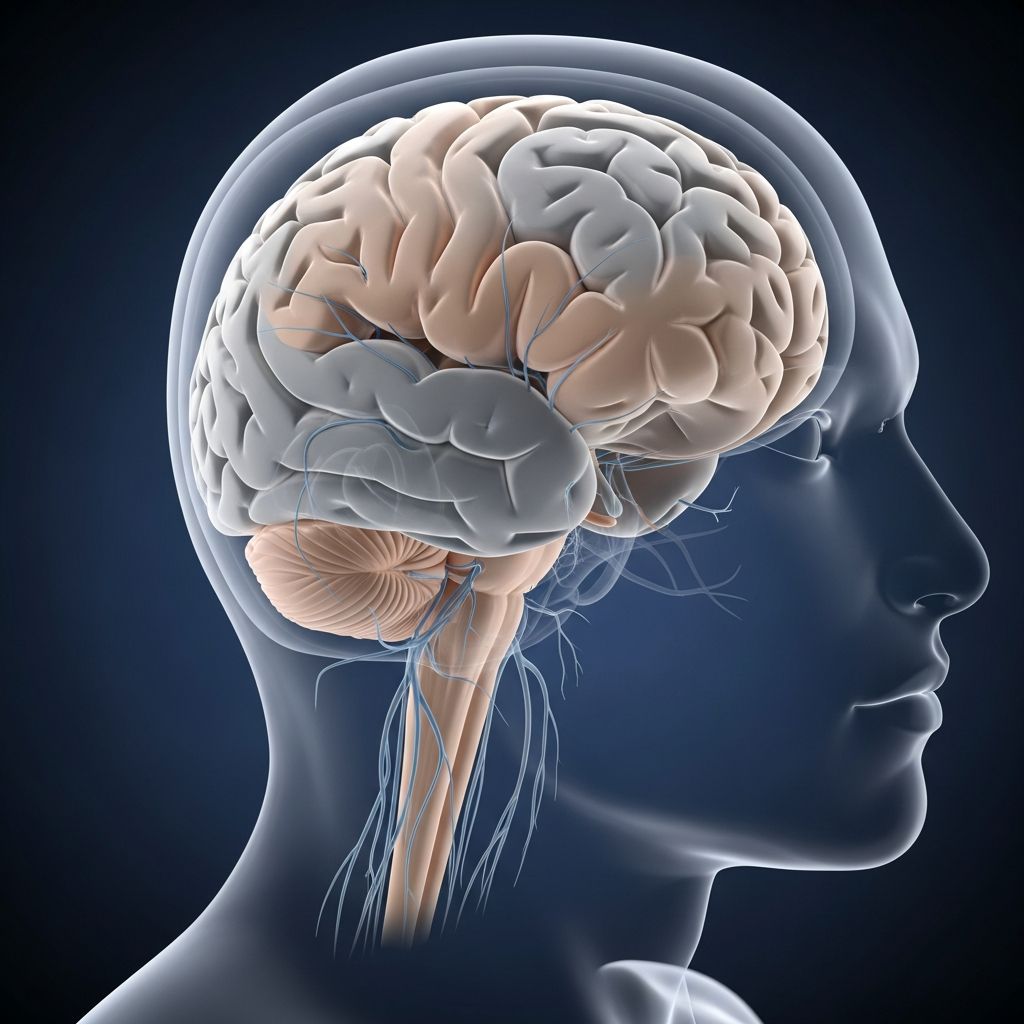
The brainstem is a critical structure located at the base of your brain, serving as the bridge between your brain and spinal cord. Despite its small size, the brainstem houses numerous neural centers responsible for maintaining life itself. This vital region regulates many of the body’s most fundamental processes that occur automatically without conscious thought or control. Understanding the brainstem’s structure and function is essential for appreciating how your nervous system maintains your survival moment by moment.
What Is the Brainstem?
The brainstem is the portion of your brain that connects the larger brain structures to your spinal cord. It sits at the base of your brain, just above where your brain meets your spinal cord. As its name suggests, the brainstem resembles the stem of a flower, anchoring the more complex brain structures above it. This region forms a crucial component of your central nervous system and represents one of the most ancient and conserved parts of the brain from an evolutionary perspective.
The brainstem contains several important structures including cranial nerve nuclei, relay centers, and specialized regions that regulate automatic bodily functions. Ten of your twelve cranial nerves originate in the brainstem, providing both motor and sensory functions to numerous structures throughout your head and neck. These nerves control essential activities such as facial movements, facial sensations, taste perception, hearing, and balance.
Anatomy of the Brainstem: Three Main Sections
The brainstem is anatomically divided into three distinct sections, each with specialized functions and responsibilities. These three regions work together seamlessly to create a coordinated system that maintains vital body functions and facilitates communication between your brain and the rest of your body.
The Midbrain (Mesencephalon)
The midbrain represents the uppermost section of the brainstem, positioned just below the central brain structures. This region plays a significant role in visual and auditory processing, allowing your brain to interpret information from your eyes and ears. The midbrain also contains the substantia nigra, a dopamine-producing nucleus that controls movement and coordination. Through this structure, the midbrain helps regulate voluntary movements and maintain motor control. Additionally, the midbrain regulates eye movements, allowing you to focus on objects and track moving targets smoothly.
The Pons (Metencephalon)
The pons serves as a bridge, literally connecting the midbrain to the medulla oblongata below it. The name “pons” comes from the Latin word for bridge, reflecting its anatomical position and function. This region contains cranial nerve nuclei essential for motor control of the eyes, hearing, balance, attention, and facial movements. The pons facilitates communication between different brain regions and helps coordinate complex movements. It also contains neurons that are crucial for regulating sleep-wake cycles and maintaining consciousness.
The Medulla Oblongata (Myelencephalon)
The medulla oblongata represents the lowermost portion of the brainstem and serves as the direct connection between your brain and spinal cord. This critical structure passes through an opening at the base of your skull called the foramen magnum. The medulla oblongata regulates some of the most vital automatic functions, including heart rhythm, blood pressure, and breathing. It also controls involuntary actions such as coughing, swallowing, vomiting, and gag reflexes. Because of its role in maintaining these essential life functions, damage to the medulla oblongata can have severe or even fatal consequences.
Critical Functions of the Brainstem
Related Stories



The brainstem controls numerous automatic and essential functions that you rarely think about consciously. These functions operate continuously to maintain your survival and well-being.
Regulation of Vital Life Functions
The brainstem houses the primary control centers for your body’s most essential functions. These include cardiovascular control (regulating heart rate and blood pressure), respiratory control (managing your breathing patterns), and vasomotor control (controlling blood vessel function). The brainstem ensures that your heart continues beating steadily, your lungs continue exchanging oxygen and carbon dioxide, and your blood pressure remains stable. Without these regulatory functions, survival would be impossible.
Cranial Nerve Control
Ten of your twelve cranial nerves have nuclei located within the brainstem. These nerves provide motor and sensory functions to structures throughout your head and neck region. Through these cranial nerves, the brainstem enables you to move your facial muscles, control your tongue and throat, taste food, hear sounds, maintain balance, and perceive sensations on your face and head. The brainstem essentially serves as the command center for all conscious and unconscious functions involving your head and neck structures.
Sleep-Wake Cycle Regulation
Within the brainstem lies the reticular activating system (RAS), a network of neurons that regulates your sleep-wake cycles and maintains consciousness. This system helps determine whether you remain alert and awake or transition into sleep. The RAS also controls your level of attention and awareness, allowing you to focus on important stimuli while filtering out irrelevant background noise and sensations.
Neural Pathway Integration
The brainstem serves as a critical relay station through which all efferent (outgoing) and afferent (incoming) pathways between your cerebrum and cerebellum must pass. Many of these neural pathways cross over, or decussate, within the brainstem. This crossing over of pathways means that motor and sensory information from one side of your body is processed on the opposite side of your brain, and vice versa. This anatomical arrangement allows for coordinated and contralateral (opposite-sided) control of body movements and sensations.
Autonomic Nervous System Control
The brainstem contains important nuclei that regulate both sympathetic and parasympathetic divisions of your autonomic nervous system. The sympathetic division prepares your body for fight-or-flight responses, increasing heart rate and redirecting blood flow during times of stress or danger. The parasympathetic division promotes rest-and-digest responses, slowing heart rate and facilitating digestion during times of calm and recovery. The brainstem’s ability to balance these two systems helps maintain homeostasis and ensures your body responds appropriately to different situations.
Brainstem Dysfunction and Disorders
Because the brainstem contains so many critical neural structures concentrated in such a small area, even minor injuries can produce significant effects on bodily function and consciousness. Various conditions can damage the brainstem and impair its ability to regulate vital functions.
Common Causes of Brainstem Injury
Brainstem damage can result from several different causes, each potentially leading to serious complications:
– Stroke (interruption of blood flow to brainstem tissue)- Head trauma and accidents- Brain tumors- Infections affecting brainstem structures- Demyelinating diseases such as multiple sclerosis- Aneurysms or bleeding in the brainstem region
Symptoms of Brainstem Disorders
The symptoms associated with brainstem dysfunction vary depending on the specific location and extent of injury within the brainstem region. Possible symptoms include:
– Balance and coordination problems (vertigo or ataxia)- Dizziness and lightheadedness- Loss of gag reflex- Sleep disruptions and insomnia- Nausea and vomiting- Slurred or unclear speech- Difficulty swallowing, drinking, or eating (dysphagia)- Abnormal facial movements or weakness- Loss of consciousness or altered consciousness- Locked-in syndrome (in severe cases)- Respiratory disturbances or irregular breathing patterns
Brainstem Stroke
Brainstem strokes occur when blood flow to the brainstem is blocked, typically by a blood clot or due to a heart attack. Clinical features associated with brainstem strokes depend on the specific site of injury within the brainstem. Minor strokes may cause symptoms such as vertigo and diminished consciousness, while more severe strokes can result in devastating conditions like locked-in syndrome, where a person is conscious but completely paralyzed and unable to communicate.
Brain Death and Brainstem Function
Because the brainstem controls your heart rate and breathing—the two functions most critical to survival—complete loss of brainstem function is considered equivalent to brain death by many medical professionals and ethicists. When brainstem function ceases entirely, the body can no longer maintain a heartbeat or breathing without mechanical life support. This relationship between brainstem function and survival underscores just how essential this small brain region is to human life.
Frequently Asked Questions About the Brainstem
Q: Can you survive without a brainstem?
A: No, you cannot survive without a functioning brainstem. Because the brainstem controls essential life functions like breathing and heartbeat, a non-functioning brainstem is considered brain death. Without brainstem function, artificial life support systems may temporarily maintain heartbeat and breathing, but biological life cannot continue independently.
Q: What happens if the brainstem is damaged?
A: Depending on the severity and location of damage, brainstem injury can cause speech disorders, balance problems, swallowing difficulties, respiratory disturbances, loss of consciousness, or even death. Even small lesions in the brainstem can have profound effects due to the concentration of critical neural structures in this region.
Q: How is brainstem damage diagnosed?
A: Brainstem damage is typically diagnosed using imaging techniques such as MRI (magnetic resonance imaging) or CT (computed tomography) scans. These imaging methods can reveal structural abnormalities, bleeding, strokes, tumors, or other damage to brainstem tissue. Neurological examinations testing reflexes, balance, and cranial nerve function also help identify brainstem problems.
Q: Is brainstem damage always fatal?
A: Not all brainstem damage is fatal, though the severity depends on the extent and location of injury. Minor brainstem injuries may result in temporary or permanent deficits in specific functions, while extensive damage can be life-threatening. Recovery from brainstem injury varies greatly among individuals and depends on factors such as the type of injury, promptness of treatment, and overall health status.
Q: Can the brainstem repair itself after injury?
A: The brainstem has limited capacity for repair and recovery after injury. While some neural plasticity and recovery may occur through rehabilitation and adaptation, the brainstem’s critical functions mean that damage often results in permanent deficits. Recovery depends on the extent of injury and whether undamaged portions of the brainstem can compensate for damaged areas.
Protecting Your Brainstem Health
While you cannot directly control brainstem function, maintaining overall brain and cardiovascular health supports optimal brainstem functioning. Protecting your brainstem from injury and disease involves:
– Preventing head injuries through proper safety precautions- Managing cardiovascular risk factors to reduce stroke risk- Maintaining healthy blood pressure and cholesterol levels- Avoiding smoking and excessive alcohol consumption- Managing stress and getting adequate sleep- Seeking prompt medical attention for neurological symptoms- Treating infections and inflammation promptly
Conclusion
The brainstem, despite its small size and often-overlooked status in discussions of brain function, represents one of the most critical structures in your nervous system. Its three main sections—the midbrain, pons, and medulla oblongata—work together to regulate vital life functions including breathing, heart rate, blood pressure, and consciousness. The brainstem houses cranial nerve nuclei that control facial movements, sensations, taste, hearing, and balance. It also regulates sleep-wake cycles through the reticular activating system and maintains autonomic nervous system balance. Because the brainstem controls functions essential to life itself, protecting this vital brain region from injury and disease is paramount to maintaining health and survival.
References
- Brainstem | Definition, Structure, & Function — Britannica. Accessed December 2025. https://www.britannica.com/science/brainstem
- Medulla Oblongata: What It Is, Function & Anatomy — Cleveland Clinic. Accessed December 2025. https://my.clevelandclinic.org/health/body/23001-medulla-oblongata
- What Is the Pons? — Cleveland Clinic. Accessed December 2025. https://my.clevelandclinic.org/health/body/23003-pons
- Brain Stem – The Defeating Epilepsy Foundation — Defeating Epilepsy Foundation. Accessed December 2025. https://www.defeatingepilepsy.org/brain-anatomy-series/brain-stem/
- Cranial Nerves: Function, Anatomy & Location — Cleveland Clinic. Accessed December 2025. https://my.clevelandclinic.org/health/body/21998-cranial-nerves
- Brain: Parts, Function, How It Works & Conditions — Cleveland Clinic. Accessed December 2025. https://my.clevelandclinic.org/health/body/22638-brain
Similar Articles








Read full bio of medha deb