Branchial Cleft Cyst Pathology: A Comprehensive Guide
Detailed pathology of branchial cleft cysts: embryonic remnants with lymphoid tissue, squamous lining, and key differential diagnoses.
Branchial cleft cysts represent congenital anomalies arising from incomplete obliteration of the embryonic branchial apparatus, commonly manifesting as neck masses with characteristic histopathological features.
Introduction
Branchial cleft cysts, also known as cervical lymphoepithelial cysts, originate from remnants of the branchial clefts during embryonic development. These structures, which evolve into gills in fish, fail to regress fully in humans, leading to cyst formation typically along the lateral neck. The second branchial cleft is most frequently implicated, with cysts presenting anterior to the sternocleidomastoid muscle, deep to the platysma, and alongside the carotid sheath.
Clinically, these cysts are often asymptomatic until infected, appearing as smooth, fluctuant masses that transilluminate well. They predominate in young adults but can manifest at any age, with sizes varying from small nodules to several centimeters. Infection leads to tenderness, erythema, and purulent drainage if a sinus tract is present. Rarely, autosomal dominant inheritance is noted, and cysts may contain cartilage or skin tag-like remnants.
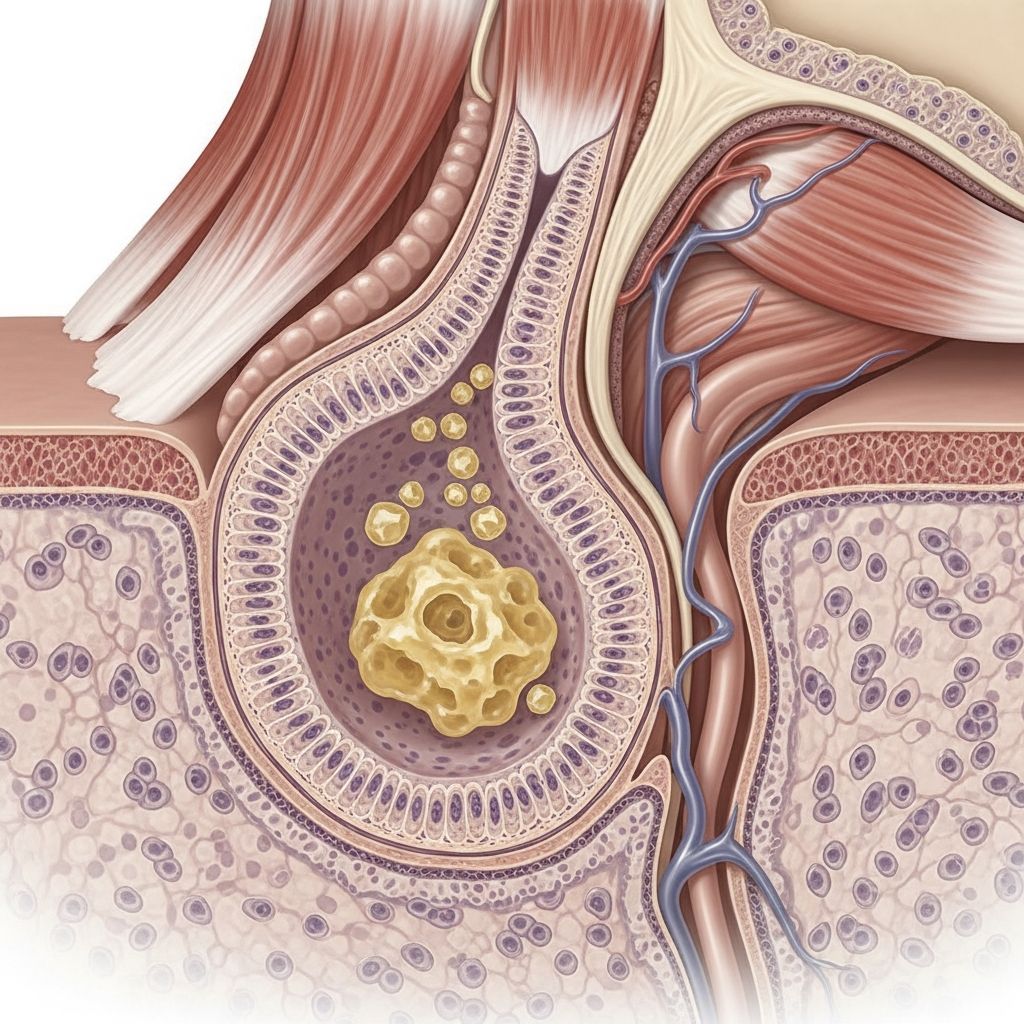
Histologically, these cysts are distinguished by a squamous epithelial lining surrounded by dense lymphoid aggregates, mimicking a lymph node with a central cavity. This feature underscores their embryologic derivation from ectodermal and mesodermal elements of the branchial apparatus. Malignant transformation is exceedingly rare, though differentiation from metastatic squamous cell carcinoma is critical.
Histology
The hallmark of a
branchial cleft cyst
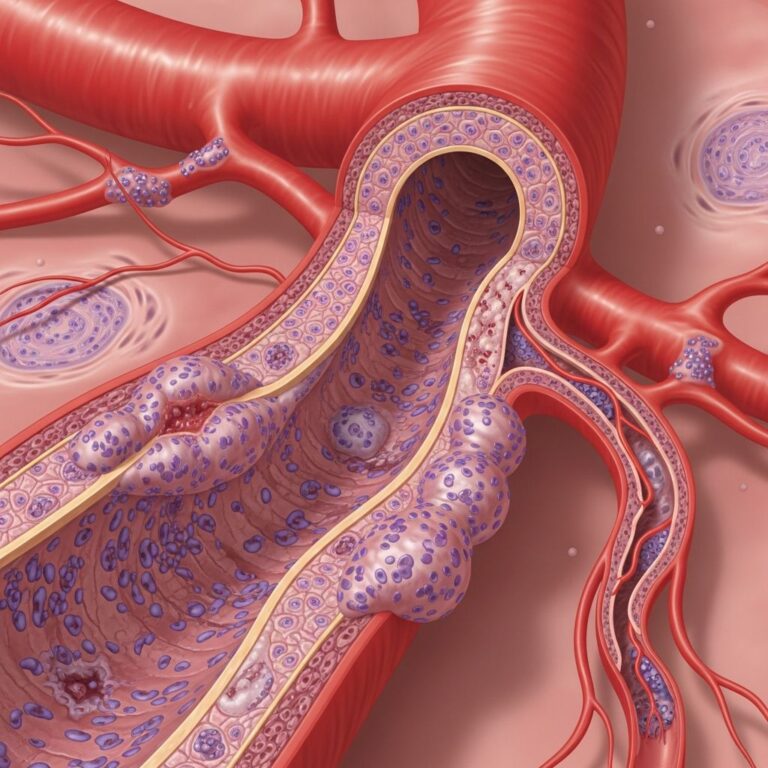
is a cyst wall lined by stratified squamous epithelium, often attenuated due to chronic inflammation, and subtended by prominent lymphoid tissue with germinal centers (Figure 1).- Lymphoid stroma: Dense aggregates of lymphocytes, frequently forming follicles with germinal centers, dominate the cyst wall, resembling a lymph node.
- Epithelial lining: Primarily stratified squamous, but respiratory-type columnar ciliated epithelium may be focal or predominant. Desquamated keratin accumulates within the lumen, sometimes liquefying centrally.
- Inflammatory changes: Marked acute and chronic inflammation is common, with epithelial attenuation or ulceration overlying lymphoid tissue (Figure 3).
- Wall components: Rare smooth muscle bundles; mucous (seromucinous) glands and cartilage plates may be present, reflecting mesodermal contributions. Fibrosis often results from repeated infections.
Microscopic examination reveals a unilocular or multilocular cyst with cholesterol clefts and foamy macrophages in the lumen. The absence of skin appendages distinguishes type I first branchial cleft cysts from type II variants. Second branchial cleft cysts, the most common, track from the tonsillar fossa between carotid arteries to the anterior neck.
| Branchial Cleft Type | Location | Key Features |
|---|---|---|
| First | Preauricular, parotid, peritragal | Type I: epidermoid only; Type II: appendages, cartilage; no lymphoid tissue in fistulas |
| Second (most common) | Anterior sternocleidomastoid | Squamous/respiratory lining, lymphoid wall, germinal centers |
| Third | Lower neck, pyriform sinus | Rare; associated with hypopharynx |
Images typically show low-power views of lymphoid-rich cyst walls (Figure 1), medium-power squamous lining (Figure 2), and high-power inflamed epithelium (Figure 3).
Special Studies
No special studies, such as immunohistochemistry, are routinely required for diagnosing branchial cleft cysts, as the classic histologic features are diagnostic. However, in challenging cases:
- p63 and cytokeratins (CK5/6): Highlight squamous lining; useful to distinguish from pure glandular cysts.
- CD20/CD3: Confirm lymphoid follicles if atypical.
- S100:** Negative in epithelium; positive in dendritic cells within lymphoid tissue.
Related Stories



Electron microscopy or molecular studies are unnecessary. Cyst contents may show cholesterol crystals and inflammatory cells on cytology.
Differential Diagnoses
Accurate diagnosis hinges on recognizing lymphoid stroma and excluding mimics.
| Differential | Distinguishing Features | Key Exclusion |
|---|---|---|
| Cutaneous ciliated cyst | Ovarian-type stroma, ciliated columnar lining; no lymphoid tissue, smooth muscle, glands, or cartilage | Lacks lymphoid wall |
| Metastatic squamous cell carcinoma (SCC) | Cystic SCC metastases mimic cysts; atypia, invasion, desmoplasia; often keratinizing with extracellular keratin pools | Cytologic atypia, mitoses |
| Bronchogenic cyst | Midline suprasternal; respiratory lining, smooth muscle, glands; minimal/no lymphoid tissue | Midline location, muscle |
| Thyroglossal duct cyst | Midline; respiratory/squamous lining, thyroid tissue; moves with swallowing | Midline, thyroid follicles |
| Lymphangioma/Branchial pouch sinus | Endodermal pouch origin; no ectodermal squamous lining | Internal tract |
Metastatic cystic SCC, particularly from oropharynx (HPV+), poses the greatest pitfall, especially in older patients with smoking history. Features favoring metastasis include marked atypia, surface involvement, and lymphovascular invasion. Branchial cleft cysts rarely harbor carcinoma; reported cases often represent unrecognized primaries.
Clinical Features and Management
Branchial cleft cysts present as painless, mobile neck masses, enlarging with infection. Symptoms include swelling, pain, fever, and drainage. Diagnosis relies on imaging (ultrasound, CT: cystic lesion with thin walls, debris) and fine-needle aspiration showing squamous debris and lymphocytes.
Treatment is surgical excision, especially post-infection to prevent recurrence. Complete tract removal is essential for fistulas/sinuses. Risks include nerve injury (marginal mandibular, hypoglossal), vascular damage, and recurrence (<5%). Observation suffices for asymptomatic small cysts.
Frequently Asked Questions (FAQs)
Q: Are branchial cleft cysts cancerous?
A: Almost always benign; rare malignant transformation reported, but most ‘carcinomas’ are metastatic SCC.
Q: What is the most common location?
A: Anterior border of sternocleidomastoid muscle in the neck, from second branchial cleft.
Q: Do they require special stains for diagnosis?
A: No, routine histology suffices; IHC only if SCC suspected.
Q: How to differentiate from metastatic carcinoma?
A: Lack atypia, orderly maturation, prominent lymphoid stroma without invasion.
Q: What causes branchial cleft cysts?
A: Embryologic persistence of branchial clefts, 4-8 weeks gestation.
Prognosis
Excellent post-excision; recurrence rare with complete removal. Infection prophylaxis via early surgery recommended.
References
- Branchial cleft cysts pathology — DermNet NZ. 2013 (updated). https://dermnetnz.org/topics/branchial-cleft-cyst-pathology
- Cutaneous ciliated cyst pathology — DermNet NZ. https://dermnetnz.org/topics/cutaneous-ciliated-cyst-pathology
- Branchial cleft cyst or sinus — VisualDx. https://www.visualdx.com/visualdx/diagnosis/branchial+cleft+cyst+or+sinus?diagnosisId=53773&moduleId=102
- Atlas of Head and Neck Pathology: Branchial Cleft Cyst — Ohio State University Medicine. https://medicine.osu.edu/-/media/files/medicine/departments/otolaryngology/atlas-of-head-and-neck-pathology/b/brachialcleftcyst2.pdf
- Branchial Cleft Cyst: Symptoms, Types & Treatment — Cleveland Clinic. 2023-10-27. https://my.clevelandclinic.org/health/diseases/22547-branchial-cleft-cyst
- Branchial cleft cysts pathology image — DermNet NZ. https://dermnetnz.org/imagedetail/12355-branchial-cleft-cyst-pathology
- Branchial Cleft Cyst: 5-Minute Pathology Pearls — YouTube (Kikoxp). https://www.youtube.com/watch?v=6baLsP2m3fw
Similar Articles








Read full bio of medha deb